[CityUHK Research for the Future] CityUHK advances green finance in Hong Kong to achieve net‑zero goals
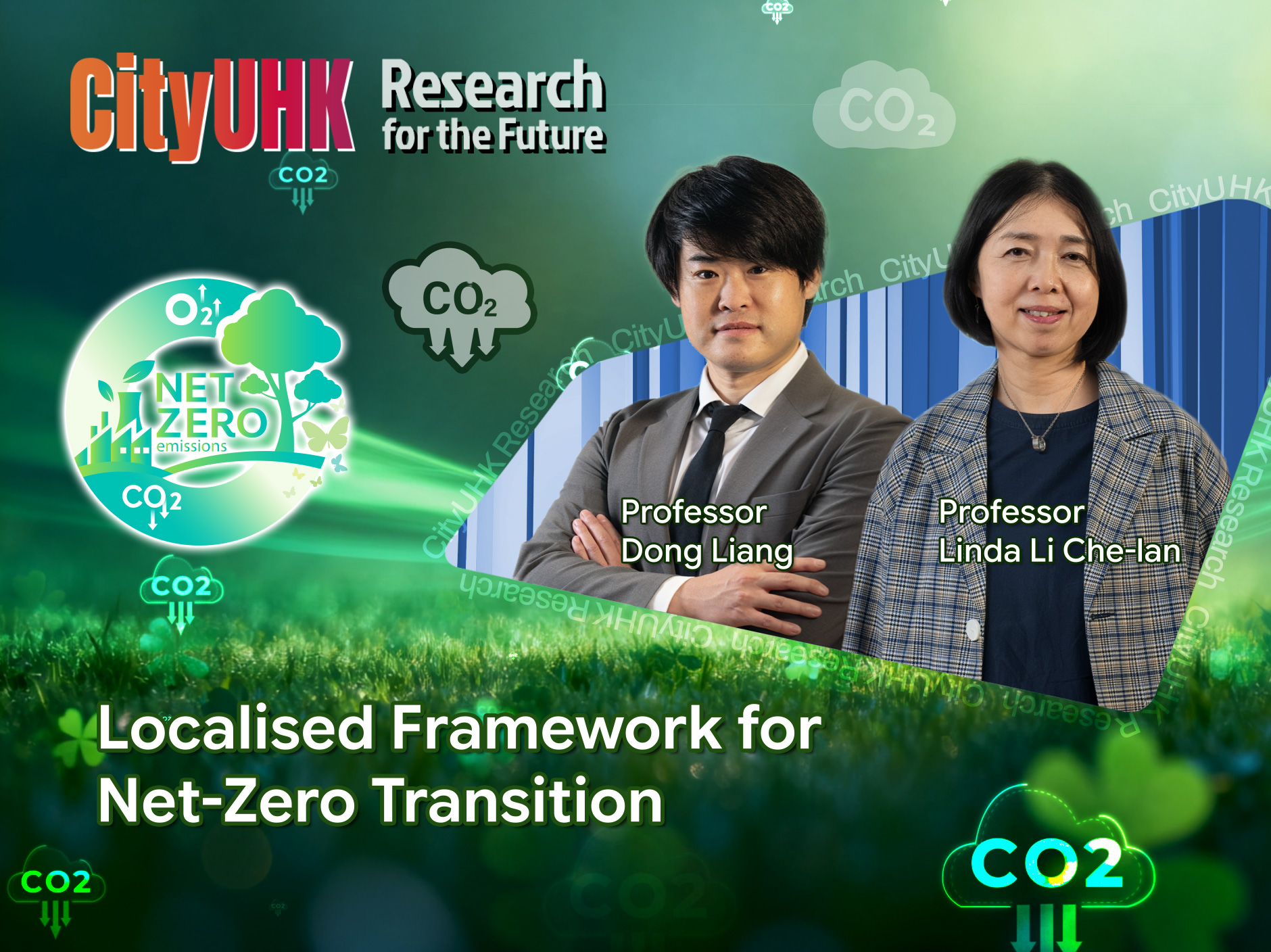
City University of Hong Kong (CityUHK) is at the forefront of the global acceleration towards net‑zero emissions. A cutting-edge framework developed by researchers at CityUHK can accurately estimate the scale and distribution of “financed emissions”, which is key to advancing the implementation of green finance policy and consolidating Hong Kong’s status as an international centre of green finance. The first of its kind deployed in Hong Kong, this methodological framework enables financial institutions to identify and reduce financed emissions and effect important policy and regulatory changes.
Led by Professor Linda Chelan Li and Professor Dong Liang, from the Department of Public and International Affairs, and supported by CityUHK’s Research Centre for Sustainable Hong Kong (CSHK), the interdisciplinary green finance research programme, launched in 2016, aims to accelerate Hong Kong’s transition to sustainable finance practices.
Unlike direct and indirect greenhouse gas emissions that are linked to business operations, financed emissions are the greenhouse gas emissions of businesses arising from the investment or lending activities of financial institutions. They are a critical but overlooked component of climate disclosure. As global market demands for transparency in financed emissions disclosure become increasingly stringent, the CityUHK team has designed a reliable calculation methodology and regulatory framework aligned with international standards, providing essential, reference-based estimation tools for the government, regulators and enterprises.
The team produced Hong Kong’s first estimates of financed emissions in the bank loan, residential mortgage and assets-under-management sectors, providing government and regulators with the territory’s first locally grounded baseline. The results showed that the total estimated financed emissions in Hong Kong reached 380.27 million tonnes of CO₂‑equivalent emissions in 2021, highlighting the sector’s significant climate impact.
Simulations with different policy scenarios showed that, by reallocating just 10% of bank lending from high‑carbon to low‑carbon industries, sector‑wide financed emissions could fall by 6%. This discovery offers a clear pathway for scenario testing in future investment strategies and climate‑risk management.
The team has extended its analysis across East Asian supply chains to assist stakeholders in better understanding the regional cost efficiency of a green transition. Covering 13 major electronics manufacturers, including TSMC, Samsung, SK Hynix and Foxconn, the extended study finds that if these firms transition to 100% renewable energy by 2030, they will collectively save over US$20 billion in annual operating and energy costs and reduce over 230 million tonnes of CO₂ emissions. This scale of emission reduction, if realised, will substantially exceed the total emissions of the Netherlands in 2022.

“Our research findings not only debunk the misconception that decarbonisation is a financial burden, but also provide multinational enterprises, investors and financial institutions with robust evidence to drive greener supply chain transformation locally and globally,” said Professor Li.
To refine its policy recommendations, the team further conducted a comparative study of the green‑finance regulatory frameworks in Hong Kong, Singapore and Japan. They identified areas in which Hong Kong still has room for improvement, particularly in market‑based decarbonisation tools, such as carbon pricing and carbon taxes, information disclosure requirements and green‑classification systems.
Professor Li stated that the team has consistently engaged in in-depth exchanges with the government and regulatory authorities. Suggestions were put forward to improve disclosure infrastructure, amplify the financial sector’s role in decarbonisation and strengthen the green finance market ecosystem. The directions of these measures were subsequently incorporated into the 2024 Policy Address and the Sustainable Finance Action Agenda released by the Hong Kong Monetary Authority.
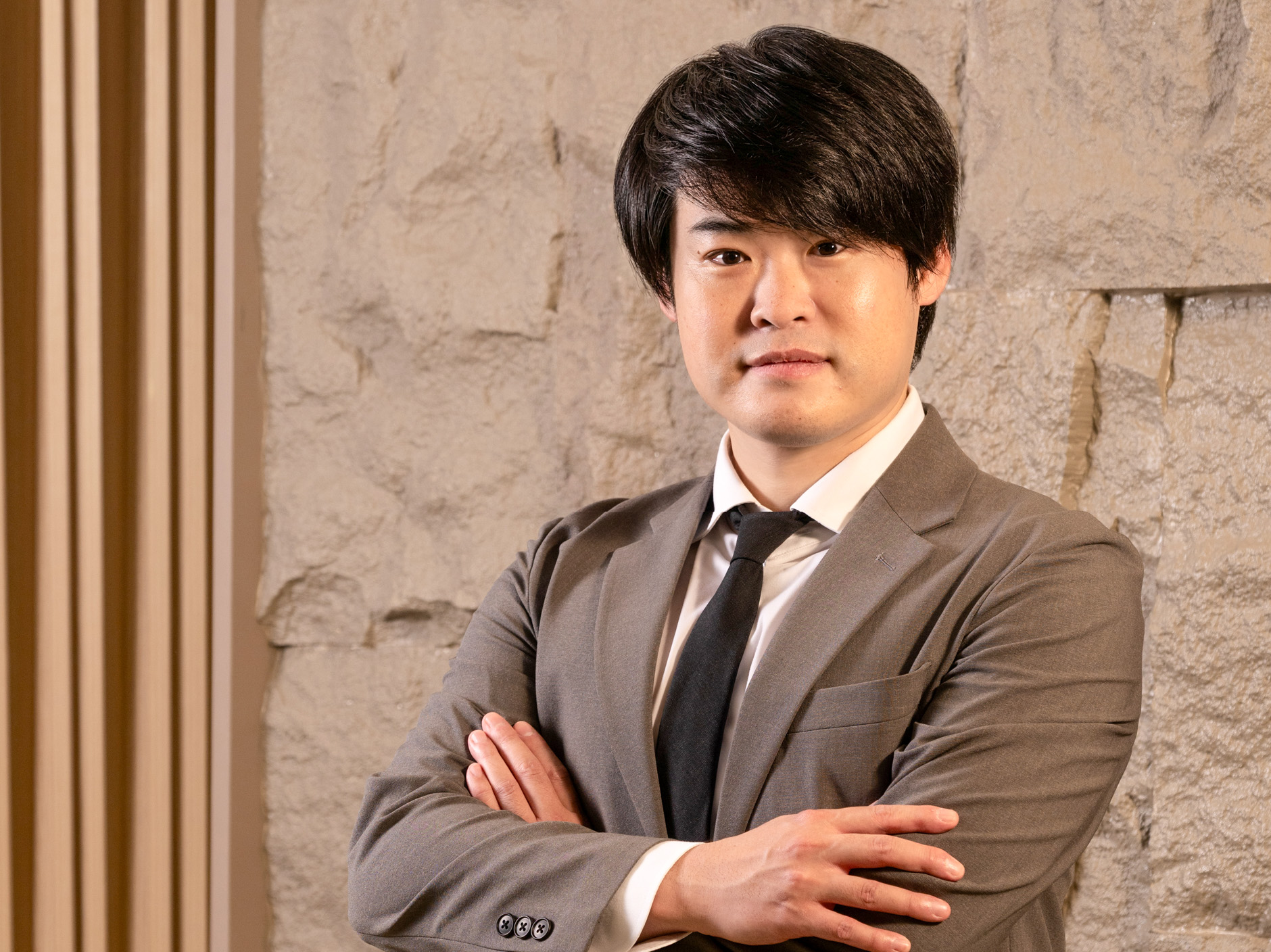
Professor Dong added that the research has also been actively translated into practical corporate-level applications. Since 2024, the team has actively collaborated with GreenPoint, a developer of an online Scope 3 emissions data management platform targeting small and medium-sized enterprises (SMEs). The partnership integrates financed emission calculation methodologies to help SMEs complete greenhouse gas accounting and compliance at lower costs. A platform tool launched in Shanghai in 2024 by GreenPoint has expanded to Hong Kong. By 2025, the platform had supported about 100 SMEs across Shanghai and Hong Kong in establishing foundational carbon management systems.
The research team has, to sum up, effectively transformed green finance from concept to practice: provided the government with local baselines and analytical tools, offered scientific evidence for financial and corporate decision‑making, and delivered practical solutions that make decarbonisation achievable. CityUHK will continue to work with the government, regulators and industry to strengthen disclosure frameworks and advance toward the net‑zero goals.
CityUHK has been committed to transforming research excellence into real world applications that benefit society. The “CityUHK Research for the Future” series showcases the University’s prominent research projects over the years and how they contribute to building a sustainable, inclusive, and innovative future.