International Conference on AI-Empowered Communication and Global Innovation Successfully Concludes at CityUHK
23 Sep 2025 (Tue)
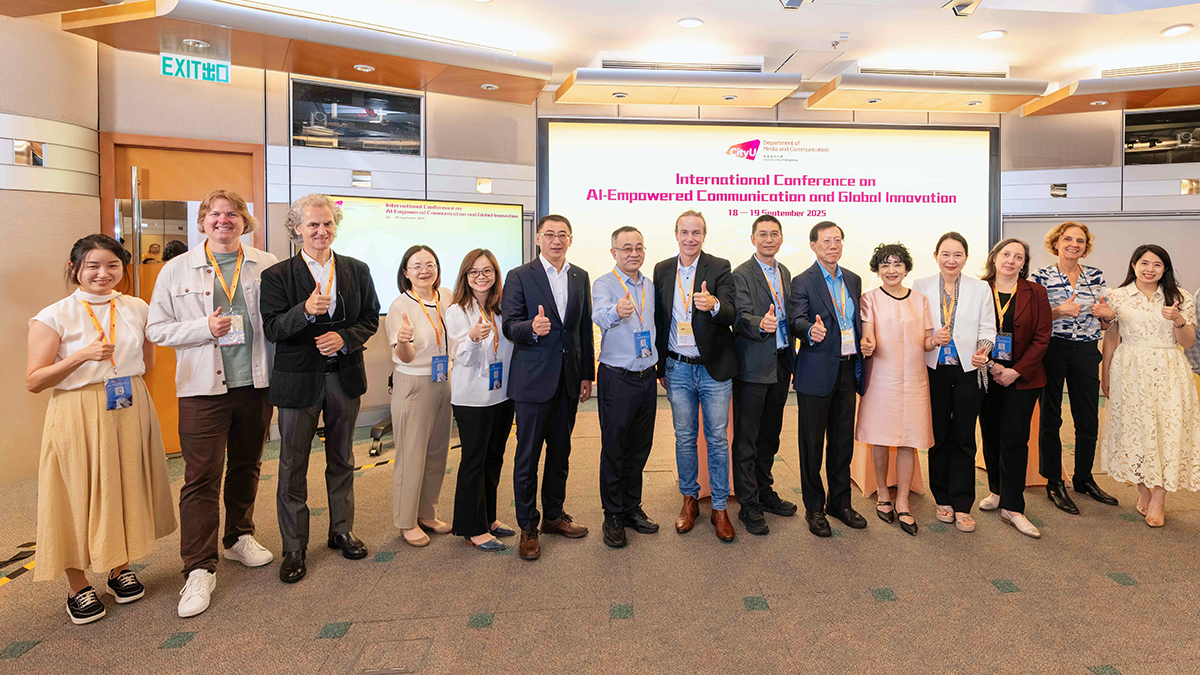
Hong Kong, 19 September 2025 – City University of Hong Kong’s Department of Media and Communication (COM) successfully hosted the
International Conference on AI-Empowered Communication and Global Innovation from 18 to 19 September 2025. The two-day conference brought together approximately 200 scholars, industry pioneers, and journal editors from across the globe to explore the transformative impact of artificial intelligence on communication research and practice. As discipline leader, CityUHK COM takes pride in advancing intellectual discourse in this cutting-edge field.
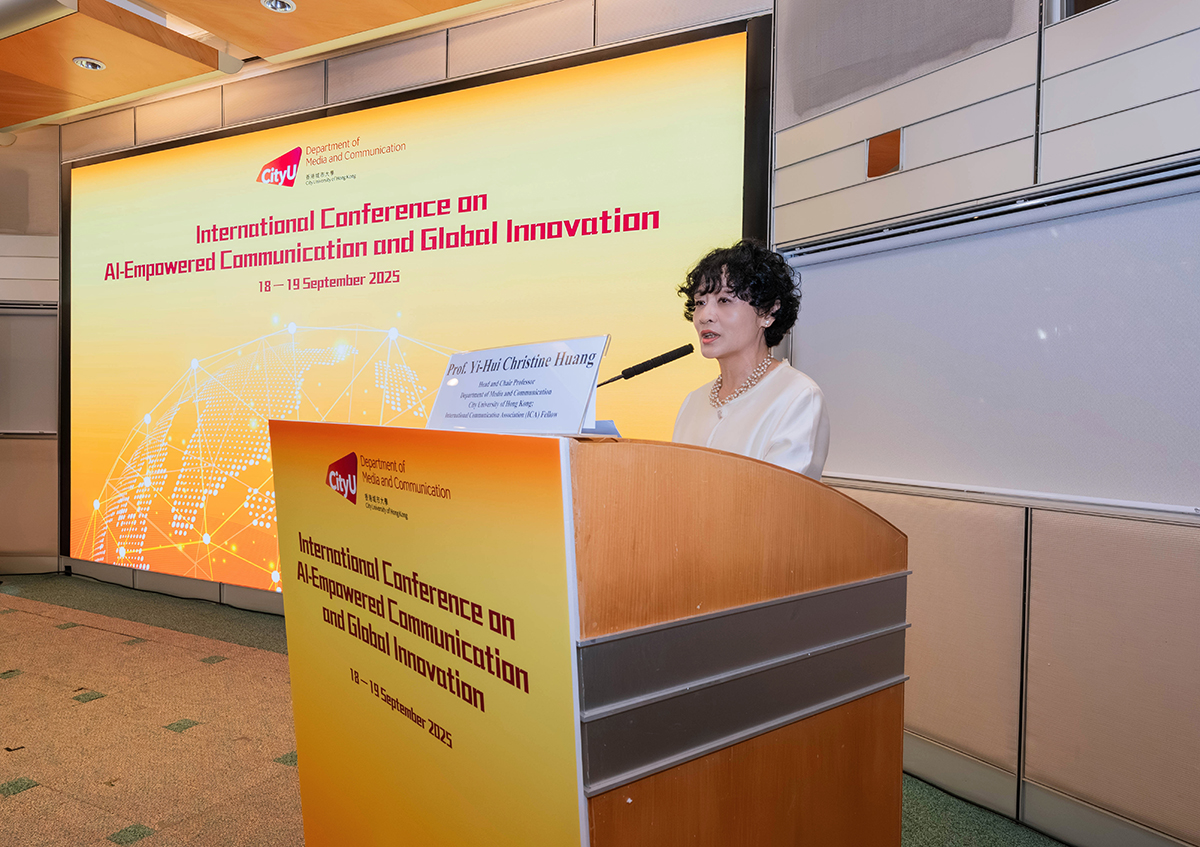
The conference commenced with keynote addresses from CityUHK's senior leadership, establishing the foundational tone for this international gathering. Provost and Deputy President Professor Chun-Sing Lee emphasized AI's pivotal role in addressing global challenges, while Professor Alfred Tat-Kei Ho, Dean of the College of Liberal Arts and Social Sciences, articulated the mission to integrate humanistic perspectives with technological advancement through interdisciplinary collaboration. Professor Yi-Hui Christine Huang, Head of the Department of Media and Communication, highlighted the urgency of developing innovations grounded in real-world contexts during this period of rapid AI evolution.This comprehensive framework—spanning national boundaries, academic disciplines, and temporal dimensions—created a remarkable convergence of perspectives.
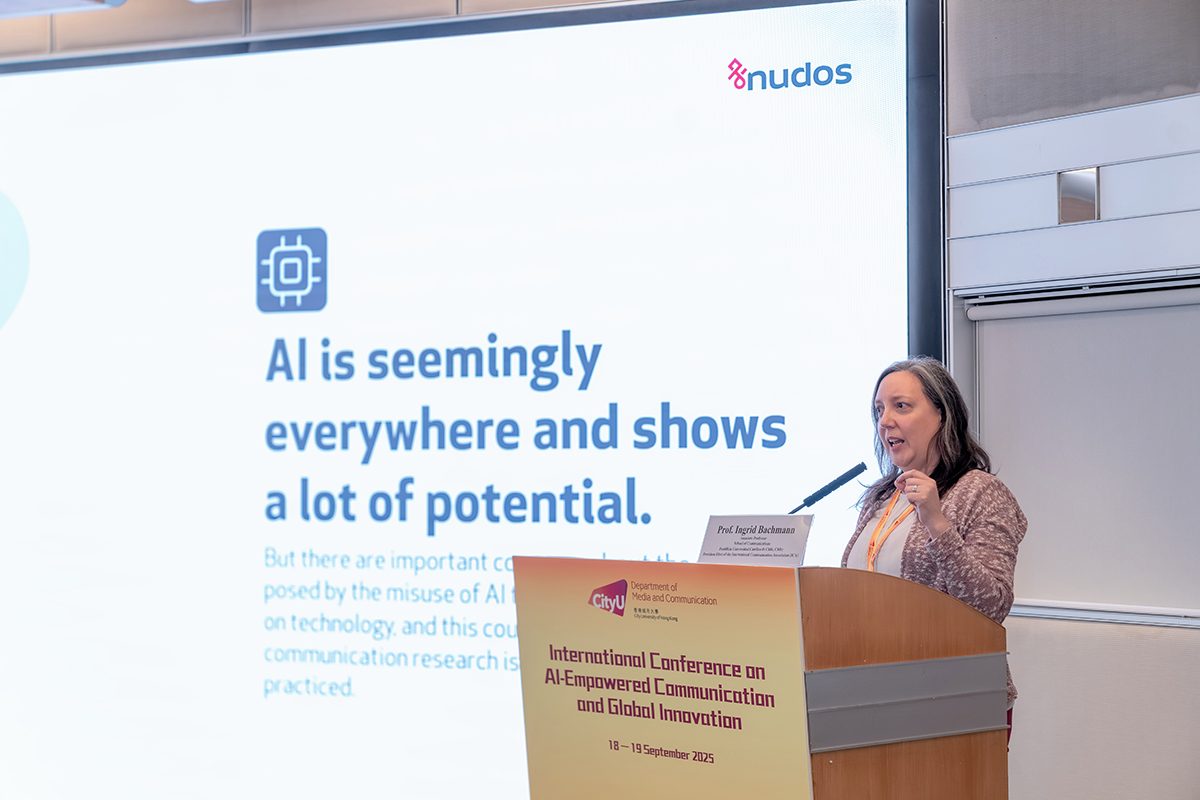
From the very first speaker, Professor Ingrid Bachmann, who is also the President-Elect of the International Communication Association, addressed the issue of trust in AI at the outset. Ethics, trust, and governance in AI became a recurring theme throughout the conference. Professor Huang's analysis of trust mechanisms revealed cultural variations in AI adoption, demonstrating how effective governance requires trust-centric ecosystems through culturally adaptive policies. Professor Fen Lin, who is the Associate Vice President of Global Strategy also contributed the framework examining global AI governance landscapes.
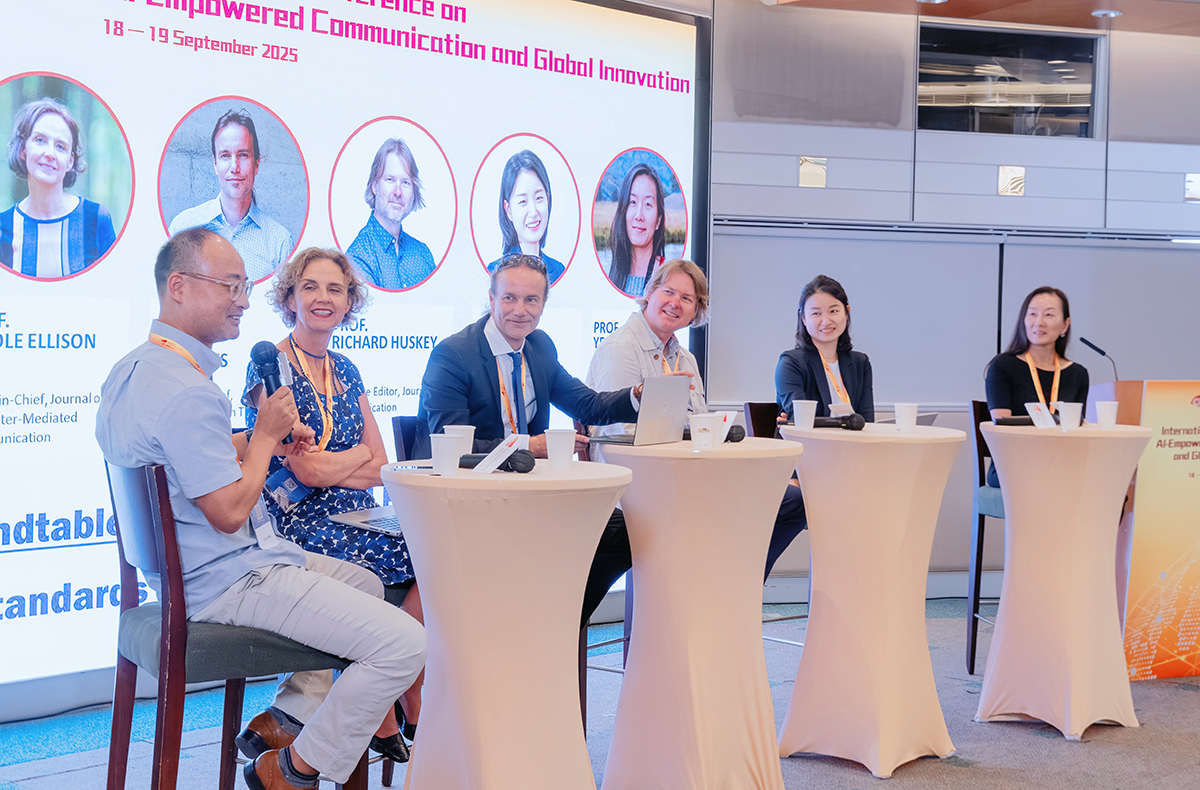
A highlight was the journal editors roundtable, moderated by Prof. Fei Shen who is also COM Associate Head, brought together leading editors from both Eastern and Western academic traditions. Participants included Professor Nicole Ellison, Professor Jörg Matthes, Professor Richard Huskey, Professor Nuri Kim, and Professor Ye Sun. The forum emphasized equitable publishing practices and diversifying editorial boards to better recognize innovative work from non-Western theoretical traditions. A diverse editorial board can mitigate algorithmic biases, foster cross-cultural innovation, and ultimately build an inclusive knowledge ecosystem, ensuring that AI technology benefits all regions and reduces disparities.
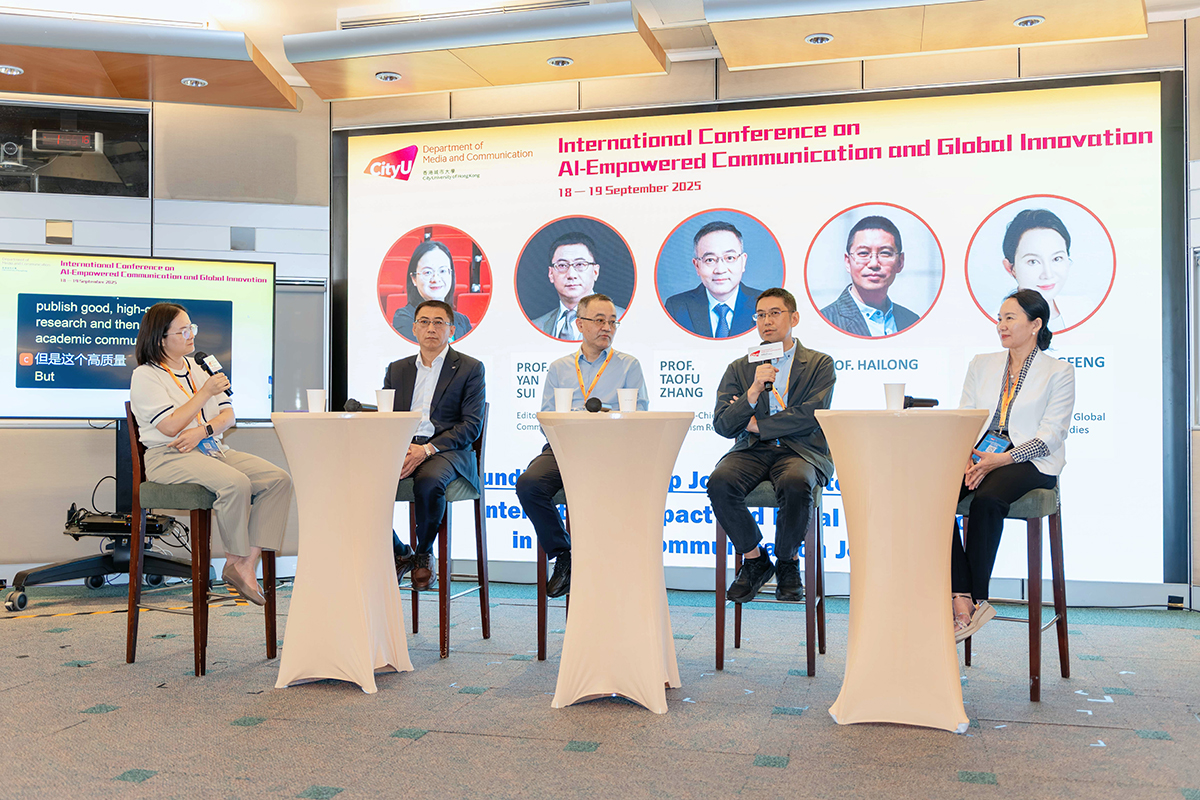
Also, relatively in mainland session, another particularly notable editor roundtable featured Professor Crystal Jiang moderating a remarkable discussion with four chief editors of the leading CSSCI journals, engaging in critical dialogue about journalism and communication research, together they took a look into the future China's AI issue. Professor Yan Sui explored how AI-generated content is transforming cultural power structures, and Professor Taofu Zhang emphasized the need to establish core disciplinary principles amidst evolving academic boundaries. Professor Hailong Liu however proposed moving beyond anthropocentric communication theories, while Professor Changfeng Chen advocated for using AI to address substantive problems rather than merely hot trends. The panel consensus recognized AI's role in fundamentally reshaping communication theory and methodology. While maintaining technological optimism, the scholars adopted a balanced perspective that acknowledged both the potential and challenges of AI's impact on the field.
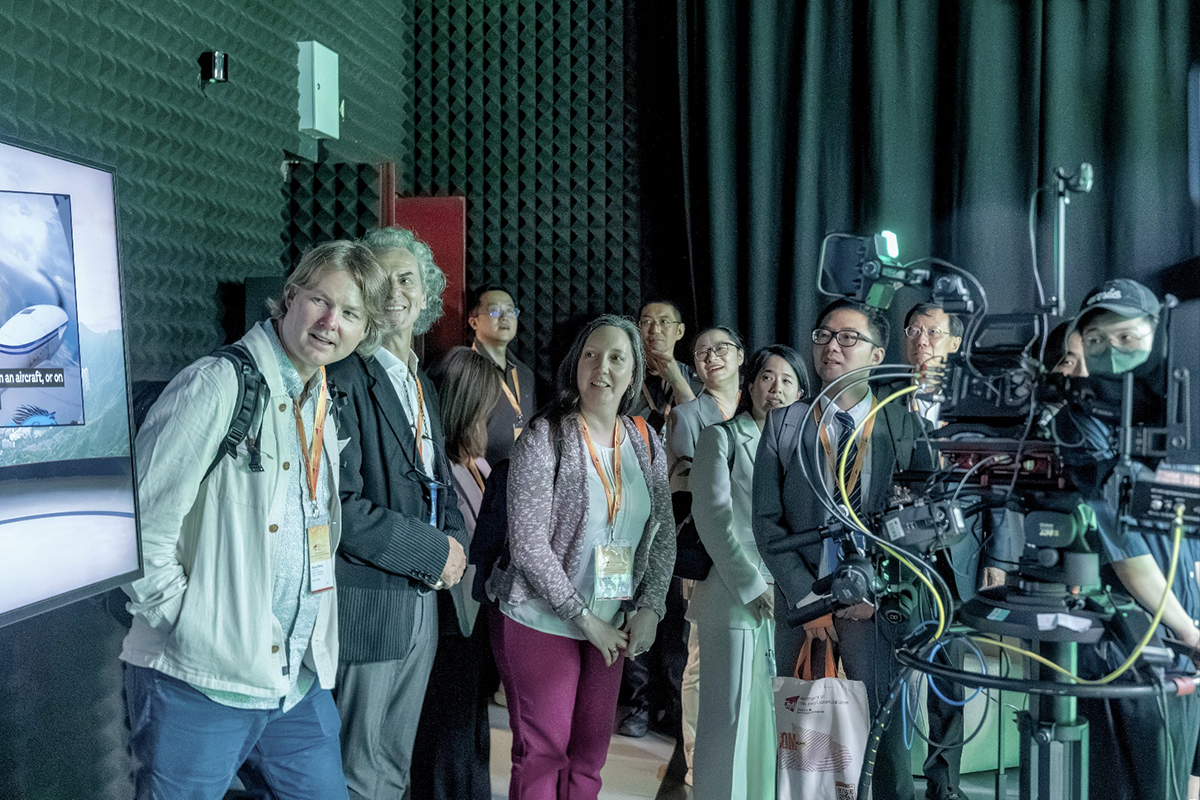
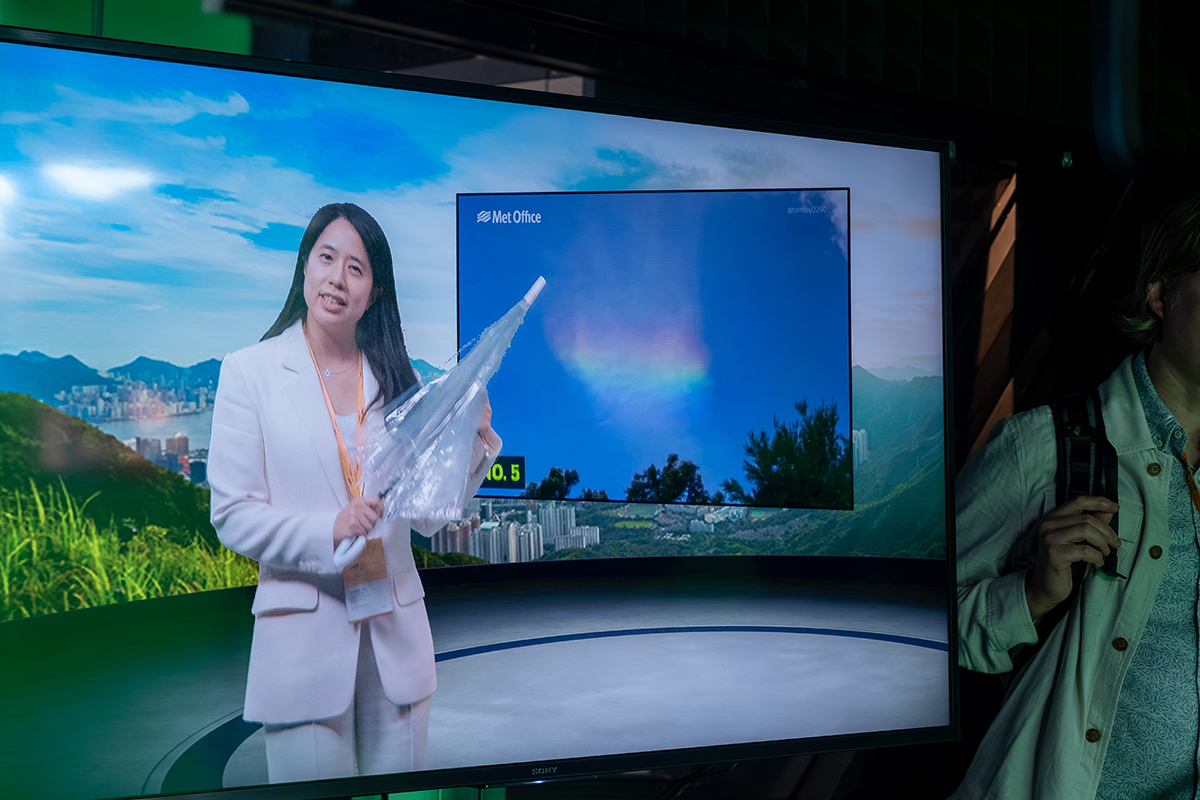
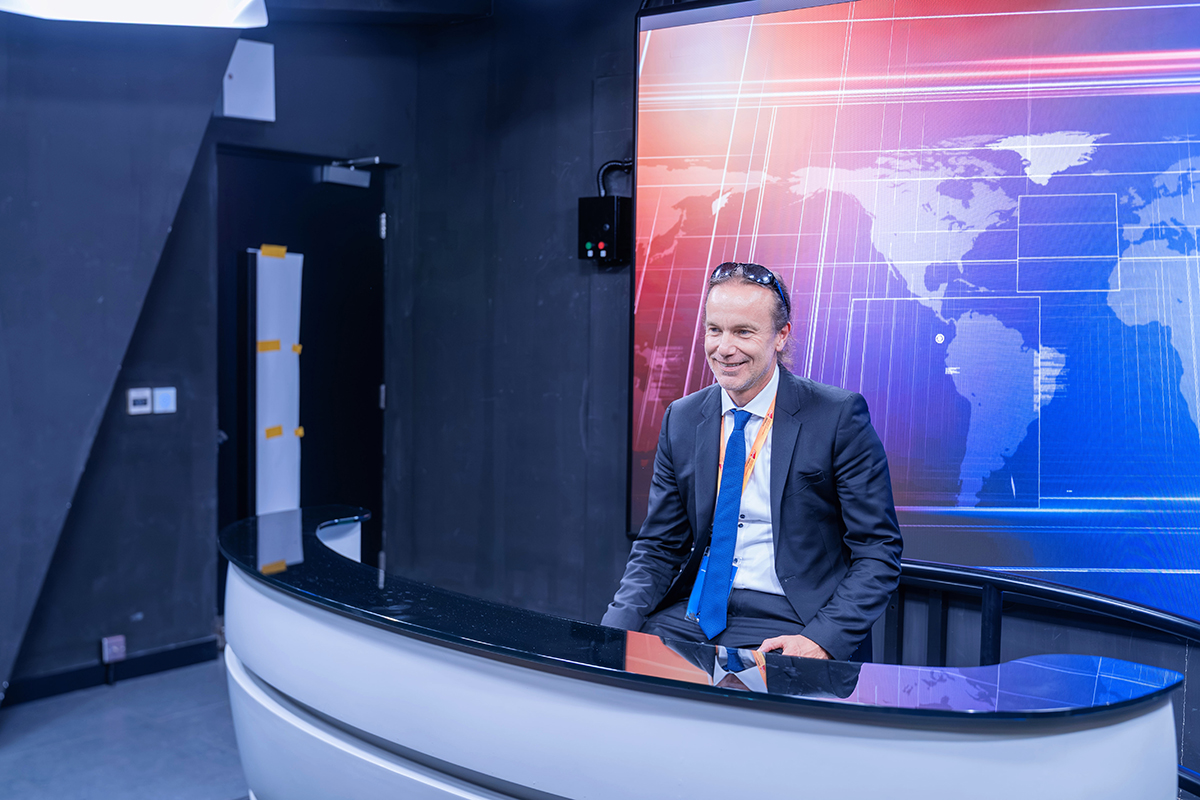
The conference also built up wonderful connections across disciplines, ending first day with a delightful tour of the world-class architecture Run Run Shaw Creative Media Centre, which is the buiding of the Department of Media and Communication. Guests particularly expressed their appreciation to the warm atmosphere. This memorable experience created lasting bonds and inspired future collaborations in AI research.
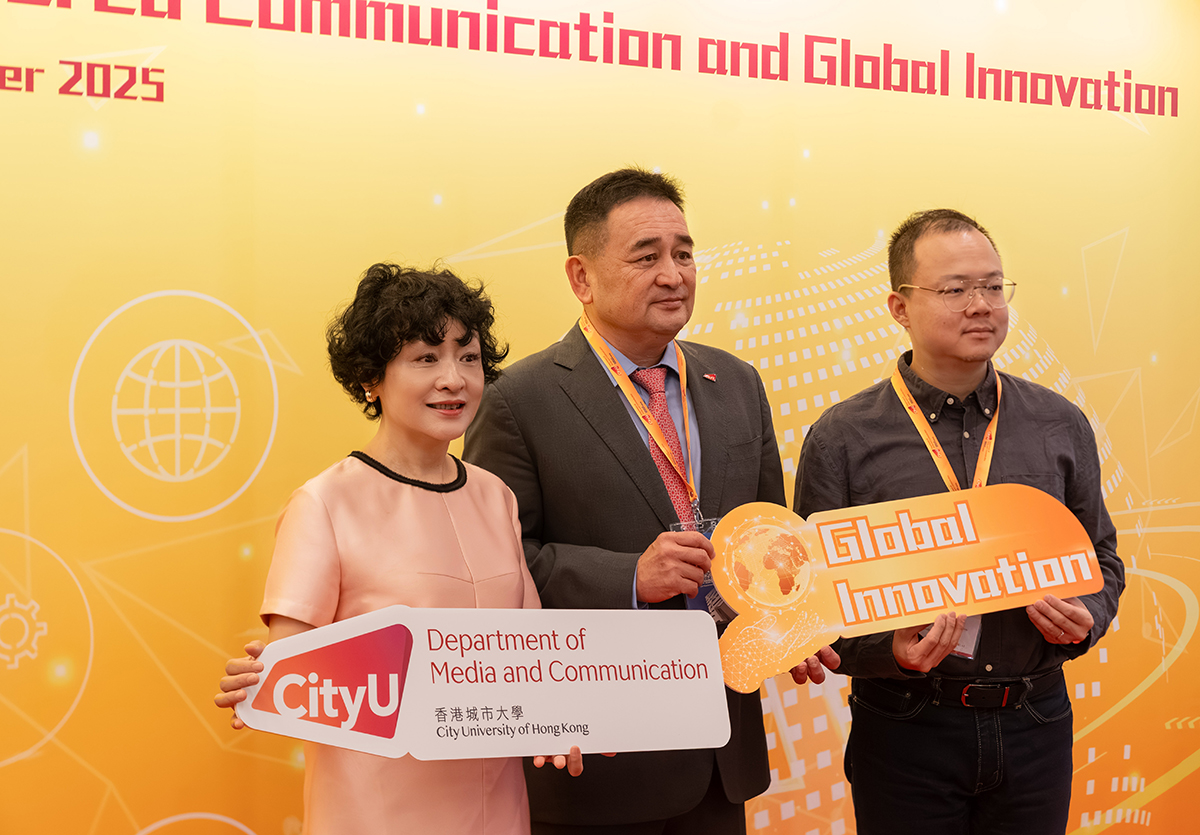
In the end, the conference successfully finished by paying attention to forging a collaborative future, Professor Yi-Hui Christine Huang extended sincere appreciation to convenor, Professor Xinzhi Zhang, all participants and staffs for their invaluable contributions to the conference. In her concluding remarks, she articulated a forward-looking vision for "AI-powered advancements that foster more profound human connections and enhance cross-cultural understanding."
The conference not only served to reaffirm CityUHK's leadership in pioneering research that strategically harnesses AI's transformative potential while maintaining steadfast alignment with fundamental human values and sustainable social progress. This gathering established significant academic-industry partnerships that will propel responsible innovation in communication technologies, positioning the university at the forefront of ethical AI development in global communication studies.