Showing 11 to 20 of 316 results
![[CityUHK Research for the Future] From wired to wireless: CityUHK’s world-class research transforms wireless charging](/-/media/project/cityuhk/home-site/media/news/2026/07/27/research_impact_series_a_kv.jpg?rev=-1&hash=271FC9488DC826EF508D66C5F2876ED6)
27 Jul 2026
CityUHK has long been committed to fostering innovation through world-class research and transforming cutting-edge discoveries into solutions that benefit society. Among its most impactful breakthroughs is the wireless power transfer technology developed by Professor Ron Hui Shu-yuen, Chair Professor in the Department of Electrical Engineering, and his team. Their pioneering work was adopted as the world’s first international wireless charging standard, Qi.
16 Jul 2026
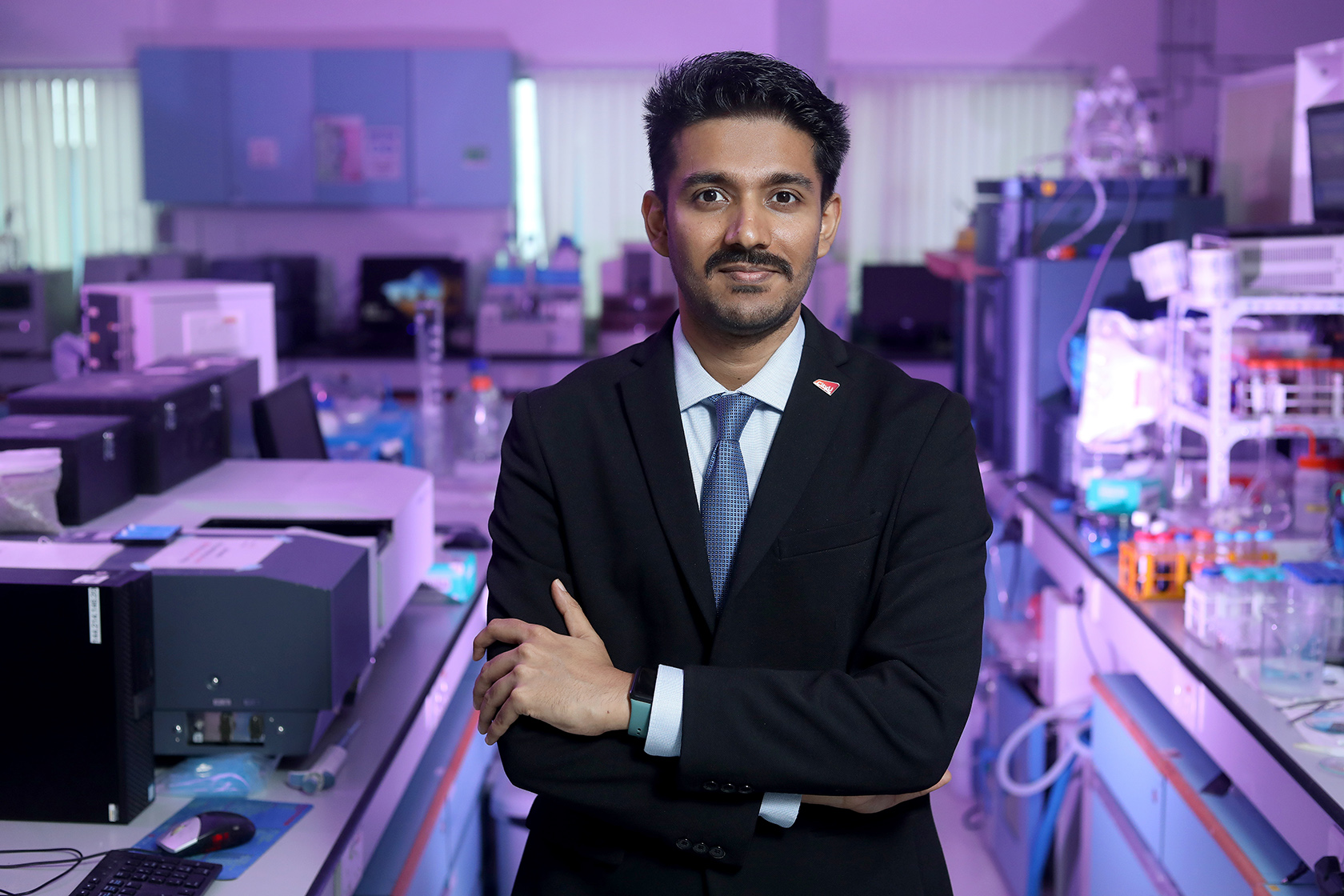
A research team led by Professor Sai Kishore Ravi from SEE at CityUHK has successfully demonstrated how mechanical vibrations can be harnessed to drive the production of useful chemicals from water.
06 Jul 2026
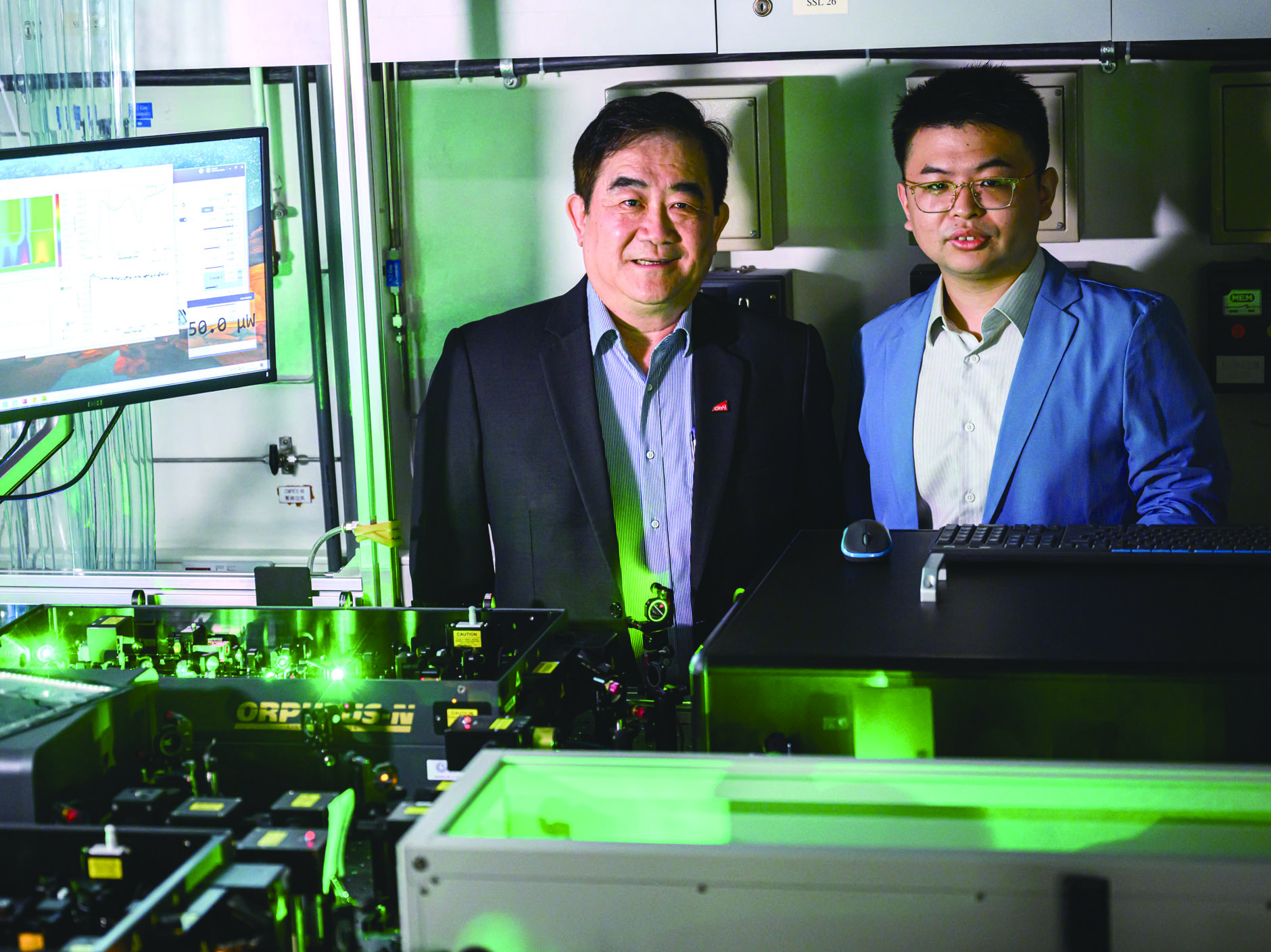
A research team from CityUHK has recently overcome a technological bottleneck that has persisted for over a decade. They successfully “turned waste into treasure” by recycling triplet excitons and converting them into effective charge carriers for electricity generation. Using this new approach, they achieved an efficiency of 20.5% in OPV cells.

22 Jun 2026
CityUHK researcher maps the kidney’s “longevity protein”, revealing segment‑specific roles of Klotho
A research team led by CityUHK, in collaboration with the University of Zurich, has uncovered the first comprehensive map of how the anti‑ageing protein Klotho operates in distinct regions of the kidney, resolving long‑standing scientific uncertainties about its physiological roles.
01 Jun 2026
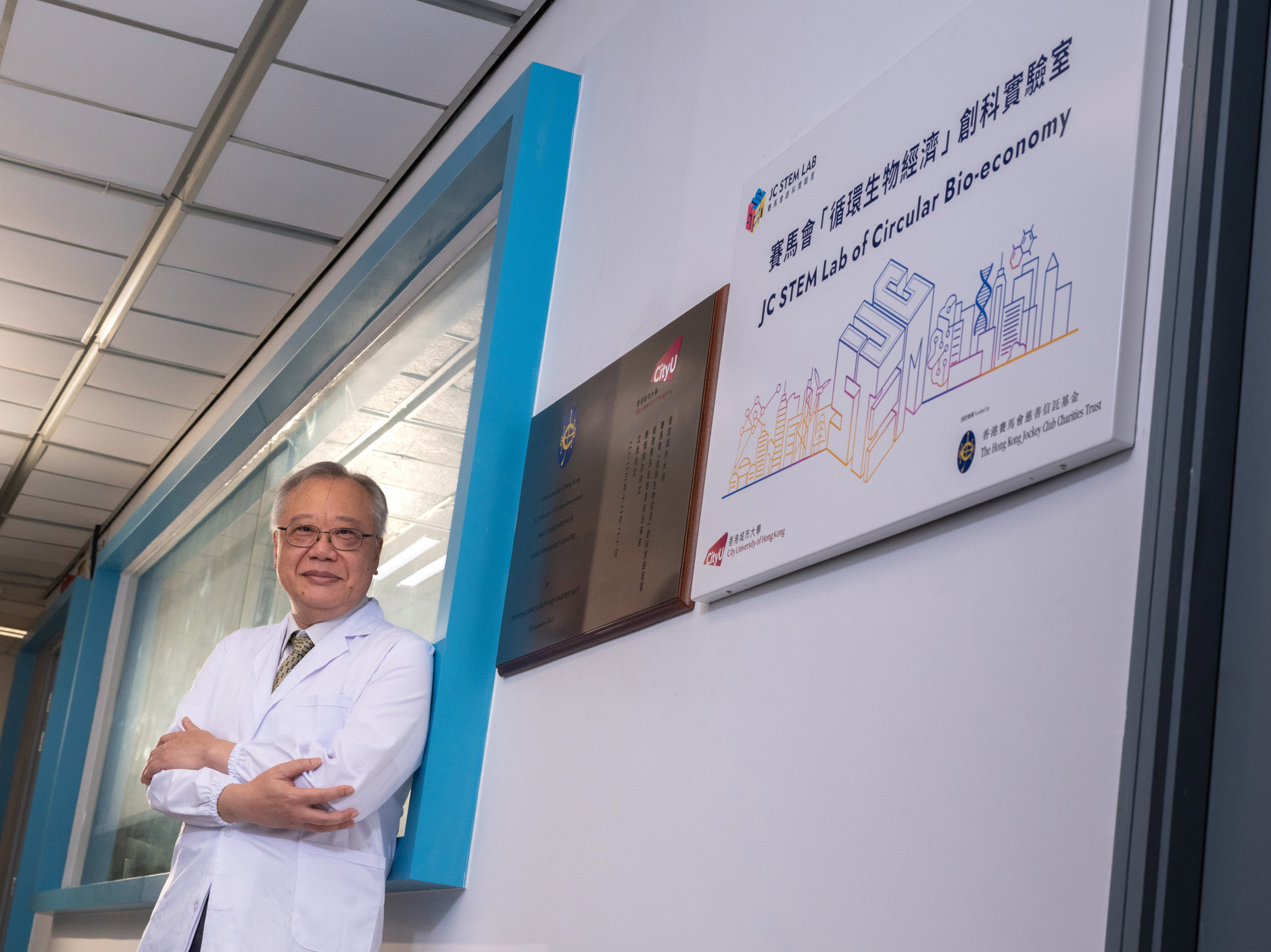
The JC STEM Lab of Circular Bio-economy at CityUHK has recently achieved a breakthrough in the field of sustainable development technologies. A research team led by Professor Lee Duu-Jong, Director of the Lab and Professor in the Department of Mechanical Engineering, has successfully developed a bio-inspired "all-weather building skin" that cools in sunlight and harvests energy from rain, alongside a "turbocharged" solar hydrogen system powered by low-cost copper ions.

26 May 2026
A research team led by Professor Steven Wang, Associate Vice-President (Resources Planning) and Associate Professor in the Department of Mechanical Engineering and School of Energy and Environment, has designed a revolutionary capillary structure that can trigger the Leidenfrost effect, offering a practical solution for the temperature-regulated Leidenfrost effect without requiring complex surface engineering.
18 May 2026
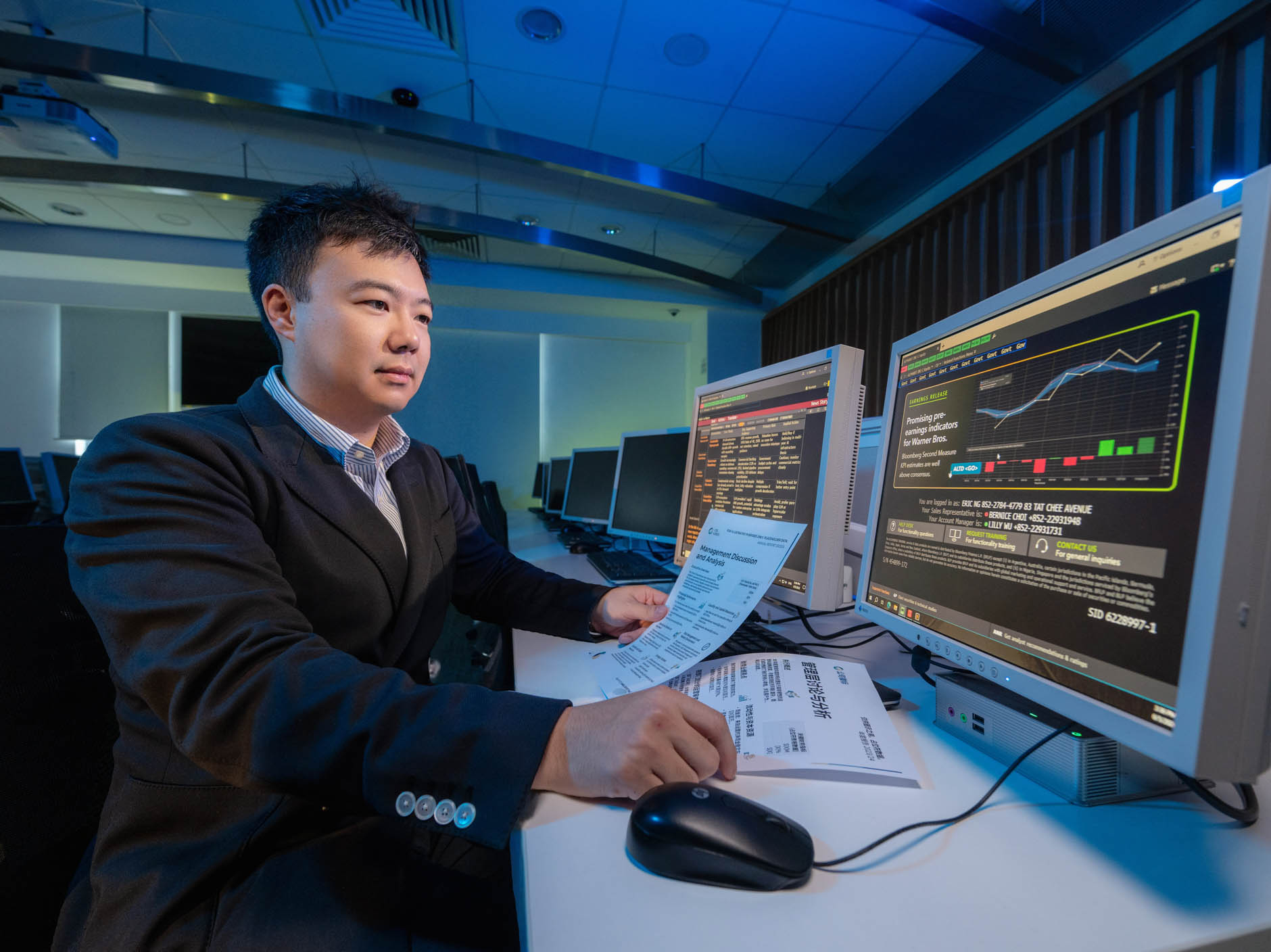
A research team led by Professor Forester Wong Yu-ting, Assistant Professor in the Department of Accountancy at CityUHK, pioneered a novel approach to detecting “differential communication”. The study, titled “Differential Communication and Local Information Advantage: Revelations from Translation Differences”, was recently published in The Accounting Review, a top-tier journal in the field of accounting.

29 Apr 2026
A research team led by Professor Li Danfeng, Associate Dean (Research and Postgraduate Education) of the College of Science and Associate Professor in the Department of Physics at CityUHK, has discovered magnetic-field-induced re-entrant superconductivity in infinite-layer nickelates. The finding challenges conventional understanding and opens new directions for exploring unconventional superconducting mechanisms and next-generation materials.

27 Apr 2026
An international research team led by a scholar from CityUHK has broken through the overlooked role of sewers as a source of methane, developing the first-ever globally applicable estimation tool and offering a new perspective on mitigating climate change. Led by Professor Yuan Zhiguo, Chair Professor of the School of Energy and Environment, the research lasted for 20 years.
13 Apr 2026
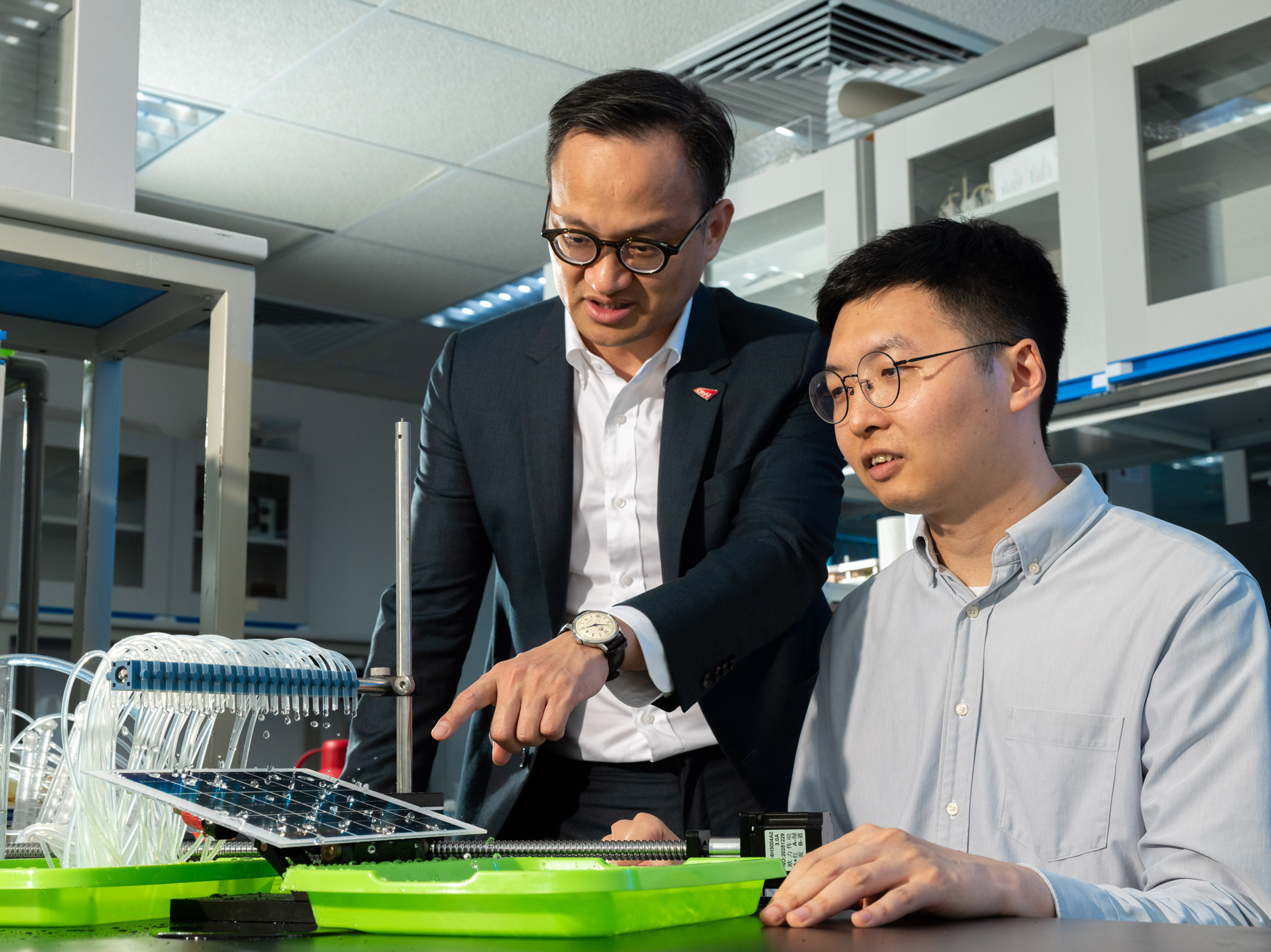
An international research team led by the Department of Mechanical Engineering at CityUHK has successfully developed a breakthrough technology, called “Liquid Droplet Mops”, which only uses a minimal amount of water to effectively remove dust and pollutants from solar panel surfaces, significantly enhancing cleaning efficiency while conserving water.