
News
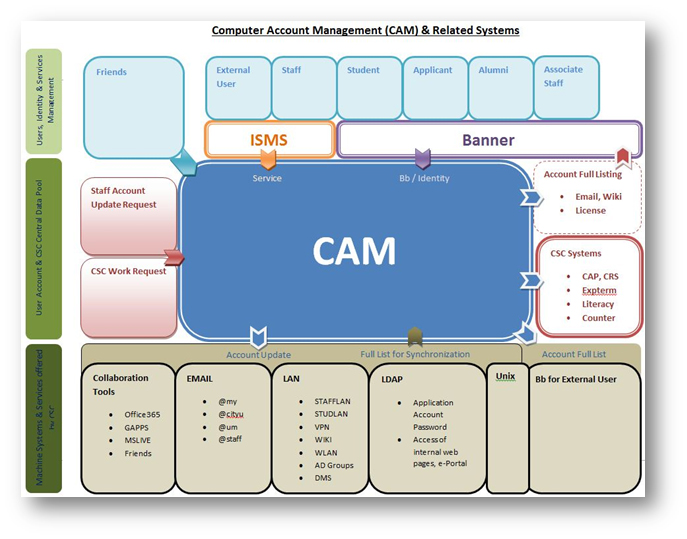
Since our last article (Ref: Network Computing Issue 43 – March 2005) on the Computer Account Management (CAM) System, the system has evolved to serve more than just simple maintenance tasks. Now it manages not only the accounts for students and alumni, but also those for staff, applicants, ex-staff and external users.
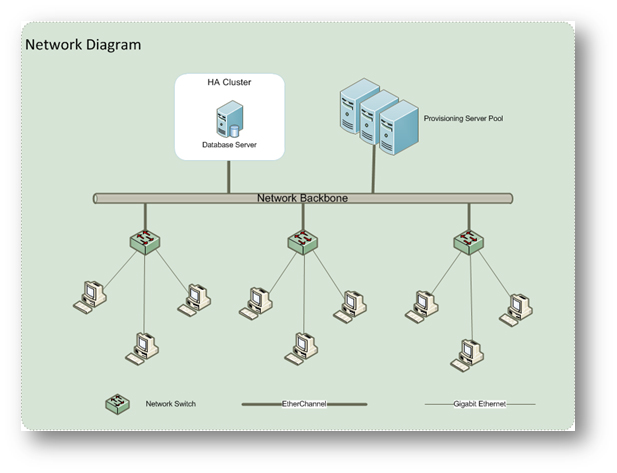
The Computing Services Centre (CSC) has successfully completed the first phase of the client virtualization project and, after the past Easter break, released around 130 virtualized workstations in one Teaching Studio (AC2-4200) and two Open Access Areas (AC2-G601 and AC2-5802) in the CSC Teaching Studio Areas. The virtualization technology adopted in this phase was “streamed Virtual Hard Disk (VHD)”.
/* The following article is extracted from the "Information Security Newsletter" published by the JUCC IS Task Force. */ Firewalls are one of the most critical devices or applications that protect universities' information systems and resources from unauthorised access or malicious attacks. To effectively utilise the security features of firewalls, accurate configuration and maintenance of rules shall be made by universities' network administrators and IT security staff in accordance with the Information Security Policy and any other applicable security standards (e.g. Acceptable Usage Standard). Inappropriate management of firewall systems may result in security flaws and risks that are unaware by the universities. Some examples are illustrated below.
Firewalls are one of the most critical devices or applications that protect universities' information systems and resources from unauthorised access or malicious attacks.
Firewalls are one of the most critical devices or applications that protect universities' information systems and resources from unauthorised access or malicious attacks.
/* The following article is extracted from the "Information Security Newsletter" published by the JUCC IS Task Force. */ Any device that controls network traffic for security reasons can be called a firewall. It puts up a barrier that controls the flow of traffic between networks and is able to protect the boundary of a university’s internal network whilst it is connected to other networks (e.g. the Internet, third-parties’ private networks).
Any device that controls network traffic for security reasons can be called a firewall. It puts up a barrier that controls the flow of traffic between networks and is able to protect the boundary of a university’s internal network whilst it is connected to other networks (e.g.
Any device that controls network traffic for security reasons can be called a firewall. It puts up a barrier that controls the flow of traffic between networks and is able to protect the boundary of a university’s internal network whilst it is connected to other networks (e.g.

/* The following article is extracted from the "Information Security Newsletter" published by the JUCC IS Task Force. */ Although patches aim to mitigate the risks caused by information system's vulnerabilities, they may expose these systems to additional channels of attack and even be manipulated by hackers to become the carrier of malware. Universities should pay attention to the following vulnerabilities relevant to patch management.

/* The following article is extracted from the "Information Security Newsletter" published by the JUCC IS Task Force. */ To build an effective patch management process that manages the risks from both external (i.e. vulnerabilities of the information systems) and internal factors (i.e. vulnerabilities related to patch itself), universities are recommended to consider the following practices:
To build an effective patch management process that manages the risks from both external (i.e. vulnerabilities of the information systems) and internal factors (i.e. vulnerabilities related to patch itself), universities are recommended to consider the following practices:
To build an effective patch management process that manages the risks from both external (i.e. vulnerabilities of the information systems) and internal factors (i.e. vulnerabilities related to patch itself), universities are recommended to consider the following practices:
/ssl-1.jpg?rev=563f5b76d09d4ba6bc12d1b2146e2b54&hash=A1C13323D82F5B90A1D380C14241E4E5)
Nowadays, people use PCs, mobile devices to perform many activities on the internet, such as webmail, online shopping, e-banking, etc. Private information is frequently being transmitted across the internet. If these sensitive data are not transferred securely, they can easily be captured or stolen by hackers without your knowledge.
Message from Microsoft "After 12 years, support for Windows XP will end on April 8, 2014. There will be no more security updates or technical support for the Windows XP operating system. It is very important that customers and partners migrate to a modern operating system…” (Microsoft, 2014) After 8th April, 2014, Windows XP operating system will no longer be supported by Microsoft and there will be no security updates or technical support for this platform. Security updates patch vulnerabilities that may be exploited by malware and help keep PCs and their data protected. Without such, PCs running XP are prone to hacking attacks.
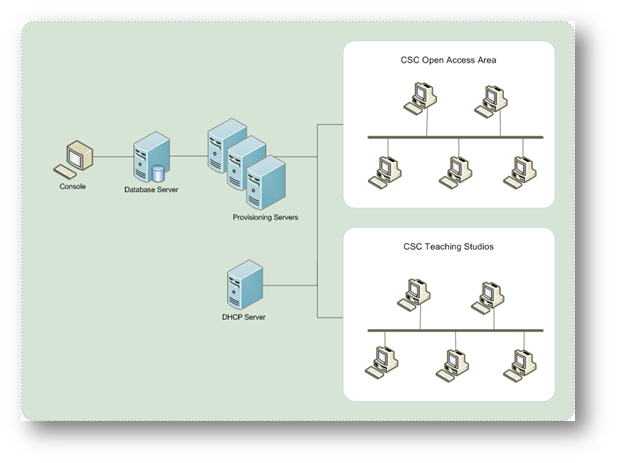
Virtualization is an irreversible trend in the IT industry. It brings great benefits to enterprises by allowing better utilization of IT resources, simplifying IT administration, facilitating faster disaster recovery. For more discussion on its benefits, please refer to an earlier article “Moving Forward with Client Virtualization” in Network Computing Issue 71 - March 2012. The Computing Services Centre (CSC) has decided to deploy some selected virtualization technologies for improving the teaching and learning environment. They are: the server virtualization for the student printing services, the virtualization of application provisioning in the CSC Teaching Studios, and outsourcing (public cloud) the student email service to Microsoft Office 365.
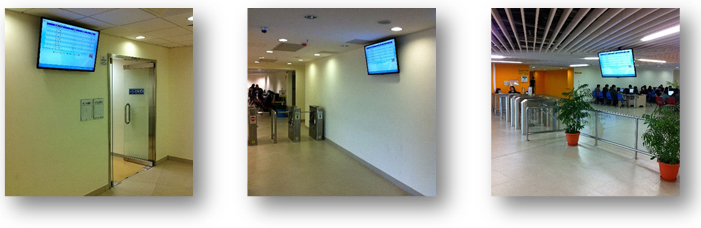
To better serve our users, the Computing Services Centre (CSC) has installed three sets of 42-inch LED TV panel beside the entrances of the CSC Teaching Studio Areas on G/F, 4/F and 5/F of Academic 2.
 CityU IT ChatBot