
News
Microsoft has officially launched its latest Operating System, Windows 8.1, to the public in mid-October 2013. Windows 8.1 is packed with many new features and improvements over its predecessor, Windows 8, which sought to bridge the gap among touchscreen devices (such as tablets and smartphones), traditional laptops and desktop computers.
/dls-1.jpg?rev=80d3499a3b00411a9283837da238c562&hash=8FBBEBA0BEE0A655ABCAD39B62E9B6B6)
The Student Notebook Computer Daily Loan Scheme (DLS) has been established for more than 10 years (previously known as the Mobile Computer Service) to give students the convenience and flexibility to make use of the wireless network to access the campus network and the Internet, facilitating their learning and academic activities. When the Computing Services Centre (CSC) was moved from Academic 1 (AC1) to Academic 2 (AC2) in August 2012, the new DLS counter was set up on the 4/F of AC2 to provide 600 Lenovo X200 notebooks for loan to students. As AC2 is a bit remote from AC1 while the building works of Academic 3 (AC3) were still underway then, we had expected the usage to drop due to inconvenience. Nevertheless, there was still a 3% increase in notebook loans in 2012-13. In addition, we observed that there was a change in the usage pattern. We took remedial measures immediately to cope with the change and maintained a satisfactory service that year.
To further enhance the website hosting environment of the university, an upgrade of the central web server (www.cityu.edu.hk) had been completed on 16th Oct 2013.The central web server (www.cityu.edu.hk) was previously served by Sun Solaris and Apache. After the websites were migrated to a new server cluster environment, the central web server is now served by Microsoft Windows and Internet Information Services (IIS). The Web Server Upgrade activity had been phased into two stages as described below.

/* The following article is extracted from the "Information Security Newsletter" published by the JUCC IS Task Force. */ A software patch is an additional piece of program codes or executable designed to fix problems with, or update a computer program or its supporting data.
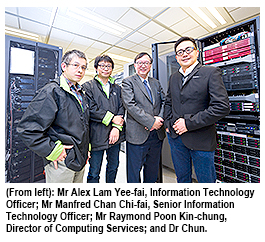
A leading magazine in the field of IT security has named a security information and event management (SIEM) system developed at City University of Hong Kong (CityU) as one of the world’s top 40 IT security projects for 2014.CSO Magazine named CityU as a winner in the highly competitive CSO40 awards with a panel of judges consisting of global experts from the IT security industry. An awards ceremony will be held in March 2014 in Georgia, US.
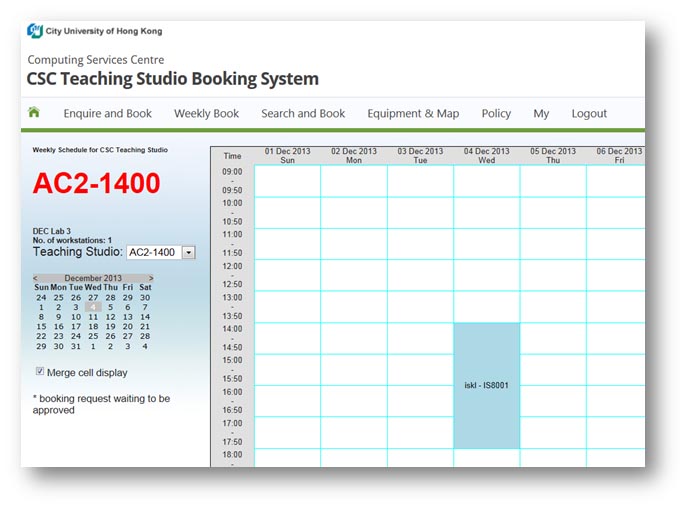
The CSC Teaching Studio Booking System was originally launched in 2003; this unique booking system was designed to serve the bookings of both the CSC Teaching Studios for staff and individual PC workstations in the Teaching Studio Areas for students. The system can handle multiple week/weekday bookings with searching capability. Class scheduling data from ARRO can be preloaded into the booking system before opening up for free booking at the start of each semester, email notification and booking history can also be generated.
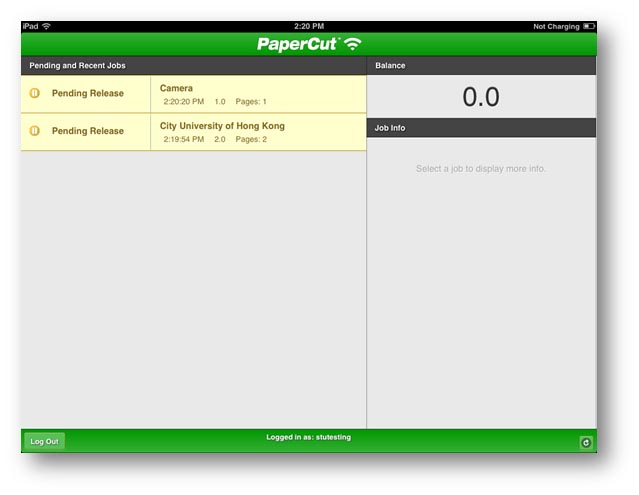
Nowadays, mobile devices such as smart phones and tablets have become an indispensable part of our daily lives. In the academic world, most course-related materials are now being delivered in electronic form (as PDF, Microsoft Word, Excel, PowerPoint files and so on) and thus can also be handily viewed online through these devices. However, situations do exist that students may need to print these materials. To cater for such printing needs, the Computing Services Centre (CSC) has spent time and effort in studying viable printing solutions for the two most popular mobile platforms, the Apple iOS and the Google Android.
Nowadays, smartphones and tablet computers are increasingly popular in our everyday lives. Instead of completing the tasks using traditional personal computers, we are storing much more personal and private information in these handheld devices and using them to access sensitive university data. It is therefore extremely important that we are aware of the security risks involved and increase the security protection of our mobile devices by following the security tips below.
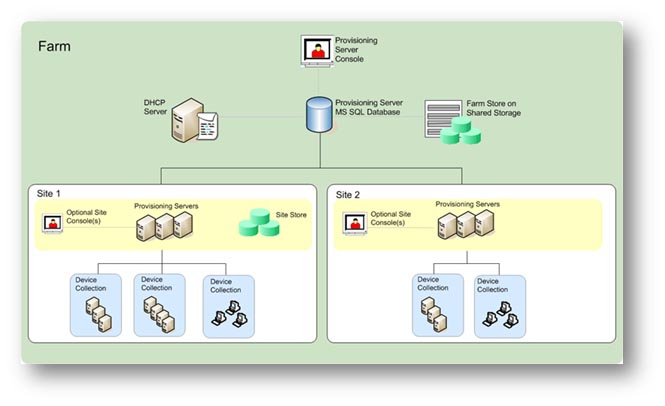
Concept – The Trend towards virtualization The main enabling technology for cloud computing is virtualization. Virtualization abstracts the physical infrastructure, which is the most rigid component to compile, and makes it available as a soft component that is easy to use and manage. By doing so, virtualization provides the swiftness required to speed up IT operations, and reduces cost by enabling infrastructure with high availability. On the other hand, virtual computing automates the process through which the user can provision computer resources on-demand. By minimizing administration involvement, automation speeds up the provisioning process and reduces the possibility of human errors. For more information, please refer to our article on “Moving Towards Client Virtualization” (Ref: Network Computing Issue 71 - March 2012).
/* The following article is extracted from the "Information Security Newsletter" published by the JUCC IS Task Force. */ Data leakage can be caused by internal and external parties, either intentionally or accidentally. According to INFOWATCH's "Global Data Leakage Report 2009" 51% of data leakages were resulted from intentional attacks and 43% leakages were due to accidental events, which indicates a strong increase of intentional leakages when comparing to 2007's figures (i.e. 29% intentional and 71% accidental). Several intentional exploitations on data leakage are illustrated below:
 CityU IT ChatBot