
News

In recent years, many Audio Visual (AV) vendors made use of IP technology on their AV products. Such technology allows administration, control, and transmission of AV and signals over computer networks. Such flexibility extended the manageability and extensibility of AV systems and made AV inseparable from Information Technology (IT).
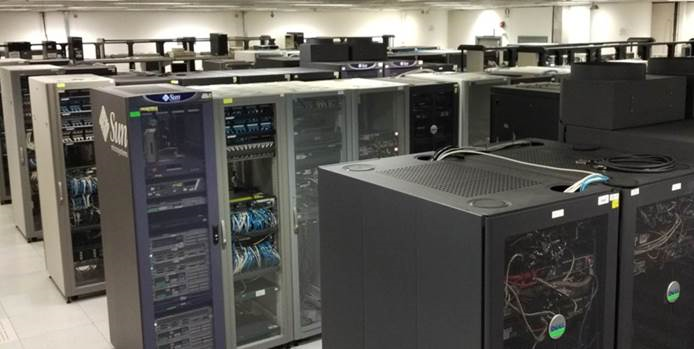
The Primary Data Centre at City University of Hong Kong (CityU) will be relocated to make room for several strategic initiatives and the setting up of additional web laboratories. The Primary Data Centre relocation project is divided into two phases: the first phase is scheduled to complete by the end of Q1 of 2020, while the second phase is expected to be completed by Q1 of 2021.
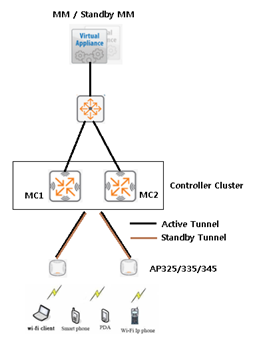
The CityU WLAN upgrade project began in 2017 (Ref: Network Computing Issue 92 – June 2017) and has been ongoing for more than two years. During this period, the outdated Aruba Wi-Fi system was replaced to support the 5th generation of Wi-Fi standard 802.11ac (Wi-Fi 5). Up until now the Computing Services Centre (CSC) has replaced more than 2,100 access points (AP) and the remaining ones are expected to be done by this summer.

/* The following article is extracted from the "Information Security Newsletter" published by the JUCC IS Task Force. */ Phishing refers to the malicious attack method by attackers who imitate legitimate companies in sending emails in order to entice people to share their passwords, credit card or other sensitive personal information. The term comes from the fact that Internet scammers are using increasing sophisticated lures as they “fish” for victims’ personal and financial sensitive information.
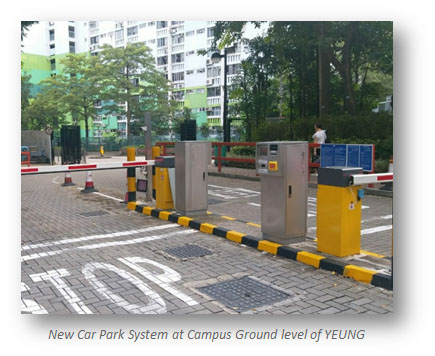
As part of an initiative to build a smart campus, the Carpark Management System at the Bank of China (Hong Kong) Complex (BOC), Yeung Kin Man Academic Building (YEUNG) and Lau Ming Wai Academic Building (LAU) have been upgraded with the video analytics technology. The new Carpark Management System uses the license plate recognition (LPR) and Octopus systems to link up with the workstations at the entrance and exit terminals of various carparks. The data records in any one of the workstations will automatically disseminate to all workstations of the system.
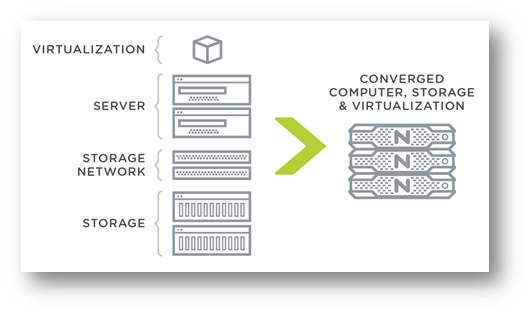
CityU currently maintains its own datacenters to provide an IT infrastructure supporting diverse services for teaching, research, administrative, and management use. Dated back a few decades ago, we have adopted a three-tier architecture consisting of compute, storage and networking. This approach has provided us with a reliable backend that we are proud of over the years.
In our previous issue (Ref: Network Computing Issue 97 – October 2018), we introduced the newly designed CityU Mobile v2, covering the enhanced UI design, the technologies used in the core, as well as new capabilities like checking room availability, retrieving library loan records, etc.
/* The following article is extracted from the "Information Security Newsletter" published by the JUCC IS Task Force. */ Authentication is the process of identifying the authenticity of a user. It can be accomplished by means of a combination of login ID (identification) and password (authentication). People nowadays are struggling with their login IDs and passwords because of the need to access more and more systems. Setting and remembering login credentials is becoming a painful experience because different systems enforce different security requirements. For example, people can choose preferred ID name for Gmail as long as there is no duplication with previously registered users while university ID might be assigned randomly by the campus IT administrator; Asia miles web portal requires the password to be composed of numeric numbers only but Internet banking system enforces password complexity consisting of uppercase, lowercase, non-alphanumeric characters and digits.
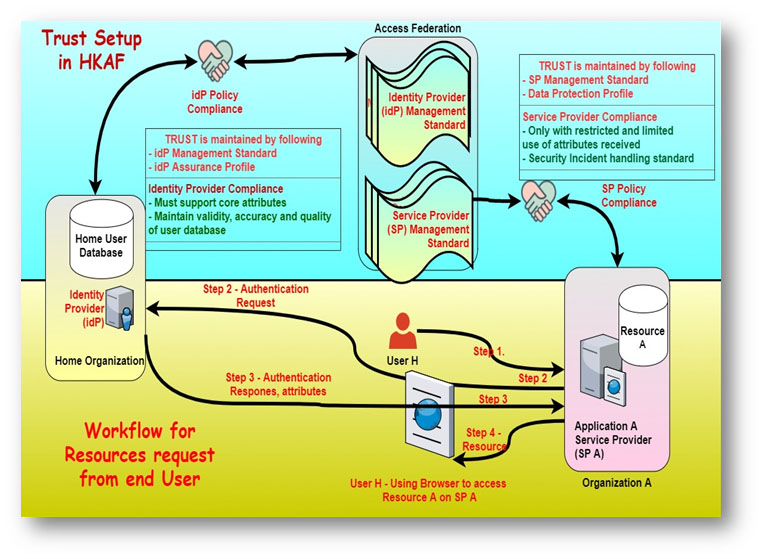
It is very common nowadays for students and staff to access research data, journals and courses online offered by other education institutions or companies over the Internet. The access usually requires users to sign up and create different user accounts. This article will detail how the Computing Services Centre (CSC) work together with other institutions in Hong Kong to formulate the Hong Kong Access Federation (HKAF), which leverages new technologies to mitigate this problem.
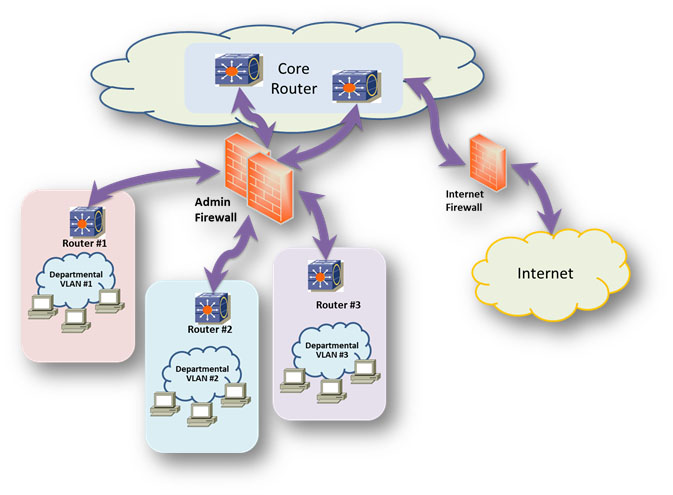
Information System Security has been a key concern over the past many years as more and more business processes rely on Information Technology to operate. Alike many other organizations, the usual first line of defense would be Internet protection with security devices such as a perimeter firewall. However, this type of protection cannot address the challenges posed to network security for universities. Security enhancement at universities is even more challenging as security control and academic freedom, at certain extent, conflict with each other, and there are just too many devices connecting to the network with different purposes and usages.
 CityU IT ChatBot