

A research team from City University of Hong Kong (CityUHK) recently collaborated with an international research team to publish a study revealing a correlation between global contamination of per- and polyfluoroalkyl substances (PFAS) in globally consumed edible marine fish and associated human health risks.
The study found that consumers may be exposed to elevated levels of PFAS by consuming imported fish such as salmon, tuna, swordfish and cod — even in regions with low environmental pollution — thereby increasing food‑safety risks.
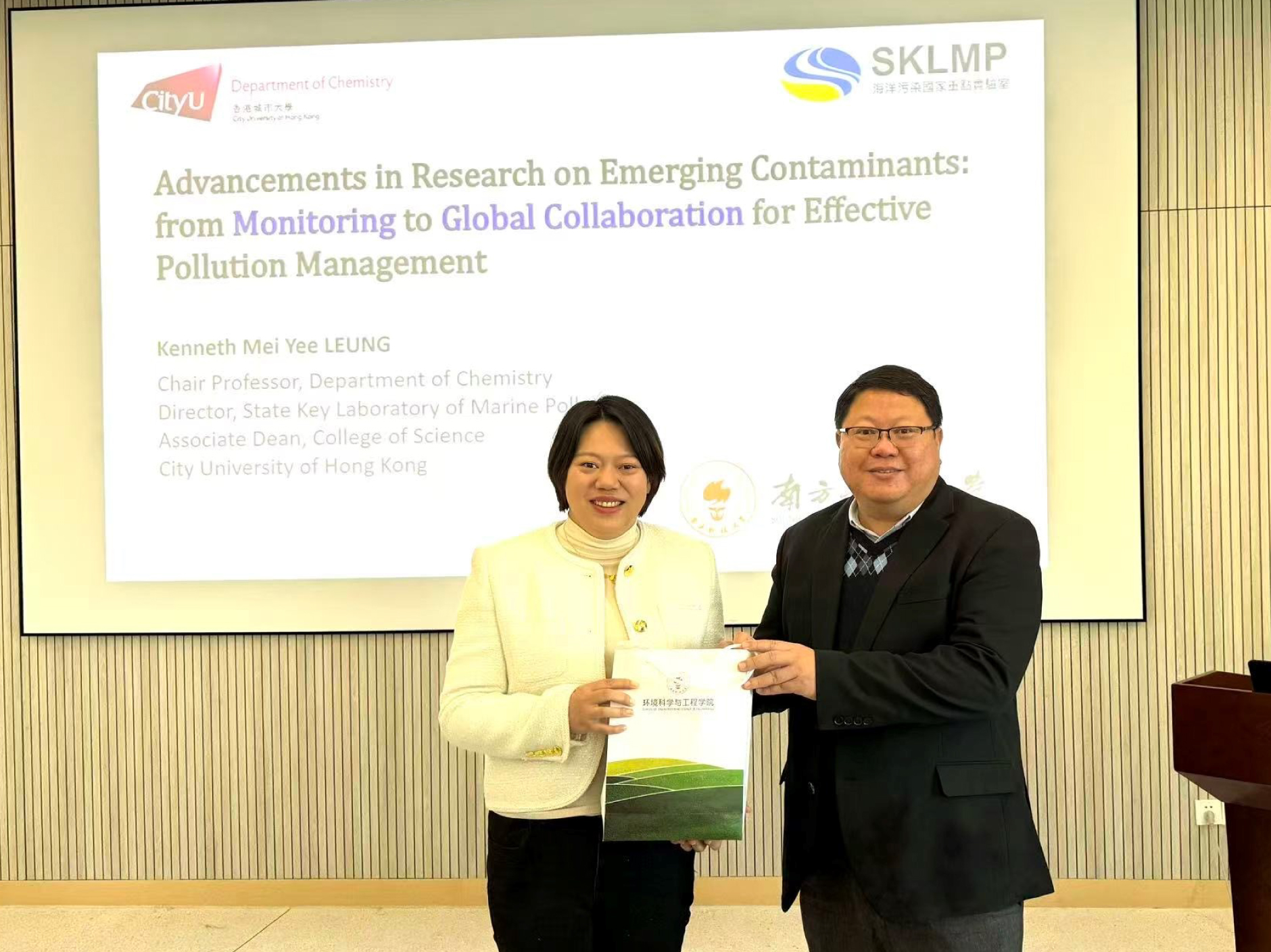
The research was jointly led by Professor Wenhui Qiu and Professor Chunmiao Zheng, from the School of Environmental Science and Engineering at Southern University of Science and Technology in the Chinese Mainland. Professor Kenneth Mei-yee Leung, Director of the State Key Laboratory of Marine Environmental Health, Chair Professor of the Department of Chemistry and Associate Dean of the College of Science at CityUHK, served as a co‑author of the study. The findings were recently published in the international journal Science, under the title “Risks of Per- and Polyfluoroalkyl Substance Exposure through Marine Fish Consumption”.
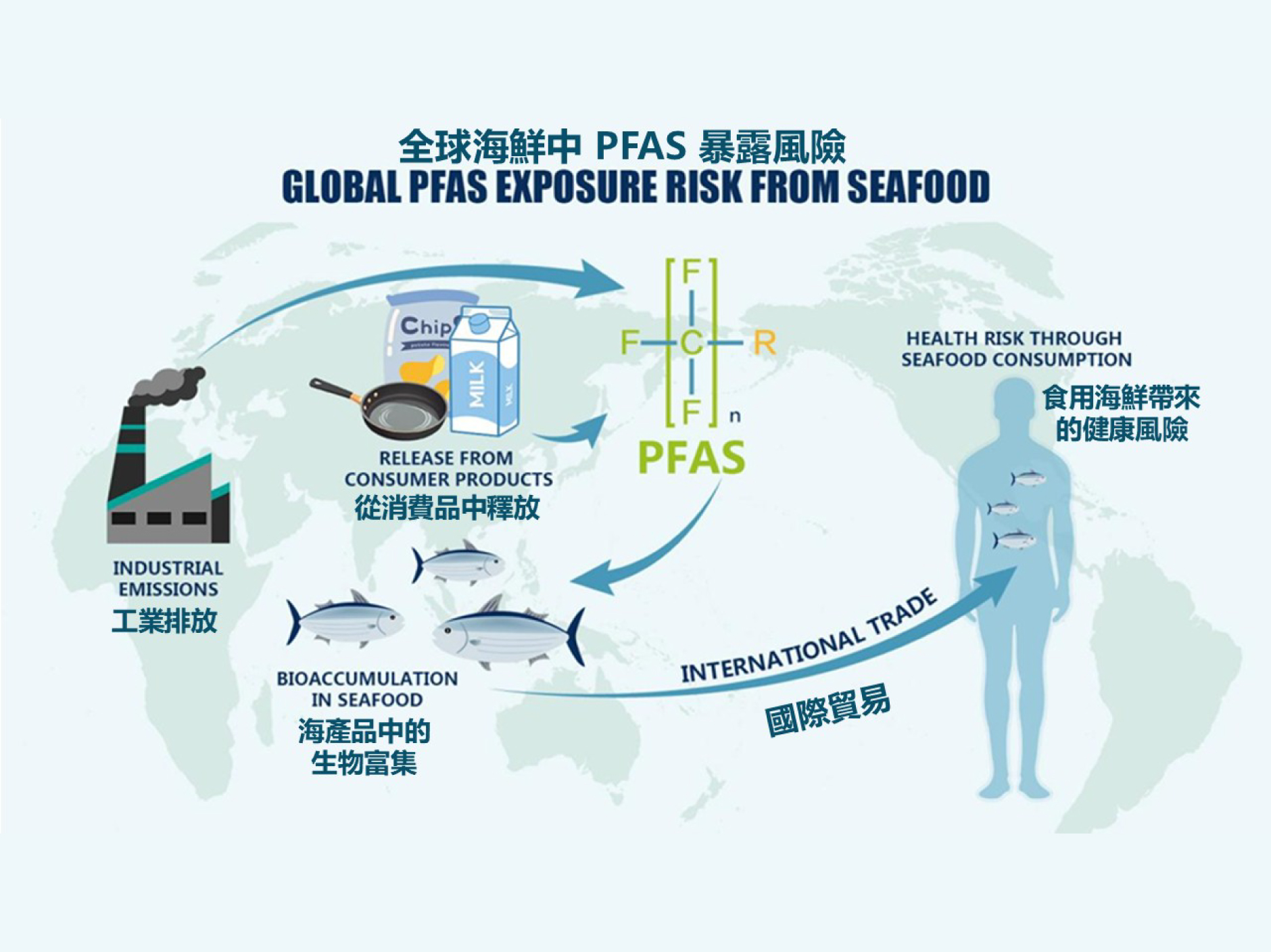
The team compiled seawater‑monitoring data from 3,126 locations worldwide over the past 20 years and used marine food‑web models to analyse PFAS concentrations in 212 edible marine fish species. They found that PFAS levels are closely linked to the pollution history and dilution capacity of marine regions, with significantly higher concentrations found in predatory species at high trophic levels.
PFAS are synthetic chemicals widely used in industrial and consumer products, such as non‑stick cookware, waterproof clothing and firefighting foams. Owing to their extreme chemical stability, PFAS are slow to degrade in the natural environment and tend to accumulate in organisms and move up the food chain, posing potential risks to human health.
The study’s findings reveal that between 2010 and 2021, the median concentration of C8‑PFAS — including PFOA and PFOS — in global marine fish was 0.34 ng/g wet weight. In Asia, the median level was notably higher than that in other regions, reaching 1.03 ng/g wet weight. Some marine fish species from Saudi Arabia and Thailand exhibited even higher contamination levels at 11.72 and 6.06 ng/g wet weight, respectively.

The team also analysed fisheries and trade data from 33 countries, along with estimated daily intake (EDI) levels of various fish species. They found that high-risk contaminated species, such as cod, herring, sea bass, salmon, tuna and swordfish, are sourced mainly from Europe and traded to other markets. This indicates that consumers in local sea areas with low contamination levels may still be exposed to higher food-safety risks because of imported fish, leading to a “cross‑border transfer” of PFAS exposure. For example, in Italy, only 11.71% of fish is imported from Sweden, but these imports account for 35.82% of Italians’ C8‑PFAS intake. In contrast, the domestic fish catch in Italy accounts for 28.02% of consumption but only 5.23% of C8-PFAS exposure. Similar patters were observed in the United Kingdom and Colombia.
Professor Leung and his research team at CityUHK, including Professor Yuefei Ruan, Assistant Professor in the Department of Chemistry, and Dr Qi Wang, postdoctoral fellow, also conducted tests on PFAS contamination in local fish species commonly caught in Hong Kong waters.
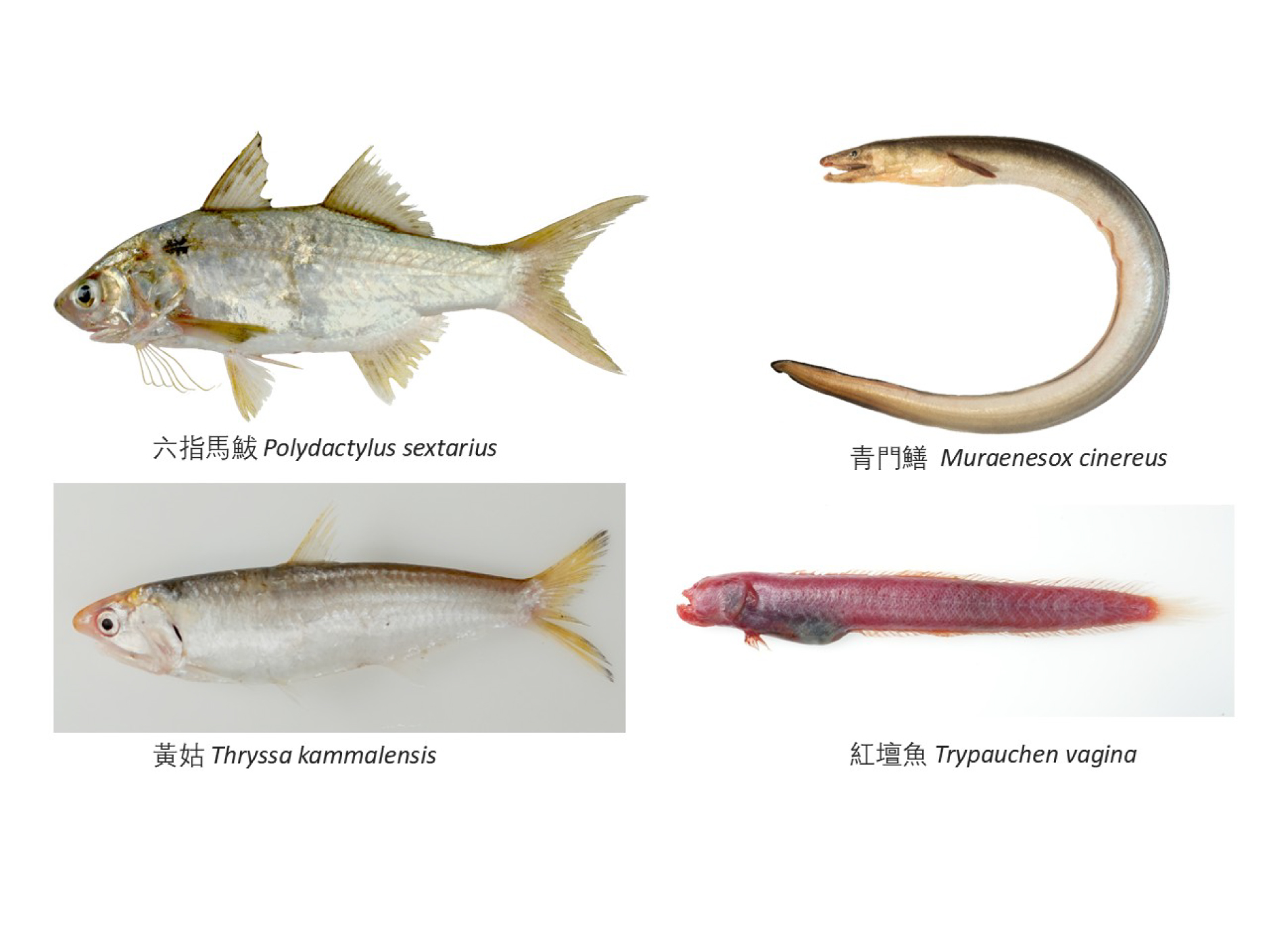
The results indicate that while overall PFAS exposure risks from local fish remained low in Hong Kong, several species were found to contain relatively high PFAS concentrations, including Blackspot threadfin (Polydactylus sextarius), Daggertooth pike conger (Muraenesox cinereus), Indian thryssa (Thryssa kammalensis) and Burrowing goby (Trypauchen vagina).
Professor Leung noted that three categories of fish tend to pose higher PFAS‑exposure risks:
• Predatory species at high trophic levels, such as threadfin, conger, cod, tuna and swordfish;
• High fat species, such as salmon, herring and sardines; and
• Demersal (bottom dwelling) species, such as the burrowing goby.
“Elderly people, pregnant women, young children and individuals with chronic illnesses are more vulnerable to PFAS‑related risks and should therefore be especially careful when choosing seafood,” said Professor Leung. “The public is also advised to maintain a balanced diet and limit their consumption of fish species known to have elevated PFAS levels to minimise potential health risks.”
This article originated from CityUHK News Centre.