BEng Mechanical Engineering

College/School
Subtitle
工學士(機械工程)
Thumbnail
Image
MNE_new
Academic Year of Entry
Admission Code

1696A

Indicative Intake Target

Local Places:

87 (For First Year and Advanced Standing I Entries)* and  
10 (For Senior Year Entry)


Non-Local Places  
(All CityUHK programmes except Chinese Mainland Gaokao):

Around 500

Normal Duration of Programme
3 Years (For Advanced Standing I Entry);
2 Years (For Senior Year Entry)
Major Leader
Prof. Pingan ZHU
Deputy Major Leader
Prof. Lishuai JIN
Deputy Major Leader
Prof. Changhong LINGHU
Admissions Tutor
Prof. Wei Yin MA
Deputy Admissions Tutor
Prof. Jack Hau Yung LO
Deputy Admissions Tutor
Prof. Qiyi FANG
Remarks

* for JUPAS and non-JUPAS admissions

Why BEng Mechanical Engineering?

As mechanical engineers are irreplaceably important in our society, Mechanical Engineering represents a fundamental branch of engineering knowledge. To fulfil the rapid demands of expanding markets in the area of automation engineering, dynamical and control analysis, engineering design, and materials/product testing, our Bachelor of Engineering in Mechanical Engineering programme at the City University of Hong Kong has been established in order to offer a comprehensive and dynamic curriculum which prepares students with analytical and quantitative skills to tackle scientific and engineering problems, independent and critical thinking to develop/enhance engineering products, and integrated creativity and expertise to generate novel product designs to support the sustainable development of the industries.

  • Motivated by the fact that the prospects for the development of the Mechanical Engineering industry are greatly expanding, the future manpower demands in the related Mechanical Engineering fields will be greatly increasing.
  • Since the establishment of the Closer Economic Partnership Arrangement (CEPA) policy back in 2006, original design manufacturing (ODM) of all the “made-in-HK” consumer products, involves conceptual engineering design and product research and development, has become the key role of Hong Kong companies.
  • In the coming years, it is expected that Hong Kong will have stronger needs in the Mechanical Engineering applications such as intelligent consumer products, improved product design and manufacturing, robotics and industrial automation, synthesis and testing of new materials, micro-devices and instrumentation for medical/healthcare purposes.
Entrance Requirements for Direct/Non-JUPAS Applicants

Entrance Requirements for Direct/Non-JUPAS Applicants

To be considered for admission, you must satisfy the General Entrance Requirements and have studied an engineering-related discipline at a high school or post-secondary institution

OR

have completed an Associate Degree/Higher Diploma with a cumulative grade point average (CGPA) of ≥3.0 or an equivalent overall mark, or a credit award in an engineering-related discipline.

Curriculum Structure

For details of the programme's curriculum structure, please visit the 'Undergraduate Catalogue'.

Our Target

The aim of the Mechanical Engineering major is to prepare students with solid, fundamental knowledge to meet the needs of industries. Our graduates are expected to serve and contribute to a broad range of mechanical engineering industries in their future careers, working for instance as chartered engineers, chief administrators/managers of technical teams, and technology consultants. Some of them may even choose to be entrepreneurs for their own start-up companies.

The objectives of the major are to:

  • provide a systematic curriculum that combines education, research and development of innovative technologies and enable students to tackle engineering problems in mechanical related areas efficiently and independently;
  • equip students with critical thinking, independent research, qualitative and quantitative analysis capacities. Students can perform high-impact and leading edge research and development for the continuous advancements of both industrial and academic expertise;
  • prepare students for professional employment in areas such as engineering design of materials, dynamical and control analysis, automation engineering and micro and nano technologies; and
  • nurture students to contribute to the community and professional groups through academic achievements and knowledge transferable products.
Start Your Career Here

Mechanical engineering is a fundamental branch of engineering. It fulfils the rapid demands of the expanding consumer products and infrastructural development markets and other engineering areas such as automation engineering, dynamical and control analysis, engineering design, and materials/product testing. The Mechanical Engineering major will help you to develop a comprehensive and dynamic knowledge-set; flexible analytical and quantitative skills to tackle scientific and engineering problems; independent and critical thinking to develop/enhance engineering products; and integrated creativity and expertise to generate novel product designs to support the sustainable development of industries.

What You Will Be Studying

While maintaining the major aspects of mechanical engineering knowledge (e.g. engineering mechanics, materials engineering, mechanical product design, mechatronics, dynamics and controls, and thermal fluids), this programme focuses on the following areas for the future needs of society:

  • Product design with comprehensive considerations of high levels of functionality (e.g. smart home and appliances) and environmentally-friendly product design and manufacturing.
  • Automation (with control algorithms, sensors and actuators) and system integration of machines ranging from consumer products and building facilities to transportation vehicles.
  • Providing a solid background in and integrated knowledge of both conventional and emerging mechanical engineering techniques, such that graduates can generate new products and serve as the next generation to inherit and handle the obligations of existing occupations.

The choice of electives provides students with opportunities to enhance their interests and apply what they have learnt. Appropriate quality assurance processes and guidelines will be adopted to ensure that the new programme is managed and delivered in the same way as other well-recognised international undergraduate programmes.

Industrial Training and International Exchange

The College of Engineering and the Department offer work placement opportunities through various internship schemes that provide students with full-time job attachments in firms not only in Hong Kong, but also in the Pearl River Delta region and overseas. Through such placements, students will:

  • gain solid experience in a real-world work environment;
  • develop problem-solving abilities and interpersonal skills;
  • learn the right attitudes towards work and professionalism; and
  • broaden their experience and enhance their employability.

For details, please visit the College's Co-operative Education Centre's website.

Furthermore, for students to broaden their educational horizons, gain language experience and enhance their awareness of different cultures, the Department, College and University offer a number of credit-bearing exchange programmes with various partner institutions around the world including universities in Australia, Canada, Europe, the US and the Asia-Pacific region.

Please visit CityUHK's website and the Department's website for details of outbound exchange programmes.

Professional Recognition

This major has been granted full accreditation by the Hong Kong Institution of Engineers (HKIE), a signatory member of the Washington Accord under which all members agree to recognise each other's accredited Engineering degree programmes.

Did You Know?

The prospects for the development of the mechanical engineering industry are greatly expanding and creating a strong demand for manpower in related mechanical engineering fields.

Since the establishment of the Closer Economic Partnership Arrangement (CEPA) policy in 2006, the original design manufacturing (ODM) of "made-in-HK" consumer products, which involves conceptual engineering design and product research and development, has become the key role of Hong Kong companies.

In the coming years, it is expected that Hong Kong will have stronger needs in mechanical engineering applications such as intelligent consumer products, improved product design and manufacturing, robotics and industrial automation, synthesis and testing of new materials, micro-devices and instrumentation for medical/healthcare purposes.

In recent years, more than 97% of our graduates have found jobs in related professional fields within six months after graduation.

Many of our students have industrial placement experience before graduation. 

Admission Talks
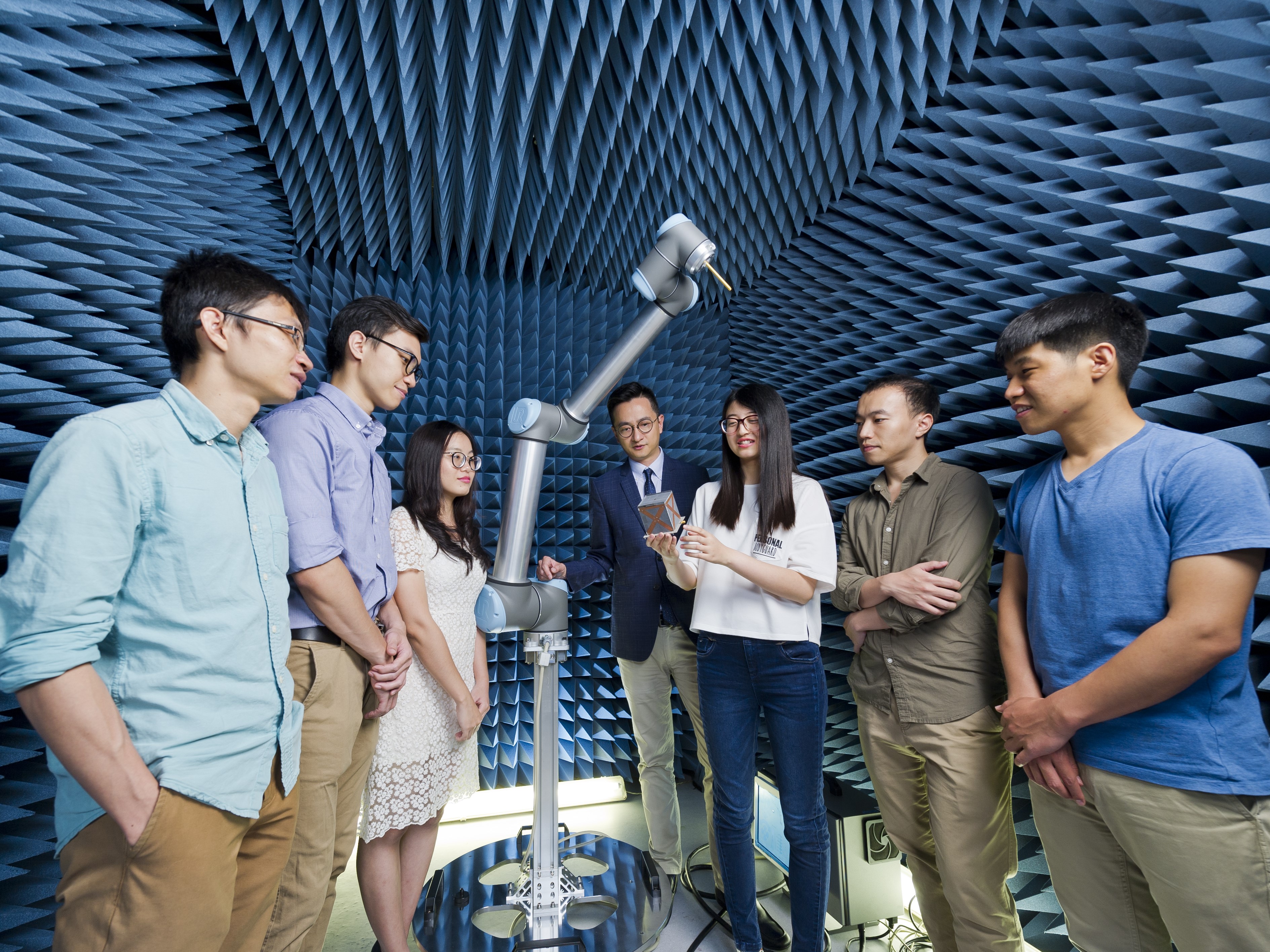
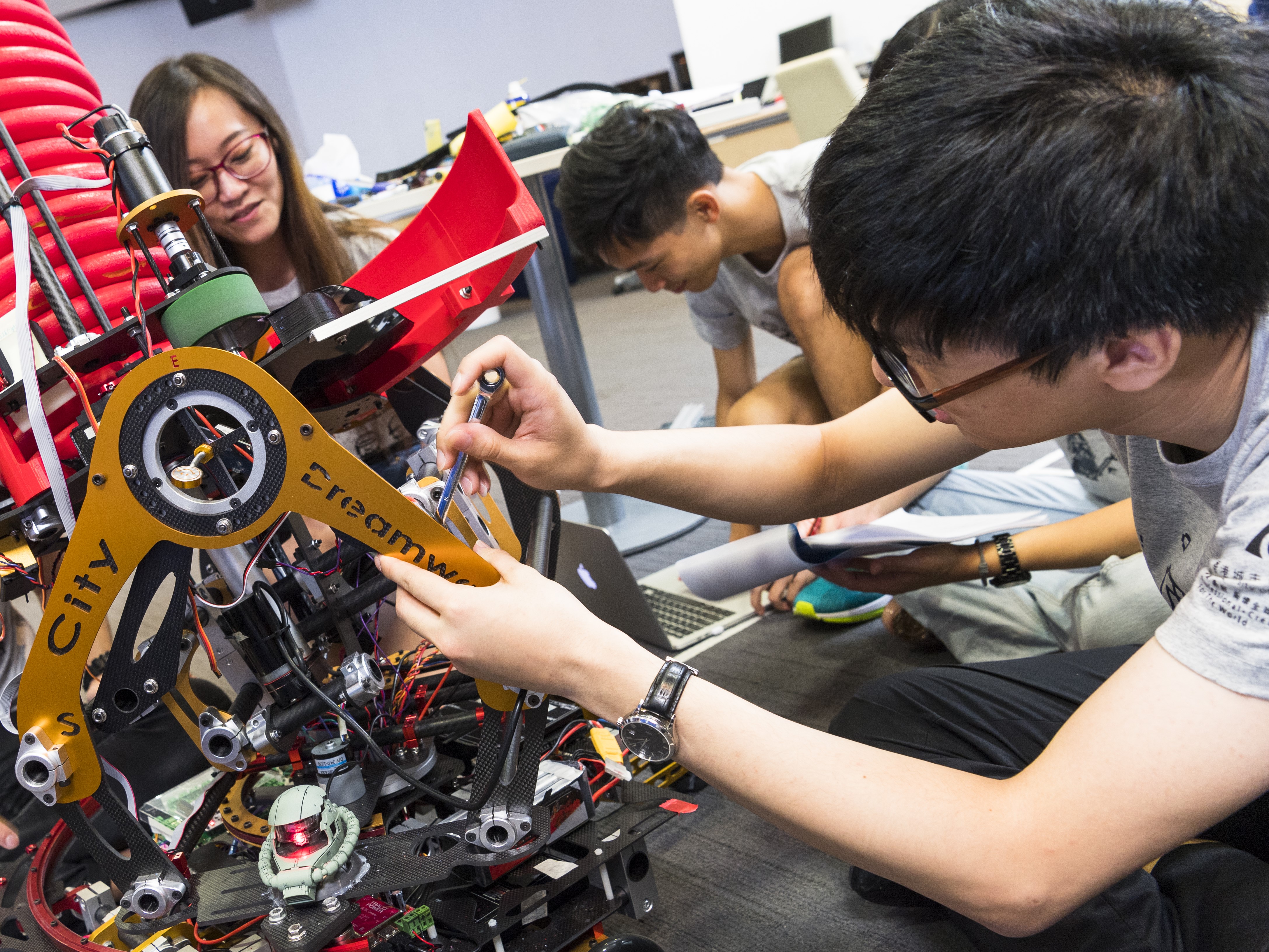
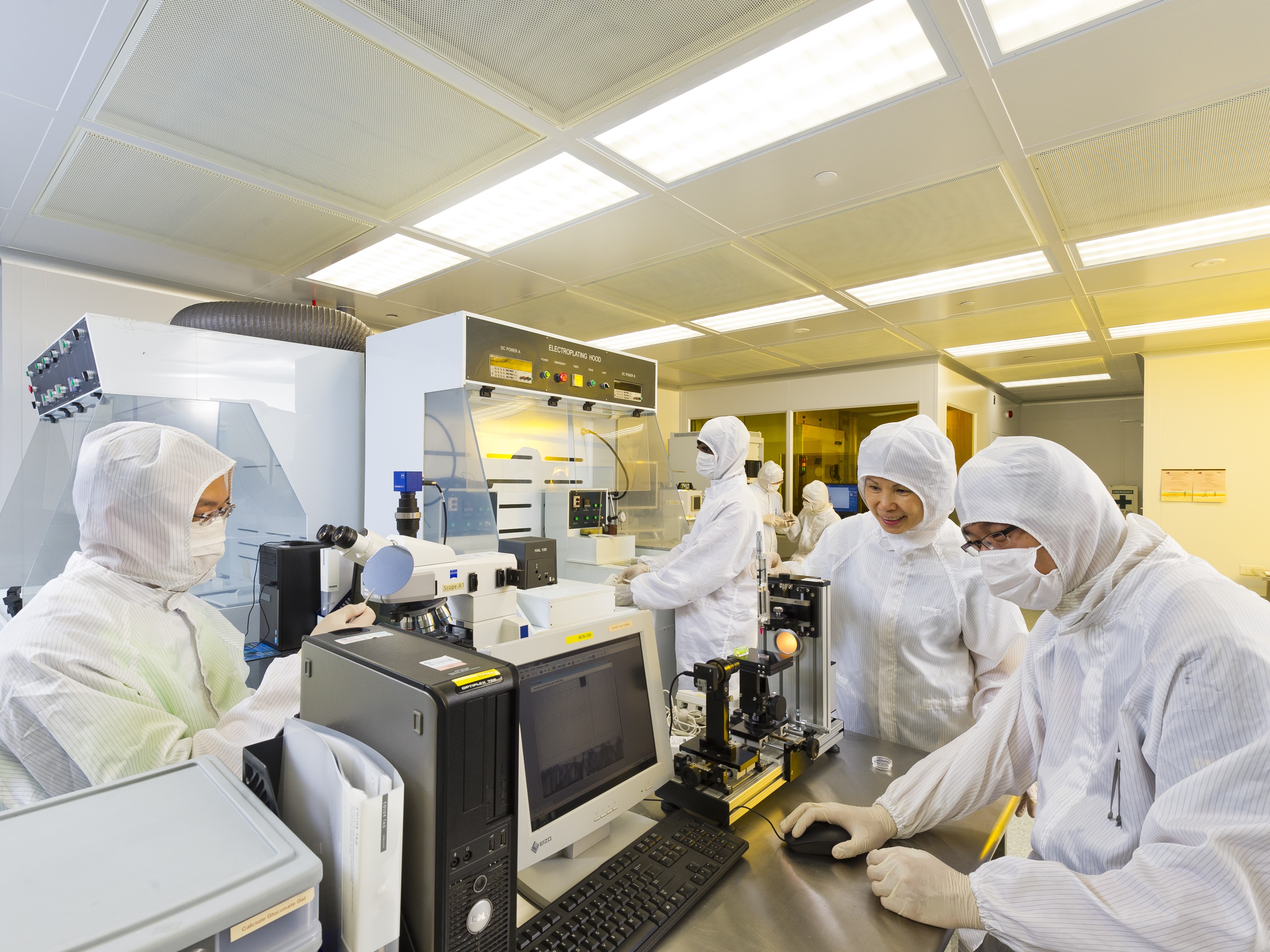
城大機械工程實驗室
MNE Laboratories
Programme Brochure
About MNE CityUHK
Contact Type
Email
Contact Value
Programe A-Z
author_college
Title (For sorting)
434
Non-JUPAS Year 1 Admission
Non-JUPAS Senior Year Admission
International Admission
Mainland Non-Gaokao Admission
Deadline applicable to all types of Admission
Interview Arrangement - Direct SY

On a selective basis
- December 2026 to May 2027
- Individual interview
- English
Late Application (Deadline applicable to all types)
Off
Late Application (International Admission)
Off
Late Application (Mainland Non-Gaokao Admission)
Off
Late Application (Non-JUPAS Senior Year Admission)
Off
Late Application (Non-JUPAS Year 1 Admission)
Off
Maths Core / M1 / M2 Calculation as one Subject
Off
Historical Data Display
Off
Reduce the font size?
Off

BEng Microelectronics Engineering

College/School
Subtitle
工學士(微電子工程學)
Thumbnail
Image
MEE
Academic Year of Entry
Admission Code

1703A

Indicative Intake Target

Local Places : 

163 (For First Year and Advanced Standing I Entries)*


Non-Local Places  
(All CityUHK programmes except Chinese Mainland Gaokao):

Around 500

Normal Duration of Programme
3 years (For Advanced Standing I Entry)
Programme/ Major Leader
Prof. Arindam BASU

B.Tech, M. Tech (E & ECE) I.I.T Kharagpur, M.S. (Math), Ph.D. (ECE) GaTech, SMIEEE

+852 3442 6077 (Phone)
+852 3442 0562 (Fax)

Remarks

* for JUPAS and non-JUPAS admissions

Why BEng Microelectronics Engineering?

We live in an increasingly connected and smart world – the main driver for this growth is innovations in microelectronics engineering that produce high-performance and low-energy integrated circuits (IC) and sensing devices. ICs are found in every aspect of our daily lives starting from mobile phones and computers to automobiles and refrigerators. Many novel applications get enabled by ICs such as smart medical devices like pacemakers for the heart or deep brain stimulators for Parkinson’s disease or graphics processing units to drive a revolution in artificial intelligence research. If you are excited by these topics and want to learn about cutting-edge IC technologies, then you are at the right place!


The aim of the Microelectronics engineering major is to provide students with sound knowledge of the fundamental principles involved in the design and fabrication of integrated circuits (ICs), and a comprehensive understanding of electronics and information technologies. The curriculum includes application-specific IC (ASIC) design for novel applications, nanotechnologies for high-performance devices and microsystems, new designs and materials for ICs, wireless and optical communications, and embedded system design.


Upon completion of the major, students will be sufficiently prepared for employment in various sectors of the electronics industry, and well equipped with fundamental knowledge for pursuing postgraduate studies. In Hong Kong, companies headquartered in Hong Kong Science Park including Huawei, AMASIC, UMEC, REDISH, Infineon, and Solomon Systech have hired many engineers in different areas of microelectronics. There is also a huge demand for engineers skilled in all aspects of semiconductors in the Greater Bay Area as well as globally making this major very timely.

Entrance Requirements for Direct/Non-JUPAS Applicants

Entrance Requirements for Direct/Non-JUPAS Applicants

To be considered for admission, you must satisfy the General Entrance Requirements and have studied an engineering-related or a science-related discipline at a high school or post-secondary institution.

Curriculum Structure

For details of the programme curriculum structure, please visit the ‘Undergraduate Catalogue’.

Programme Objectives

The aim of this major is to provide students with sound knowledge of the fundamental principles involved in the design and fabrication of integrated circuits (ICs), and a comprehensive understanding of electronics and information technologies. The curriculum includes application specific IC (ASIC) design for novel applications, nanotechnologies for high-performance devices and microsystems, new designs and materials for ICs, digital processor, system-on-chip, wireless and optical communications, and embedded system design. Upon completion of the major, students will be sufficiently prepared for employment in various sectors of the microelectronics and electronics industry, and well equipped with fundamental knowledge for pursuing postgraduate studies.


工學士(微電子工程學課程為學生提供有關集成電路(IC)設計和製造的基本原理,以及對電子和信息技術的全面理解。課程包括特定應用積體電路(ASIC) 設計、用於高性能設備和微系統的納米技術、用於IC的新設計和材料、數字電路處理器、單晶片系統、無線及光學通訊,以及嵌入式系統設計。完成專業後,學生將為微電子和電子行業各個領域的就業做好充分的準備,並具備攻讀研究生的基礎知識。

What You Will Be Studying

The first year of this major includes basic courses in mathematics, physics, electronics, and computing, with hands-on experience in electronics circuits and computer programming.


Core subjects include Engineering Mathematics, Computer Programming, Logic Circuit Design, Electronic Devices and Circuits, Microcomputer Systems, Semiconductor Materials and Devices, Applied Electromagnetics, Embedded System Design, Applied Optoelectronic Devices, VLSI Circuit Design, and Microsystems and Nanotechnology.


The technical electives in the final stage of the major cover specialized subject areas, such as integrated photonics, microelectronics manufacturing, real-time embedded systems, and advanced ICs.


Career Prospects

The job opportunity for IC engineers will be strong and will be on a steady growth. Artificial intelligence and 5G technology promise to deliver some of the most exciting challenges on engineering opportunities since the past two decades. Sophisticated and versatile ICs have made commercialization of these technologies possible. The industries have experienced a strong demand on IC design/manufacturing engineers in recent years. But companies globally and locally in Hong Kong are struggling to find enough talent. Locally in Hong Kong, the talent shortfall stems from the severe shortage in training IC engineers in the undergraduate level.


In Hong Kong, companies headquartered in Hong Kong Science Park including Huawei, AMASIC, UMEC, REDISH, Infineon, and Solomon Systech are the major players of IC design and technology. They all together have hired over one thousand IC engineers focusing on different areas. Jobs and demands from these international players are increasing because of the strong global market and the technological hub in the Greater Bay area. Across the border in Shenzhen, there are also huge demand on well-trained IC engineers.

Co-curricular Activities and Learning Support

Placement Schemes

The Department collaborates with industry to provide real-world experience through:

These opportunities ensure students gain practical skills and industry exposure before graduation.

International Exchange and Summer Exchange Programme

To boost global competitiveness, the Department has facilitated student exchanges with top universities in countries such as Australia, Canada, Germany, Japan, and the USA. Since 2015, approximately 380 students have participated in semester-long and summer exchange programmes, although opportunities were impacted by COVID-19 in certain years.

Student Learning Support Scheme

The Student Tutoring Scheme fosters a supportive learning environment. Outstanding senior students mentor first- and second-year students, promoting effective study habits and peer collaboration. This initiative has been highly successful in creating a positive learning community.

Scholarship

The Department of Electrical Engineering awards approximately 60 scholarships annually, totaling over HK$1 million, to recognize academic excellence and support student development. For details, visit the Scholarship Page.


Student Achievements

CityUHK Electrical Engineering students consistently excel in international, regional, and local competitions, securing top awards in various academic and professional arenas. Learn more about their achievements on the EE Student Achievements Page.

Professional Recognition

The Department offers four majors: Computer and Data Engineering, Electronic and Electrical Engineering, Information Engineering, and Microelectronics Engineering. All established majors are accredited by the The Department offers four majors: Computer and Data Engineering, Electronic and Electrical Engineering, Information Engineering, and Microelectronics Engineering. All established majors are accredited by The Department offers four majors: Computer and Data Engineering, Electronic and Electrical Engineering, Information Engineering, and Microelectronics Engineering. All established majors are accredited by the Hong Kong Institution of Engineers (HKIE), with the Microelectronics Engineering curriculum receiving provisional accreditation in 2025. 

Under the Washington Accord, graduates receive reciprocal recognition from equivalent bodies in countries including Australia, Bangladesh, Canada, China, Chinese Taipei, Costa Rica, Hong Kong-China, India, Indonesia, Ireland, Japan, Korea, Malaysia, Mexico, New Zealand, Pakistan, Peru, Philippines, Russia, Singapore, South Africa, Sri Lanka, Turkey, the UK and the US, enhancing global career mobility.

Department's Highlight
  • Renowned Faculty: 47 professors, including 3 Fellows of the Royal Academy of Engineering, 1 Fellow of the World Academy of Sciences (TWAS), 37 faculty in the top 2% of world’s most highly cited scientists, 20 Fellows of the Institute of Electrical and Electronics Engineers, USA (FIEEE), 4 Fellows of the Hong Kong Institution of Engineers and 1 Croucher Foundation Senior Research Fellows.
  • Global Rankings:
    • 27th worldwide and 1st in Hong Kong in Electrical and Electronic Engineering (U.S. News Best Global Universities Rankings 2026).
    • 11th worldwide and 1st in Hong Kong in Electronics and Electrical Engineering (Research.com 2026).
  • Teaching Excellence: Six professors have received the University’s Teaching Excellence Award.
  • State-of-the-Art Facilities: 
  • Over 5,048 sq. meters of lab space and access to industry-standard EDA software for IC design.
  • 3 Centres and *1 State Key Laboratory Established - The Department has established 3 centres namely 1/ Centre for Complexity and Complex Networks, 2/ Centre for Biosystems, Neuroscience, and Nanotechnology and 3/ Centre for Smart Energy Conversion and Utilization Research.


  • Research Leadership: Home to the State Key Laboratory of Terahertz and Millimeter Waves, the first engineering-focused lab of its kind in Hong Kong established in 2008, supported by the Ministry of Science and Technology, PRC.
  • Holistic Development: Emphasis on co-curricular activities, including student tutoring, exchange programmes, internships, and career workshops.
工學士(微電子工程學) BEng MEE
明報升學網 - 認識電機工程學成為科創人才第一步
城大電子&電機工程 / 資訊工程 / 電子計算機&數據工程/ 微電子工程(利申: 工程神科 )
又實習又Exchange 忙到氣咳為啲乜?
Programme Brochure
Contact Type
Miss Jaycee JIA
Contact Value

+852 3442 7971 (Phone)
+852 3442 0562 (Fax)

eebemee@cityu.edu.hk

Programe A-Z
author_college
Title (For sorting)
446
Non-JUPAS Year 1 Admission
Non-JUPAS Senior Year Admission
International Admission
Mainland Non-Gaokao Admission
Deadline applicable to all types of Admission
Interview Arrangement - Direct SY

When necessary 
- December 2026 to August 2027
- Group / Individual interview 
- English

Late Application (Deadline applicable to all types)
Off
Late Application (International Admission)
Off
Late Application (Mainland Non-Gaokao Admission)
Off
Late Application (Non-JUPAS Senior Year Admission)
Off
Late Application (Non-JUPAS Year 1 Admission)
Off
Maths Core / M1 / M2 Calculation as one Subject
Off
Historical Data Display
Off
Reduce the font size?
Off

BEng Information Engineering

College/School
Subtitle
工學士(資訊工程學)
Thumbnail
Image
INFE
Academic Year of Entry
Admission Code

1597A

Indicative Intake Target

Local Places : 

163 (For First-Year and Advanced Standing I Entries)*


Non-Local Places  
(All CityUHK programmes except Chinese Mainland Gaokao):

Around 500

Normal Duration of Programme
3 years (For Advanced Standing I Entry)
Programme/ Major Leader
Prof. Andrew Chi Sing Leung

B.Sc., M.Phil., Ph.D. CUHK, MIEEE

+852 3442 7378 (Phone)
+852 3442 0562 (Fax)

Remarks

* for JUPAS and non-JUPAS admissions

Why BEng Information Engineering?

Information engineering involves several areas: networking, communications, cybersecurity, artificial intelligence (AI), AI system and product lifecycle management, multimedia, and algorithms and optimization.

Information engineering is an interdisciplinary subject that brings together knowledge and techniques from computer science, electrical engineering, and communication theory to design and develop systems that can efficiently and effectively process, transmit, and store information. In today's digital and AI-driven era, the demand for professionals with expertise in information engineering is higher than ever. By studying information engineering, students develop the knowledge and skills required to design intelligent systems capable of handling the massive volumes of data generated by our increasingly connected world.

Networking and communications deal with the design and optimization of communication systems. Understanding the principles behind networking and communications is essential for developing systems that can effectively handle large amount of data.

Cybersecurity deals with securing and protecting information systems from unauthorized access. With the increasing threat of cyber attacks, cybersecurity has become a critical area of concern for organizations and governments around the world.

Artificial Intelligence (AI) is transforming industries and societies by enabling machines to learn from data, make decisions, and perform tasks that traditionally require human intelligence. AI in information engineering covers the entire AI system and product lifecycle, including data collection and management, algorithm design, model development and training, deployment, monitoring, maintenance, and continuous improvement. AI applications span a wide range of domains, such as intelligent automation, smart manufacturing, healthcare, finance, transportation, and robotics. Developing AI solutions requires a strong foundation in information engineering principles, including data structures, algorithms, optimization techniques, signal processing, and software engineering.

Multimedia and signal processing involve analyzing, processing, and interpreting signals such as audio, images, and video to extract useful information. These technologies support numerous applications, including speech recognition, computer vision, audio and video processing, autonomous systems, human-computer interaction, robotics, and digital entertainment.

Many challenges arising from the above areas can be formulated as optimization problems. Therefore, information engineers must develop efficient and cost-effective algorithms to identify optimal solutions under practical constraints. Optimization techniques play a crucial role in improving the performance, reliability, and scalability of modern information systems, including AI-driven applications.

Career opportunities: Information engineering is a rapidly growing field, and there is a high demand for professionals with expertise in this area. Studying information engineering can open up a range of career opportunities in areas such as software engineering, data analysis, networking and telecommunication,  cybersecurity, multimedia, and AI engineering.

Entrance Requirements for Direct/Non-JUPAS Applicants

Entrance Requirements for Direct/Non-JUPAS Applicants

To be considered for admission, you must satisfy the General Entrance Requirements and have studied an engineering-related or a science-related discipline at a high school or post-secondary institution.

Curriculum Structure

For details of the programme curriculum structure, please visit the ‘Undergraduate Catalogue’.

Programme Objectives

This major aims to equip students a balanced understanding of the theory and applications of information engineering, which encompasses networking, communications, cybersecurity, artificial intelligence (AI), AI system and product lifecycle management, multimedia, and algorithms and optimization. It offers all-round education, which nurtures independent thinking, creativity, and various soft skills. Upon completion of the major, graduates will be sufficiently prepared for further studies or employment in a wide range of economic sectors, mainly technology, but also business, banking, finance and trading in Hong Kong and the Asia-Pacific region.

資訊工程學工學士課程目標:培育專業資訊工程師,教授電腦及資訊科技知識,重點有網絡、通訊、網絡安全、人工智能、人工智能系統和產品生命週期管理、多媒體、及算法和優化。

What You Will Be Studying

This major focuses on five areas: Networking and Communications, Algorithms and Optimization, Cybersecurity, Artificial Intelligence, and Signal Processing.

Core courses include: Engineering Mathematics, Logic Circuits, Computer Programming, Java Programming and Applications, Data Structures and Algorithms, Microcomputer Systems, Signals and Systems, Optimization Methods for Engineering, Applied AI Systems in Information Engineering: Lifecycle and Human-Centered Design, Operating Systems, Database Systems, Data Communications and Networking, Internet Technology, Principles of Communications, Product Design, and Project.

In the final year, students may specialize in different areas of interest in preparation for their future careers and enjoy considerable flexibility through the selection of elective courses on topics such as advanced networking technologies, cloud computing, artificial intelligence, and cybersecurity.

Career Prospects

Information Technology is amongst the areas that the Hong Kong SAR Government has identified for focused support, with manpower projections showing this technology sector to have the fastest growth. Even in the banking, finance, business services, trading, legal and public administration sectors, personnel with a solid background in technology are in great demand in this increasingly complex technological age.

Co-curricular Activities and Learning Support

Placement Schemes

The Department collaborates with industry to provide real-world experience through:

These opportunities ensure students gain practical skills and industry exposure before graduation.

International Exchange and Summer Exchange Programme

To boost global competitiveness, the Department has facilitated student exchanges with top universities in countries such as Australia, Canada, Germany, Japan, and the USA. Since 2015, approximately 380 students have participated in semester-long and summer exchange programmes, although opportunities were impacted by COVID-19 in certain years.

Student Learning Support Scheme

The Student Tutoring Scheme fosters a supportive learning environment. Outstanding senior students mentor first- and second-year students, promoting effective study habits and peer collaboration. This initiative has been highly successful in creating a positive learning community.

Scholarship

The Department of Electrical Engineering awards approximately 60 scholarships annually, totaling over HK$1 million, to recognize academic excellence and support student development. For details, visit the Scholarship Page.


Student Achievements

CityUHK Electrical Engineering students consistently excel in international, regional, and local competitions, securing top awards in various academic and professional arenas. Learn more about their achievements on the EE Student Achievements Page.

Professional Recognition

The Department offers four majors: Computer and Data Engineering, Electronic and Electrical Engineering, Information Engineering, and Microelectronics Engineering. All established majors are accredited by the Hong Kong Institution of Engineers (HKIE), with the Microelectronics Engineering curriculum receiving provisional accreditation in 2025.

Under the Washington Accord, graduates receive reciprocal recognition from equivalent bodies in countries including Australia, Bangladesh, Canada, China, Chinese Taipei, Costa Rica, Hong Kong-China, India, Indonesia, Ireland, Japan, Korea, Malaysia, Mexico, New Zealand, Pakistan, Peru, Philippines, Russia, Singapore, South Africa, Sri Lanka, Turkey, the UK and the US, enhancing global career mobility.

Department's Highlights
  • Renowned Faculty: 47 professors, including 3 Fellows of the Royal Academy of Engineering, 1 Fellow of the World Academy of Sciences (TWAS), 37 faculty in the top 2% of world’s most highly cited scientists, 20 Fellows of the Institute of Electrical and Electronics Engineers, USA (FIEEE), 4 Fellows of the Hong Kong Institution of Engineers and 1 Croucher Foundation Senior Research Fellows.
  • Global Rankings:
    • 27th worldwide and 1st in Hong Kong in Electrical and Electronic Engineering (U.S. News Best Global Universities Rankings 2026).
    • 11th worldwide and 1st in Hong Kong in Electronics and Electrical Engineering (Research.com 2026).
  • Teaching Excellence: Six professors have received the University’s Teaching Excellence Award.
  • State-of-the-Art Facilities: 
    • Over 5,048 sq. meters of lab space and access to industry-standard EDA software for IC design.
    • 3 Centres and *1 State Key Laboratory Established - The Department has established 3 centres namely 1/ Centre for Complexity and Complex Networks, 2/ Centre for Biosystems, Neuroscience, and Nanotechnology and 3/ Centre for Smart Energy Conversion and Utilization Research.
  • Research Leadership: Home to the State Key Laboratory of Terahertz and Millimeter Waves, the first engineering-focused lab of its kind in Hong Kong established in 2008, supported by the Ministry of Science and Technology, PRC.
  • Holistic Development: Emphasis on co-curricular activities, including student tutoring, exchange programmes, internships, and career workshops.
明報升學網 - 認識電機工程學成為科創人才第一步
城大電子&電機工程 / 資訊工程 / 電子計算機&數據工程/ 微電子工程(利申: 工程神科 )
又實習又Exchange 忙到氣咳為啲乜?
Programme Brochure
Contact Type
Mr. Hugo Cheung
Contact Value

+852 3442 7139 (Phone)
+852 3442 0562 (Fax)
eebeinfe@cityu.edu.hk

Programe A-Z
author_college
Title (For sorting)
428
Non-JUPAS Year 1 Admission
Non-JUPAS Senior Year Admission
International Admission
Mainland Non-Gaokao Admission
Deadline applicable to all types of Admission
Interview Arrangement - Direct SY

When necessary 
- December 2026 to August 2027
- Group / Individual interview 
- English

Late Application (Deadline applicable to all types)
Off
Late Application (International Admission)
Off
Late Application (Mainland Non-Gaokao Admission)
Off
Late Application (Non-JUPAS Senior Year Admission)
Off
Late Application (Non-JUPAS Year 1 Admission)
Off
Maths Core / M1 / M2 Calculation as one Subject
Off
Historical Data Display
Off
Reduce the font size?
Off

BEng Electronic and Electrical Engineering

College/School
Subtitle
工學士(電子及電機工程學)
Thumbnail
Image
ELEL
Academic Year of Entry
Admission Code

1585A

Indicative Intake Target

Local Places:

163 (For First Year and Advanced Standing I Entries)* and  
9 (For Senior Year Entry)


Non-Local Places  
(All CityUHK programmes except Chinese Mainland Gaokao):

Around 500

Normal Duration of Programme
3 Years (For Advanced Standing I Entry);
2.5 Years (For Senior Year Entry)
Programme/ Major Leader
Prof. JIANG Derrick C.Q.

B.Eng., M.Eng. WHU, Ph.D. HKU, SMIEEE, Member Clare Hall Cambridge

+852 3442 5382 (Phone)
+852 3442 0562 (Fax)

Remarks

* for JUPAS and non-JUPAS admissions

Why BEng Electronic and Electrical Engineering?

The BEng Electronic and Electrical Engineering programme at City University of Hong Kong offers a comprehensive education in the latest developments of the field. Led by expert faculty, our hands-on programme covers topics such as wireless communications and data technology; microwave, terahertz and optical technologies; photonic, electronic and sensor devices; and smart control and electrical power systems.

The programme provides students with a solid foundation in electronic and electrical engineering fundamentals while exposing them to the latest trends and developments. This prepares students for success in a rapidly evolving industry.

Graduates have a wide range of career opportunities: they can work in telecommunications, circuits and devices, energy and power, robotics, signal processing, designing and developing advanced electronic systems, and engaging in cutting-edge research projects. Others may choose to pursue higher degrees.

Entrance Requirements for Direct/Non-JUPAS Applicants

Entrance Requirements for Direct/Non-JUPAS Applicants

To be considered for admission, you must satisfy the General Entrance Requirements and have studied an engineering-related or a science-related discipline at a high school or post-secondary institution.

For senior-year (Advanced Standing II) admission, applicants are normally expected to have completed an Associate Degree/Higher Diploma with a cumulative grade point average (CGPA) of ≥3.0 or an equivalent overall mark, or a credit award in an engineering-related or science-related discipline.

Curriculum Structure

For details of the programme curriculum structure, please visit the ‘Undergraduate Catalogue’.

Programme Objectives

This major aims to provide students with a solid education in advanced electronic and electrical technologies. Students will be exposed to the latest developments in:

         1. Wireless communications & data technology
         2. Microwave, terahertz & optical technologies
         3. Photonic, electronic, & sensor devices
         4. Smart control & electrical power systems
         5. Bioelectronics & bioinformatics
Our programme will transform students into well-trained professional engineers, ready to thrive in a rapidly changing, knowledge-based economy. Throughout their training, students will be equipped with the skills, vision, and opportunities needed to advance in their career paths.

科技發展一日千里,隨著各類電子產品及機電建設的迅速發展,香港特區政府已將「第五代流動技術」和「智慧城市」定為其中兩個重點支持項目。本課程旨在為電子、通訊、機電及能源工程業培育專業工程師,學生將具備專業技術和視野,並能設計及應用不同電子、通訊、機電及能源系統,迎接新科技帶來的挑戰。內容主要教授電子及通訊科技知識,重點有(1) 無線通訊及數據技術;(2) 微波,太赫兹與光學科技;(3) 光電子及電子器件、感應器;(4) 智能管理及電機能源系統;及 (5) 生物電子及生物信息技術。

What You Will Be Studying

First-year core courses are introductory courses in electronics and electrical engineering. These courses aim to provide students with a solid background for more advanced courses in later years. They are supplemented with plenty of hands-on experience to teach students concepts and skills in analog circuits, digital circuits, and software programming. Upon completing these basic courses, students will advance to learn more complex subjects in their second and final years.

Core subjects include Principles of Communications, Logic Circuit Design, Electronic Devices and Circuits, Signals and Systems, Microcomputer Systems, Computer Programming, Systems and Control, Introduction to Electric Power Systems, Introduction to Electric Machines and Drives, and Applied Electromagnetics. Most core courses are supported by relevant laboratory work. Additionally, students will participate in a second-year “design project course” that offers opportunities to solve real-life problems and applications in an interdisciplinary and teamwork setting.

In the final year, students will choose technical electives covering various specialized subject areas. Examples include Microwave Circuits for 5G Wireless Product Design, Fundamentals of Antenna Design, Mobile Data Networks, Optical Fibre Communications, Introduction to Integrated Photonics, Sustainable Energy Systems, Engineering Applications of Artificial Intelligence, and Data Engineering and Learning Systems. Students will also work independently on their Final Year Project, solving high-level technological problems. Those who wish to gain work experience before graduation may apply for the Professional Internship Program in their final year.

Career Prospects

To maintain Hong Kong's competitiveness, the government has taken steps to boost technology-based, high-value-added services and industries. Electronic and electrical technologies are among the areas identified for focused support. Even in the banking, finance and business sectors, personnel with a solid background in technology are in great demand in this increasingly complex technological age.

Co-curricular Activities and Learning Support

Placement Schemes

The Department collaborates with industry to provide real-world experience through:

These opportunities ensure students gain practical skills and industry exposure before graduation.

International Exchange and Summer Exchange Programme

To boost global competitiveness, the Department has facilitated student exchanges with top universities in countries such as Australia, Canada, Germany, Japan, and the USA. Since 2015, approximately 380 students have participated in semester-long and summer exchange programmes, although opportunities were impacted by COVID-19 in certain years.

Student Learning Support Scheme

The Student Tutoring Scheme fosters a supportive learning environment. Outstanding senior students mentor first- and second-year students, promoting effective study habits and peer collaboration. This initiative has been highly successful in creating a positive learning community.  

Scholarship

The Department of Electrical Engineering awards approximately 60 scholarships annually, totaling over HK$1 million, to recognize academic excellence and support student development. For details, visit the Scholarship Page.

Student Achievements

CityUHK Electrical Engineering students consistently excel in international, regional, and local competitions, securing top awards in various academic and professional arenas. Learn more about their achievements on the EE Student Achievements Page.

Professional Recognition

The Department offers four majors: Computer and Data Engineering, Electronic and Electrical Engineering, Information Engineering, and Microelectronics Engineering. All established majors are accredited by the Hong Kong Institution of Engineers (HKIE), with the Microelectronics Engineering curriculum receiving provisional accreditation in 2025.

Under the Washington Accord, graduates receive reciprocal recognition from equivalent bodies in countries including Australia, Bangladesh, Canada, China, Chinese Taipei, Costa Rica, Hong Kong-China, India, Indonesia, Ireland, Japan, Korea, Malaysia, Mexico, New Zealand, Pakistan, Peru, Philippines, Russia, Singapore, South Africa, Sri Lanka, Turkey, the UK and the US, enhancing global career mobility.

Department's Highlights
  • Renowned Faculty: 46 professors, including 2 Fellows of the Royal Academy of Engineering, 1 Fellow of the World Academy of Sciences, 37 faculty in the top 2% of global scientists, 19 IEEE Fellows, and more.
  • Global Rankings:
    • 24th worldwide and 1st in Hong Kong in Electrical and Electronic Engineering (U.S. News Best Global Universities Rankings 2025).
    • 12th worldwide and 1st in Hong Kong in Electronics and Electrical Engineering (Research.com 2024).
  • Teaching Excellence: Six professors have received the University’s Teaching Excellence Award.
  • State-of-the-Art Facilities: Over 5,048 sq. meters of lab space and access to industry-standard EDA software for IC design.
  • Research Leadership: Home to the State Key Laboratory of Terahertz and Millimeter Waves, the first engineering-focused lab of its kind in Hong Kong, supported by the Ministry of Science and Technology.
  • Holistic Development: Emphasis on co-curricular activities, including student tutoring, exchange programmes, internships, and career workshops.
明報升學網 - 認識電機工程學成為科創人才第一步
城大電子&電機工程 / 資訊工程 / 電子計算機&數據工程/ 微電子工程(利申: 工程神科 )
又實習又Exchange 忙到氣咳為啲乜?
Programme Brochure
Contact Type
Miss. Mandy Leung
Contact Value

+852 3442 7772 (Phone)
+852 3442 0562 (Fax)

eebeelel@cityu.edu.hk 

Programe A-Z
author_college
Title (For sorting)
425
Non-JUPAS Year 1 Admission
Non-JUPAS Senior Year Admission
International Admission
Mainland Non-Gaokao Admission
Deadline applicable to all types of Admission
Interview Arrangement - Direct SY

When necessary 
- December 2026 to August 2027
- Group / Individual interview 
- English

Late Application (Deadline applicable to all types)
Off
Late Application (International Admission)
Off
Late Application (Mainland Non-Gaokao Admission)
Off
Late Application (Non-JUPAS Senior Year Admission)
Off
Late Application (Non-JUPAS Year 1 Admission)
Off
Maths Core / M1 / M2 Calculation as one Subject
Off
Historical Data Display
Off
Reduce the font size?
Off

BEng Computer and Data Engineering

College/School
Subtitle
工學士(電子計算機及數據工程學)
Thumbnail
Image
Computer and Data Engineering
Academic Year of Entry
Admission Code

1573A

Indicative Intake Target

Local Places:

163 (For First Year and Advanced Standing I Entries)* and  
12 (For Senior Year Entry)


Non-Local Places  
(All CityUHK programmes except Chinese Mainland Gaokao):

Around 500

Normal Duration of Programme
3 Years (For Advanced Standing I Entry);
2.5 Years (For Senior Year Entry)
Programme/ Major Leader
Prof. L M PO

BSc, PhD, CityU HK, SMIEEE

+852 3442 7779 (Phone)
+852 3442 0562 (Fax)

Remarks

* for JUPAS and non-JUPAS admissions

Why BEng Computer and Data Engineering?

Are you captivated by the transformative power of data and artificial intelligence (AI)? The BEng in Computer and Data Engineering programme equips you with cutting-edge skills in AI, computer systems, and data-driven technologies, preparing you for a dynamic career in a world increasingly shaped by data.

This programme is designed for those passionate about:

  • Developing innovative AI applications and machine learning models.
  • Designing robust software and hardware systems.
  • Leveraging data analytics to drive impactful business decisions.

Join a vibrant community of innovators at the forefront of the AI revolution, and unlock a world of opportunities with a degree tailored for the future of technology.

Entrance Requirements for Direct/Non-JUPAS Applicants

Entrance Requirements for Direct/Non-JUPAS Applicants

To be considered for admission, you must satisfy the General Entrance Requirements and have studied an engineering-related or a science-related discipline at a high school or post-secondary institution.

For senior-year (Advanced Standing II) admission, applicants are normally expected to have completed an Associate Degree/Higher Diploma with a cumulative grade point average (CGPA) of ≥3.0 or an equivalent overall mark, or a credit award in an engineering-related or science-related discipline.

Curriculum Structure

For a detailed breakdown of the programme’s curriculum structure, please refer to the ‘Undergraduate Catalogue’.

The curriculum integrates theoretical foundations with hands-on experience, ensuring graduates are well-prepared for industry demands and further studies.

Programme Objectives

The BEng Computer and Data Engineering programme provides a robust foundation in computer systems, with a strong emphasis on data-driven technologies and AI. The curriculum covers:

  • Software and Hardware Design
  • Data Science, Machine Learning and AI
  • IoT and Cybersecurity
  • Cloud Computing and Big Data Management

Graduates will develop expertise in areas such as AI systems, data analytics, and computer vision, preparing them for diverse engineering roles, postgraduate studies, or lifelong learning in this fast-evolving field.

本專業課程為電子計算機及數據工程學奠定堅實基礎,涵蓋軟硬件設計、數據科學、機器學習和物聯網安全,培養學生在人工智能系統、數據分析和雲計算等領域的專業技能,為各種工程角色、研究生學習和終身學習做好準備。 

What You Will Be Studying

Our comprehensive curriculum emphasizes data-driven technologies and AI, blending theoretical knowledge with practical applications. Key study areas include:

  1. Computer Science Fundamentals: Programming, Data Structures, Algorithms, and Operating Systems.
  2. Data and AI Engineering: Machine Learning, Deep Learning, Generative AI, and Big Data Management.
  3. Computer Hardware: System Design and Embedded Systems.
  4. Networking and Security: IoT Security, Cybersecurity, and Network Protocols.
  5. Multimedia and Human-Computer Interaction: Computer Vision and User Interface Design.

Core Courses include Engineering Mathematics, Programming, Data Structures, Machine Learning, and Operating Systems. In their final year, students can specialize in high-demand fields such as:

  • Artificial Intelligence
  • Computer Vision
  • Cybersecurity
  • Big Data Management

The programme emphasizes hands-on learning with cutting-edge technologies, including large language models and generative AI, ensuring graduates are ready to lead in the AI-driven future.
 

Career Prospects

With rapid advancements in computer technology and data applications, graduates enjoy diverse career opportunities in:

  • Software Developer and Hardware Design Engineer
  • Data Analytics and Cybersecurity Analyst
  • Machine Learning Engineer and AI Solution Architect 
  • Banking, Finance, and Insurance Sectors
  • Government Roles (e.g., Hong Kong SAR Government)

Potential employers include leading tech companies, financial institutions, and government agencies, offering roles in software engineering, data science, AI development, and more.

Co-curricular Activities and Learning Support

Placement Schemes

The Department collaborates with industry to provide real-world experience through:

These opportunities ensure students gain practical skills and industry exposure before graduation.

International Exchange and Summer Exchange Programme

To boost global competitiveness, the Department has facilitated student exchanges with top universities in countries such as Australia, Canada, Germany, Japan, and the USA. Since 2015, approximately 380 students have participated in semester-long and summer exchange programmes, although opportunities were impacted by COVID-19 in certain years.

Student Learning Support Scheme

The Student Tutoring Scheme fosters a supportive learning environment. Outstanding senior students mentor first- and second-year students, promoting effective study habits and peer collaboration. This initiative has been highly successful in creating a positive learning community.

Scholarship

The Department of Electrical Engineering awards approximately 60 scholarships annually, totaling over HK$1 million, to recognize academic excellence and support student development. For details, visit the Scholarship Page.

Student Achievements

CityUHK Electrical Engineering students consistently excel in international, regional, and local competitions, securing top awards in various academic and professional arenas. Learn more about their achievements on the EE Student Achievements Page.

Professional Recognition

The Department offers four majors: Computer and Data Engineering, Electronic and Electrical Engineering, Information Engineering, and Microelectronics Engineering. All established majors are accredited by the Hong Kong Institution of Engineers (HKIE), with the Microelectronics Engineering curriculum receiving provisional accreditation in 2025.

Under the Washington Accord, graduates receive reciprocal recognition from equivalent bodies in countries including Australia, Bangladesh, Canada, China, Chinese Taipei, Costa Rica, Hong Kong-China, India, Indonesia, Ireland, Japan, Korea, Malaysia, Mexico, New Zealand, Pakistan, Peru, Philippines, Russia, Singapore, South Africa, Sri Lanka, Turkey, the UK and the US, enhancing global career mobility.

Department's Highlight
  • Renowned Faculty: 47 professors, including 3 Fellows of the Royal Academy of Engineering, 1 Fellow of the World Academy of Sciences (TWAS), 37 faculty in the top 2% of world’s most highly cited scientists, 20 Fellows of the Institute of Electrical and Electronics Engineers, USA (FIEEE), 4 Fellows of the Hong Kong Institution of Engineers and 1 Croucher Foundation Senior Research Fellows.
  • Global Rankings:
    • 27th worldwide and 1st in Hong Kong in Electrical and Electronic Engineering (U.S. News Best Global Universities Rankings 2026).
    • 11th worldwide and 1st in Hong Kong in Electronics and Electrical Engineering (Research.com 2026).
  • Teaching Excellence: Six professors have received the University’s Teaching Excellence Award.
  • State-of-the-Art Facilities: 
  • Over 5,048 sq. meters of lab space and access to industry-standard EDA software for IC design.
  • 3 Centres and *1 State Key Laboratory Established - The Department has established 3 centres namely 1/ Centre for Complexity and Complex Networks, 2/ Centre for Biosystems, Neuroscience, and Nanotechnology and 3/ Centre for Smart Energy Conversion and Utilization Research.


  • Research Leadership: Home to the State Key Laboratory of Terahertz and Millimeter Waves, the first engineering-focused lab of its kind in Hong Kong established in 2008, supported by the Ministry of Science and Technology, PRC.
  • Holistic Development: Emphasis on co-curricular activities, including student tutoring, exchange programmes, internships, and career workshops.
明報升學網 - 認識電機工程學成為科創人才第一步
城大電子&電機工程 / 資訊工程 / 電子計算機&數據工程/ 微電子工程(利申: 工程神科 )
又實習又Exchange 忙到氣咳為啲乜?
Programme Brochure
Contact Type
Miss Jaycee JIA
Contact Value

+852 3442 7971 (Phone)
+852 3442 0562 (Fax)
eebecde@cityu.edu.hk 

Programe A-Z
author_college
Title (For sorting)
422
Non-JUPAS Year 1 Admission
Non-JUPAS Senior Year Admission
International Admission
Mainland Non-Gaokao Admission
Deadline applicable to all types of Admission
Interview Arrangement - Direct SY

When necessary 
- December 2026 to August 2027
- Group / Individual interview 
- English

Late Application (Deadline applicable to all types)
Off
Late Application (International Admission)
Off
Late Application (Mainland Non-Gaokao Admission)
Off
Late Application (Non-JUPAS Senior Year Admission)
Off
Late Application (Non-JUPAS Year 1 Admission)
Off
Maths Core / M1 / M2 Calculation as one Subject
Off
Historical Data Display
Off
Reduce the font size?
Off

BSc Computer Science

College/School
Subtitle
理學士(計算機科學)
Thumbnail
Image
programme default img
Academic Year of Entry
Admission Code

1561A

Indicative Intake Target

Local Places:

85 (For First Year and Advanced Standing I Entries)* and  
21 (For Senior Year Entry)


Non-Local Places  
(All CityUHK programmes except Chinese Mainland Gaokao):

Around 500

Normal Duration of Programme
3 Years (For Advanced Standing I Entry);
2 Years (For Senior Year Entry)
Major Leader
Prof. Howard LEUNG

BEng McGill, MSc PhD Carnegie Mellon

Remarks

* for JUPAS and non-JUPAS admissions

Why BSc Computer Science?

This programme is one of the leading Computer Science programmes in Hong Kong, providing students with a well-balanced curriculum and solid education in both the theoretical and practical aspects of computing. This foundation enables students to lead successful careers as professional software developers, system architects, system analysts, technology officers, etc. Besides acquiring a broad knowledge of Computer Science, students can elect to specialise in different technology streams, such as artificial intelligence, information security, multimedia, software engineering/project management or data science.

  • A well-balanced curriculum which comprises a set of highly focused core courses and a wide range of electives, with 5 study streams on Artificial Intelligence, Data Science, Cybersecurity, Multimedia Computing, and Software Engineering and Project Management to allow in-depth study in different areas of expertise.

  • All students acquire working experience before graduation through the mandatory internship, an integral component of the curriculum with emphasis on developing applicable skills and addressing the industry needs.

  • 97.5% full-time employment according to the Graduate Employment Survey 2024 conducted by the University.

Entrance Requirements for Direct/Non-JUPAS Applicants

Entrance Requirements for Direct/Non-JUPAS Applicants

To be considered for admission, you must satisfy the General Entrance Requirements or have obtained an Associate Degree or Higher Diploma in engineering or a related discipline, or an equivalent qualification.

For senior-year (Advanced standing II) admission, applicants are normally expected to have completed an Associate Degree/Higher Diploma with a cumulative grade point average (CGPA) of ≥3.0 or an equivalent overall mark, or a credit award.

Curriculum Structure

For details of the programme’s curriculum structure, please visit the ‘Undergraduate Catalogue’.

Department of Computer Science

The Department of Computer Science was established in 1984, and has evolved from a teaching-oriented department into one that excels in both teaching and research.

The Department launched its first BSc in Computer Studies in 1987 (renamed and restructured as the BSc Computer Science in 2000), followed by the MSc in Computer Science in 1991. The Department also produced its first PhD graduate in 1994.

In addition to offering traditional courses such as foundations of computer science, computer architecture and software engineering, our curriculum exposes students to the latest advances in cloud computing, machine learning, and bioinformatics. Students have the opportunity to undertake a major design and development project in areas such as electronic commerce, virtual reality, multimedia, computer vision, cloud computing, and information security.

All teaching within the Department is subject to stringent quality assurance procedures. The Department maintains state-of-the-art computing facilities, including a private cloud infrastructure for teaching activities support and a high-throughput computing cluster for computationally intensive tasks involved in various research activities.

The Department's research foci include bioinformatics, cloud computing, data science, evolutionary computation and metaheuristic, information security, machine learning, mobile computing, multimedia computing, software engineering, vision and graphics. Our staff have contributed intellectually and professionally to the advancement of these fields.

Our Target

We provide students with a thorough grounding in the theoretical and practical aspects of the computer science discipline. This prepares them for successful careers as system architects and technology officers in the continually developing information technology environment. Our flexible curriculum enables students to develop a strong foundation in the overall discipline and specialisation in a particular area. Through a wide range of electives, our students can keep pace with trends in technology.

Industrial Training and International Exchange

After completing the first two years of full-time study, CS students will take a 9-month IT Professional Internship (ITPP) course in the third year. This structured placement/internship programme enables our students to integrate and apply what they have learnt in class in a real-world environment. Students perform IT-related projects/developments, and learn how to work as a team member in business or government organizations. In the past, we had students who work at international computer vendors, such as Siemens Ltd., Huawei Tech. Investment Co., Limited; at banks such as HSBC and the Bank of East Asia; at the Hong Kong SAR government and related organisations such as the Office of the Government Chief Information Officer, the Hospital Authority, the Housing Authority and other enterprises such as Hongkong Electric, Deloitte China and Hong Kong Exchanges and Clearing Limited. During the placement year, students will take one day off weekly from work to study a number of courses. For more information, please visit the ITPP website.

If time permits, students may in addition opt for additional short-term overseas internships between the ITPP and semester start. For more information, please visit the University’s Career and Leadership Centre website.

Furthermore, for students to broaden their educational horizons, gain language experience and enhance their awareness of different cultures, the Department, College and University offer over 110 credit-bearing exchange programmes with various partner institutions around the world including universities in Australia, Canada, Europe, the US and the Asia-Pacific region.  For details on Outgoing Exchange opportunities, please visit the University's Global Engagement Office website.

Professional Recognition

This programme is the first computer science programme in Hong Kong accredited by the Hong Kong Institution of Engineers (HKIE).

Did You Know?

This is one of the most popular computer science programmes in Hong Kong. We have student exchange partnerships with well-known universities including University College London (UK), University of Bath (UK), University of Sheffield (UK), University of Alicante (Spain), McGill University (Canada), University of Toronto (Canada), University of Illinois at Urbana-Champaign (US) and Vanderbilt University (US), the University of New South Wales (Australia), Peking University (China) and Tsinghua University (China).

Programme Brochure
Contact Type
Phone
Contact Value

+852 3442 8580

Contact Type
Fax
Contact Value

+852 3442 0503

Contact Type
Email
Contact Value
Programe A-Z
author_college
Title (For sorting)
319
Non-JUPAS Year 1 Admission
Non-JUPAS Senior Year Admission
International Admission
Mainland Non-Gaokao Admission
Deadline applicable to all types of Admission
Interview Arrangement - Direct SY

When necessary
- November 2026 to June 2027
- Group interview
- English

Late Application (Deadline applicable to all types)
Off
Late Application (International Admission)
Off
Late Application (Mainland Non-Gaokao Admission)
Off
Late Application (Non-JUPAS Senior Year Admission)
Off
Late Application (Non-JUPAS Year 1 Admission)
Off
Maths Core / M1 / M2 Calculation as one Subject
Off
Historical Data Display
Off
Reduce the font size?
Off

BEng Biomedical Engineering

College/School
Subtitle
工學士(生物醫學工程)
Thumbnail
Image
programme default img
Academic Year of Entry
Admission Code

1693A

Indicative Intake Target

Local Places:

41 (For First Year and Advanced Standing I Entries)*


Non-Local Places  
(All CityUHK programmes except Chinese Mainland Gaokao):

Around 500

Normal Duration of Programme
3 years (For Advanced Standing I Entry)
Admissions Tutor
Prof. Jiachen ZHANG
Major Leader
Prof. Chung TIN
Remarks

* for JUPAS and non-JUPAS admissions

Department of Biomedical Engineering

The Department of Biomedical Engineering (BME) aims to provide world-class education and to conduct research in emerging fields of engineering. To achieve these aims, the Department adopts an interdisciplinary approach and includes subject areas that ensure our graduates are equipped to meet Hong Kong's current and future needs. The Department ranked 40th in the world in the subject of biomedical engineering in the Academic Ranking of World Universities in 2025.

The Department currently offers a major in Biomedical Engineering. The Department’s faculty members have interdisciplinary backgrounds with academic strengths in areas including (a) bioMEMS; (b) bioimaging; (c) flexible bioelectronics; (d) biomedical robotics; and (e) nanomedicine / biomaterials.

Please refer to the Department's website for more information about the BME Department.

生物醫學工程學系旨在提供世界級的跨學科課程和教育,以培養可綜合工程技術與生命科學從而促進人類健康的卓越人才。本學系在世界大學學術排名 (Academic Ranking of World Universities) 當中的生物醫學工程學科排名位於全球第40名。因應香港和世界各地日益增加的人才需求,本系畢業生能夠應用跨學科知識服務於多個領域,如醫療器械、醫學診斷與治療技術、醫藥開發、公共健康、食物安全、生物安全測量、以及各類與生物醫學工程技術有關的行業。學系課程按社會發展設計,包括5大範疇,分別是生物醫學微機電系統、生物醫學成像、柔性生物電子學、生物醫學機械人、以及納米醫學/生物材料學。

Why BEng Biomedical Engineering?

Healthcare is one of the fastest-developing fields. Air and chemical pollution in modern city, fast spreading of infectious diseases, cancer, aging-related obesity, diabetes, and Alzheimer disease, all impose enormous pressure threating our health and quality of life. However, because of many challenges ahead in this dynamic field, it requires a discipline which can integrate the knowledge of engineering and life sciences at the intersection for medical solutions and innovations.

Hong Kong government clearly identifies medical and testing/certification services being among the six industries which Hong Kong has clear advantages for further development. Considerable amount of job opportunities will be created locally and globally. Aligned with this, Biomedical Engineering will serve to educate the future professionals, ultimately positioning Hong Kong to become a major centre in the following areas:

  • New biomedical devices for diseases diagnosis, monitoring, surveillance, and therapeutic treatment
  • Food safety and bio-security
  • New drug discovery
Our Target

This major aims to pursue excellence in education, research and innovation through the fusion of engineering with life sciences for the advancement of human health. The objectives of the major are to provide integrative educational opportunities that allow students to learn passionately, think critically and independently and innovate creatively so that they are:

  1. able to apply their skills to a variety of challenges in their chosen field;
  2. equipped with the spirit of innovation, creativity, adaptability and critical thinking to solve problems in biomedical engineering-related professions;
  3. able to function effectively in multidisciplinary team environments and communicate with a variety of audiences;
  4. able to demonstrate competency in their chosen fields, and make decisions that are socially and ethically responsible; and
  5. able to build and expand upon their undergraduate foundations by engaging in learning opportunities throughout their careers.
Start Your Career Here

As a graduate, you will find career opportunities in the medical device industry, engineering services in hospitals, consultation for public health, regulation and management in government departments and laboratories, and research and development in the commercial and educational sectors. Alternatively, you might choose to pursue postgraduate studies locally or overseas. This major will provide you with the expertise required to meet the needs of increasing public concern and demands on medical diagnostics and therapeutic treatments, biomedical instruments, food safety and quality, advancement in pharmaceutical and health maintenance products, as well as an awareness of human health and wellness.

Entrance Requirements for Direct/Non-JUPAS Applicants

Entrance Requirements for Direct/Non-JUPAS Applicants

To be considered for admission, you must satisfy the General Entrance Requirements. Applicants are also expected to have studied a science- or engineering-related discipline with high grades at a high school or post-secondary institution.  Preference will be given to applicants with physics and mathematics backgrounds.

For programme specific requirements on IB Mathematics, please click here.

Outstanding applicants with Associate Degree, Higher Diploma, GCE A Level, IB Diploma, or equivalent qualifications may be admitted with Advanced Standing I.

Curriculum Structure

For details of the programme’s curriculum structure, please visit the 'Undergraduate Catalogue'.

What You Will Be Studying

The curriculum has been categorised into four main areas:

Technical Foundation courses

Artificial Intelligence in Biomedical Engineering, Mathematics for Biomedical Engineering, Electrical Principles, Biological Thermofluids, Biomechanics, Materials for Biomedical Engineering, Electromagnetics, Engineering Graphics, Engineering Computing

Medical Devices and Systems

Medical Biotechnology in Imaging and Measurement, Biomedical Signals and Systems, Micro and Nanotechnology, Computational Biology and Bioinformatics, Biomedical Instrumentation, Bio-sensors and Bio-devices, Biomedical Devices for Digital Medicine, Neural Interfacing Technologies

Cell and Molecular Engineering

Cellular and Biomolecular Engineering, Cell Transport and Signalling, Tissue Engineering, Regenerative Medicine

Health and Wellness Technology

Human Quantitative Physiology, Robotic Technology in Healthcare, Bio-safety and Risk Assessment, Technology for Drug Discovery, Radiotherapy Physics

Industrial Training and International Exchange

The University and the Department offer work placement opportunities through various internship schemes, which provide students with full-time job attachments not only in Hong Kong hospitals and firms, but also in those of the Greater Bay Area and overseas. Through such placements, students will:

  • gain solid experience in real-world work environments; 
  • develop problem-solving abilities and interpersonal skills; 
  • learn the right attitudes towards work and professionalism; and 
  • broaden their experience and enhance their employability.

Students in the department can also opt for technical final year projects offered by companies, under the joint supervision of a BME faculty member and a company mentor.

The University offers a number of credit-bearing exchange programmes for students with various partner institutions all around the world. Through these, students can broaden their educational horizons, gain language experience and enhance their awareness of different cultures.

Please visit CityUHK's website for details of outbound exchange programmes.

Professional Recognition

This major has been granted accreditation by the Hong Kong Institution of Engineers (HKIE), a signatory member of the Washington Accord under which all members agree to recognise each other’s accredited Engineering degree programmes.

Did You Know?
  • The world is currently suffering from the effects of the coronavirus disease 2019 (COVID-19) pandemic. Biomedical engineering is a major player in the fight against COVID-19, including the development of biomaterials for vaccines, devices for rapid tests, and image technology for diagnosis and treatment.
  • Over 400 million people in China, 31% of the population, will be over 60 years old by 2050 (www.chinadaily.com.cn). In addition, air and chemical pollution, threats to bio-security, obesity and the rapid spread of infectious diseases will continue to impose enormous pressures on the provision of trained professionals in the field of biomedical engineering.
  • The Hong Kong government has clearly identified medical and testing/certification services as among the six industries with clear advantages for further development. The Biomedical Engineering major will educate future professionals in these industries.

本課程旨在為香港及大中華地區培育生物醫學工程專業人才,畢業生將具備跨學科專業技術及國際視野,以應付人口老化及疾病對人類健康帶來的挑戰。

Programme Video
生物醫學工程 多元出路 成就未來
年輕畢業生盼以所學造福人群
生物醫學工程學什麽?
生物醫學工程的應用:電子皮膚
醫院內的「解決專員」:生物醫學工程師
打針又關工程學的事!?
Interview Articles and Publications
Programme Brochure
Contact Value
Programe A-Z
author_college
Title (For sorting)
107
Non-JUPAS Year 1 Admission
Non-JUPAS Senior Year Admission
International Admission
Mainland Non-Gaokao Admission
Deadline applicable to all types of Admission
Interview Arrangement - Direct SY

When necessary
- March to July 2027
- Individual interview
- English

Late Application (Deadline applicable to all types)
Off
Late Application (International Admission)
Off
Late Application (Mainland Non-Gaokao Admission)
Off
Late Application (Non-JUPAS Senior Year Admission)
Off
Late Application (Non-JUPAS Year 1 Admission)
Off
Maths Core / M1 / M2 Calculation as one Subject
Off
Historical Data Display
Off
Reduce the font size?
Off

BEng Civil Engineering

College/School
Subtitle
工學士(土木工程)
Thumbnail
Image
MNE_new
Academic Year of Entry
Admission Code

1699A

Indicative Intake Target

Local Places:

87 (For First Year and Advanced Standing I Entries)*


Non-Local Places  
(All CityUHK programmes except Chinese Mainland Gaokao):

Around 500

Normal Duration of Programme
3 years (For Advanced Standing I Entry)
Remarks

* for JUPAS and non-JUPAS admissions

Why BEng Civil Engineering?

Civil engineering is a professional discipline which transforms our daily life, from clean water supply and waste water treatment to new town development, road and bridge construction, building structure design, landslip prevention and flooding mitigation. Modern civil engineers also concern about the sustainability of new infrastructure developments and their impacts to the society and the environment. Many innovative technologies, including artificial intelligence, sensors, drones, virtual reality, etc. have been applied to improve the planning, design, construction, maintenance and public engagement of civil engineering work.

Themes of Study

  • Structural engineering, design and analysis
  • Geotechnical engineering and foundation analysis
  • Environmental engineering
  • Transportation engineering
  • Construction technology and management
  • Hydraulics and hydrology
Entrance Requirements for Direct/Non-JUPAS Applicants

Entrance Requirements for Direct/Non-JUPAS Applicants

To be considered for admission, you must satisfy the General Entrance Requirements and the following major-specific entrance requirements:

  • level 3 or above in HKDSE Mathematics;
  • grade C or above in GCE A Level Mathematics;
  • subject score of 4 or above in the IB Mathematics subject group; OR
  • other qualifications equivalent to any one of the above and approved by the University.
Curriculum Structure

For details of the programme’s curriculum structure, please visit the ‘Undergraduate Catalogue’.

Our Target

We aim to equip students with specialised advanced knowledge of civil engineering with particular edges in structural engineering, and infrastructure and urbanism. You will be able to master the analysis and design of reinforced concrete and steel structures, various foundations and retaining walls, green construction systems, and transportation systems.

What You Will Be Studying

Some of the subjects studied in this programme include:

  • Engineering Communication
  • Construction Materials, Construction Engineering
  • Engineering Mechanics, Fluid Mechanics
  • Construction Contract
  • Hydraulics and Hydrology
  • Environmental Engineering
  • Engineering Analysis
  • Engineering Surveying
  • Design of Structural Elements
  • Structural Analysis
  • Reinforced and Prestressed Concrete Structures
  • Soil Mechanics, Geotechnical Design
  • Integrated Building Project Development
  • Final Year Project
  • Building Information Modelling
  • Temporary Works Design
  • Urban Design and Analysis, Infrastructure Asset Management, Highway Engineering, Transportation Engineering
Start Your Career Here

The construction industry has been one of the major drivers of the economies of Hong Kong and Chinese Mainland. This trend is expected to continue in view of recent major urban and infrastructure developments in Hong Kong. Civil Engineers will find career opportunities in many areas including real-estate development, construction, consulting, operation and maintenance, government departments. Graduates of this major are expected to be in high demand.

Industrial Academic Exchange Programmes

The College of Engineering and the Department offer work placement opportunities through internship schemes that provide students with full-time job attachments to firms not only in Hong Kong, but also in the Pearl River Delta region and overseas. Through such placements, students will:

  • gain solid experience in a real-life work environment;
  • develop problem-solving abilities and interpersonal skills;
  • learn the right attitudes towards work and professionalism; and
  • broaden their experience and enhance their employability.

For details, please visit the College’s Co-operative Education website. 

Furthermore, to help students to broaden their educational horizons, gain language experience and enhance their awareness of different cultures, the Department, College and University offer a number of credit-bearing exchange programmes with various partner institutions around the world including universities in Australia, Canada, Europe, the US and the Asia-Pacific region.

For details, please visit the University’s outbound exchange programme website.

Professional Accreditation

This Major is accredited by The Hong Kong Institution of Engineers (HKIE). Graduates are eligible for Scheme A Training in the following disciplines:

ProgrammeDisciplineEligibilityConditions (if applicable)
BEng Degree in Civil Engineering (with streams in Structural Engineering / Infrastructure and Smart City) (FT)Civil (CVL)Eligible-
Geotechnical (GEL)Eligible-
Building (BUD)Eligible subject to condition(s)Graduates for this programme are eligible for Scheme “A” in Building (BUD) Discipline only if they have fulfilled the relevant top-up requirements as specified in the Admission Requirements for the Building Discipline.
BEng Degree in Civil Engineering (with stream in Structural Engineering) (FT)Structural (STL)Eligible subject to condition(s)Graduates for this programme are eligible for Structural (STL) Scheme “A” Discipline on condition that they have to take any one of the following courses:
(i) CA4644, 
(ii) CA4682, or
(iii) CA4516, which must be in structural engineering.
BEng Degree in Civil Engineering (with stream in Infrastructure and Smart City) (FT)Logistics & Transportation Engineering (LTE)Eligible subject to condition(s)This programme is eligible for Scheme “A” in Logistics & Transportation (LTE) Discipline on condition that the graduates must have taken CA2676 and CA3707.
Programme Brochure
Contact Type
Phone
Contact Value

+852 3442 7609

Contact Type
Email
Contact Value
Programe A-Z
author_college
Title (For sorting)
440
Non-JUPAS Year 1 Admission
Non-JUPAS Senior Year Admission
International Admission
Mainland Non-Gaokao Admission
Deadline applicable to all types of Admission
Interview Arrangement - Direct SY

On a selective basis
- November 2026 to July 2027
- Group and/or individual interviews
- English

Late Application (Deadline applicable to all types)
Off
Late Application (International Admission)
Off
Late Application (Mainland Non-Gaokao Admission)
Off
Late Application (Non-JUPAS Senior Year Admission)
Off
Late Application (Non-JUPAS Year 1 Admission)
Off
Maths Core / M1 / M2 Calculation as one Subject
Off
Historical Data Display
Off
Reduce the font size?
Off

BEng Architectural Engineering

College/School
Subtitle
工學士(建築工程)
Thumbnail
Image
programme default img
Academic Year of Entry
Admission Code

1698A

Indicative Intake Target

Local Places:

87 (For First Year and Advanced Standing I Entries)* and  5 (Senior Year Entry)


Non-Local Places  
(All CityUHK programmes except Chinese Mainland Gaokao):

Around 500

Normal Duration of Programme
3 years (For Advanced Standing I Entry);
2 years (For Senior Year Entry)
Remarks

* for JUPAS and non-JUPAS admissions

Why BEng Architectural Engineering?

Architectural engineering (or building services engineering) is closely related to our living, as it deals with the design of electricity supply, lighting, heating and air-conditioning, fire-fighting system, fresh water provision, waste water discharge, and lift and escalator as required in a built facility.

With an increasing concern about health and sustainability, building service engineers also devote their expertise in designing negative pressure infectious disease wards, and smart monitoring and control systems to reduce building energy consumption, not to mention about improving the indoor environmental quality and building thermal comfort.

Themes of Study

  • Building energy
  • Intelligent energy management and control
  • Indoor environmental quality
  • Heating, ventilation and air-conditioning systems
  • Fire engineering
  • Piping design
Entrance Requirements for Direct / Non-JUPAS Applicants

Entrance Requirements for Direct / Non-JUPAS Applicants

To be considered for admission, you must satisfy the General Entrance Requirements and the following major-specific entrance requirements:

  • level 3 or above in HKDSE Mathematics;
  • grade C or above in GCE A Level Mathematics;
  • subject score of 4 or above in the IB Mathematics subject group; OR
  • other qualifications equivalent to any one of the above and approved by the University.

For senior-year (Advanced Standing II) admission, applicants are normally expected to have completed an Associate Degree/Higher Diploma in Building Services Engineering and a CGPA ≥ 3.0 in the scale with 4.3 maximum or equivalent.

Curriculum Structure

For details of the programme’s curriculum structure, please visit the ‘Undergraduate Catalogue’.

Our Target

We aim to provide students with the academic background necessary for a professional building services engineer. You will be able to manage the design, installation, testing, commissioning, maintenance and management of various building services systems.

What You Will Be Studying

The core courses in this major include:

  • Environmental and Thermal Science
  • Fluids
  • Mechanics
  • Mathematics
  • Practical Training
  • Fire and Piped Services
  • Heating, Ventilating and Air-conditioning Systems
  • Management
  • Professional Ethics and Safety
  • Electrical Engineering
  • Fire Engineering
  • Building Energy
Start Your Career Here

The ever-increasing demand for sustainable, green, intelligent building projects in Hong Kong and throughout Chinese Mainland has created a great need for building services engineers. We are playing an extremely important role in the building industry, and you can join us!

Industrial Training and International Exchange

The College of Engineering and the Department offer work placement opportunities through internship schemes that provide students with full-time job attachments to firms not only in Hong Kong, but also in the PRC and overseas. Through such placements, students will:

  • gain solid experience in a real-life work environment;
  • develop problem-solving abilities and interpersonal skills;
  • learn the right attitudes towards work and professionalism; and
  • broaden their experience and enhance their employability.

For details, please visit the College’s Co-operative Education website.  

Furthermore, to help students to broaden their educational horizons, gain language experience and enhance their awareness of different cultures, the Department, College and University offer a number of credit-bearing exchange programmes with various partner institutions around the world including universities in Australia, Canada, Europe, the US and the Asia-Pacific region.

For details, please visit the University’s outbound exchange programme website.

Professional Recognition

This Major is accredited by The Hong Kong Institution of Engineers (HKIE).  Graduates are eligible for Scheme A Training in the following disciplines:

  • Building Services Discipline
  • Energy Discipline
  • Fire Discipline for graduates who completed successfully CA4737 Fire Science and Modelling and CA4738 Fire Engineering Approach. (Students should refer to the “Admission Requirements of the Fire Discipline” for the top-up requirements to be fulfilled.)
Did You Know?

We offer our students eye-opening and inspiring experiences through our Industrial Attachment Scheme and student exchange programmes with mainland universities in major cities, including Taiwan, Sydney, London, Lyngby, Singapore etc. All of our building services engineering graduates are employed in related professional building services engineering fields after graduation.

本課程旨在培訓能迎接新技術、新挑戰的建築工程專業精英,以創建更先進、更環保、更智能化的明日建築。

Programme Brochure
Contact Type
Phone
Contact Value

+852 3442 7609

Contact Type
Email
Contact Value
Programe A-Z
author_college
Title (For sorting)
437
Non-JUPAS Year 1 Admission
Non-JUPAS Senior Year Admission
International Admission
Mainland Non-Gaokao Admission
Deadline applicable to all types of Admission
Interview Arrangement - Direct SY

On a selective basis
- November 2026 to July 2027
- Group and/or individual interviews
- English

Late Application (Deadline applicable to all types)
Off
Late Application (International Admission)
Off
Late Application (Mainland Non-Gaokao Admission)
Off
Late Application (Non-JUPAS Senior Year Admission)
Off
Late Application (Non-JUPAS Year 1 Admission)
Off
Maths Core / M1 / M2 Calculation as one Subject
Off
Historical Data Display
Off
Reduce the font size?
Off

BSc Environment and Sustainable Business (Features: Environmental Science / Business Sustainability / Environmental, Social & Governance (ESG))

Subtitle
理學士(環境及可持續發展商業) [特點:環境科學 / 商業可持續發展 / 環境、社會和管治]
Thumbnail
Image
SEE ESB Cover
Academic Year of Entry
Admission Code

1053 (JS1053)

Indicative Intake Target

Local Places:

30 (For First-Year Entry)*


Non-Local Places:

(All CityUHK programmes except Chinese Mainland Gaokao):

Around 500

Normal Duration of Programme
4 Years
Major Leader
Prof. Shauhrat CHOPRA
Remarks

* for JUPAS and non-JUPAS admissions

Why BSc in Environment and Sustainable Business?

The Bachelor of Science in Environment and Sustainable Business is a four-year undergraduate programme that is jointly offered by the School of Energy and Environment (SEE) and the College of Business (CB). The programme is designed to provide students with a comprehensive understanding of the principles and practices of sustainable business and Environmental, Social, and Governance (ESG), and their integration in the business world.

By the end of the programme, students will have a comprehensive understanding of sustainable business and ESG, and be able to apply their knowledge to real-world scenarios. They will also have a solid foundation in the science behind non-financial disclosures, and be familiar with the latest trends and technologies in sustainable energy and other fields in support of investment decision-making for sustainable finance.

The programme will be taught through a combination of lectures, case studies, and interactive discussions, and will feature experiential learning and industry connection via experts sharing (e.g., in guest lectures) from practitioners of leading organizations in Hong Kong. Students will have the opportunity to engage with real-world sustainable business/finance projects and develop practical skills in sustainability assessment, ESG integration, and impact investing. Students will also have a comprehensive understanding of sustainability in practice and ESG challenges and opportunities, and be prepared to pursue careers in this rapidly growing field.

The rationale for starting a new 4-year undergraduate programme in Environment and Sustainable Business is to meet the growing demand for professionals who can integrate ESG considerations into business, finance, and investment decisions. This demand is driven by the recognition that ESG factors are critical to long-term financial performance, and is reflected in the increasing popularity of sustainable investing and the growth of the sustainable finance industry. Hong Kong is well-positioned to take advantage of this growing demand, given its strategic location as a major financial hub and center for international trade and finance.

Entrance Requirements
JUPAS Applicants

JUPAS Entrance Requirements

JS1053 BSc Environment and Sustainable Business (Features: Environmental Science / Business Sustainability / Environmental, Social & Governance (ESG))
HKDSE SubjectMinimum Level Required
English LanguageLevel 3
Chinese LanguageLevel 3
MathematicsLevel 3
Citizenship and Social DevelopmentAttained
Elective 1Level 3 in one elective subject from: 
- Biology 
- Chemistry 
- Physics
Elective 2Level 3

Notes:  
- Besides Category A elective subjects, Mathematics extended modules (M1/M2) and “other languages” can also be used to meet the elective requirement. If students take both M1 and M2, they are counted as one subject only.  
- Applied Learning subjects are not counted as elective subjects.  
- For details of the alternative Chinese Language qualifications acceptable by the University for Non-Chinese Speaking (NCS) students, please click here.

Direct/Non-JUPAS Applicants

Direct/ Non-JUPAS Applicants Entrance Requirements

In addition to meeting the General Entrance Requirements as stipulated by the University, as a guide for applications, direct / non-JUPAS applicants are expected to have studied Mathematics and subjects related to Chemistry/Physics at a high school or post-secondary institution.

Curriculum Structure


For the full curriculum structure, please refer to the School website at the following link: 

Integrated Enrichment Programme

Integrated Enrichment Programme comprises a wide range of co-curricular activities and training that are tailored for SEE undergraduate students. Through the Programme, students will be exposed to not only summer programme and regular student exchange, but also industry-ready internship, professional training in leadership, presentation skills, business etiquette, business communication, and so on. The series of co-curricular activities organized by SEE every year aims to equip our students to be all-round professionals who possess skillsets highly sought after by the job market.

For details, please visit our page at:  
https://www.cityu.edu.hk/see/student-life-and-learning/integrated-enrichment-programme

SEE Corporate Video
SEE Programme Leaflet
Contact Type
Email
Contact Value

Ms LAU M Y, Man

j.man.yee@cityu.edu.hk

Admission Year
Programe A-Z
Description (For Search Result Only)

理學⼠(環境及可持續發展商業)

Title (For sorting)
270
Programme Calculation Method
Best 5 Subjects
Non-JUPAS Year 1 Admission
Non-JUPAS Senior Year Admission
International Admission
Mainland Non-Gaokao Admission
Deadline applicable to all types of Admission
Included Subjects for calculation first
Included Subjects for calculation first (One of)
Historical Data
Interview Arrangement - Direct Yr1

When necessary

Interview Arrangement - JUPAS

On a selective basis  
- Early to mid-July 2027
- Group interview  
- English

Late Application (Deadline applicable to all types)
Off
Late Application (International Admission)
Off
Late Application (Mainland Non-Gaokao Admission)
Off
Late Application (Non-JUPAS Senior Year Admission)
Off
Late Application (Non-JUPAS Year 1 Admission)
Off
Maths Core / M1 / M2 Calculation as one Subject
Off
Minimum Entrance Requirement (Core)
Historical Data Display
On
Reduce the font size?
On