Collaborating together for a greener future: CityUHK-led sessions shed light on sustainable development blueprint

Collaboration across academia, industry and government will be crucial for a sustainable future, explained experts from City University of Hong Kong (CityUHK) on Day 3 of the Global Sustainable Development Congress 2026. With global issues such as climate change and social injustice on the rise, cross-sector collaboration and partnership become imperative for positive change and green solutions.
The first CityUHK-led panel of the day centred on how artificial intelligence (AI) is reshaping diverse domains and the production and governance of cultural heritage. Professor RAY LC and Professor Elke Reinhuber, from the School of Creative Media, shared views on how preserving cultural heritage is an important facet of building a sustainable and equitable future.
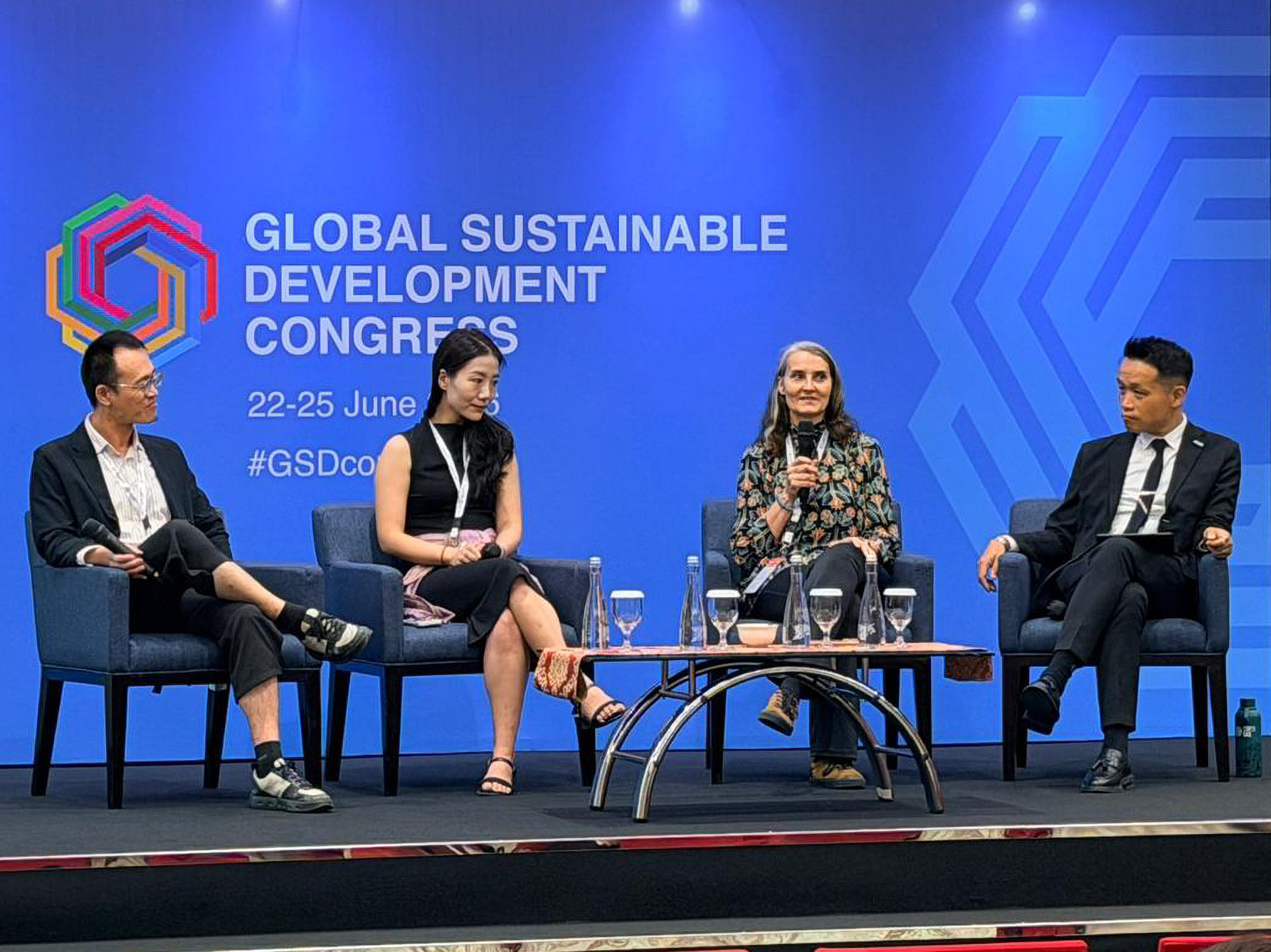
“With the use of emerging technologies such as imaging software, we can recreate and capture fragmented memories of different locations and create photorealistic representations of cultural sites,” shared Professor Reinhuber, adding that preservation should encompass physical, emotional, and social elements of each piece of heritage.
Dr Sue Hua Shuo, Associate Curator at the University Museum of the University of Hong Kong, presented how adaptive strategies and incentive structures can support more equitable and durable heritage. “Oftentimes, the personal and historical context of each artwork is lost when presented in an exhibition. Using tools such as AI and other emerging technologies, we can create databases that understand the interconnecting links between artworks and provide more clarity,” she said.
The panel also covered how cultural heritage must be approached as a dynamic system built upon cooperation, competition and negotiation between human and non‑human actors. Mr Tim Wong Ming-tai, Technical Director & ESG and Sustainability Hub Lead in Hong Kong at AECOM Asia, noted that AI can provide metrics and datasets that help industries to make better and more comprehensive decisions on how to sustainably operate.
An insightful panel discussion moderated by Professor Benjamin Horton, Dean of the School of Energy and Environment (SEE), shared views on how cities can integrate climate adaptation with long-term urban sustainability to protect communities, infrastructure and ecosystems while advancing equitable and liveable futures in the face of increasing extreme weather conditions.
Panellists included Professor Chen Peipei, Professor Chu Jung-eun, and Professor Penny Han Ping from the SEE, and Mr Fadly Amran, Mayor of Padang City in Indonesia. Together, they concluded that climate scientists, urban leaders, and policymakers must work together on global issues such as extreme weather through forward-looking and sustainable strategies.
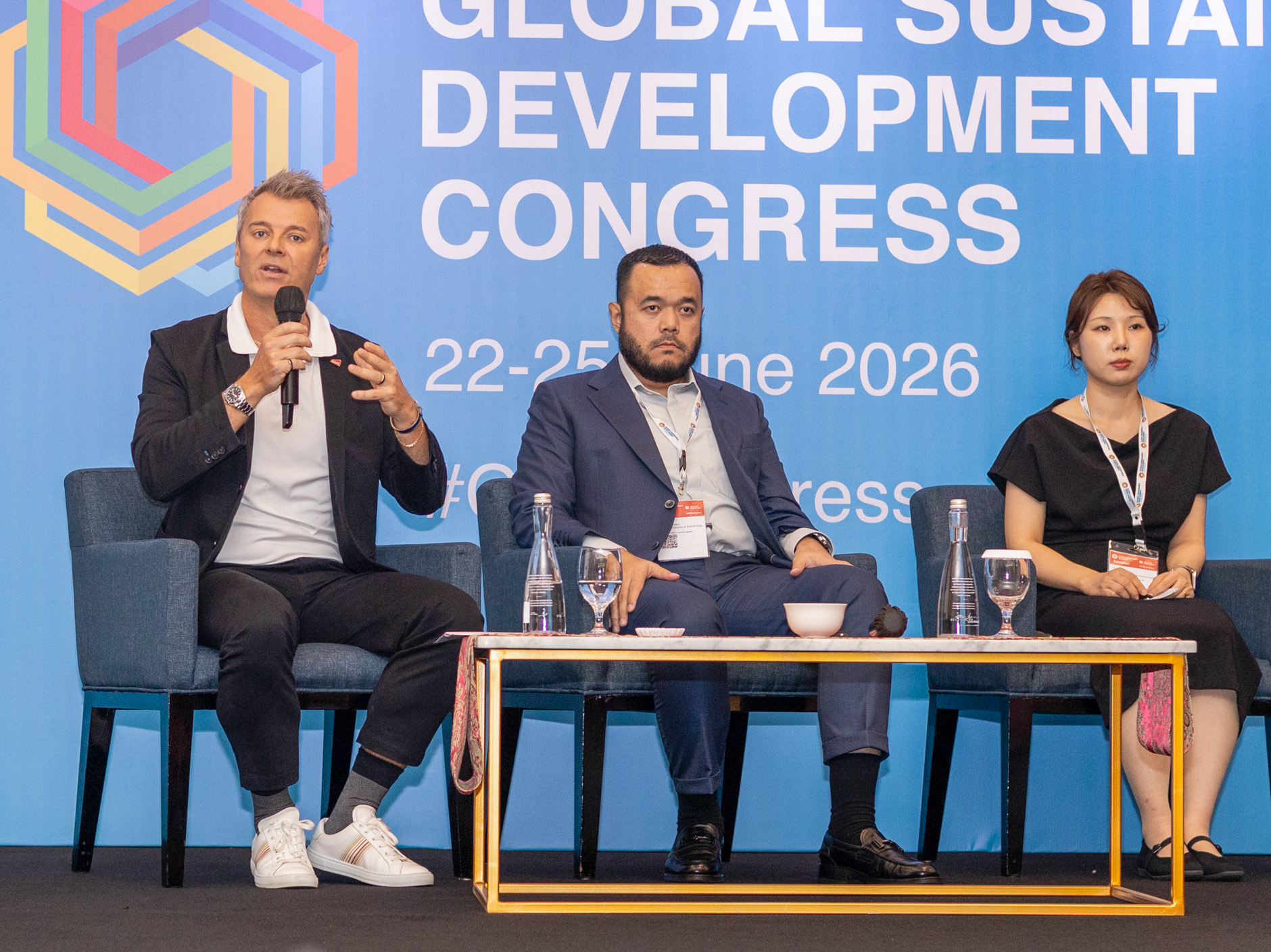
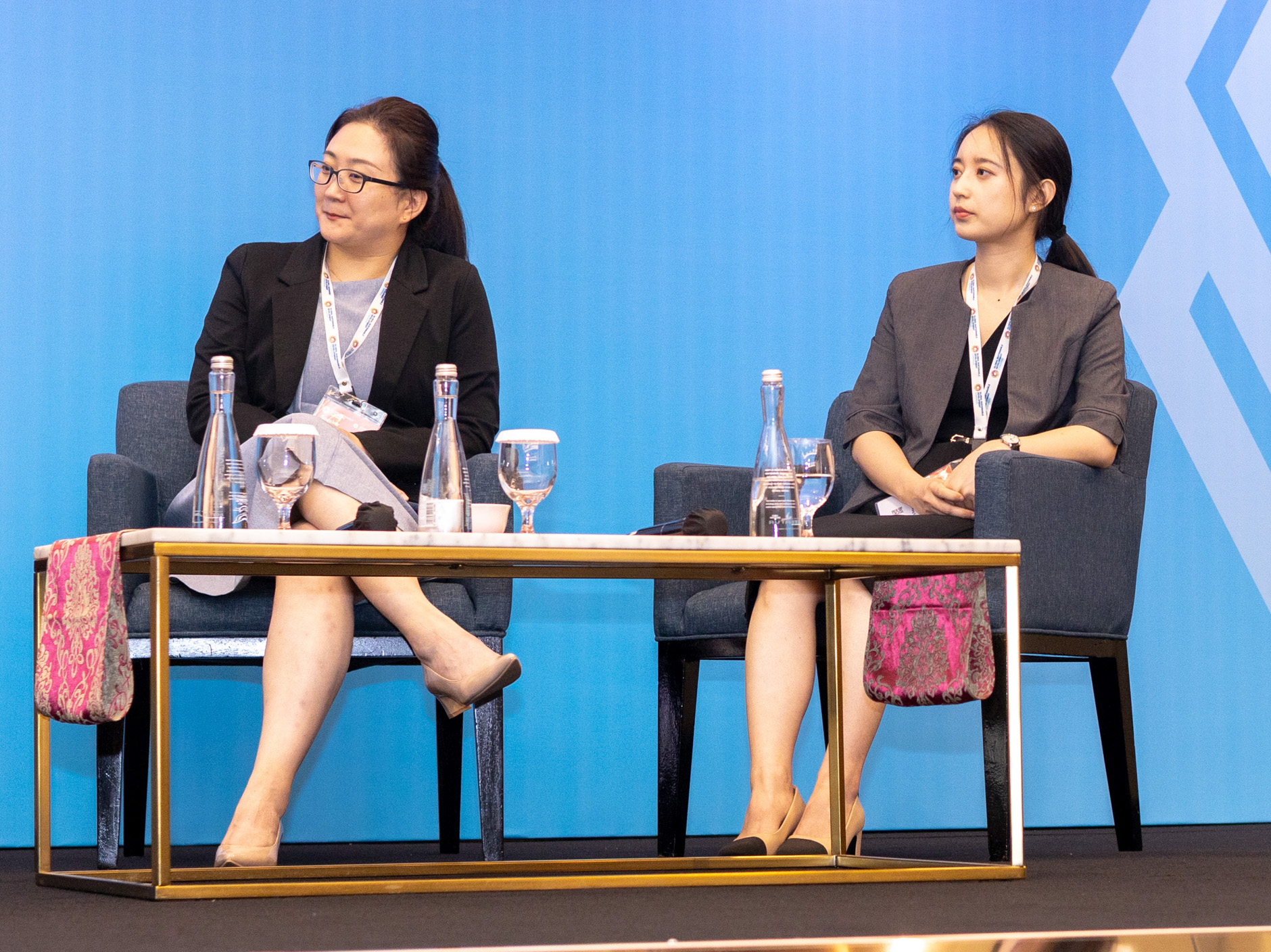
Professor Chen and Professor Chu stressed that extreme weather has been escalating on cities and highlighted the necessity of sustainability planning to minimise risks. They also warned that weather conditions will continue to worsen without deliberate intervention and that academia, industry and government must join hands to combat climate change.
Along the same line, Professor Han agreed collaboration will be the key to a resilient and sustainable future. “We need to be site-specific and problem driven. The most promising nature-based solutions include shortening the flooding period, creating cooling infrastructure and implementing eco-shorelines,” she said.
Sharing insights on how Padang has adapted to adverse weather, Mr Amran introduced “R3P”, a locally-implemented framework for mitigating and responding to natural disaster. It guides the short, medium, long term and continuous efforts about recovery, rehabilitation, reconstruction and preparedness. “The government has to be the first institution to respond, build trust with citizens for the implementation of technology,” he added.
Professor Kenneth Leung Mei-yee, Vice President (Research) and Director of the State Key Laboratory of Marine Environmental Health, joined the Green Skills Summit to address how marginalised communities may be left behind as companies and industries rapidly adopt green skills.
He stressed that the transition period must remain just and inclusive, and that leaders must implement policies and strategies that create equitable pathways into green careers, ensuring that underserved communities receive equal benefits.
“To support our students and to create a future where they can fight for their dreams, we need to build a business ecosystem that’s attractive to young talent while also driving sustainability initiatives,” he said, adding that students should be open-minded and remain ‘forever learners’ who can adapt and evolve with the changing socioeconomic landscape.
Professor Leung also moderated the last CityUHK-led session of the Congress, which focused on coastal infrastructure and how eco-engineering can benefit marine life and urban living simultaneously.
He highlighted his research team’s artificial seawalls project, which was integrated into Hong Kong’s first eco-friendly shoreline in the Tung Chung East reclamation area.
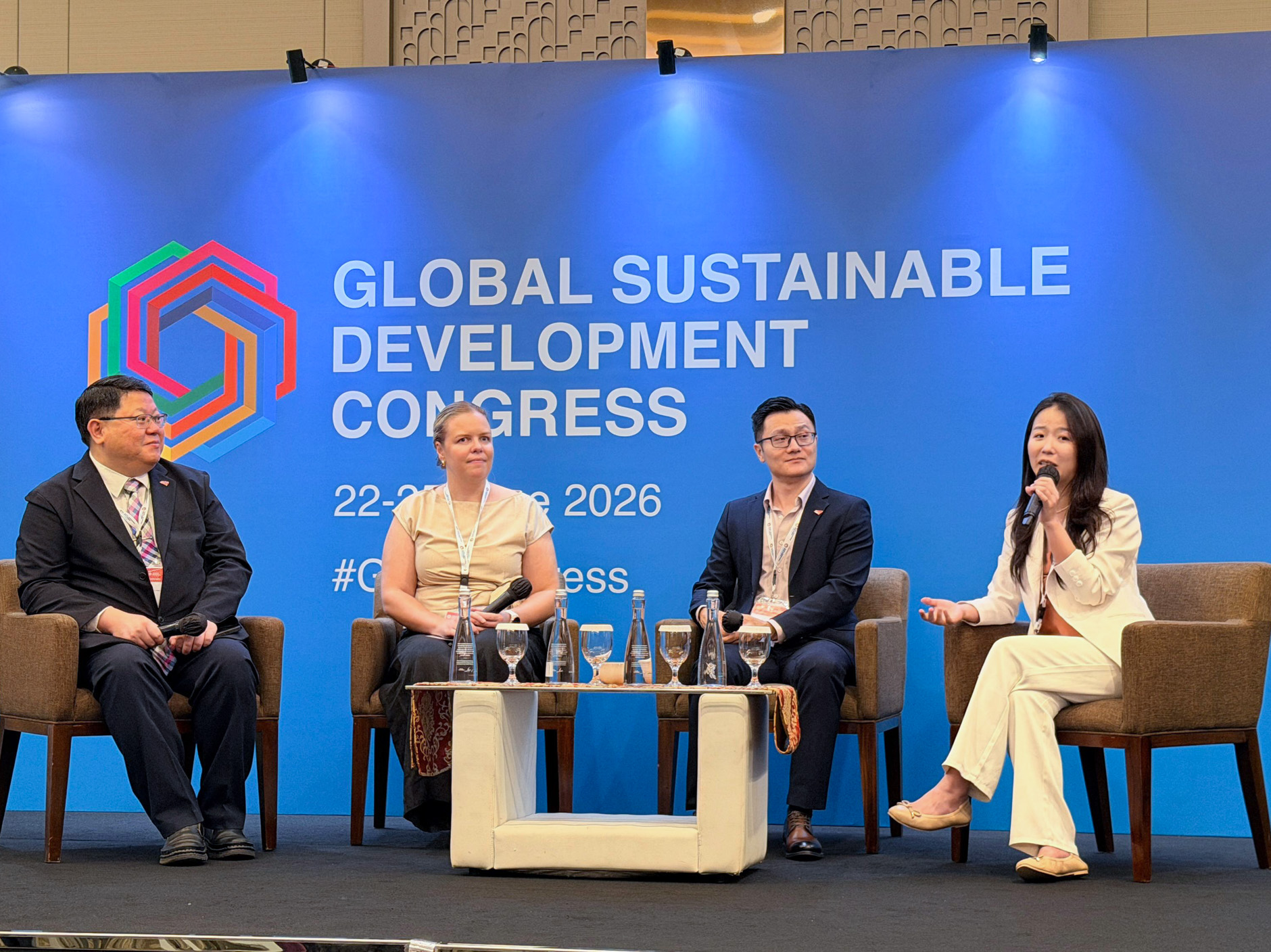
Dr Thea Bradford, Director of afterNATURE, said that conventional seawalls and breakwaters currently provide limited and unsuitable habitats for marine organisms, diminishing biodiversity. “With our eco-seawalls, we saw the number of marine species appearing on our coastline rise by nearly 5 times compared to traditional concrete shorelines,” she said.
However, recent developments in eco-engineering have offered new insights and tactics to redesign shorelines, through connecting industry and policymakers to assess and implement sustainable solutions in local and global contexts. Dr Vriko Yu co-founded Archireef, an ocean risk management company, which deploys nature-positive coastal infrastructure across the Middle East and the Asia-Pacific region.
“Beyond obvious benefits such as biodiversity rise and creating human-friendly shorelines, community engagement is another greatest advantage of implementing eco-seawalls. We host events where children and the general public can design their own seawalls, raising awareness of the urgency of biodiversity loss,” she said.
Having spent the last decade investigating and managing rising sea-level rises, Professor Li Tanghua from the Department of Data Science, noted that the help of eco-engineered and nature-positive coastal infrastructure worldwide has enabled revitalised seawalls which serve as effective coastal defence and biodiversity hubs. “Decarbonisation is a major and universal topic across the globe right now. With proper management and nature-based solutions such a mangrove plantation, we can restore and revitalise our shorelines,” he added.
Please visit the thematic website for more information about how CityUHK sustainability experts are sharing their insights at GSDC 2026.