
News
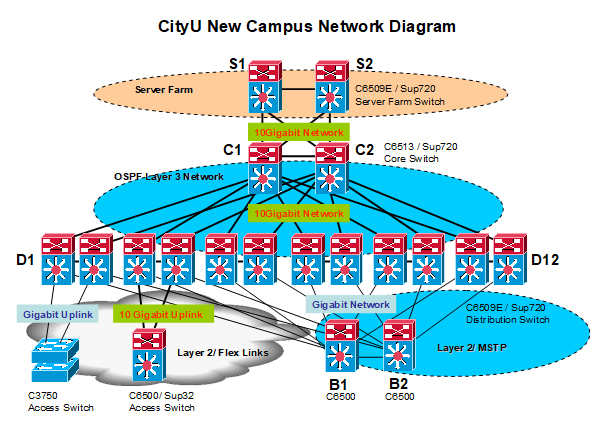
Introduction The University’s data network (CTNET – City University Campus Network) has undergone several major upgrades since its creation in 1985. Each major upgrade represents the adoption of the latest state-of-the-art networking technologies and standards. The network has evolved from circuit switching to Ethernet, Extended Ethernet, FDDI, ATM, Gigabit Ethernet, and eventually to 10 Gigabit Ethernet as of today.

Cloud Computing is a promising technology trend for the provisioning of IT services. Many datacenters have been moving towards the Cloud service model. The Computer Science Laboratory (CSLab) has started to build a departmental private Cloud in 2008. Most IT services of the Department of Computer Science (CS) are now supported by this internal Cloud. CS students and staff have already been enjoying the efficiency and flexibility of the Cloud in their learning and research activities.
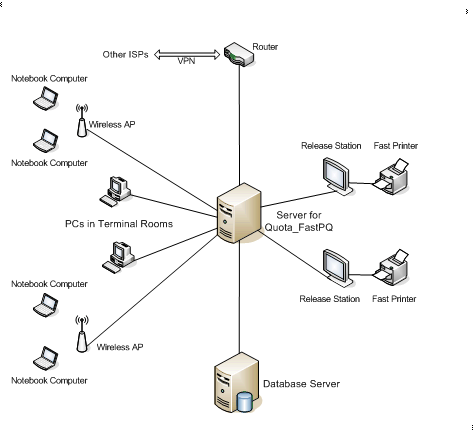
Hitting new record high sometimes is good but it is certainly not the case in student printing as more trees are destroyed and substantial energy is consumed to produce tons of paper, distribute them and print them. The following chart depicts the usage trend of quota-controlled free student printing service in 6 consecutive years since its launch in 2005.The usage pattern is very similar over the years; however, the total number of pages printed rises rapidly. In only 6 years, the usage has been doubled giving a total of nearly 25,000,000 pages per year.
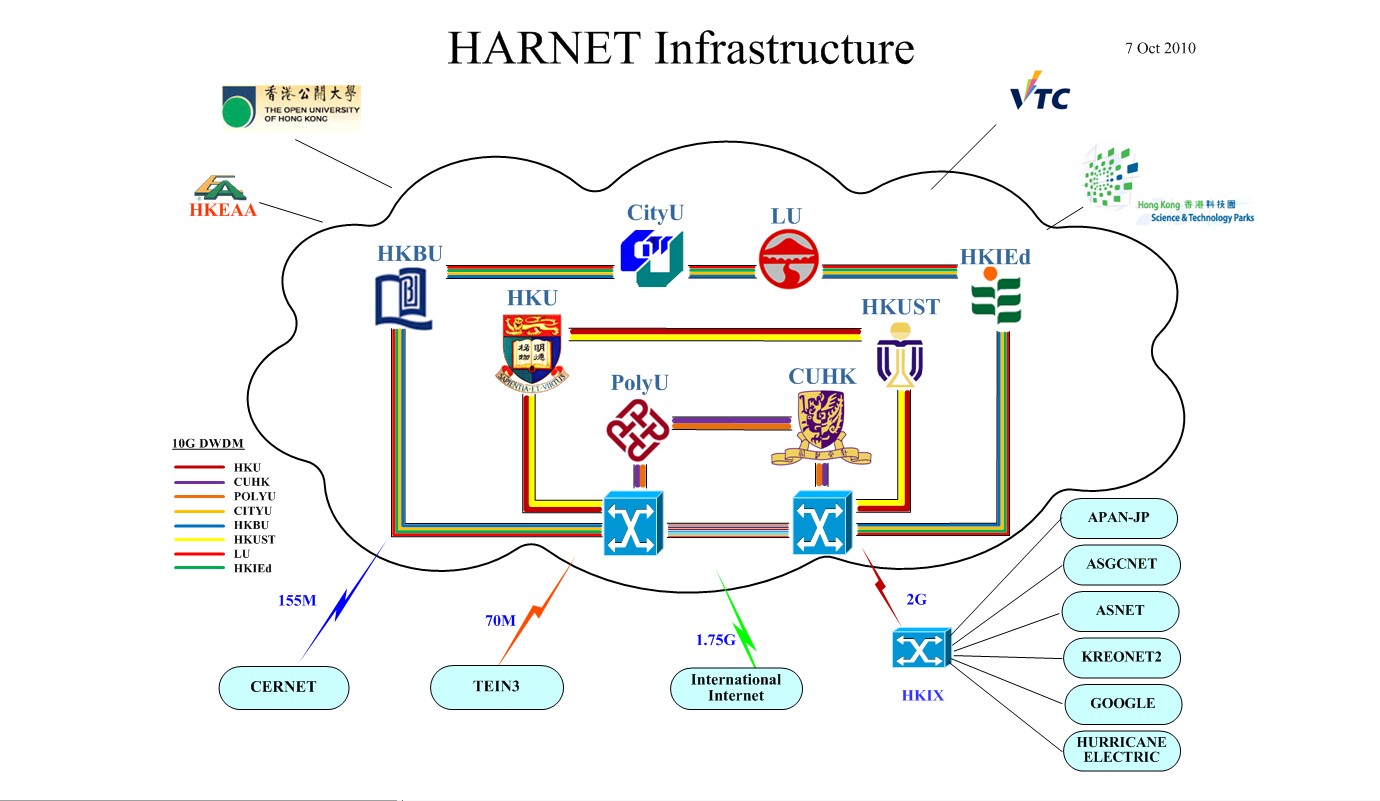
The Hong Kong Academic and Research Network (HARNET) is the wide-area network that links the campus networks of the eight tertiary institutions in Hong Kong and connects them to the Internet, the TEIN2 and other research and academic networks. The HARNET is managed by the Joint Universities Computer Centre (JUCC), a consortium of eight UGC-funded institutions. The HARNET also provides Internet connectivity to JUCC’s affiliate members and network members, including the Open University of Hong Kong, Vocational Training Council, the Hong Kong Examinations and Assessment Authority and the Hong Kong Science and Technology Parks.

The seven nominated programmes piloting the 4-year degree curriculum in 2010/11 are on board; so is DegreeWorks, also for these programmes. After eight months of preparation and hard work from The Academic Regulations and Records Office (ARRO), the Enterprise Solutions Office (ESU) and the Computing Services Centre (CSC), the system was launched on 23 December 2010 for preview by the programme leaders and the departments offering the seven programmes. After the grades of Semester A had been recorded in the student database, the system was opened up on 7 January 2011 for students to view their progress of studies.

As a protection for all University email users, the Committee on Information Services and Technology (CIST) endorsed in its meeting in August 2010 to enable email spam filtering as a default for all CityU email users, and it was implemented on staff, student and alumni email systems on 21 December 2010.The default spam filtering of level 9 (email with calculated spam score of 90% or higher will be filtered as spam) will be applied to new email accounts, and to all old email accounts which have not enabled or set spam filtering rules before. Filtered email will be kept in the AUTO-PURGE folder of the user’s mailbox for 1 month where the user should check regularly for any mistakenly filtered email. Users can adjust the spam filter level of his/her email account, and add whitelist and blacklist to complement the auto-filtering as needed.
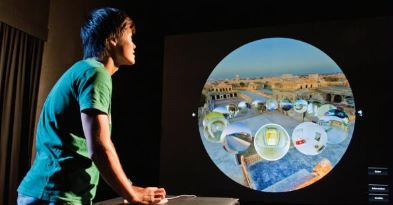
With curriculum changes to support the 3-3-4 academic reform, the University has a rare opportunity to rethink and redesign how we provide and deliver education to our students to create a rewarding and unique CityU learning experience. The University has instigated a new “Discover & Innovate @ CityU” (D&I) campaign, designed to broaden our students’ minds and to challenge their creativity in an interdisciplinary manner through a technology-enriched learning experience.

The Committee on Information Services and Technology (CIST) has approved to adopt the Microsoft Exchange Server (Exchange) as the standard University email server for staff, and will phase out the current Sun Java System Messaging Server (JSMS) which is an old technology and must be replaced.
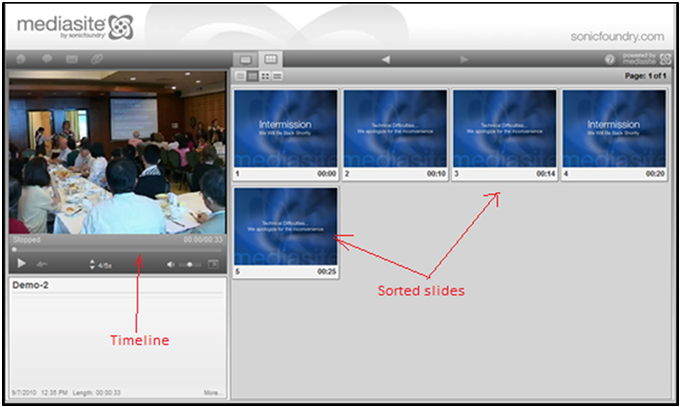
In the old days, when we tried to make the video experience realistic and enjoyable, panning the camera back and forth between the presenter and the projection screen was unavoidable. This inevitably degraded the quality of video capture. Luckily, we have tools available now to make presentation capture easier and look better without using this “point the cam at the screen” trick!
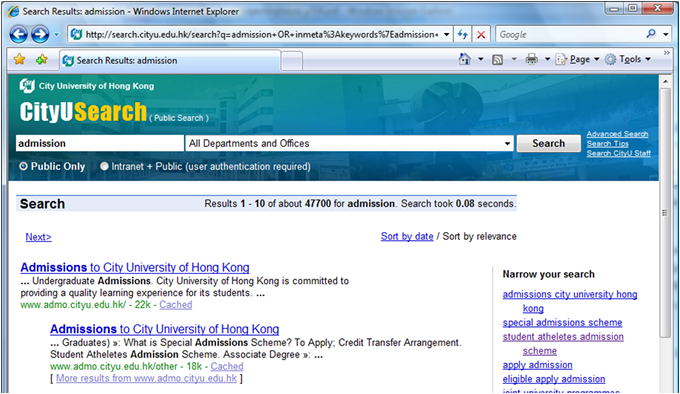
There is tons of information over the internet. It is important to provide a powerful searching tool for visitors to search for the information they want when they come across our websites. There are over 330,000 web pages in CityU. Without a good search engine, it is really hard for a visitor to find a piece of information among these pages. Even for a CityU community member, it is also not an easy task. In view of this, the Computing Services Centre (CSC) incorporated the Google Public Search to the CityU homepage in 2005 (which later updated to Google Custom Search in 2007) in order to provide a state-of-the-art search engine for both CityU and non-CityU community members to search for their desired information. Unfortunately, the Google Custom Search has its limitation. Firstly, it usually takes days or even weeks for the changes of a website to become searchable. Secondly, all the advanced functions, such as Google Advanced Search and search suggestion, are missing. And finally, it does not support searching on password protected pages meaning that CityU community members cannot locate information via the Google Custom Search such as administrative notes and regulations, which is protected for access from staff, students or special groups.
 CityU IT ChatBot