

Research Highlights
Posted
Involved Members: Prof. Paul Kwan Sing LAM, Dr. James Chung Wah LAM, Dr. Phoebe Yuefei RUAN
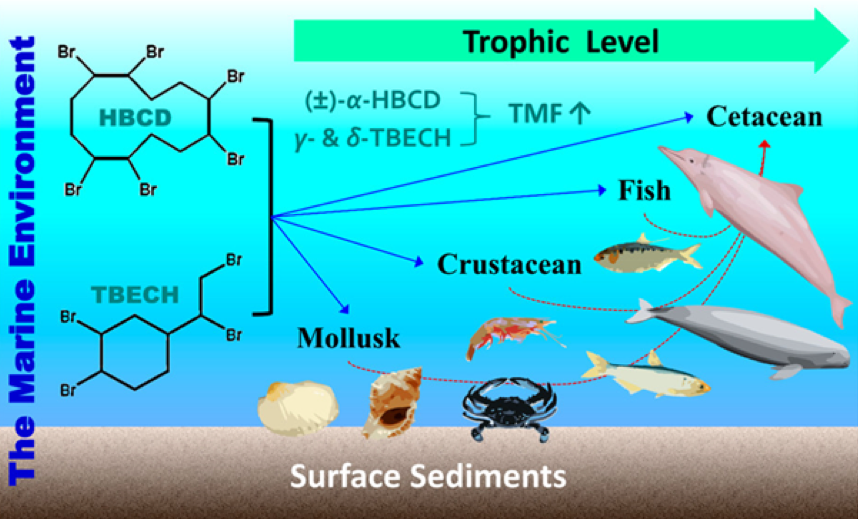
Emerging chemicals of concern (ECCs) encompass a wide range of man-made chemicals that are in use worldwide and indispensable for modern society. The phasing out of many legacy environmental pollutants, most of which are persistent organic pollutants (POPs), has resulted in the compensatory production and use of their alternatives, and these replacements constitute a large part of ECCs, being inevitably released into the environment. The toxicities of some of these replacements are evidenced to be comparable or even higher than the legacy chemicals, many of which are endocrine-disrupting and carcinogenic chemicals. ECCs also include pharmaceuticals and personal care products (PPCPs), phycotoxins, nanoparticles, etc. that have been detected in the environment and may cause ecological and human health impacts (at low levels), which typically are not regulated under current environmental legislations. Environmental data on the majority of ECCs are limited, and relevant analytical methods are not well established. Due to heavy industrialization and urbanization in the Pearl River Delta over the past decades, high levels of recalcitrant pollutants have been reported in this region, which were eventually released to the Pearl River Estuary and ended up in the South China Sea.

Posted
Involved Member: Prof. Kenneth Mei Yee LEUNG
Asia is a home for around 4.6 billion people, making up more than half of the world’s population of 7.8 billion in 2020 and putting enormous pressure on natural resource and the environment. The United Nations have predicted that Asia will become the leading generator of global municipal solid waste by 2030. Air, soil and water pollution as well as food safety are consistently great challenges in this region.
The Global Horizon Scanning Project (GHSP) was launched in 2015 by the Society of Environmental Toxicology and Chemistry (SETAC) to identify top priority environmental quality and health issues around the world. This project has been carried out in Europe, Latin America, North America, and Oceania. This Asian effort and associated publication were recently accomplished.
Posted
Involved Member: Prof. Wenxiong WANG
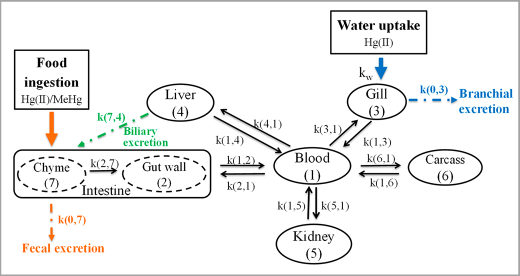
Mercury (Hg) in fish poses great threat to human health. Consumption of low-Hg-level fish species (e.g. rabbitfish, Siganus canaliculatus) could be one possible solution to balance the nutrient benefits and Hg exposure. However, the underlying mechanisms for the low Hg accumulation in rabbitfish remain unclear. This study quantitatively described the disposition of inorganic Hg(II) and methylmercury (MeHg) in rabbitfish under different exposure routes by constructing a physiologically based pharmacokinetic (PBPK) model. The results strongly suggested that effective elimination (estimated rate constant of 0.060, 0.065 and 0.020 d-1 for waterborne Hg(II)-, dietary Hg(II)- and MeHg-exposed fish, respectively) was the main reason for the low Hg accumulation in rabbitfish. By quantifying the possible pathways for Hg elimination, our study revealed that biliary coupled with fecal excretion played an important role in the elimination of dietary Hg. Although biliary excretion rate for MeHg was remarkable (6.8±2.2 d-1) and the excreted amount per day could reach up to 790 ng, most of the MeHg in the bile was re-absorbed by the intestine and transferred back to the liver through enterohepatic circulation, leading to a prolonged retention time in fish body. Moreover, branchial excretion dominated the Hg(II) elimination following aqueous exposure, suggesting a flexible alteration on elimination pathways against different exposure scenarios. The present study provided important understanding of the unique strategies adopted by rabbitfish to maintain the low Hg levels.
Posted
Involved Members: Prof. Paul Kwan Sing LAM, Dr. James Chung Wah LAM, Dr. Phoebe Yuefei RUAN
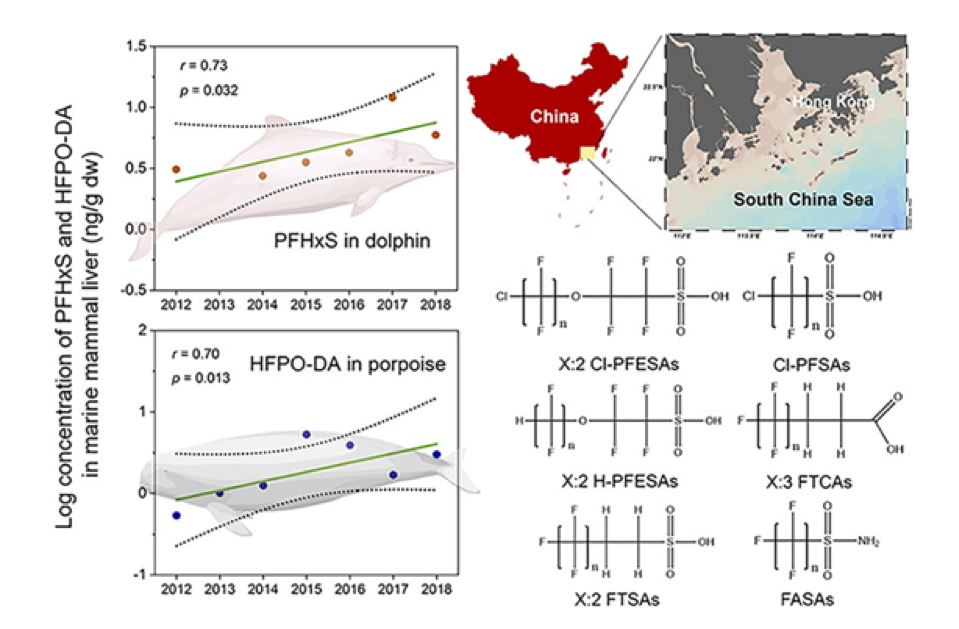
For emerging chemicals of concern, in this case PFASs, in key environmental matrices, my research team has developed sensitive, reliable, and robust analytical methods. We developed a SPE-HPLC-MS/MS procedure to measure PFASs at parts-per-trillion (ng/L) levels in seawater; this study revealed for the first time the widespread occurrence of PFASs in Chinese and Korean waters. Our further studies revealed the occurrence of PFASs in Chinese rivers, surface waters between Asia and Antarctica, and open oceans. We then developed a new HPLC-MS/MS method to analyze short-chain PFASs. These results demonstrated the ubiquitous distribution of PFASs in the global environment, which laid part of the foundation for the standardized determination methods (HELCOM - Helsinki Convention; ISO).
Importantly, our analytical method was sensitive enough for measuring PFASs in open ocean waters. We then participated in a global study, which yielded important data lending strong support to the hypothesis that non-volatile PFASs were transported to polar regions via ocean currents. Our sensitive and selective method enabled the trace analyses of PFASs in ice core, surface snow, and water samples collected from Norwegian Arctic. As glaciers were formed by the compression of fallen snow over many years, the glaciers sampled, located at high altitude, was expected to receive PFAS contamination mainly from atmospheric pathways. Therefore, ice cores in this location were used to investigate the transport pathways of PFASs and provide information on the temporal trends of atmospheric concentrations of PFASs.
Posted
Involved Member: Prof. Paul Kwan Sing LAM

Posted
Involved Member: Prof. Tong ZHANG
Up till present, the research team led by Prof. Tong Zhang has collected more than 1000 domestic sewage samples from sewage collection systems in different areas for nucleic acid tests of the new coronavirus SARS-CoV-2. The initial results of the research have demonstrated that the sewage surveillance could be used for the following purposes:
1. Providing early warning signals for COVID-19 outbreak. The detection rate of viruses in sewage can reflect the overall spread of virus in the community, and could be used as supplementary information to complement clinical testing to provide early warning signals of community outbreak.
2. Tracking the development trend of community outbreak. The research team will continue to collect a large amount of data for analysis and make reference to the actual clinical diagnosis data to develop a systematic evaluation method and follow-up actions.
3. Complementing the monitoring of estates with infection clusters. The research team flexibly adjusted the monitoring plan, conducted targeted sampling and analysis at buildings with infection clusters, and provided complementary information for clinical tests.
Reference:
https://www.hku.hk/press/press-releases/detail/22201.html