People
Organization
Organization
Highlighted
Research
Research
Laboratory
Facility
Facility
Knowledge
Exchange
Exchange
Research
Grant
Grant

WE PROTECT THE MARINE ENVIRONMENT OF HONG KONG AND SOUTH CHINA

To be a key international research centre in advancing marine environmental research that contributes to the protection and management of the marine environment and generates positive societal impact.

Pilot_01_high_res11.jpg

The crystal phase plays a crucial role in determining the properties of two-dimensional (2D) transition metal dichalcogenides. SKLMP Member Prof. Zhiyuan Zeng from City University of Hong Kong, collaborated with Prof. Xinge Yu from City University of Hong Kong, Prof. Ju Li from MIT, Prof. Meng Gu from the Eastern Institute of Technology, as well as many other researchers, to conduct relevant experiments and published their research findings in the journal Nature Synthesis.

The research team discovered that by controlling the discharge current density and cutoff voltage, and utilizing an electrochemical lithium-ion intercalation-based exfoliation strategy, they successfully achieved phase-switchable preparation of 2D transition metal dichalcogenides. A small discharge current density (0.005 A g⁻¹, cutoff voltage 0.9 V) could produce a pure semiconducting 2H phase WS2 bilayers, while a large discharge current density (0.02 A g⁻¹, cutoff voltage 0.7 V) leads to the dominant semimetallic 1T′phase WS2 monolayers. Through techniques such as cryo-electron microscopy, annular dark-field scanning transmission electron microscopy, and Raman, the researchers clarified the mechanism behind phase-switchable preparation. These findings inject new vitality into the current electrochemical Li⁺ intercalation-based exfoliation strategy, rendering it a feasible method for large-scale production of solution-processable group-VI 2D transition metal dichalcogenides (WS2) with designated phases.

More information: https://doi.org/10.1038/s44160-024-00679-2

Methylmercury (MeHg) in aquatic systems poses a serious public health risk through bioaccumulation in the aquatic food web. MeHg in rivers near cities around the world have risen to concerning levels in recent years. However, the reasons for this increase remain unclear. SKLMP Member Prof. Zhiguo Yuan from the School of Energy and Environment of City University of Hong Kong, in collaboration with the team led by Prof. Feng Jiang of Sun Yat-sen University, revealed the significant impact of sewage contamination by analyzing more than 1,300 publicly available metagenomes in urban rivers worldwide and conducting experiments with water samples across China. Relevant research findings have been published in Nature Communications and picked by the editor as a highlight.

The research team found that sewage contamination significantly increases the abundance of mercury-methylating microorganisms in urban rivers globally. This increase is mainly attributed to the high abundance of active mercury-methylating microorganisms in sewage, which migrate to rivers through direct discharge or combined sewer overflows, becoming key contributors to elevated riverine MeHg levels. The findings highlight the importance of the effective removal of mercury-methylating microorganisms from sewage to mitigate the public health risks associated with MeHg in urban rivers.

More information: https://doi.org/10.1038/s41467-024-53479-9

Congratulations to SKLMP Member Dr. Apple Chui, Research Assistant Professor in the School of Life Sciences at The Chinese University of Hong Kong, for receiving the "Falling Walls Science Breakthroughs Award" in the Science Engagement category at the Falling Walls Science Summit held from the 7th to 9th November 2024.

Hong Kong, surrounded by three sides of the sea, boasts a rich diversity of coral species. However, in recent years, these corals have faced the threat of bleaching due to the impacts of climate change and human activities. To better conserve corals, Dr. Apple Chui officially established the outreach program "Coral Academy" in 2018, focusing on researching coral nurseries and coral propagation techniques. With the support of the Hong Kong Agriculture, Fisheries and Conservation Department, the "Coral Academy" has organized numerous public engagement activities, including the groundbreaking "Secondary School Coral Nursery Education Programme" initiated in 2020.
This program transforms primary and secondary schools in Hong Kong into culturing stations, allowing local students and teachers to participate in maintaining coral tanks and monitoring coral growth and health. Through hands-on experiences learning about Hong Kong's marine ecology and biological knowledge, students can enhance their awareness and concern for the biodiversity of marine life and coral conservation in Hong Kong, fostering a sense of duty to protect the oceans.

In Clarivate's latest release of the “Highly Cited Researchers 2024”, a total of 6,636 scholars from 59 countries and regions have been recognized for their exceptional academic influence. Among them are 6 members of the State Key Laboratory of Marine Pollution. They are Prof. Ruquan Ye, Prof. Zhiguo Yuan, Prof. Zhiyuan Zeng, and Prof. Alex Jen from the City University of Hong Kong, as well as Prof. Tong Zhang and Prof. Xiaoling Zhang from the University of Hong Kong. This list celebrates leading scholars whose work ranks in the top 1% of citations globally across science and social sciences, highlighting their significant contributions to advancing knowledge and research excellence.

NerOcean, a startup company co-founded by SKLMP members Prof. Rudolf Wu, Prof. Vincent Ko and his Research Associate Dr. Ron NG, recently participated in the HKMA/HKT Global Innovation Award 2024 in the "Rising Stars" category. Their project "Artificial Mussel: A Novel Monitoring Device for Heavy Metals and Radionuclides in Global Aquatic Environments", earned NerOcean the prestigious Social Impact Innovation Award. This innovation award has been organized by the Hong Kong Management Association (HKMA) since 2022, aiming to contribute towards the National 14th Five-Year Plan to develop Hong Kong as an international innovation and technology hub. As one of the Top 10 Finalists, NerOcean is set to compete for the title of "Best Rising Star of the Year" against nine other teams in January 2025.

Moreover, NerOcean showcased its work at the 19th Eco Expo Asia, a conference jointly organized by the Hong Kong Trade Development Council (HKTDC) and Messe Frankfurt (HK) Ltd, co-organized by the Environment and Ecology Bureau of the Government of the HKSAR. NerOcean has been working closely with AFCD on advancing fish culture in Hong Kong and during the expo, Mr. LAI Chuen Chi, the Deputy Director of AFCD, engaged in a brief talk with them about the upcoming product trials and future plans.

NeroceanWebPhoto


Two-dimensional (2D) materials, as adsorbents, have attracted great attention in removing heavy metal ions from drinking water due to their extensively exposed adsorption sites. However, existing experimental research has not fully unlocked their adsorption capabilities and completely elucidated their adsorption mechanisms. SKLMP Member Prof. Zhiyuan Zeng, an associate professor from the Department of Materials Science and Engineering at City University of Hong Kong, collaborated with SKLMP Director Prof. Kenneth Mei Yee Leung to conduct an experiment, which has been published in the journal "Nature Communications".

The research team utilized synthesized metallic 1T/1T’ phase 2D transition metal dichalcogenides (TMDs, including MoS2, WS2, TaS2, and TiS2) nanosheets, which hold tremendous activated S chemisorption sites, to achieve outstanding lead ion removal capacity (up to 758 mg/g). The residual Pb2+ concentration can be reduced from 2 mg/L to 2 μg/L within 0.5 minutes, meeting the drinking water standards set by the World Health Organization (Pb2+ concentrations <10 μg/l).="" point-of-use="" devices="" made="" from="" metallic="" phase="">2 nanosheets reported by the research team exhibit treatment capabilities 1 to 3 orders of magnitude higher than other 2D materials and commercial activated carbon.

More information: https://doi.org/10.1038/s41467-024-52078-y

In September 2024, the Chinese manned submersible Jiaolong successfully completed its first international deep-sea scientific research expedition in the Western Pacific Ocean, carrying out a total of 18 dives.

Among the three young Hong Kong scholars participating in this expedition was Dr. Qi Wang, a postdoctoral researcher at SKLMP. Dr. Wang was the second scientist to dive, reaching a maximum depth of 4700 meters. Reflecting on the experience, Dr. Qi Wang said, "I am honoured to have had the opportunity to represent Hong Kong in the 45-day 2024 Western Pacific International Deep-Sea Expedition. My research focuses on the environmental behaviour of pollutants and their adverse effects on marine ecosystems. Some pollutants are highly stable, allowing them to disperse globally through ocean currents and reach the deep sea.

During this expedition, I was fortunate to dive with the manned submersible Jiaolong, investigating the deep-sea environment at a depth of 4700 meters. We collected valuable samples of bottom seawater, sediments, and various biological specimens. These samples are now stored in our SKLMP laboratory, where I will utilize advanced trace analysis methods to study the presence of pollutants. This research will help us better understand the levels and behaviour of pollutants in the deep-sea environment, contributing to the protection of marine ecosystems."

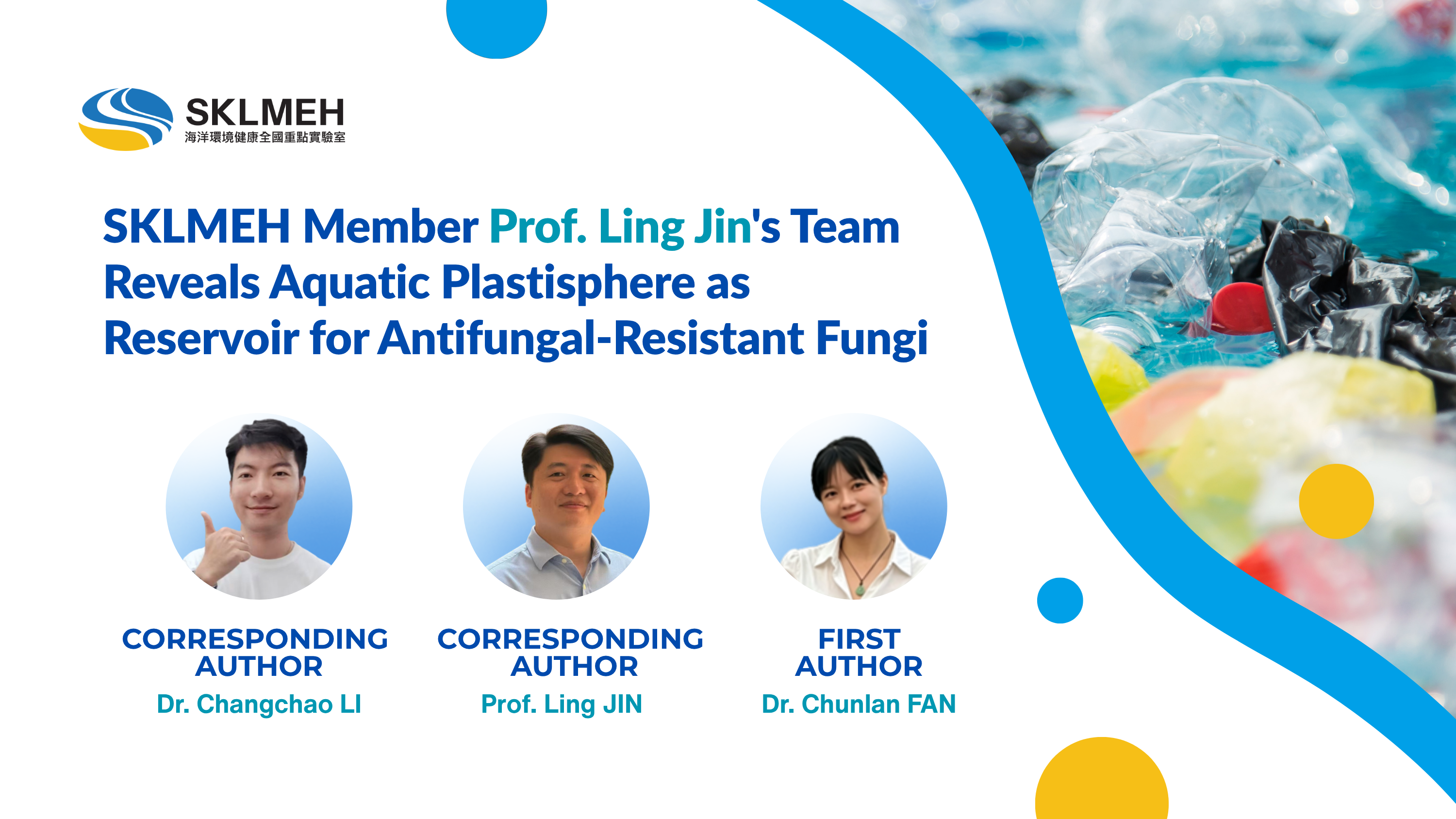
Recently, invited by Nature, SKLMP Member Dr. Nathanael Ling Jin, an assistant professor from The Hong Kong Polytechnic University, together with his postdoctoral researcher, Dr. Changchao Li led a Comment paper titled "What harmful microbes are lurking in the world’s 7 billion tonnes of plastic waste?" In this paper, they highlighted the microbial risks associated with plastic pollution and proposed a global strategy for understanding and combatting the risk.

Plastic debris provides a new ecological niche for microorganisms, resulting a new ecosystem referred to as the "plastisphere." Initial studies suggest that this human-made habitat serves as a widespread, mobile reservoir of various microbial hazards such as pathogens and antibiotic resistance genes, which poses potential health risks to living organisms including humans. However, current understanding and awareness of these risks remain insufficient. Risk assessments and management policies regarding plastic pollution often overlook this hidden threat.

To address this issue, this paper outlines the potential risks of plastisphere microbiomes on the functioning of ecosystems and the health of humans as well as other organisms. To develop a global strategy, this paper proposes 6 priorities: quantifying effects, redefining plastic pollution, sustaining funding, establishing expert panels, adjusting management strategies, and protecting people.

More details are available: https://doi.org/10.1038/d41586-024-03150-6

Pollution in estuaries is one of the major threats to marine biodiversity and fishery resources, and pharmaceuticals are one of the most important contaminants of emerging concern in aquatic ecosystems. To synthesize pharmaceutical pollution levels in estuaries over the past 20 years from a global perspective, this review identified data for 239 pharmaceuticals across 91 global estuaries in 26 countries.

Key findings include:

  • Analgesics, antibiotics, and stimulants were the most commonly reported in estuaries.
  • Nineteen pharmaceuticals were identified with very high ecological risks.
  • Pharmaceutical pollution was correlated with regional unemployment and poverty.

The paper was published in Environment International under the title of "Occurrence and potential risks of practical pollution in global realities: A critical review and analysis". The first author was Demilade T. Adedipe, a PhD student at the State Key Laboratory of Marine Pollution (SKLMP), City University of Hong Kong (CityUHK), and the corresponding authors were Professor Kenneth Mei Yee Leung, the director of SKLMP, and Dr. Chong Chen, a postdoctoral research fellow at SKLMP.

This study is the first paper released by the Global Estuaries Monitoring (GEM) Programme, an initiative led by the SKLMP at CityUHK, and endorsed by the United Nations Decade of Ocean Science for Sustainable Development (2021-2030).

Following its release, the paper garnered attention and coverage from the UN Ocean Decade on various platforms like Facebook and X.

Read the study: https://ow.ly/4v7n50TB8w5

Find out more about the Global Estuaries Monitoring Programme: https://www.globalestuaries.org/

GEMFigure1
The 91 global estuaries identified in this research.


The crystal phase plays a crucial role in determining the properties of two-dimensional (2D) transition metal dichalcogenides. SKLMP Member Prof. Zhiyuan Zeng from City University of Hong Kong, collaborated with Prof. Xinge Yu from City University of Hong Kong, Prof. Ju Li from MIT, Prof. Meng Gu from the Eastern Institute of Technology, as well as many other researchers, to conduct relevant experiments and published their research findings in the journal Nature Synthesis.

The research team discovered that by controlling the discharge current density and cutoff voltage, and utilizing an electrochemical lithium-ion intercalation-based exfoliation strategy, they successfully achieved phase-switchable preparation of 2D transition metal dichalcogenides. A small discharge current density (0.005 A g⁻¹, cutoff voltage 0.9 V) could produce a pure semiconducting 2H phase WS2 bilayers, while a large discharge current density (0.02 A g⁻¹, cutoff voltage 0.7 V) leads to the dominant semimetallic 1T′phase WS2 monolayers. Through techniques such as cryo-electron microscopy, annular dark-field scanning transmission electron microscopy, and Raman, the researchers clarified the mechanism behind phase-switchable preparation. These findings inject new vitality into the current electrochemical Li⁺ intercalation-based exfoliation strategy, rendering it a feasible method for large-scale production of solution-processable group-VI 2D transition metal dichalcogenides (WS2) with designated phases.

More information: https://doi.org/10.1038/s44160-024-00679-2

Methylmercury (MeHg) in aquatic systems poses a serious public health risk through bioaccumulation in the aquatic food web. MeHg in rivers near cities around the world have risen to concerning levels in recent years. However, the reasons for this increase remain unclear. SKLMP Member Prof. Zhiguo Yuan from the School of Energy and Environment of City University of Hong Kong, in collaboration with the team led by Prof. Feng Jiang of Sun Yat-sen University, revealed the significant impact of sewage contamination by analyzing more than 1,300 publicly available metagenomes in urban rivers worldwide and conducting experiments with water samples across China. Relevant research findings have been published in Nature Communications and picked by the editor as a highlight.

The research team found that sewage contamination significantly increases the abundance of mercury-methylating microorganisms in urban rivers globally. This increase is mainly attributed to the high abundance of active mercury-methylating microorganisms in sewage, which migrate to rivers through direct discharge or combined sewer overflows, becoming key contributors to elevated riverine MeHg levels. The findings highlight the importance of the effective removal of mercury-methylating microorganisms from sewage to mitigate the public health risks associated with MeHg in urban rivers.

More information: https://doi.org/10.1038/s41467-024-53479-9

Congratulations to SKLMP Member Dr. Apple Chui, Research Assistant Professor in the School of Life Sciences at The Chinese University of Hong Kong, for receiving the "Falling Walls Science Breakthroughs Award" in the Science Engagement category at the Falling Walls Science Summit held from the 7th to 9th November 2024.

Hong Kong, surrounded by three sides of the sea, boasts a rich diversity of coral species. However, in recent years, these corals have faced the threat of bleaching due to the impacts of climate change and human activities. To better conserve corals, Dr. Apple Chui officially established the outreach program "Coral Academy" in 2018, focusing on researching coral nurseries and coral propagation techniques. With the support of the Hong Kong Agriculture, Fisheries and Conservation Department, the "Coral Academy" has organized numerous public engagement activities, including the groundbreaking "Secondary School Coral Nursery Education Programme" initiated in 2020.

This program transforms primary and secondary schools in Hong Kong into culturing stations, allowing local students and teachers to participate in maintaining coral tanks and monitoring coral growth and health. Through hands-on experiences learning about Hong Kong's marine ecology and biological knowledge, students can enhance their awareness and concern for the biodiversity of marine life and coral conservation in Hong Kong, fostering a sense of duty to protect the oceans.

WE PROTECT THE MARINE ENVIRONMENT

We use cookies to ensure you get the best experience on our website.

More Information