

Research Highlights

Posted
Involved Member: Prof. Kenneth Mei Yee LEUNG
Despite growing evidence of the deleterious effects on ecological and human health, little is known regarding the global occurrence of pharmaceuticals in rivers. Studies assessing their occurrence are only available for 75 of 196 countries, with most research conducted in North America and Western Europe. This leaves large geographical regions relatively unstudied. Here, the study team presented the findings of a global reconnaissance of pharmaceutical pollution in rivers. The study monitored 1,052 sampling sites along 258 rivers in 104 countries of all continents, thus representing the pharmaceutical fingerprint of 471.4 million people. The results show that the presence of these contaminants in surface water poses a threat to environmental and human health in more than a quarter of the studied locations globally.
Reference:
Wilkinson, J.L., Boxall, A.B.A., Kolpin, D.W., Leung, K.M.Y., Lai, R.W.S., Galban-Malagon, C., et al., (2022). Pharmaceutical Pollution of the World’s Rivers. Proceedings of the National Academy of Sciences of the United States of America, 119, 2113947119. (impact factor 12.779)
Posted
Involved Member: Dr. Jason Chun Ho LAM
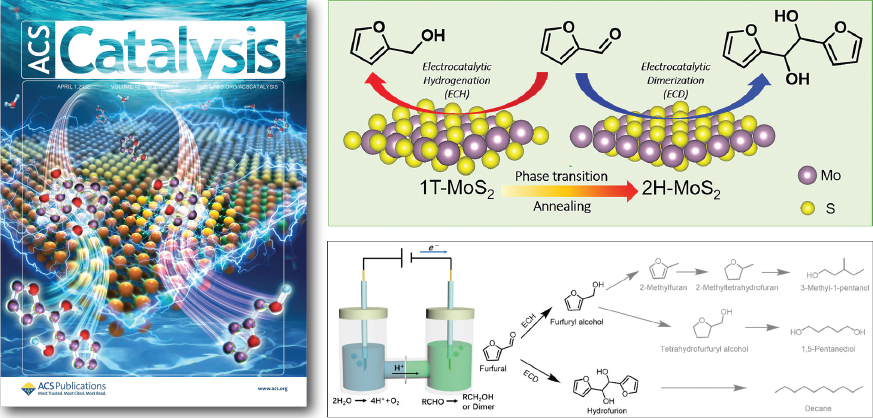
Global dependence on petroleum resources has promoted an excessive release of fossil CO2 into the atmosphere and marine environment. The catalytic valorization of biomass for renewable carbon-neutral chemical and biofuel production has thus become increasingly important. Dr. Jason Lam’s team recently developed an electrocatalytic method to control the conversion of furfural (a biomass-derived chemical) to either furfuryl alcohol (a valuable chemical precursor) or hydrofuroin (a jet fuel precursor) as main products by controlling the structural phase of a transition metal dichalcogenides (TMDs) catalyst, MoS2. The reaction operates in an aqueous environment at room temperature and atmospheric pressure, and does not generate any harmful byproducts. The result of this project helps to expand the product outcomes from renewable feedstock and to protect our environment from the consequences of fossil resources overuse.
Reference:
Huang, S.Q., Gong, B., Jin, Y.X., Sit, P.H.L., Lam, J.C.H. (2022). The Structural Phase Effect of MoS2 in Controlling the Reaction Selectivity between Electrocatalytic Hydrogenation and Dimerization of Furfural. ACS Catalysis, 12(18), 11340-11354. (impact factor 13.7)

Posted
Involved Members: Dr. James Kar Hei FANG, Dr. Alessandro STOCCHINO
Microplastics are polymer substances that have a strong ability to adsorb pollutants and can cause considerable damage to the marine environment. As an innovative device, the bubble barrier generates bubble curtains of upward natural flows by using an air pump to push microplastic particles into the catchment devices in the water so as to reduce microplastic pollution. The research team performed velocity measurements and particle tracking visualization in their experiments, where two bubble configurations with three flow conditions and two types of particles were tested. The results indicate that the bubble barrier is effective in blocking microplastic particles, while its system performance is closely related to the combination of the bubble generator configuration and main features of the flow.
Reference:
Zhang, E., Stocchino, A., De Leo, A., Fang, J.K.H. (2022). Performance Assessment of Bubbles Barriers for Microplastic Remediation. Science of the Total Environment, 844, 157027. (impact factor 10.754)
Posted
Involved Members: Prof. Kenneth Mei Yee LEUNG
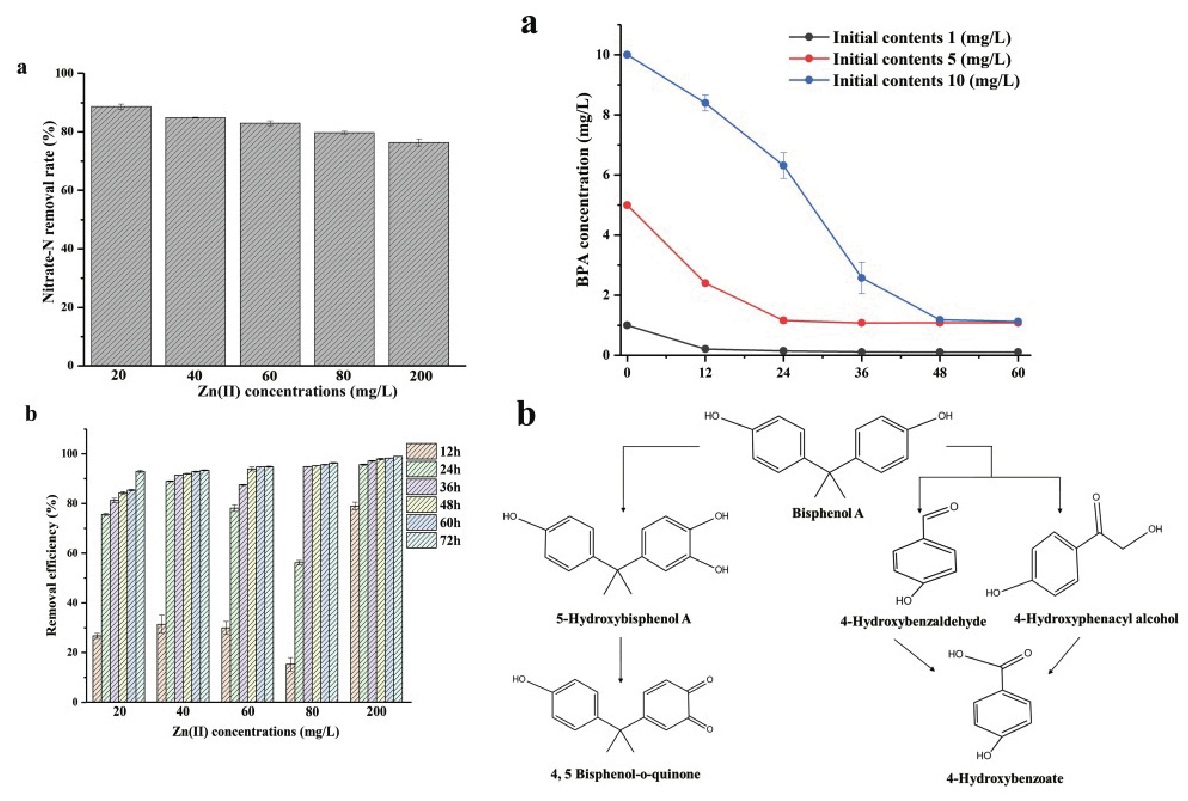
High concentrations of heavy metals and other pollutants affect microbial activity in the wastewater treatment system and impede biological denitrification process. A novel Zn(II)-resistant aerobic denitrifier (Pseudomonas stutzeri KY-37) was isolated with potential in biodegradation and removal of Bisphenol A (BPA). Its capability in concurrent removal of nitrogen, zinc, and BPA was tested. Nitrogen removal efficiency achieved 98.5% in 12h. Zn(II) removal efficiency reached more than 95%, while the maximum BPA removal efficiency reached 88.8%. Mechanisms of BPA removal included microbial degradation and adsorption on extracellular polymeric substances.
Reference:
Hong, P., Zhang, K., Dai, Y., Yuen, C.N., Gao, Y., Gu, Y., Leung, K.M.Y. (2022). Application of Aerobic Denitrifier for Simultaneous Removal of Nitrogen, Zinc, and Bisphenol A from Wastewater. Bioresource Technology, 354, 127192. (impact factor 11.889)

Posted
Involved Members: Dr. Leo Lai CHAN
Stony corals form the foundation of coral reefs, which are of prominent ecological and economic significance. A robust workflow for investigating the coral proteome is essential in understanding coral biology. Here we investigated different preparative workflows and characterized the proteome of Platygyra carnosa, a common stony coral of the South China Sea. We found that a combination of bead homogenization with suspension trapping (S-Trap) preparation could yield more than 2700 proteins from coral samples. Annotation using a P. carnosa transcriptome database revealed that the majority of proteins were from the coral host cells. Label-free quantification and functional annotations indicated that a high proportion were involved in protein and redox homeostasis. Furthermore, the S-Trap method achieved good reproducibility in quantitative analysis. Although yielding a low symbiont: host ratio, the method is efficient in characterizing the coral host proteomic landscape, which provides a foundation to explore the molecular basis of the responses of coral host tissues to environmental stressors.
Reference:
Ma, H., Liao, H., Dellisanti, W., Sun, Y., Chan, L.L., & Zhang, L. (2021). Characterizing the host coral proteome of Platygyra carnosa using suspension trapping (S-Trap). Journal of Proteome Research, 20(3), 1783-1791.

Posted
Involved Members: Prof. Kenneth Mei Yee LEUNG, Prof. Jianwen QIU
Bottom trawling has been banned in some jurisdictions to mitigate the problems of habitat destruction and overfishing. However, most reports about trawling impacts originate from temperate latitudes, and recovery of macrobenthos from trawl ban has hardly ever been studied in the tropics. In Hong Kong, to facilitate the recovery of fisheries resources and associated benthic ecosystems, the Government implemented a territory-wide trawl ban on 31 December 2012. Comparison of surveys conducted before and at 2.5 years after the ban revealed higher organic contents in sediment and lower suspended-solid loads in water, as well as a significant increase in abundance, species richness, functional diversity and among-site similarity of macrobenthos after the trawl ban. The results suggest that the imposition of a trawl ban can be an effective measure for biodiversity conservation in the tropics.
Reference:
Wang, Z., Leung, K.M.Y., Sung, Y.H., Dudgeon, D. & Qiu, J.W. (2021). Recovery of tropical marine benthos after
a trawl ban demonstrates linkage between abiotic and biotic changes. Communications Biology, 4, 212.