
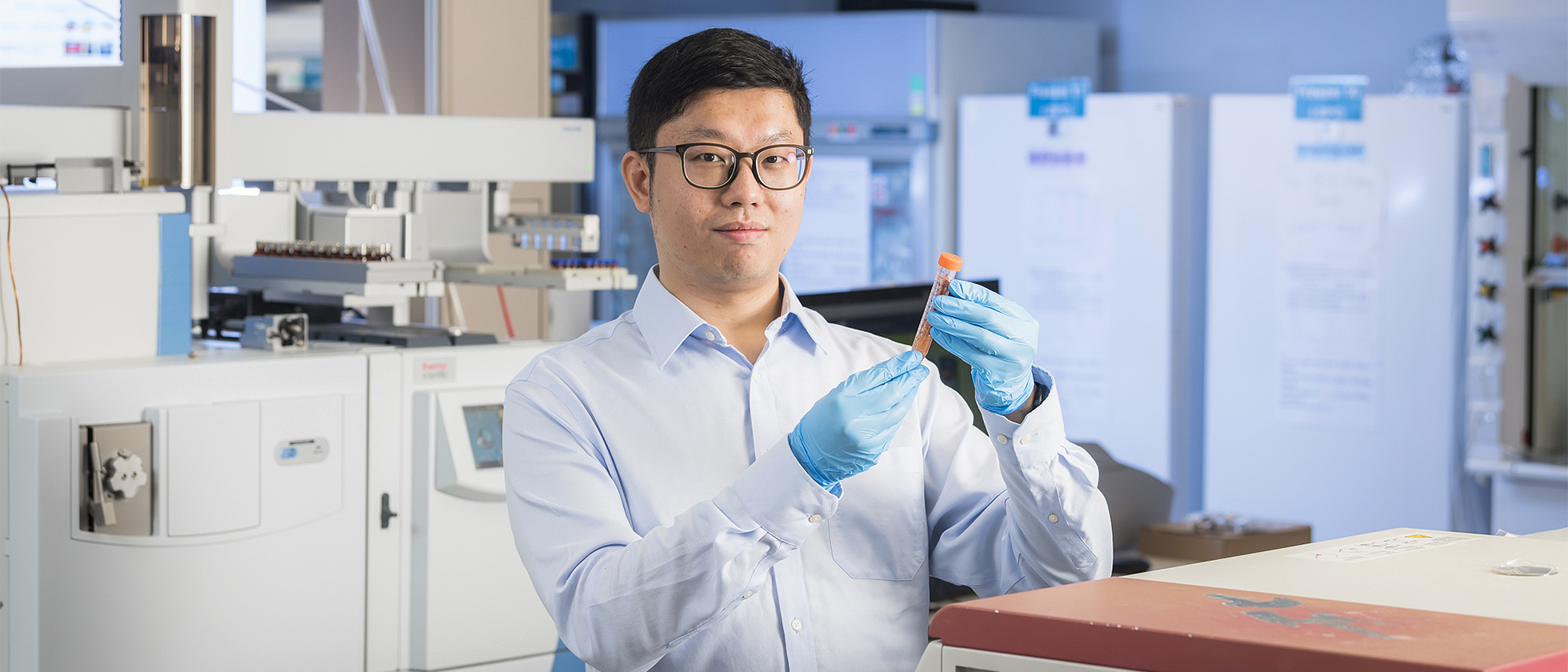
Dr Wang Qi
PhD Graduate, School of Energy and Environment
Postdoctoral Fellow, State Key Laboratory of Marine Environmental Health
Member of the Jiaolong deep-sea expedition 2024
“Always try something new.”
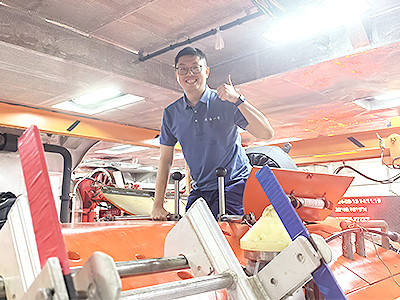
Growing up along the coastline of Liaoning Province in northern China, Dr Wang Qi witnessed the gradual deterioration of surrounding marine environments due to increasing pollution. This early exposure ignited a passion that shaped his academic journey and professional career in environmental science and led him to become one of Hong Kong’s representatives on Jiaolong, a manned deep-sea submersible developed by China. During the expedition, he dived to 4,706 metres in 2024 to investigate the realities of marine pollution in the deep-sea.
Drawn by the distinguished faculty and advanced research facilities of City University of Hong Kong (CityUHK), Dr Wang pursed his PhD here in environment chemistry in 2019. After graduation, he became a postdoctoral fellow at the State Key Laboratory of Marine Environmental Health (SKLMEH). Under the supervision of Professor Kenneth Leung Mei-yee, Chair Professor of Environmental Toxicology and Chemistry and Director of SKLMEH, Dr Wang was encouraged to look beyond the boundaries of his discipline to address environmental pollution. While his research centred on pollutants and their environmental fate, Professor Leung urged him to consider how pollutants interact with broader ecological systems. This mentorship expanded Dr Wang’s focus from coastal environments to the deep sea, fostering a global perspective on addressing environmental issues.
As a Postdoctoral Fellow at CityUHK's State Key Laboratory of Marine Environmental Health, Dr Wang specialises in studying emerging pollutants, i.e., synthetic chemicals that enter the environment and pose significant ecological risks, particularly to marine ecosystems.
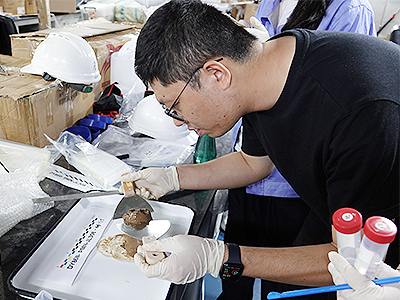
In 2024, Dr Wang was nominated by Professor Leung to join the Jiaolong deep-sea expedition organised by the National Deep Sea Centre, marking the first time an environmental chemist had participated in the mission. The 45-day expedition in the western Pacific Ocean involved a diverse crew of 60 members, including 18 scientific researchers from nine countries and regions. As one of three scientists representing Hong Kong, Dr Wang was tasked with investigating pollutants in the water, sediment, and biotas from the deep-sea habitat to evaluate the potential ecological risks posed by these chemicals.
Initially unaware of the depth he would reach, Dr Wang felt nervous when he learned he would be descending to 4,706 meters. He vividly recalls when the submersible departed from the research vessel Shenhai Yihao (Deep Sea No.1) and began its ten-hour descent to the seabed. Initial unease gave way to wonder as the submersible's lights revealed a surprisingly vibrant ecosystem teeming with sea cucumbers, corals, sea stars, and other deep-sea organisms.
Dr Wang focuses his research at CityUHK on the occurrence, distribution, and ecological risk of pollutants in the marine environment, laying the groundwork for his contributions to the Jiaolong mission. Studying pollutants at extreme depths offered him invaluable insights into global pollutant transport mechanisms. Dr Wang and his colleagues are now analysing the collected samples, and preliminary findings have already detected chemicals in the deep sea that were phased out over 10 years ago. His research aims to identify ecological threats of chemical pollutants and inform future environmental protection strategies.
Before this expedition, Dr Wang had limited knowledge about deep-sea ecosystems. The discovery of visible plastic waste and harmful chemicals at such extreme depths shocked and strengthened his resolve to continue researching and protecting marine environments. Given the opportunity, he is eager to explore even greater depths and advance our understanding of how human activities impact the most remote regions of our planet.
Dr Wang believes that addressing environmental challenges requires collaboration across disciplines. Upholding the motto of "Always try something new,” he has always maintained an open attitude towards learning, collaborating with experts from various disciplines at the University. By approaching problems from multiple perspectives, he has managed to break through research bottlenecks, thereby gaining a comprehensive understanding of complex environmental processes and designing effective, holistic solutions.
For more stories about our Heroes, please click here.
Last updated: 27-03-2026