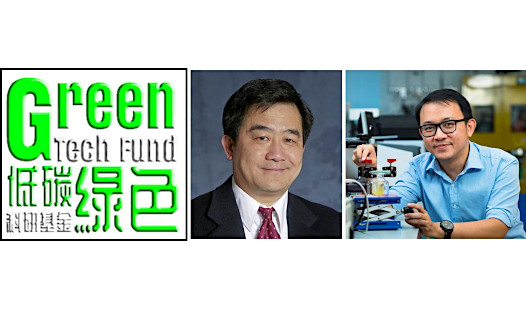
The HKSAR Government has set up the Green Tech Fund (GTF) to provide better and more focused funding support for research and development (R&D) projects which can help Hong Kong decarbonise and enhance environmental protection as Hong Kong strives towards its goal of carbon neutrality before 2050. The Secretariat of GTF has just announced the eight approved projects out of over 190 applications. Out of the eight funded proposals, CityU has successfully secured two projects, in which both are led by SEE faculty members. Chair Professor Alex Jen and his team will develop printable perovskite so
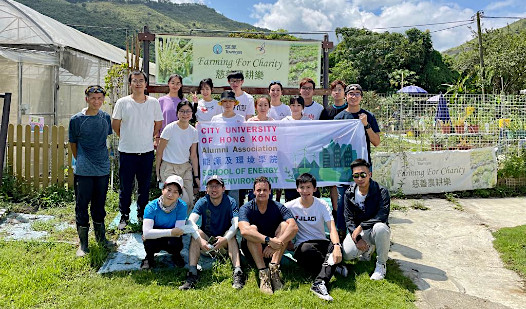
The SEE Alumni Association organised two visits to an organic farm ran by Towngas in September 2021. Led by Dr. Denis Yu and Dr. Henry He, 40 MSc students and alumni joined the visits. The groups learnt new approaches and technologies regarding organic farming.
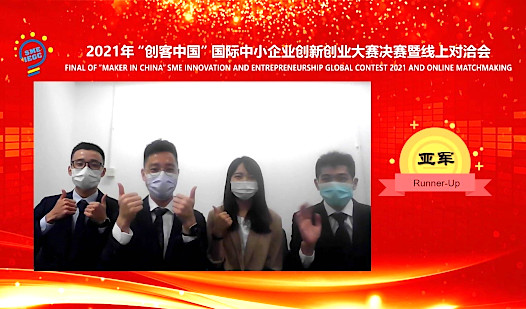
After winning the championship in SME Innovation and Entrepreneurship Global Contest, Mr. Zhu Yihao, Martin (PhD student), Mr. Lin Kaixin, Johnny (PhD student), Miss Shirley Du (PhD student) and Dr.
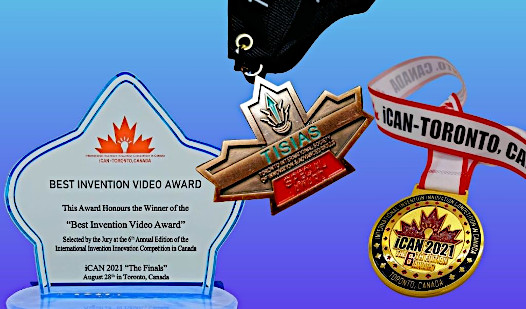
Dr. Edwin Tso and his research team (PhD students: Mr. Stanley Liu, Miss. Shirley Du, and Mr. Martin Zhu; Postdoc fellow: Dr. William Lee) recently participated in the 2021 International Invention Innovation Competition in Canada (iCAN 2021) with their invention “An Intelligent and Thermally-responsive Window (ITRW) for Indoor Thermal Management and Energy-saving in Buildings”. The team won the Gold Medal, Canadian Special Award, and Best Invention Video Award in this fierce competition.
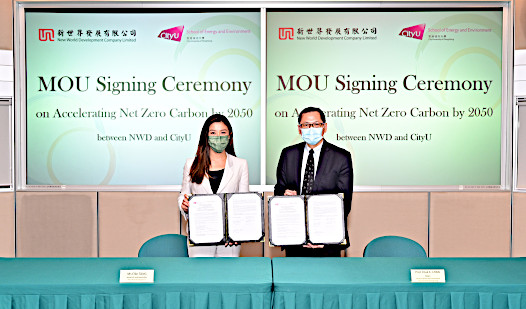
CityU SEE and New World Development Company Limited (“NWD”) concluded a MOU to accelerate the common ambition to achieve Science Based Targets by 2030 and Net Zero Carbon by 2050, echoing the HKSAR Government's own green target.
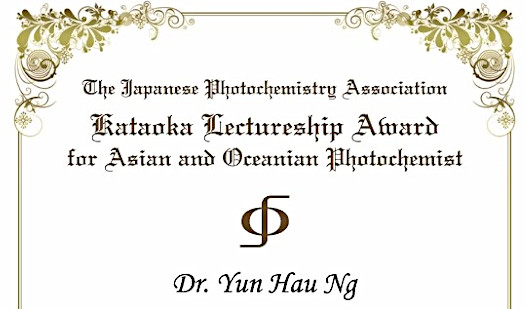
Dr. Yun Hau Ng, Associate Professor, is recently awarded the Kataoka Lectureship Award for Asian and Oceanian Photochemist 2021, by the Japanese Photochemistry Association (JPA). This annual award is presented to one eminent scientist in the Asian and Oceanian region for the scientist’s outstanding research in the study of photochemistry.
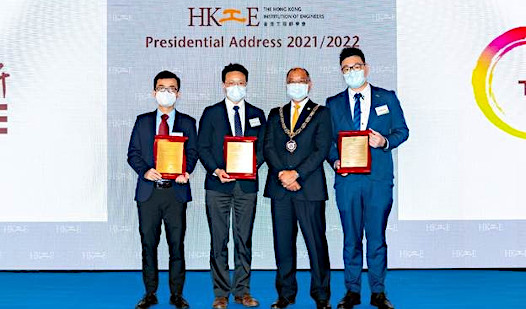
Congratulations to Prof. Michael Leung, Dr. Edwin Tso and Dr. Wei Wu for winning the HKIE Best Transactions Paper Prize 2021! They jointly published a paper entitled “Chillers of air-conditioning systems: An overview” in the HKIE Transactions. This paper discusses the technical details of the latest chiller technologies that help engineers design air-conditioning systems for high energy efficiency and sustainability. Two other co-authors are Dr. Zhanying Zheng and Dr. Jingyu Cao (SEE post-docs).
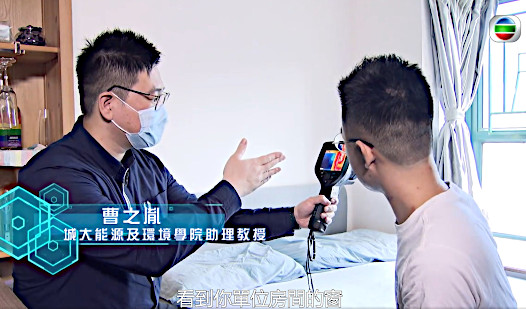
Dr. Edwin Tso, Assistant Professor, was interviewed by TVB (Television Broadcasts Limited) to showcase his innovation on thermochromic smart window. The interview was aired at Channel 85 TVB Finance & Information Channel – Innovation GPS, on 8 September 2021.
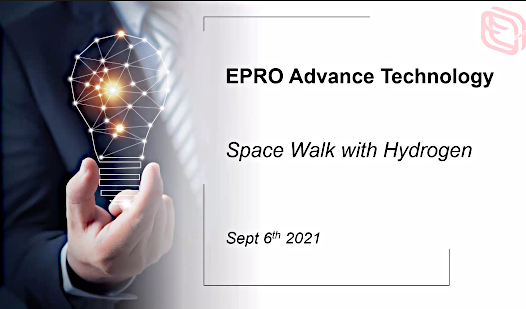
Mr. Albert Lau shared with the SEE community one of the clean energy solutions – Hydrogen. He mentioned the Scalable Si+ Hydrogen power plant and compared it with other off grid power solutions.
He also encouraged SEE students to open up their minds, see the world, discover where their interests lie and change the world together. The talk was well received with close to a hundred participants.