CityUHK scholars decode the multilingual mind at QS APAC Summit: foreign languages reshape decisions and lifelong bilingualism delays dementia

Why does presenting the classic philosophical “trolley problem” in a foreign language lead to an over 50% increase in participants choosing to push a man off a footbridge to save five workers? At the QS Higher Ed Summit: Asia Pacific 2026, held in Bali, Indonesia, scholars from City University of Hong Kong (CityUHK), together with international experts from the UK and Malaysia, convened a dedicated panel discussion to examine how language switching influences human decision-making and cognitive ageing.
Titled “The Multilingual Mind: How Language Shapes Decisions and the Ageing Brain”, the session was co-chaired by Professor Niels Schiller, Chair Professor and Head of the Department of Linguistics and Translation at CityUHK, and Professor Adel Chaouch-Orozco from the same department. The panel featured Professor Katie Lunnon, Associate Pro-Vice-Chancellor for Global Engagement and Professor of Dementia Genomics at the University of Exeter, and Dr Arjun Thanaraju, Head (Academic Portfolio) of Sunway University Online and Lecturer in Psychology at Sunway University. Spanning (psycho-)linguistics, cognitive psychology and neuroscience, the speakers explored how multilingual competence shapes neural decision pathways, builds protective barriers against cognitive decline, and provides actionable scientific insights for an ageing society.
Explaining why switching to a foreign language makes individuals more willing to make utilitarian moral choices, Professor Chaouch-Orozco pointed to the well-documented “Foreign Language Effect”. A native language is acquired through daily life during upbringing, carrying deep affective associations. When confronted with the moral taboo of physically pushing someone off a bridge to stop a train, intuition triggers an immediate emotional aversion. In contrast, a foreign language is typically acquired in classroom or other formal settings, thus bearing far less emotional weight. Stripped of the native emotional filter, deliberative reasoning takes over, steering individuals toward a utilitarian calculus, judging that sacrificing one life to save five yields a greater collective outcome, thereby significantly increasing the likelihood of making such sacrificial choices. This psychological distance similarly manifests in financial and risk assessments.
Beyond immediate decision-making, lifelong multilingualism serves as a powerful shield against brain ageing. Professor Schiller cited cross-national research encompassing over 80,000 European participants, showing that older adults who actively use two or more languages experience the onset of dementia (such as Alzheimer's disease) symptoms an average of four to five years later than monolinguals.
Professor Lunnon added that while multilingualism does not halt the underlying accumulation of neuropathology, bilingual patients ultimately pass away from the condition within a similar timeframe. However, its pivotal value lies in substantially delaying the manifestation of clinical symptoms. This delay allows individuals to enjoy several additional years of lucid, symptom-free life, markedly enhancing their quality of life during their later years.
Addressing common concerns over whether bilinguals experience a steeper or more severe cognitive decline once their reserve is depleted, Dr Thanaraju clarified this widespread misconception. He explained that monolinguals typically undergo a steady, continuous decline from the early stages of cognitive impairment. In contrast, multilingual individuals can leverage their robust cognitive reserve to resist symptom onset for years until that reserve is eventually exhausted. While the subsequent drop may appear abrupt, these individuals have effectively gained years of disease-free, high-functioning life, which makes a profound difference for patients and their families.
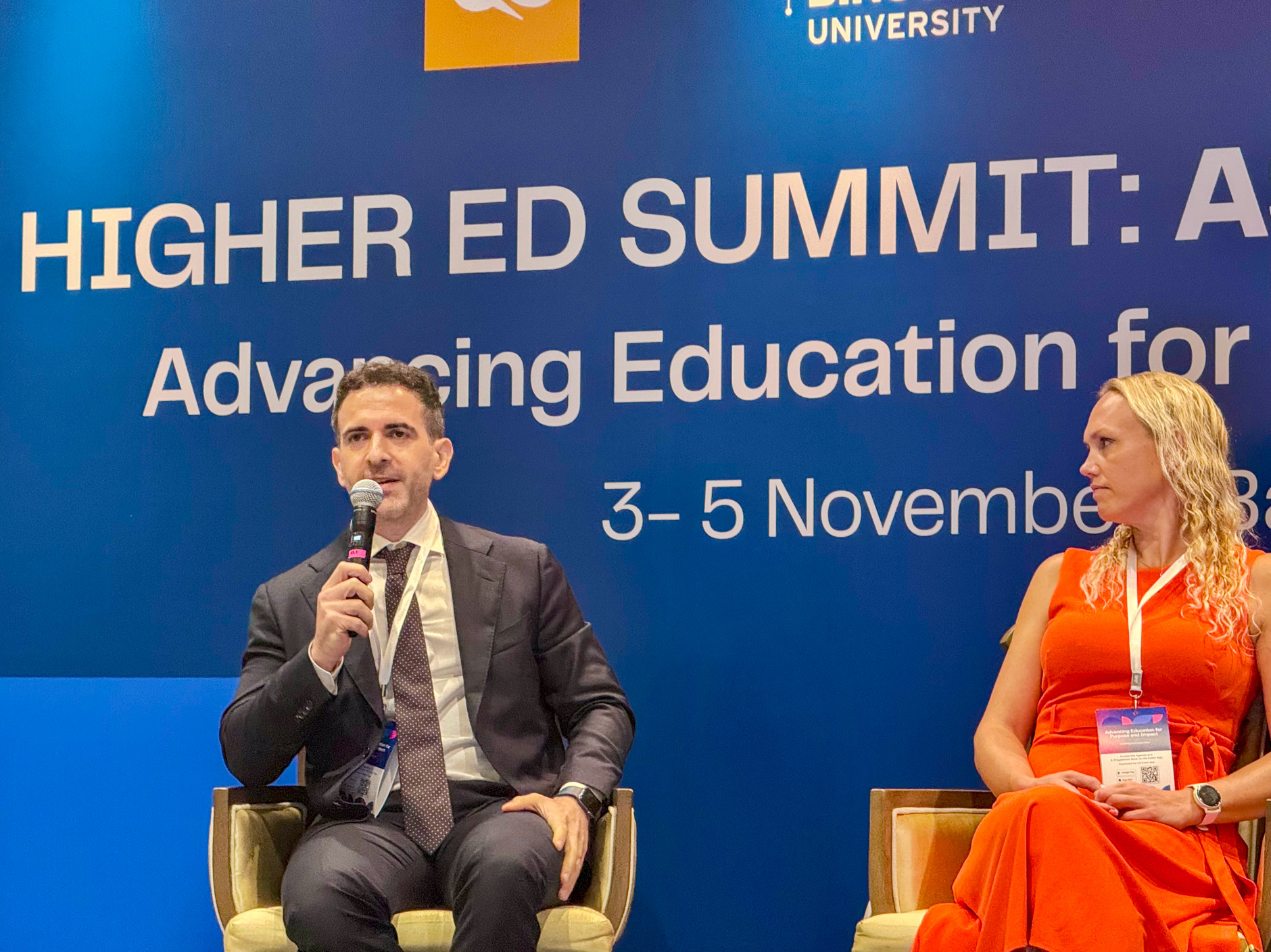
Regarding “code-switching”, a prevalent phenomenon across Southeast Asia and other multilingual societies, Professor Chaouch-Orozco emphasised that the intensity of language use is essential. Simply using language learning mobile apps offers limited neural benefits; only high-frequency, high-demand bilingual usage under authentic communicative pressure can effectively train brain plasticity.
This interdisciplinary symposium highlighted CityUHK's cutting-edge research strengths in cognitive neuroscience of language while providing valuable scientific perspectives for addressing the challenges associated with global population ageing.
CityUHK is committed to establishing partnerships with world-renowned universities and institutions to promote academic and research collaboration. For more information about CityUHK’s global partnerships, please visit our thematic website.