CityUHK integrates AI and frontier technologies to lead smart conservation of horseshoe crabs and protect marine “living fossils”
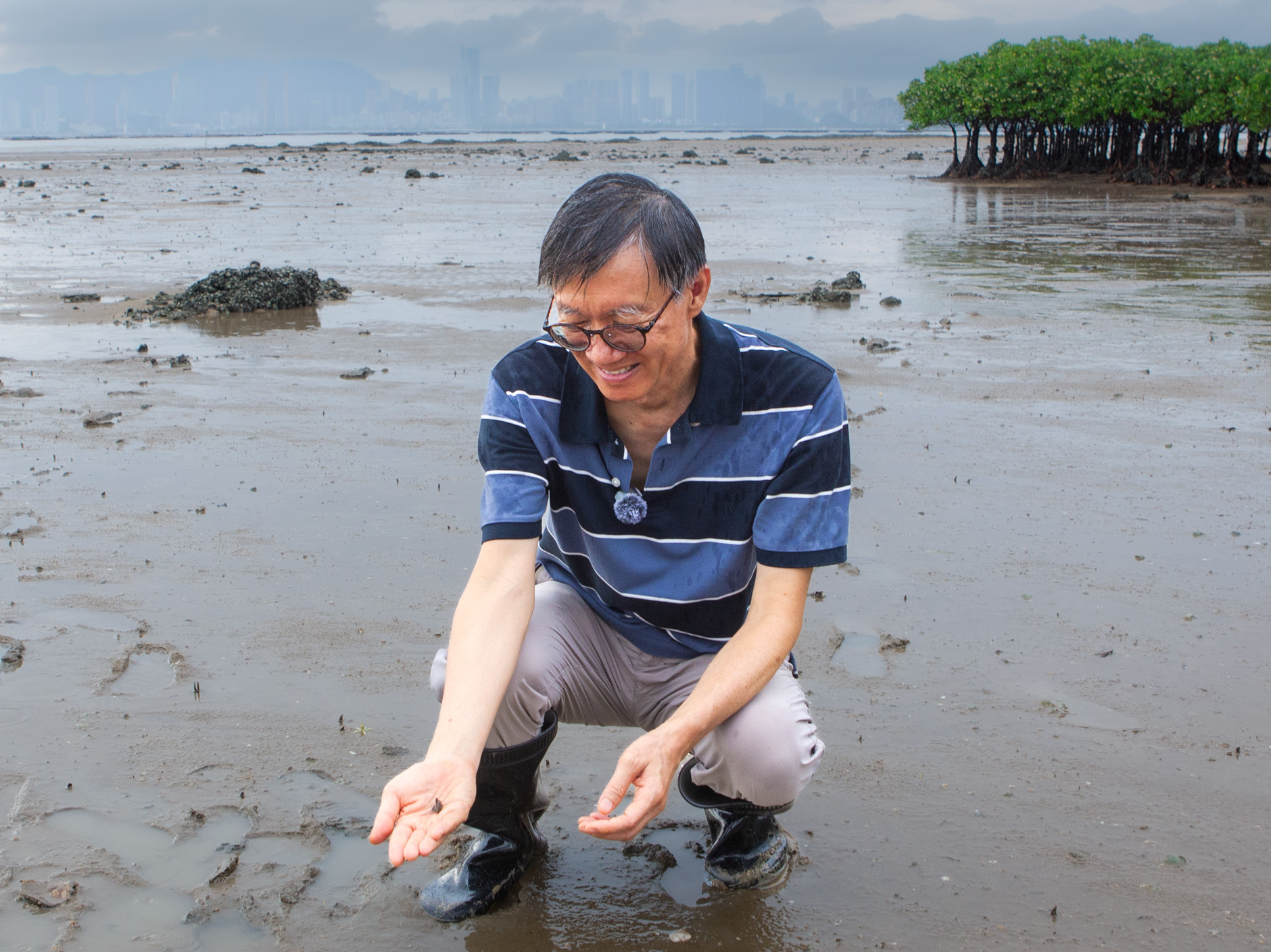
Horseshoe crabs (scientific name Tachypleus) have inhabited on Earth for over 400 million years, earning them the reputation of being “living fossils”. Among the four existing horseshoe crab species, two can be found in Hong Kong: the tri-spine horseshoe crab and the mangrove horseshoe crab. However, rapid local urbanisation and coastal pollution have caused a severe contraction in their natural breeding grounds and wild habitats, posing serious challenges to their survival.
City University of Hong Kong (CityUHK) has long played a pioneering role in local horseshoe crab conservation, dedicating ongoing efforts to artificial breeding and wild release, habitat monitoring, scientific research and public education to prevent the local disappearance of this ancient species. Since 2009, CityUHK has collaborated with the Ocean Park Conservation Foundation, Hong Kong to organise the “Juvenile Horseshoe Crab School Rearing Programme”, actively engaging schools and the community to participate in the protection of coastal wildlife. In recent years, CityUHK has advanced its horseshoe crab conservation initiatives by leveraging innovative technology and cross-sector collaboration, significantly enhancing the effectiveness of its efforts.
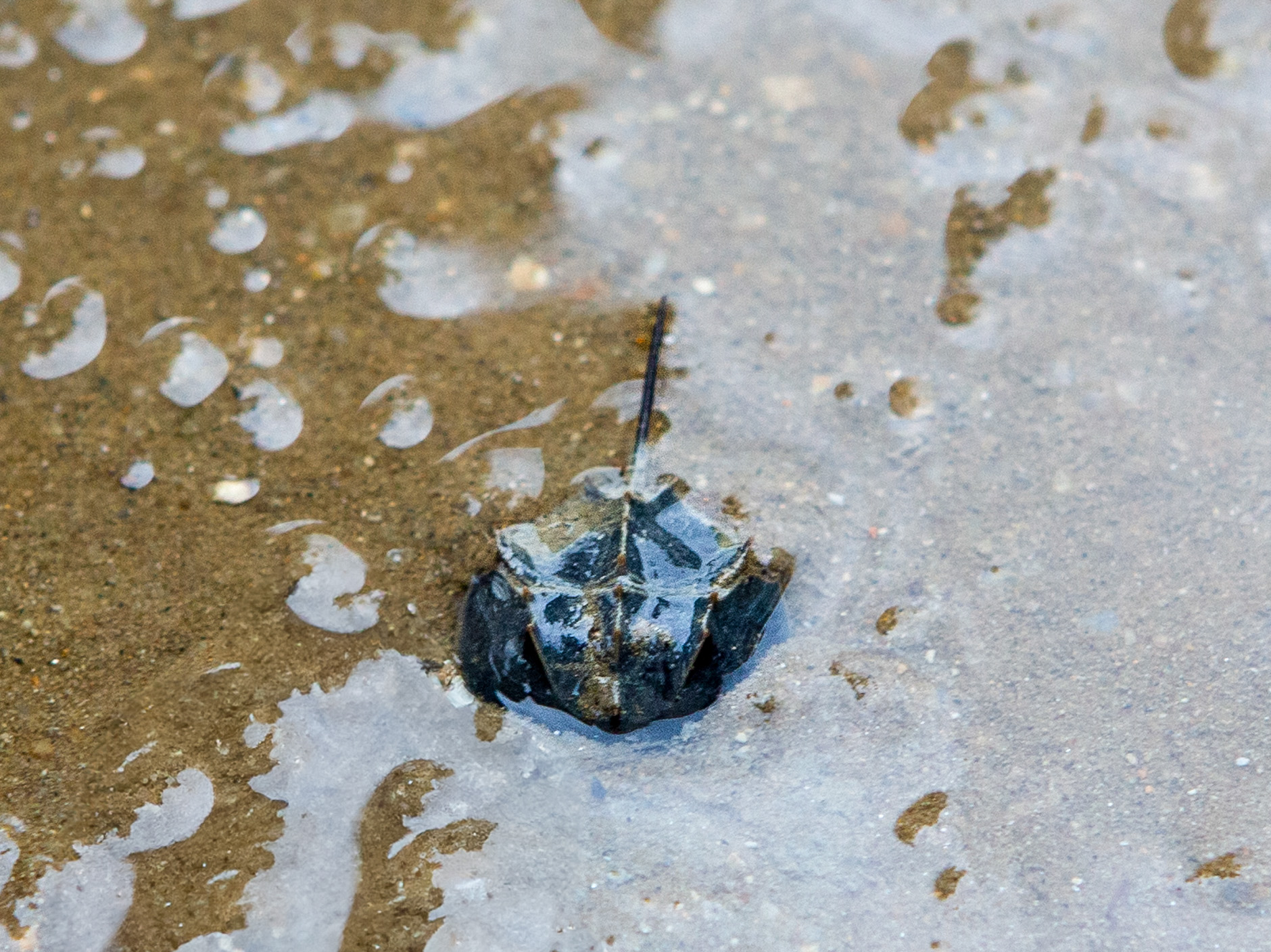
Juvenile horseshoe crabs are small in size and often hide in tiny burrows, posing significant challenges for traditional ecological surveys. Professor Cheung Siu-gin from Department of Chemistry at CityUHK, partnered with researchers from The Chinese University of Hong Kong to launch a groundbreaking pilot study. This project marks the first time that drone and artificial intelligence (AI) technologies have been deployed to monitor juvenile horseshoe crab populations across local mudflats. Traditionally, tracking these miniature juveniles required researchers to conduct exhaustive, labour-intensive searches on foot across vast mudflats. The newly developed AI-driven drone system automates detection and ensures precise counting, significantly boosting ecological survey efficiency and data accuracy.
The findings from this study have been published in an international academic journal. Building on this success, the project secured approximately HK$1.3 million in funding from the Environment and Conservation Fund of the HKSAR Government this year, enabling researchers to further scale and refine the application of these “smart conservation” technologies.
In support of adult horseshoe crab conservation, CityUHK is working in close partnership with Ocean Park Hong Kong on a specialised acoustic tracking study to better track the migratory pathways and habitat preferences of the species in deep-water seabeds. The research team will place acoustic tags on the carapace of adult horseshoe crabs in Tung Chung Bay and Deep Bay, allowing them to collect vital tracking data via underwater receivers. These empirical insights are expected to provide a robust scientific foundation for the government when formulating future marine conservation policies. Supported by a grant of approximately HK$0.8 million from the Airport Authority’s Marine Ecology Enhancement Fund, this initiative underscores the growing shift towards data-driven environmental protection.
CityUHK’s conservation impact extends to the global level. Professor Cheung serves as a member of the Steering Committee of the Horseshoe Crab Specialist Group under the International Union for Conservation of Nature (IUCN), where he coordinates international conservation efforts and evaluates extinction risks for the three Asian horseshoe crab species. Significantly, the group’s research reports contributed to the tri-spine horseshoe crab (Tachypleus tridentatus) being listed as an “Endangered” species on the IUCN Red List in 2019. This classification not only heightened international awareness but also guided the formulation of conservation policies and the targeted allocation of resources, creating new opportunities for the long-term survival of the species.
“Over the past two decades, the CityUHK team has successfully driven the evolution of horseshoe crab conservation, moving from laboratory-based artificial breeding to widespread environmental education in schools across Hong Kong, and now to today's smart, tech-driven conservation,” said Professor Cheung. “We will continue to champion the application of cutting-edge technology in ecological monitoring, delivering a more systematic and robust foundation of scientific evidence to inform marine protection policies both locally and regionally.”
Looking ahead, CityUHK will continue to leverage its robust research capabilities, focusing on the strategic deployment of advanced technologies, including AI, drones and acoustics, to help safeguard Hong Kong’s rich coastal biodiversity.