CityUHK delegation attends 9th World Investment Forum and meets Chinese ambassador to Qatar to advance education and research cooperation
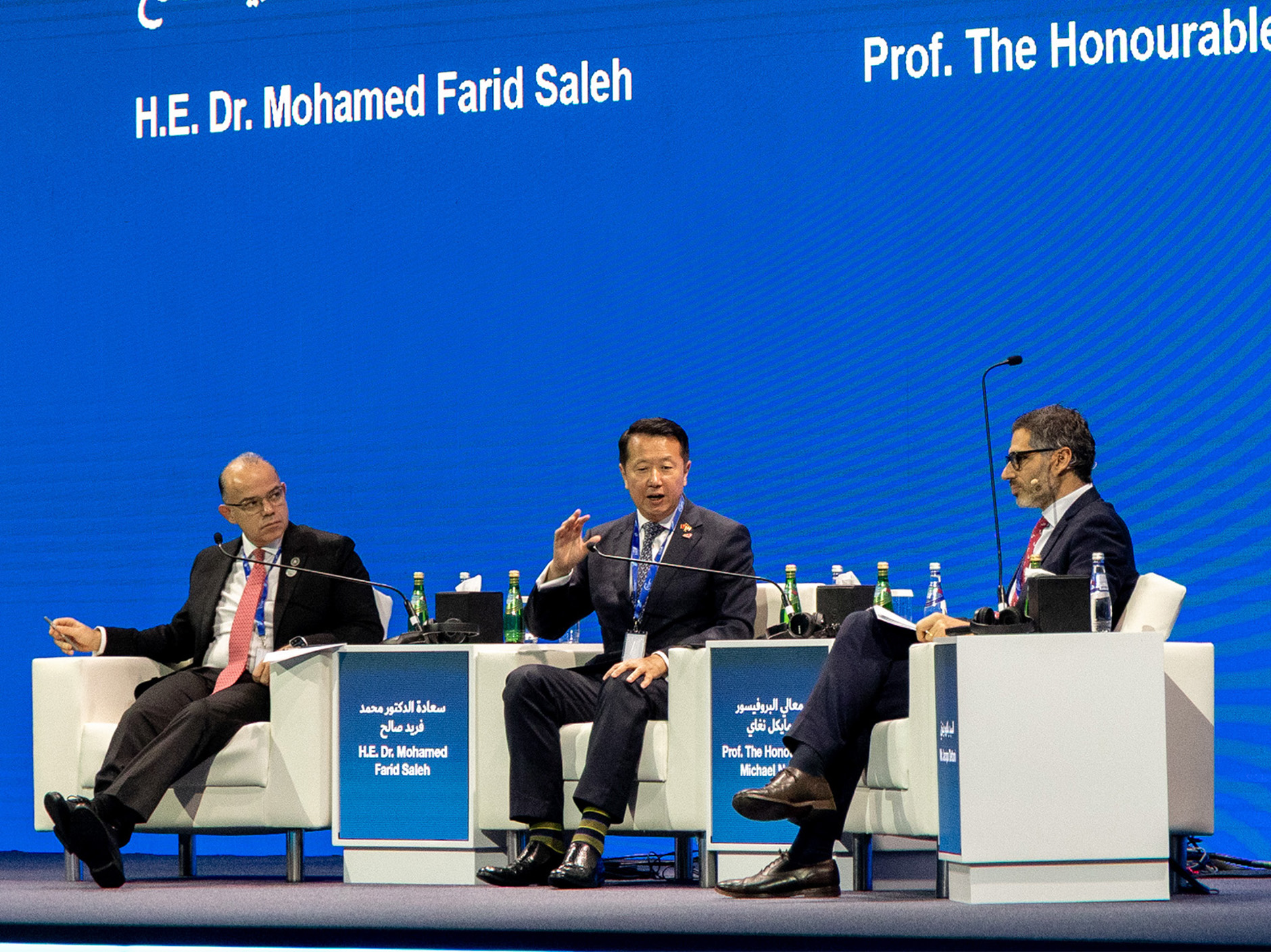
A senior delegation from City University of Hong Kong (CityUHK) took part in key sessions of the 9th World Investment Forum 2026 of United Nations Trade and Development (UNCTAD) in Doha, Qatar. The delegation also held bilateral meetings aimed at expanding the University’s partnerships across the Middle East.
Professor the Honourable Michael Ngai, Chairman of the Council at CityUHK, spoke at the “Investing in Skills, Talent and Entrepreneurship” session alongside panel discussant Dr Mohamed Farid Saleh, Minister of Investment and Foreign Trade of the Arab Republic of Egypt. Professor Ngai described CityUHK as an academic bridge connecting China, Asia and the world. It upholds a “cross-border vision, global outlook” and has been ranked the “Most International University in the World” for three consecutive years (2024, 2025 and 2026). CityUHK enjoys the backing of the Chinese Mainland, with its wide application scenarios, advanced manufacturing base and huge market, which helps transfer basic research into real applications. It also connects to Southeast Asia and Belt and Road countries, further enhancing the integration of education, technology, talent and finance. He pointed out that advanced computing infrastructure is shaping today’s productivity frontier, and that universities have a vital mandate to conduct long-term, exploratory research ahead of commercial applications.
CityUHK ranks second globally for Citations per Faculty in the QS World University Rankings 2027, second only to Harvard University and ahead of the Massachusetts Institute of Technology and the California Institute of Technology. Professor Ngai stressed that more important still is knowledge transfer, turning research into real applications that create economic value and benefit society. To this end, CityUHK launched its HK Tech 300 innovation and entrepreneurship programme in 2021. Having now incubated over 1,000 start-ups, it has become one of the largest incubation programmes in Asia, covering 16 cities on the Chinese Mainland, five Asian countries, Europe, the Middle East and Central Asia. One of its success factors is an ecosystem involving CityUHK’s faculties, the financial and professional services sectors and corporates. He shared that CityUHK’s formula for success lies in internationalisation and innovation, with an emphasis on working across subjects, sectors and countries. Beyond translating research into tangible community impact, CityUHK will deepen ties with Belt and Road institutions and world‑class universities to address shared global challenges.
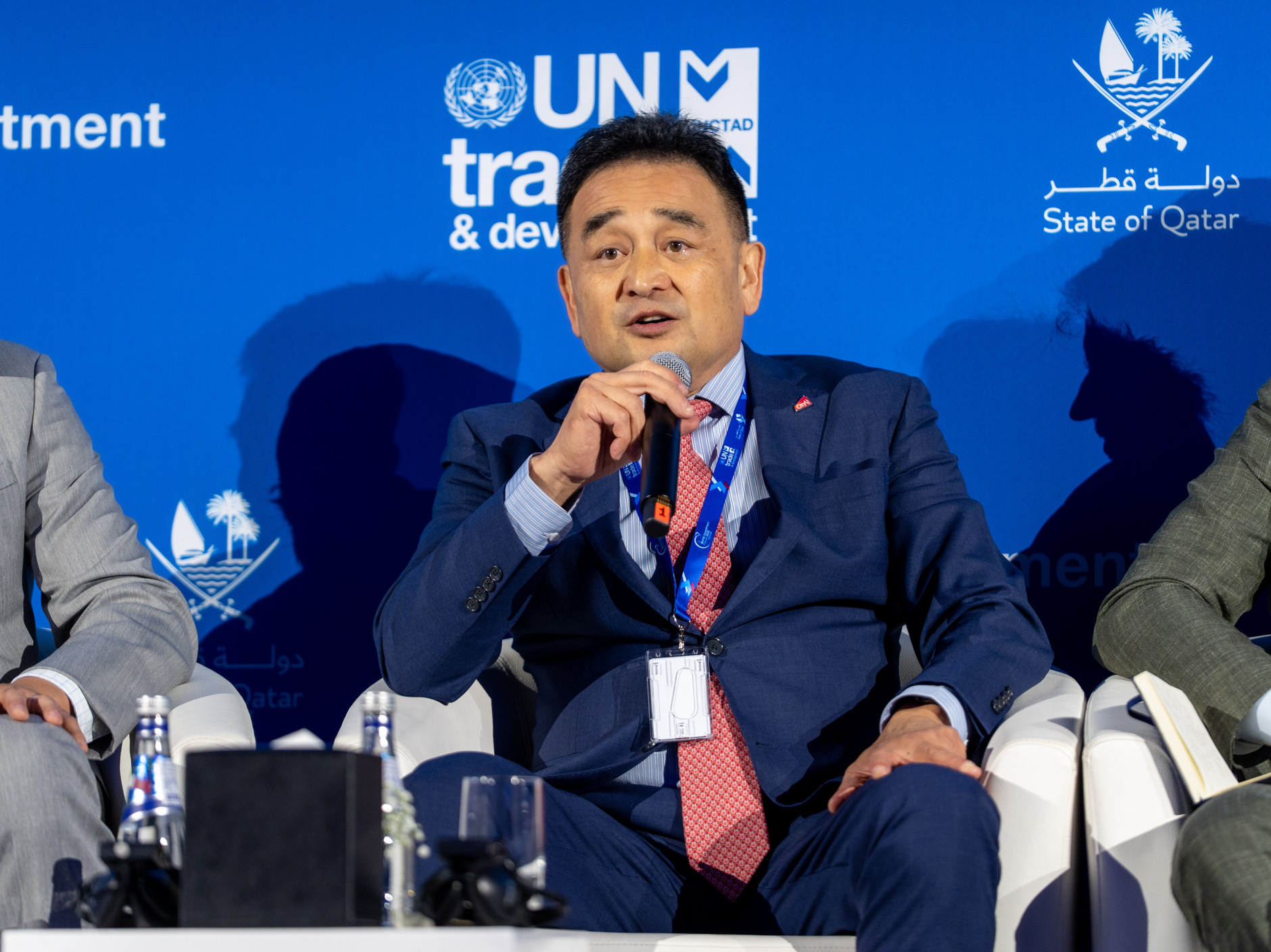
At the panel discussion “Future‑ready Talent for SMEs and Start‑ups: Crafting Resilient Business Models for a Digital and Sustainable Era”, Professor Li Wen Jung, Vice‑President (Talent and International Strategy), delivered remarks on higher education talent development amid AI‑fuelled entrepreneurship. Professor Li explained that universities are evolving into third‑ and fourth‑generation institutions. Moving beyond knowledge dissemination alone, higher education must deliver real‑world impact for society at speed. “Future‑proof talent cannot be trained in isolation. Students must engage early with industry, government and investors, solving real‑world challenges through interdisciplinary collaboration with a global perspective,” he emphasised.
As routine technical tasks are increasingly automated by AI, Professor Li argued that universities should nurture graduates with stronger empathy and interpersonal skills. He explained that much context‑rich cultural and interpersonal knowledge never enters datasets, creating inherent limitations for AI systems. “The same tool used by two different people will yield two different results. Those who know how to ask better questions will prevail in the future,” he said. He believes that cultural literacy, interpersonal judgement and incisive questioning will become core competitive strengths for tomorrow’s workforce.
Looking a decade ahead, Professor Li predicted a paradigm shift in innovation: high‑tech ventures will no longer be the near‑exclusive domain of chemical or mechanical engineering specialists. Artists, philosophers and humanities scholars will also be able to build sophisticated technology enterprises by articulating their original ideas to AI tools, bringing profound change to global entrepreneurship ecosystems.
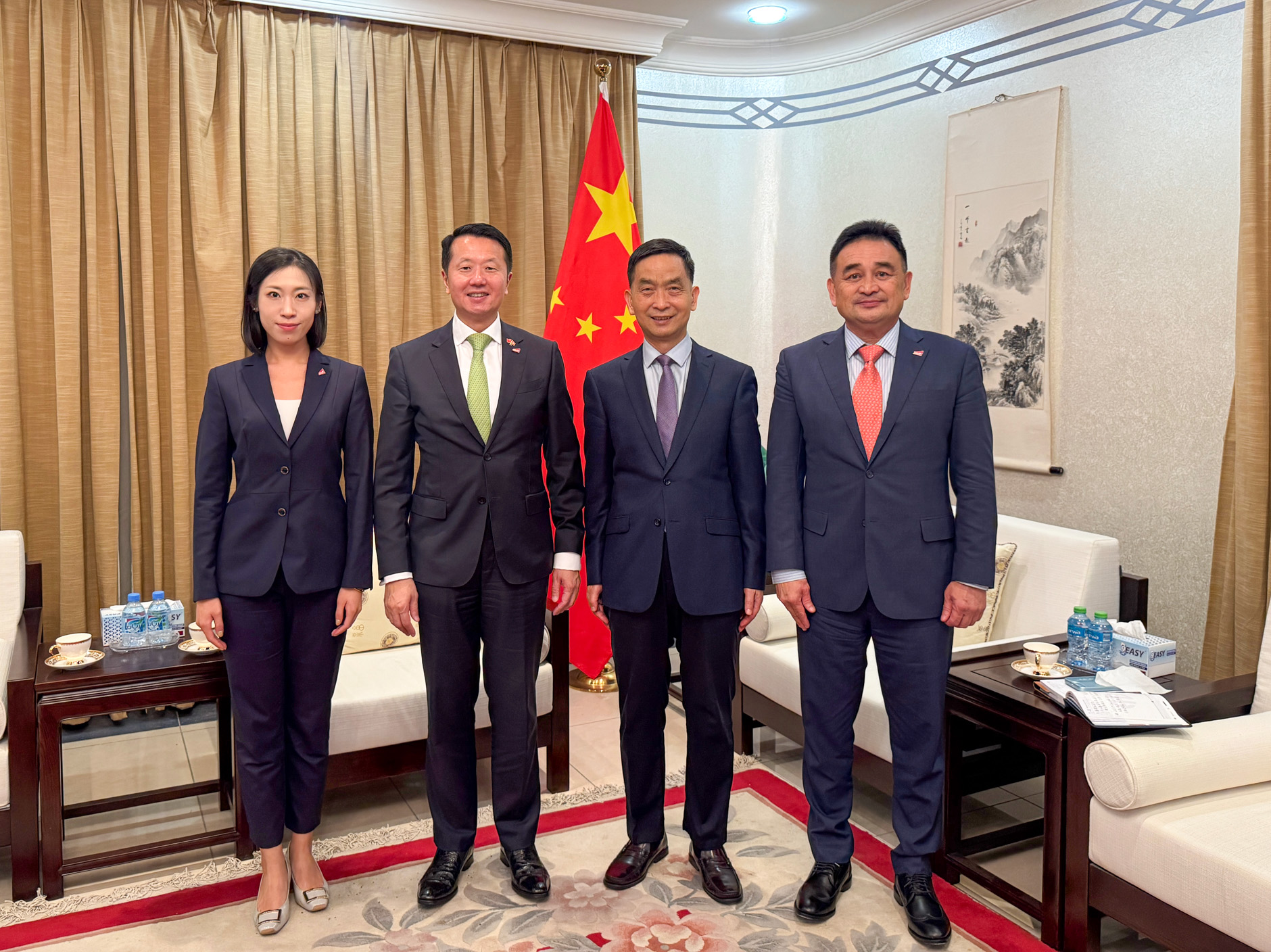
During the forum, the CityUHK delegation met H.E. Cao Xiaolin, Ambassador Extraordinary and Plenipotentiary of the People’s Republic of China to the State of Qatar. Both sides explored concrete pathways for deepening cooperation between Hong Kong and Qatar in higher education and scientific research, focusing on joint degree programmes and joint research laboratories. Ambassador Cao said that Qatar places great importance on education and is actively seeking high-calibre Asian higher education partners. He added that respect for Islamic cultural traditions would foster warmer bilateral relations and smoother delivery of cooperation projects.
CityUHK’s international collaboration is underpinned by dual strengths: the backing of the Chinese Mainland, and the global connectivity Hong Kong enjoys under “One Country, Two Systems”. Its students come from 100 countries and regions, and it maintains collaborative links with more than 400 universities and research institutes. Among Hong Kong’s eight UGC‑funded universities, CityUHK is the only one with two officially certified halal restaurants and dedicated prayer rooms, creating an inclusive campus environment for Muslim students.
Going forward, CityUHK will use its engagement with Qatar as a strategic anchor. Drawing on Hong Kong’s role as an international hub and the resources of the Chinese Mainland, the University will advance two‑way collaboration with Gulf nations in talent development and frontier science, translating signed framework agreements into tangible outcomes.
CityUHK is committed to establishing partnerships with world-renowned universities and institutions to promote academic and research collaboration. For more information about CityUHK’s global partnerships, please visit our thematic website.