Professor Herman Hu analyses 15th Five-Year Plan technology trends and career opportunities for young people at CityUHK talk
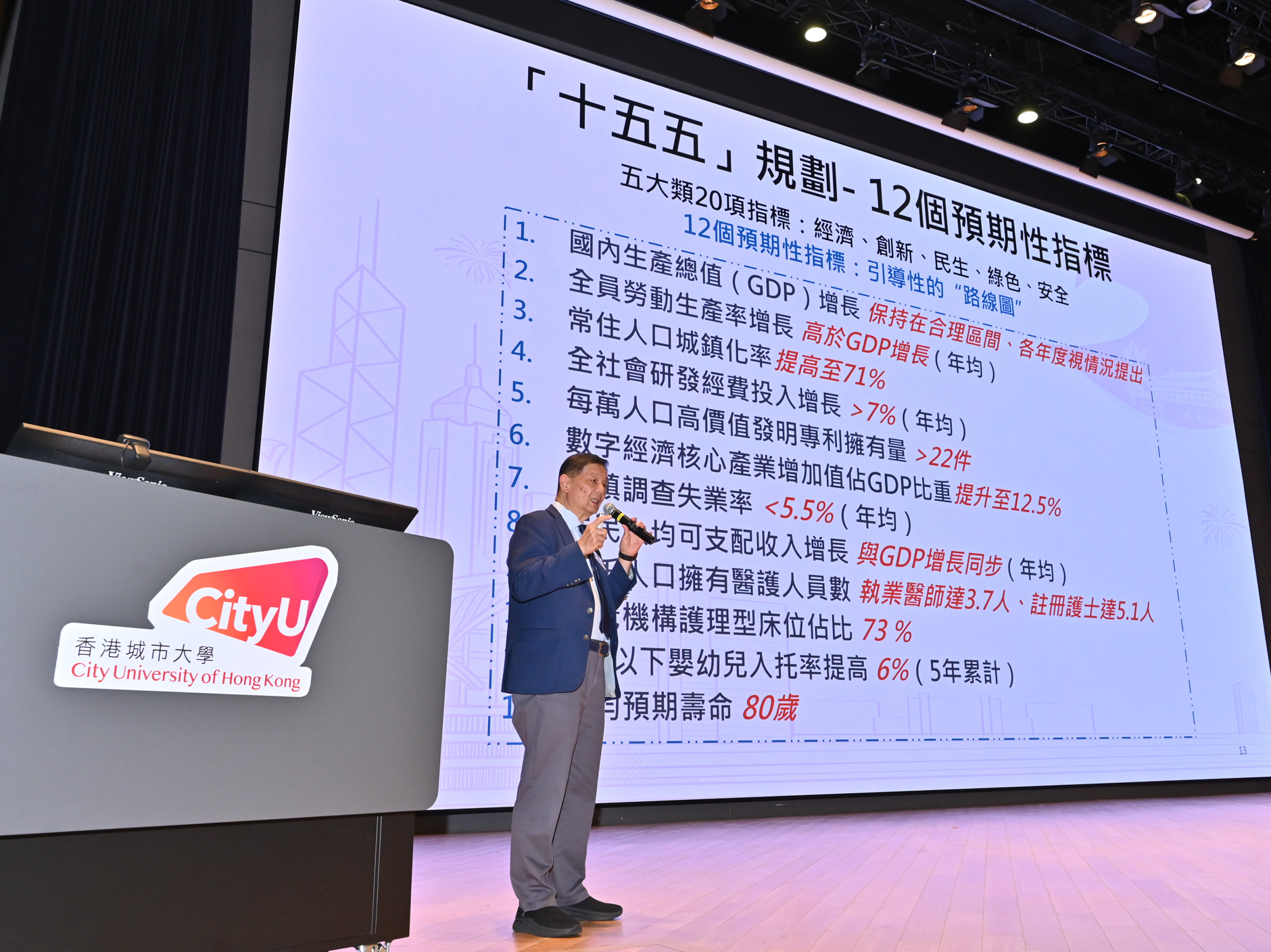
City University of Hong Kong (CityUHK) hosted a talk titled “The 15th Five-Year Plan: Technology Trends Shaping Future Career Opportunities” on 23 September, delivered by Professor Herman Hu Shao-ming, former Council Chairman of CityUHK and Chairman of Ryoden Development Limited. The talk examined the key development priorities and cutting-edge technology trends of the National 15th Five-Year Plan, as well as how young people in Hong Kong can seize the opportunities arising from the nation’s development. It attracted around 400 students and staff.
In his welcome remarks, Professor Chun-Sing Lee, Acting President of CityUHK, noted that the rapid development of emerging technologies such as artificial intelligence and green technology is reshaping global industries and talent needs. A deeper understanding of the nation’s development direction and technology trends will help students broaden their horizons and enhance their competitiveness. He said that in addition to his many contributions to education, Professor Hu is a Hong Kong deputy to the National People’s Congress with long-standing involvement in national affairs and unique insights into the development of the nation and Hong Kong. He encouraged students to seize the opportunities of the times and contribute to the nation and society.
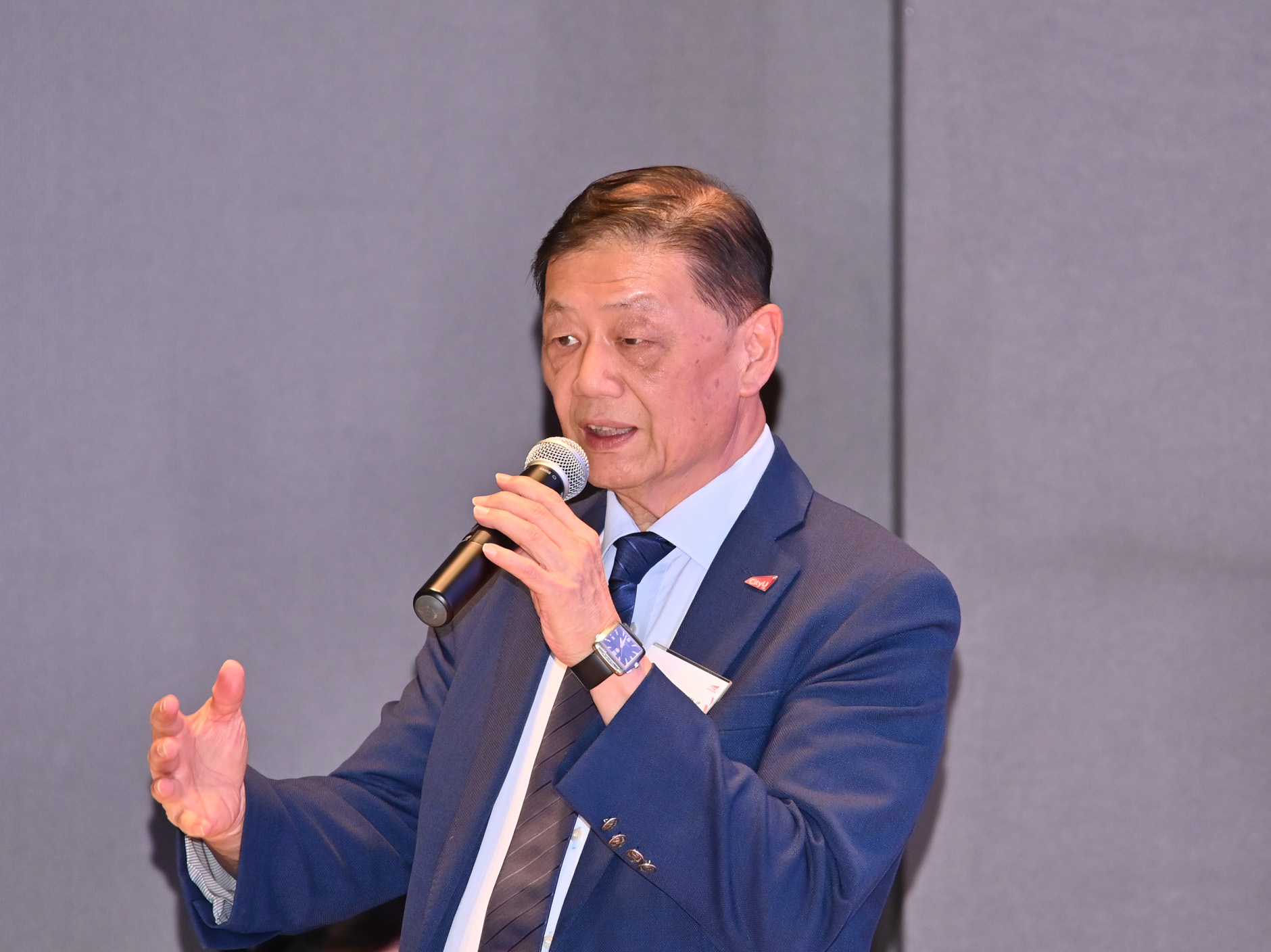
Professor Hu is currently a Hong Kong deputy to the 14th National People’s Congress and Co-Chairperson of the Board of Governors of the CityUHK Foundation, and has built strong ties with CityUHK. He was appointed to the University Council in 2004 and served as Council Chairman from 2012 to 2017. Carrying forward his family’s longstanding tradition of supporting education, Professor Hu has wholeheartedly supported the University’s teaching and research over the years, including donations to a number of scholarships and named chair professorships.
In his talk, Professor Hu analysed the evolution of the nation’s development blueprints. He pointed out that the shift in how the nation’s five-year blueprints are framed reflects the government’s role in setting strategic goals and development directions, and in turn mobilising the whole of society to take them forward. He noted that many of the targets in the 15th Five-Year Plan are closely linked to people’s well-being, such as having 3.7 licensed doctors and 5.1 registered nurses per 1,000 people. Given that all the targets of the 14th Five-Year Plan have been met, he was confident that the goals of the 15th Five-Year Plan could also be achieved.
On industrial development, Professor Hu introduced the nation’s eight strategic emerging industries and six industries of the future, covering next-generation information technology, new energy, robotics, biopharmaceuticals, quantum technology, hydrogen and nuclear fusion power, brain-computer interfaces and 6G mobile communications. He described these 14 fields as areas that the nation is fully committed to supporting, serving as a “guiding light” for young people’s future careers, and encouraged students to reflect on their interests and aspirations and actively pursue careers in these industries.
Professor Hu further noted that the 15th Five-Year Plan fully reflects the importance the nation attaches to Hong Kong. In addition to “One Country, Two Systems”, the joint development of the “Belt and Road” and the development of the Guangdong-Hong Kong-Macao Greater Bay Area, the “Northern Metropolis” has also been written into the Plan, which is both a recognition from the nation and a responsibility for Hong Kong. He said Hong Kong’s strengths lie in five areas, namely finance, law, talent, scientific research and professional services, and that besides emerging and future industries, students could also explore opportunities in these areas. He noted that Hong Kong is striving to become an International Hub for High-calibre Talents, with internationalisation being its core competitiveness. Citing CityUHK as an example, he said the higher education sector is actively attracting internationally renowned scholars to Hong Kong, and he hoped that talented individuals would stay and build their careers in Hong Kong after completing their studies.
In closing, Professor Hu encouraged students to be self-reliant and keep pace with the times, and concluded by citing words of encouragement to Hong Kong students from General Secretary Xi Jinping. He hoped that students would combine the Chinese idiom “reading 10,000 books” with “travelling 10,000 miles”, gain deep insight into global development trends, develop an in-depth understanding of the nation’s history, culture and national conditions, and grow into pillars of society capable of shouldering great responsibilities, contributing to building a better Hong Kong and realising national rejuvenation.
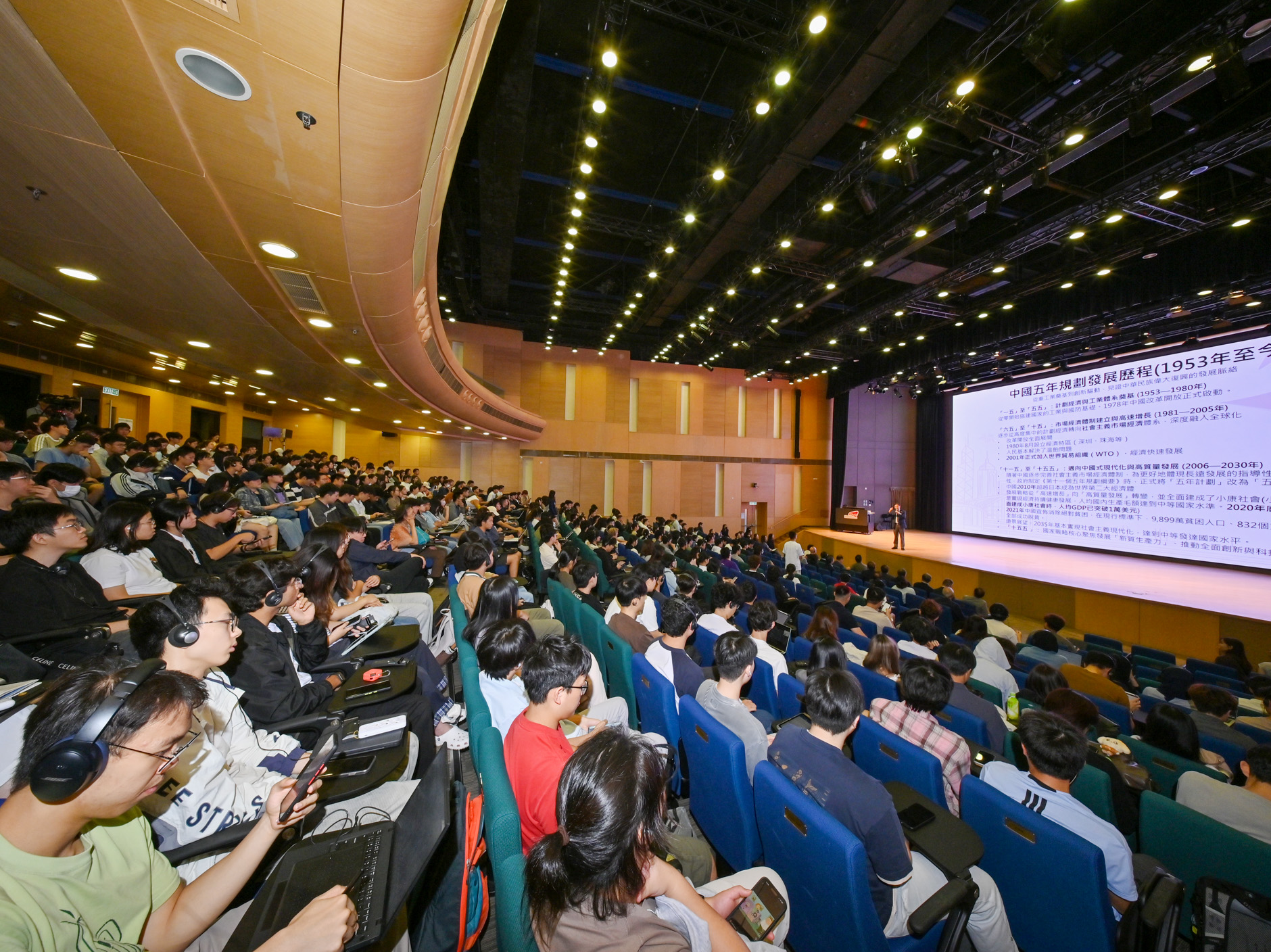
During the Q&A session, students actively raised questions on how to better understand the Mainland market and its development, as well as development opportunities in countries along the “Belt and Road”. Professor Hu encouraged students to join study tours and internship programmes to gain first-hand insights into local livelihoods and industry dynamics. Professor Lee added that CityUHK has over 400 exchange partners worldwide, many of them in Belt and Road countries, and that each year dozens of students receive funding under an HKSAR Government STEM internship scheme to intern at high-tech enterprises in the Mainland. He encouraged students to make good use of University resources and proactively broaden their horizons.
Alumni also asked about career planning and opportunities for Mainland students in Hong Kong. Professor Hu said that to become a high-end talent hub, Hong Kong needs to bring together diverse talent, and its core industries such as finance, professional services, as well as innovation and technology, have a strong demand for new blood. Hong Kong’s international positioning means that opportunities for talent are not limited to Hong Kong but extend to the Mainland and neighbouring countries and regions. He advised students to equip themselves well and make good use of the University’s extensive alumni network.
The talk was organised by Student Development Services. CityUHK will continue to broaden students’ international horizons, guiding them to grasp national and global development trends, plan their careers early and seize future opportunities.