CityUHK launches “Rehab-Link”: translating research into community care to safeguard elderly health
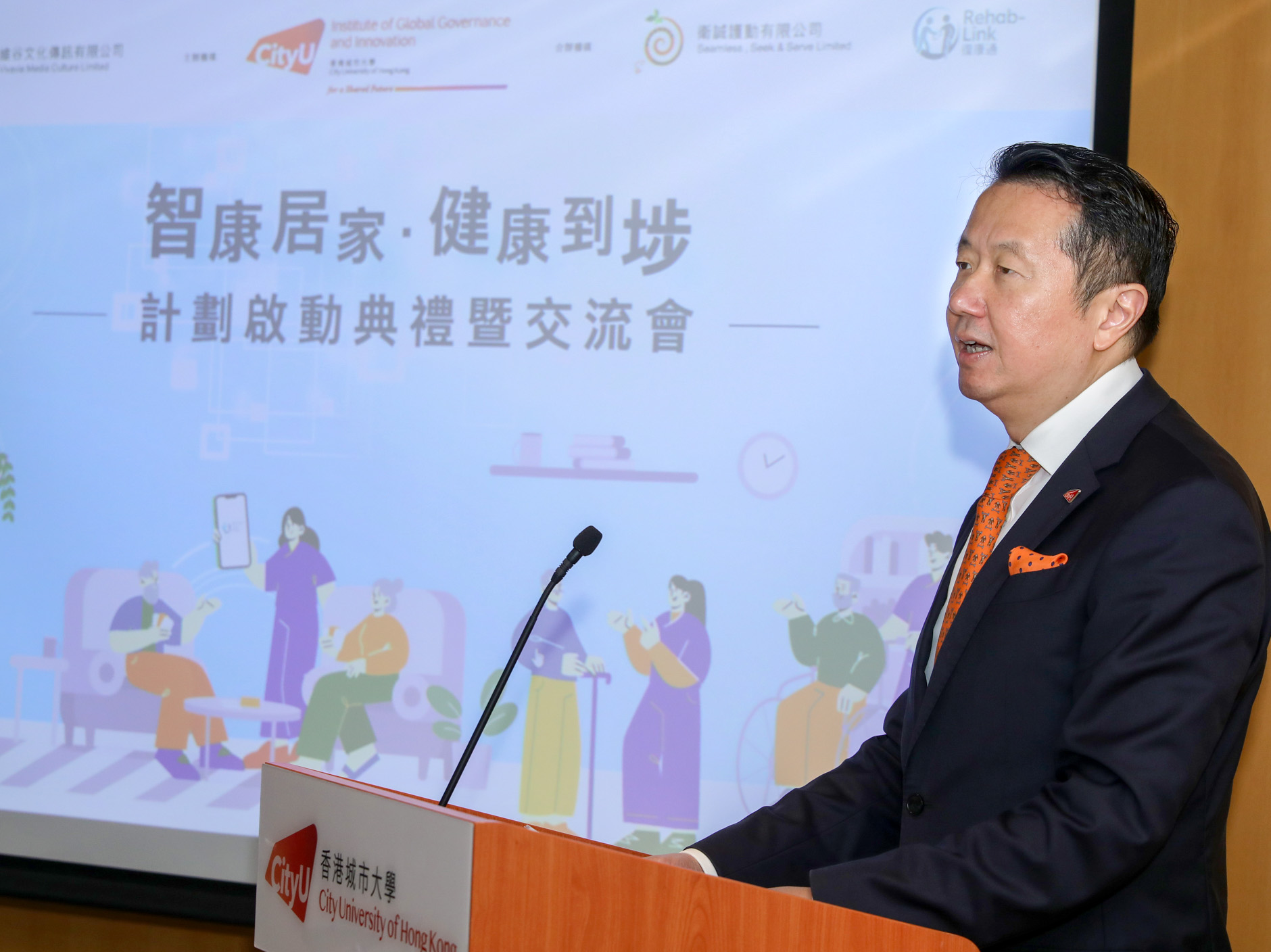
City University of Hong Kong (CityUHK) recently hosted the launch of a new community healthcare and home rehabilitation initiative, announcing a joint partnership with Seamless Seek & Serve (3S) to introduce “Rehab-Link”. This primary health screening and home rehabilitation platform translates cutting-edge research into community practice to advance smart elderly care.
The ceremony brought together representatives from various sectors in support of the initiative. Officiating guests included the Honourable Vincent Cheng Wing-shun, Legislative Council Member; Mr Oscar Wong Ho-yu, District Officer (Sham Shui Po); Dr Roy Chung Chi-ping, Founder and Chairman of the Bright Future Charitable Foundation; Dr Allen Shi Lop-tak, Chairman of the CityUHK Eminence Society; Mr Chan Lung-kit, Sham Shui Po District Council Member; Ms Ada Chan, Project Initiator of Rehab-Link at 3S; and Ms Cheung Man, Director of 3S.
CityUHK representatives included Professor the Honourable Michael Ngai, Chairman of the CityUHK Council; Professor Chun-Sing Lee, Acting President of CityUHK; Ms Kathy Chan Yin-ling, Associate Vice-President (Development); and Professor Ming Wai-kit, Associate Director of the Institute of Global Governance and Innovation for a Shared Future at CityUHK.
In his speech, Professor Ngai stated, “CityUHK has always been committed to driving knowledge transfer and industry-academia-research collaboration. This initiative serves as an exemplary demonstration of effectively combining academic resources with societal support to generate tangible community benefits, establishing a safer and more reliable health defence line for the elderly.”
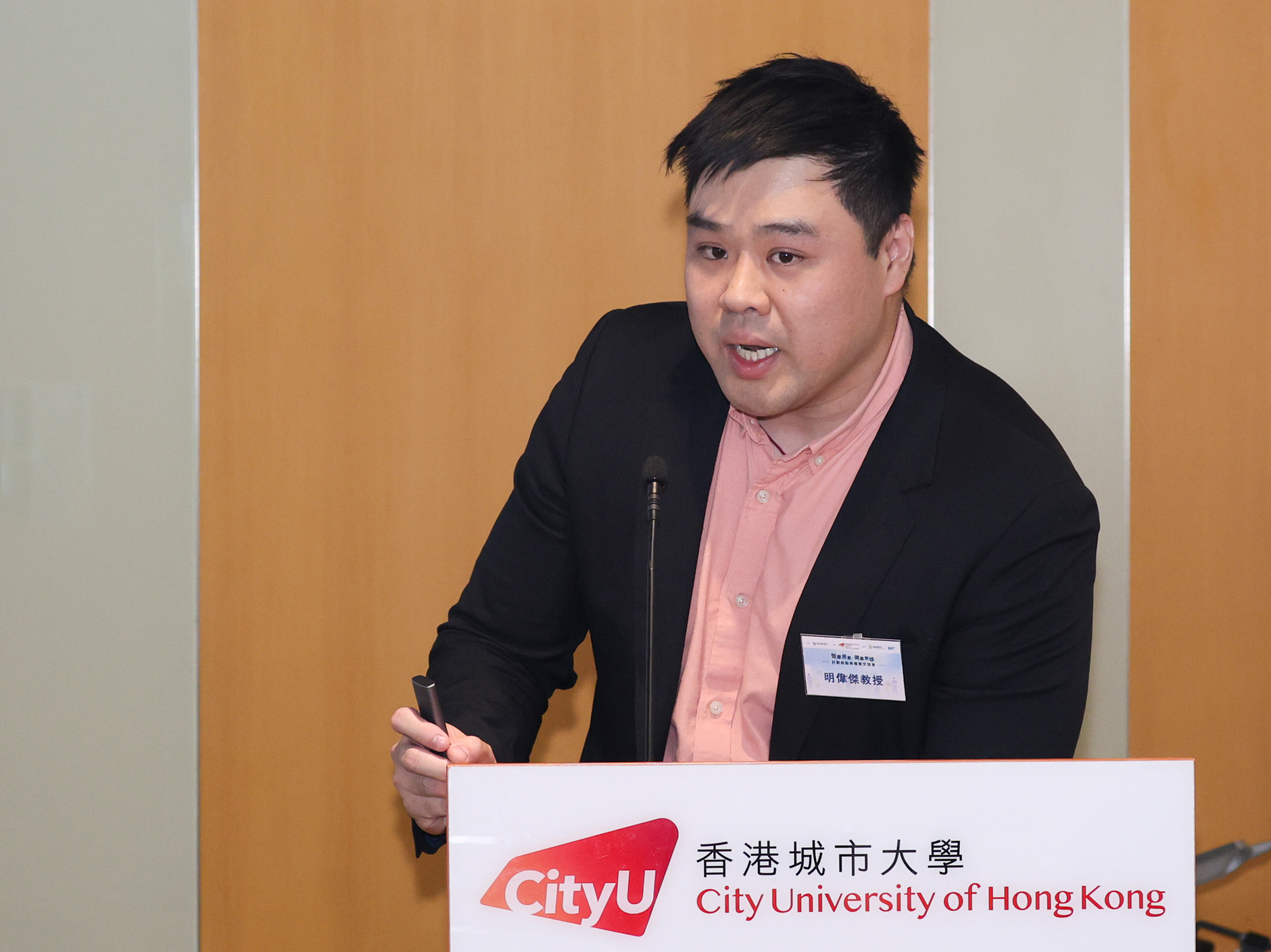
“Rehab-Link” is a one-stop digital platform tailored for primary healthcare and home-based rehabilitation. It addresses the pain point of insufficient supervision in traditional home services by introducing Hong Kong’s first “GPS Dual Real-time Location Verification Mechanism”. Therapists must complete a digital check-in within a 50-metre radius of the service recipient’s residence, ensuring that services are genuinely delivered on-site. This achieves a “reliable, verifiable and traceable” standard, safeguarding the rights of both seniors and caregivers while helping residents effectively utilise Elderly Health Care Vouchers and Community Care Service Vouchers.
“The core purpose of ‘Rehab-Link’ is to spare elderly individuals the burden of travelling back and forth for rehabilitation,” noted Professor Ming. “In the past, mobility-impaired seniors faced tedious application procedures and long wait times, often having to travel to clinics in inclement weather, which added to their physical burden. We believe that the most comfortable environment for recovery is one’s own home.” The team will collaborate with charitable partners to provide digitised home services, enabling seniors to recover at home with professional care and peace of mind.
The first phase of the initiative will roll out in August. The team will conduct health screenings for seniors of diverse backgrounds and needs in communities such as Nam Cheong East, Ha Pak Tin and Yau Yat Chuen, benefiting over 900 local elderly residents. The platform provides home-based physical fitness assessments and AMT cognitive screenings for early identification of high-risk seniors. All data collected will be encrypted for privacy protection and will be used to construct a local “Big Data Health Map” for elderly residents, serving as a reference benchmark for Hong Kong’s long-term primary healthcare policies.
In alignment with the HKSAR Government’s Primary Healthcare Blueprint and Gerontechnology policies, “Rehab-Link” will continue to leverage digital technology to overcome traditional rehabilitation challenges and fulfil the vision of “ageing in place, recovering at home”.