CityUHK physicist leads study revealing that magnetic fields can “revive” superconductivity in nickelates

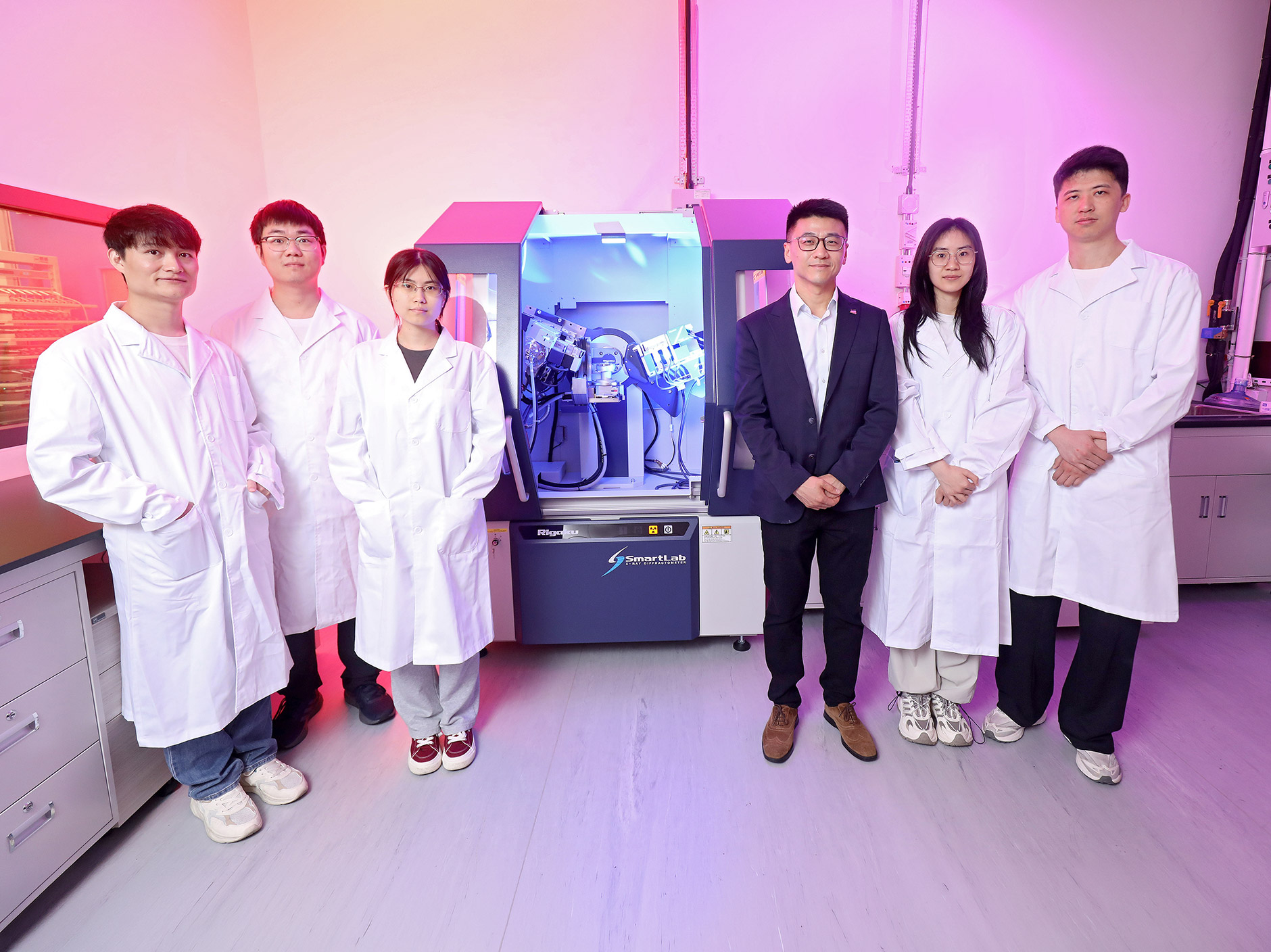
A research team led by Professor Denver Li Danfeng, Associate Dean (Research and Postgraduate Education) of the College of Science and Associate Professor in the Department of Physics at City University of Hong Kong (CityUHK), has achieved a major breakthrough in superconducting materials. The team has discovered a magnetic-field-induced “re-entrant superconductivity” phenomenon in infinite-layer nickelate superconductors, in which superconductivity—initially suppressed by a magnetic field—reappears at higher field strengths. This finding challenges the conventional understanding that magnetic fields suppress superconductivity and opens up new directions for exploring unconventional superconducting mechanisms and next-generation superconducting materials.
The research findings were recently published in the prestigious international scientific journal Nature, under the title “Field re-entrant superconductivity in Eu-doped infinite-layer nickelates”.
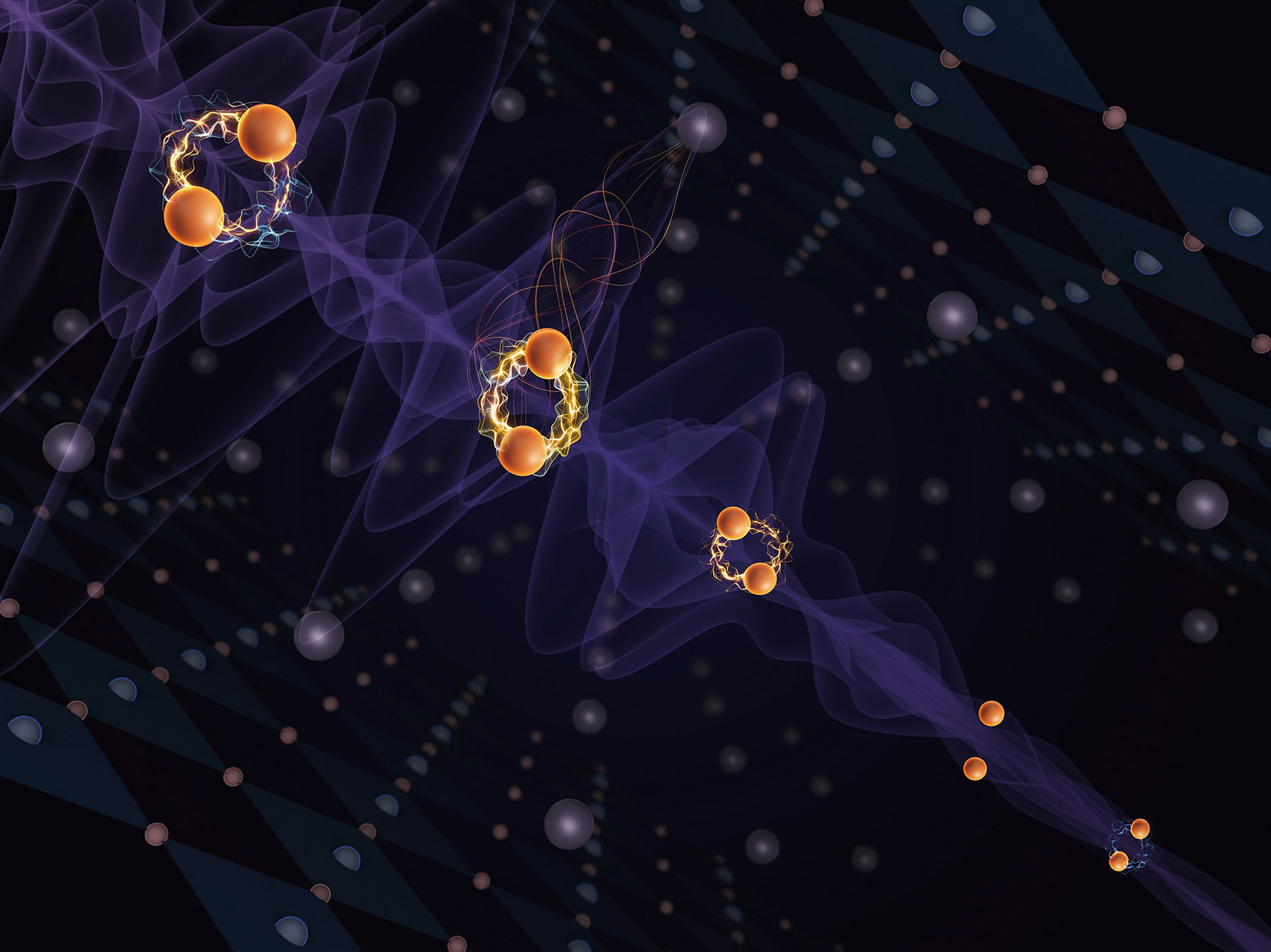
Traditionally, magnetism and superconductivity are considered mutually incompatible, as magnetic fields tend to destroy superconductivity and eliminate its zero-resistance property. However, in a few rare material systems, extremely strong magnetic fields can instead restore superconductivity after it has been suppressed—a phenomenon known as re-entrant superconductivity.
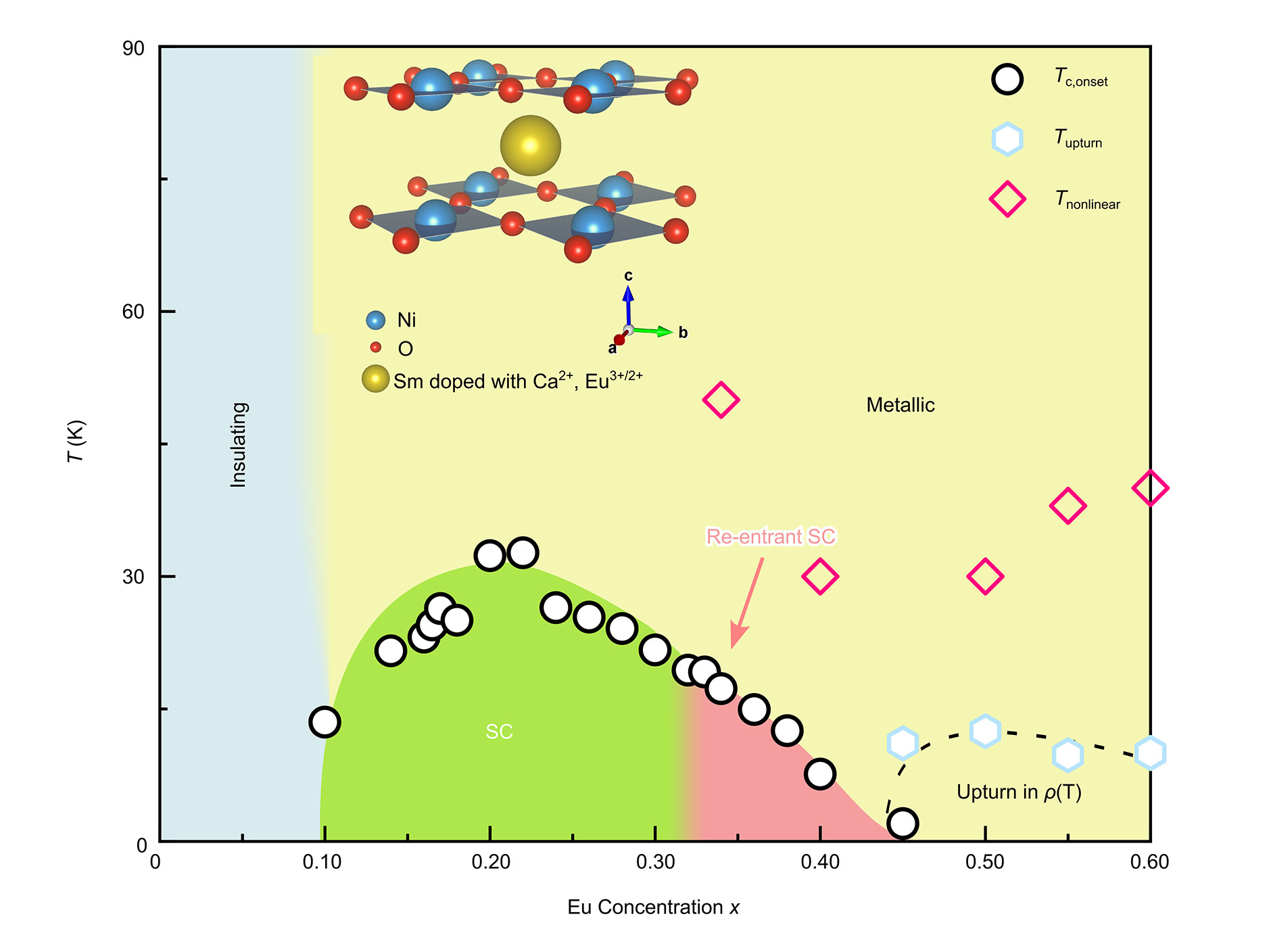
By precisely controlling the incorporation of the rare-earth element europium (Eu) into infinite-layer nickelates, the CityUHK-led team observed that superconductivity is first suppressed as the magnetic field increases, but then re-emerges at higher fields, resulting in an unusual “superconducting–normal–superconducting” transition.
Unlike previously reported re-entrant superconductors, the nickelate system demonstrates remarkable robustness. Traditional re-entrant superconductivity is highly sensitive to the orientation of the magnetic field and typically occurs only within a very narrow angular range (2°–10°). In contrast, the team found that the re-entrant superconducting state in nickelates remains stable across a broad angular range from 0° to 90°. The study also found that this high-field superconducting state is highly stable, reappearing at magnetic fields above approximately 15 tesla (approximately 300,000 times stronger than the Earth’s magnetic field) and persists under even stronger fields.
These findings suggest that the classical “field compensation mechanism” alone is insufficient to explain the underlying physics. Instead, the findings indicate that under certain conditions, magnetic interactions may no longer act as a competing factor but rather play a crucial role in facilitating electron pairing and stabilising the superconducting state.
Since the initial discovery of superconductivity in infinite-layer nickelates in 2019, these materials have attracted significant attention because of their similarity in electronic structure to cuprate high-temperature superconductors. That breakthrough was achieved by a research team at Stanford University, in a study with Professor Li as the first and a co-corresponding author. The present study further adds to this body of knowledge by revealing re-entrant superconductivity in this material system, providing a critical foundation for the future development of next-generation superconducting materials.
Professor Li said, “This surprising discovery demonstrates a field-induced superconducting phase in oxide superconductors with relatively high transition temperatures, analogous to those observed in heavy-fermion superconducting materials. It establishes a bridge between high-temperature superconductivity and magnetism-driven quantum phenomena. Our findings provide new insights into the microscopic mechanisms governing the coexistence of magnetism and superconductivity, and open up new possibilities for designing unconventional superconductors.”
This collaborative research was conducted by CityUHK in partnership with Southern University of Science and Technology, the Guangdong-Hong Kong-Macao Greater Bay Area Quantum Science Center, the High Magnetic Field Science Center of the Hefei Institutes of Physical Science of the Chinese Academy of Sciences, the National Pulsed High Magnetic Field Science Center at Huazhong University of Science and Technology, Tsinghua University, and other institutions. The work was supported by the National Natural Science Foundation of China, the National Key R&D Programme, the Research Grants Council of Hong Kong, the US Department of Energy, and other funding bodies.