
Global Outreach Coordinator of College of Science
Associate Professor
| Office: | YEUNG-P5106 |
|---|---|
| Phone: | +852 3442-9710 |
| Fax: | +852 3442-0522 |
| Email: | mbabak@cityu.edu.hk |
| Web: | Laboratory |
| ORCID ID: | 0000-0002-2009-7837 |
- Drug discovery
- Medicinal chemistry
- In vitro and in vivo target identification
- Proteomics
- Preclinical development
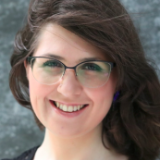
Dr Maria (Masha) Babak obtained her M.Sc. in chemistry from Higher Chemical College of the Russian Academy of Sciences (2010) in Moscow, where she worked on transition metal organometallic chemistry, mentored by Prof. Dmitry S. Perekalin. She completed her Ph.D in bioinorganic chemistry at the University of Vienna (2014), mentored by Prof. Bernhard K. Keppler and Prof. Christian G. Hartinger. In 2015-2020 Dr Babak worked as a postdoctoral research fellow at National University of Singapore, mentored by Prof. Wee Han Ang, where she developed a true passion for drug discovery and drug target identification. In 2019 Dr Babak joined the High Impact Cancer Research Program at Harvard Medical School in Boston. In November 2020, she was appointed as an assistant professor at City University of Hong Kong. Dr Babak is a board member of the Institute of Cancer and Crisis, which aims to mitigate the impact of crisis on cancer patients.
Prof. Babak’s research interests lie at the interface of chemistry, biology and medicine and focus on the discovery and preclinical development of anticancer drugs for resistant and aggressive cancers with limited treatment options, e.g. malignant pleural mesothelioma or brain metastases. This work is organized into three cutting-edge directions. The first direction focuses on developing novel immunogenic cell death (ICD) inducers (Babak and Ang et al. Angew. Chem. Int. Ed., 2021; JACS, 2024; JACS, 2025). These agents are specifically designed to not only kill cancer cells but also to activate the patient's own immune system against the tumor, turning the tumor microenvironment from "cold" to "hot." This approach is crucial for preventing relapse and achieving durable, systemic responses in cancers that are otherwise unresponsive. The second direction explores the bidirectional relationship between anticancer drugs and the host microbiome (Babak et al., PNAS, 2025). Recognizing that gut and tumor-resident microbes can dramatically alter a drug's effectiveness and toxicity, this research seeks to understand and harness these interactions to improve therapeutic outcomes and minimize side effects. The third direction leverages AI-assisted metal-based drug discovery (Chemrxiv, 2025). The research group of Prof. Babak developed the first deep learning model for the de novo prediction of metal-based anticancer complexes. This approach integrates generative AI with their deep expertise in bioinorganic chemistry to overcome traditional discovery bottlenecks and rationally design innovative therapeutic agents.
To bridge these fields, Prof. Babak leads a uniquely integrated team of chemists, biologists, medical doctors, board-certified pathologists, and machine learning specialists. Together, they employ a rigorous preclinical pipeline, from initial screening in cancer cell lines and mechanistic validation, to in vivo testing in advanced animal models of metastasis, and finally to validation in clinically relevant patient-derived organoids and xenografts.
- J. Arakelyan, H.-J. Choe, C. Wu, D.A. Rusanov., E.E. Bardina, A.A. Kirsanova, Y. V. Zakalyukina, N.Y. Shmelev, A.P. Tyurin, V.Y. Komarov, V. Kushnarev, N.S. Karnaukhov, G. D’Cruz, E.S. Vasilyev, E. Dotse, K.T. Chow, W.C. Cho, A.V. Tkachev, A.L. Gushchin,* M.V. Babak.* Modulating the microbiome as an approach to anticancer drug development, Proceedings of the National Academy of Sciences of the United States of America, 122, e2417269122, 2025
- J.X. Zou, P.A. Ivanov-Rostovtsev, J. Arakelyan, M.V. Babak,* W.H. Ang.* Organoplatinum(II) type II immunogenic cell death inducers target protein tyrosine phosphatase 1B to drive immunogenicity. Journal of the American Chemical Society, 2025
- M.R. Chang, E.M. Matnurov, C. Wu, J. Arakelyan, H.-J. Choe, V. Kushnarev, J.Y. Yap, X.X. Soo, M.J. Chow, W. Berger,* W.H. Ang,* M.V. Babak.* Leveraging immunogenic cell death to enhance the immune response against malignant mesothelioma tumors, Journal of the American Chemical Society , 147 (9), 7908-7920, 2025
- A.G. Medvedev, P.A. Egorov, A.A. Mikhaylov, E.S. Belyaev, G.A. Kirakosyan, Y.G. Gorbunova, O.A. Filippov, N.V. Belkova, E.S. Shubina, M.N. Brekhovskikh, A.A. Kirsanova, M.V. Babak,* O. Lev,* P.V. Prikhodchenko.* Synergism of primary and secondary interactions in a crystalline hydrogen peroxide complex with tin, Nature Communications, 15 (5758), 2024
- T.A. Ghebreyesus, D. Mired, R. Sullivan, A. Mueller, A. Charalambous, A. Kacharian, C. Tsagkaris, E. Soto-Perez-de-Celis, H. Grigoryan, J. Gralow, A. Ilbawi, K. Ghanem, L. Mula-Hussain, B. Mikkelsen, M. Yimer, N. Hammad, S. Arakelyan, T. Kutluk, Z. Salman, M. Lawler, G. Tamamyan, M. V. Babak, J. Arakelyan. A manifesto on improving cancer care in conflict-impacted populations, The Lancet, 404(10451), 427-427, 2024
- R.P. Gale, A. Muradyan, S. Danelyan, N. Manukyan, M.V. Babak, S. Arakelyan, G. Tamamyan, J. Arakelyan. The humanitarian crisis in Nagorno-Karabakh, The Lancet, 402(10410), 1324-1325, 2023
- M.V. Babak,* K.R. Chong, P. Rapta, M. Zannikou, H.M. Tang, L. Reichert, M.R. Chang, V. Kushnarev, P. Heffeter, S.M. Meier-Menches, Z.C. Lim, J.Y. Yap, A. Casini, I.V. Balyasnikova, W.H. Ang.* Angewandte Chemie Int. Ed., 60 (24), 13405 - 13413, 2021
- M.J.R. Tham, M.V. Babak,* W.H. Ang.* PlatinER: A Highly Potent Anticancer Platinum(II) complex that Induces Endoplasmic Reticulum Stress-Driven Immunogenic Cell Death, Angewandte Chemie Int. Ed., 59 (43), 19070-19078, 2020 [featured as a frontispiece]
- M. V. Babak, Y. Zhi, B. Czarny, T.B. Toh, L. Hooi, E. K.-H. Chow, W.H. Ang,* D. Gibson,* G. Pastorin.* Dual-targeting Dual-action Platinum (IV) Platform for Enhanced Anticancer Activity and Reduced Nephrotoxicity, Angewandte Chemie Int. Ed., 58, 1-7, 2019 [Very Important Paper, featured in Straits Times and Channel News Asia]
2025 - The College of Science Teaching Excellence Award, City University of Hong Kong
2024 - Yvonne Award: recognizing international young leaders in cancer care (awarded in Chicago, USA, by OncoDaily and American Society of Clinical Oncology)
2024 - World's Top 2% Most-cited Researchers according to Stanford ranking
2024 - Gold prize, Top 5 Best Therapeutic Projects, Top 10 Best Presentations, Best Education Award at the International Genetically Engineered Machine (iGEM) competition, Paris, France
2022 - Graeme Hanson-Asian Biological Inorganic Chemistry (AsBIC) Early Career Award: for creating scientific impact in the field of biological inorganic chemistry (given to two scientists in the Asia Pacific region biannually, awarded in Kobe, Tokyo)
2022 - Silver prize at the International Genetically Engineered Machine (iGEM) competition, Paris, France
2021 - Silver prize at the International Genetically Engineered Machine (iGEM) competition, Paris, France
2012 - First prize of international research competition “Falling Walls Lab 2012”, Vienna, Austria
2007-2009 - National Academy of Sciences fellowship (given to the top student of the department each semester), awarded 6 times in a row with GPA 5.0 out of 5.0