

CityUHK Startup GenEditBio Advances Groundbreaking Genome-Editing Therapies to Clinical Trials
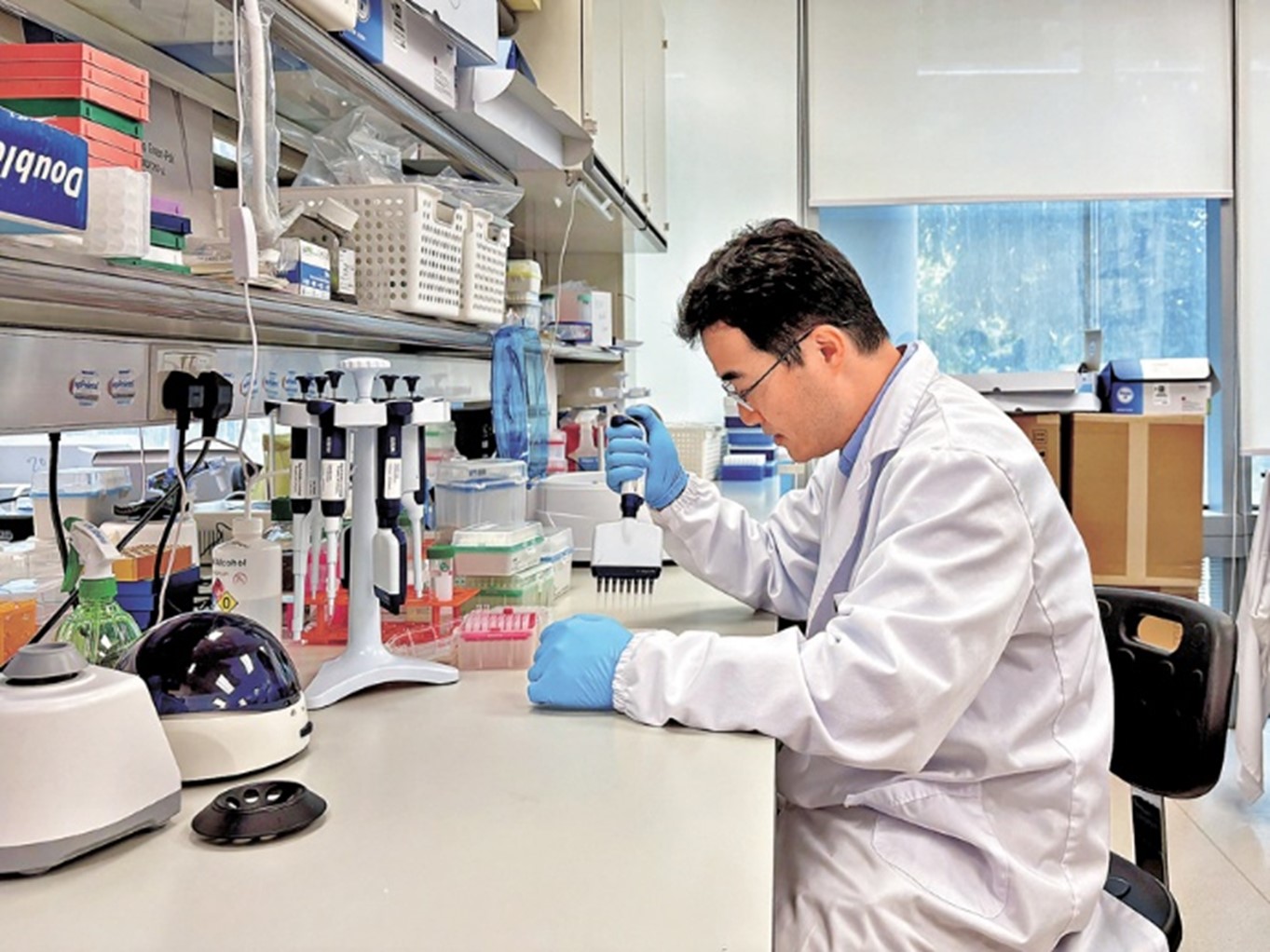
The College of Biomedicine (CBM) is delighted to share the remarkable progress of GenEditBio, a biotech startup co-founded by our Professor ZHENG Zongli from the Department of Biomedical Sciences. The company is making significant strides in developing novel “one-and-done” genome-editing therapies for inherited diseases, with multiple programs now advancing to clinical trials.
Pioneering Therapies for Liver and Cardiovascular Diseases
Professor Zheng and his team have developed two core therapeutic medicines, “PL-100” and “PL-200”, targeting inherited liver diseases and cardiovascular conditions. Supported by the HKSAR Government’s flagship RAISe+ scheme , the project aims to create safe, efficacious, and affordable therapies that can achieve a “single treatment, lifelong cure” effect by performing precise “DNA surgery” on somatic cells. The therapies utilise innovative lipid nanoparticles to deliver genome-editing tools directly to target cells, offering a potential alternative to lifelong dependency on medication. The team has completed preliminary preclinical studies in non-human primates and is partnering with pharmaceutic companies to co-develop for IND filing in regulatory agencies.
Global First: Clinical Trials for Hereditary Eye Disease
In a landmark achievement, GenEditBio’s lead program, GEB-101, has received China NMPA and U.S. FDA clearance to initiate Phase 1/2 CLARITY clinical trials for TGFBI corneal dystrophy, making it the first in vivo genome-editing treatment using ribonucleoprotein (‘hit-and-run’)-based editing for this condition to reach the clinical stage globally.
TGFBI corneal dystrophy is a hereditary eye disease prevalent in East Asia, affecting approximately 2 in 1,000 individuals. It causes abnormal protein deposition in the cornea, leading to severe photophobia, recurrent eye pain, and progressive vision loss that can result in blindness. Traditional treatments like laser surgery or corneal transplants cannot prevent recurrence as they do not address the underlying genetic cause.
GEB-101, developed using a proprietary protein delivery vehicle (PDV), employs CRISPR-Cas genome-editing technology to precisely modify the pathogenic TGFBI gene, aiming to eliminate the production of abnormal proteins with a single injection into the corneal stroma, potentially offering a curative approach rather than symptomatic management.
Professor Zheng’s foundational work on genomic medicine and biotechnology innovation has been instrumental in advancing the understanding, diagnosis and treatment of diseases, and making significant contributions to potential cures for patients worldwide.