CBM Research Seminar – CBT-Cys Click Reaction-Based Imaging Analyses
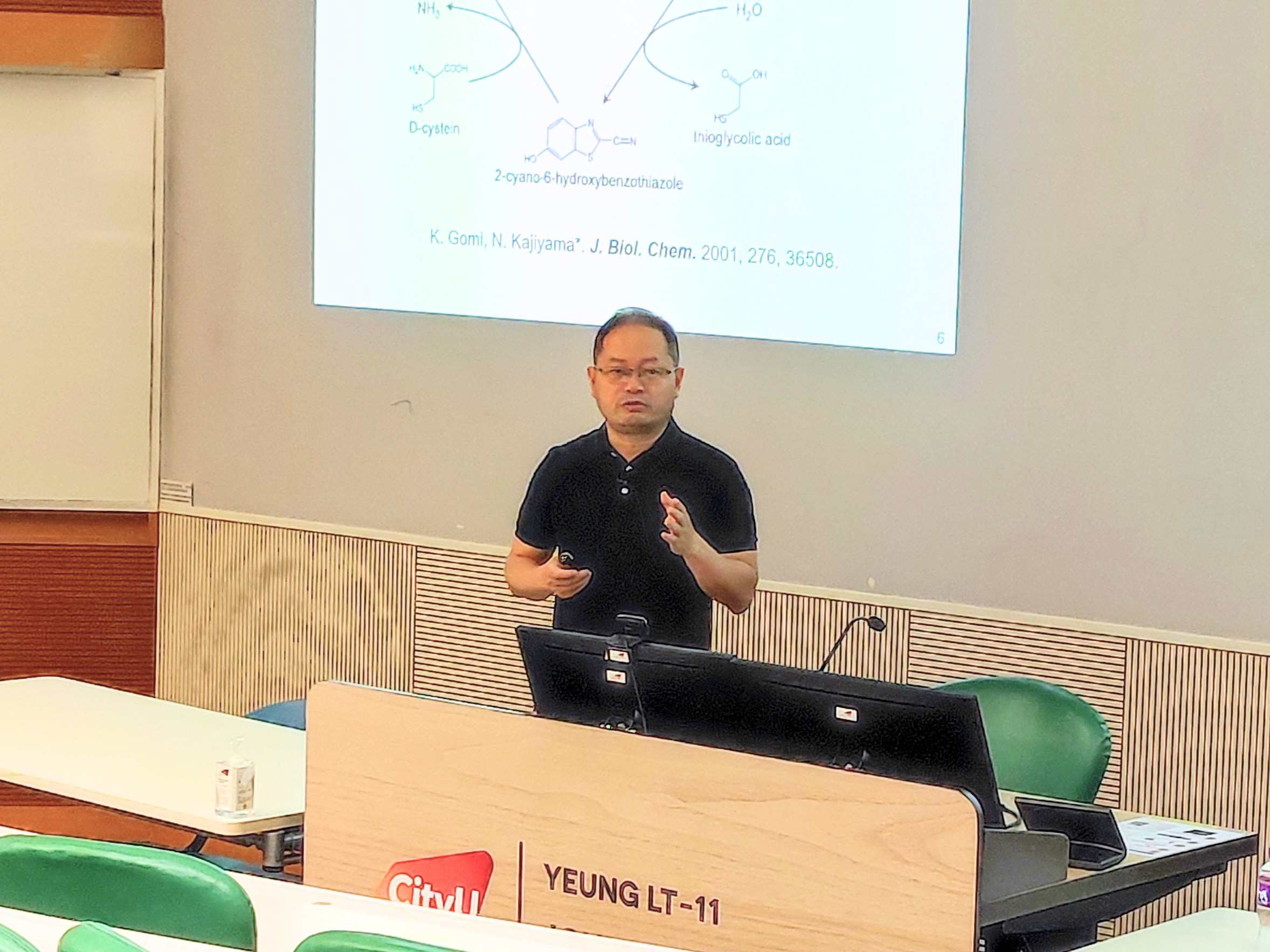
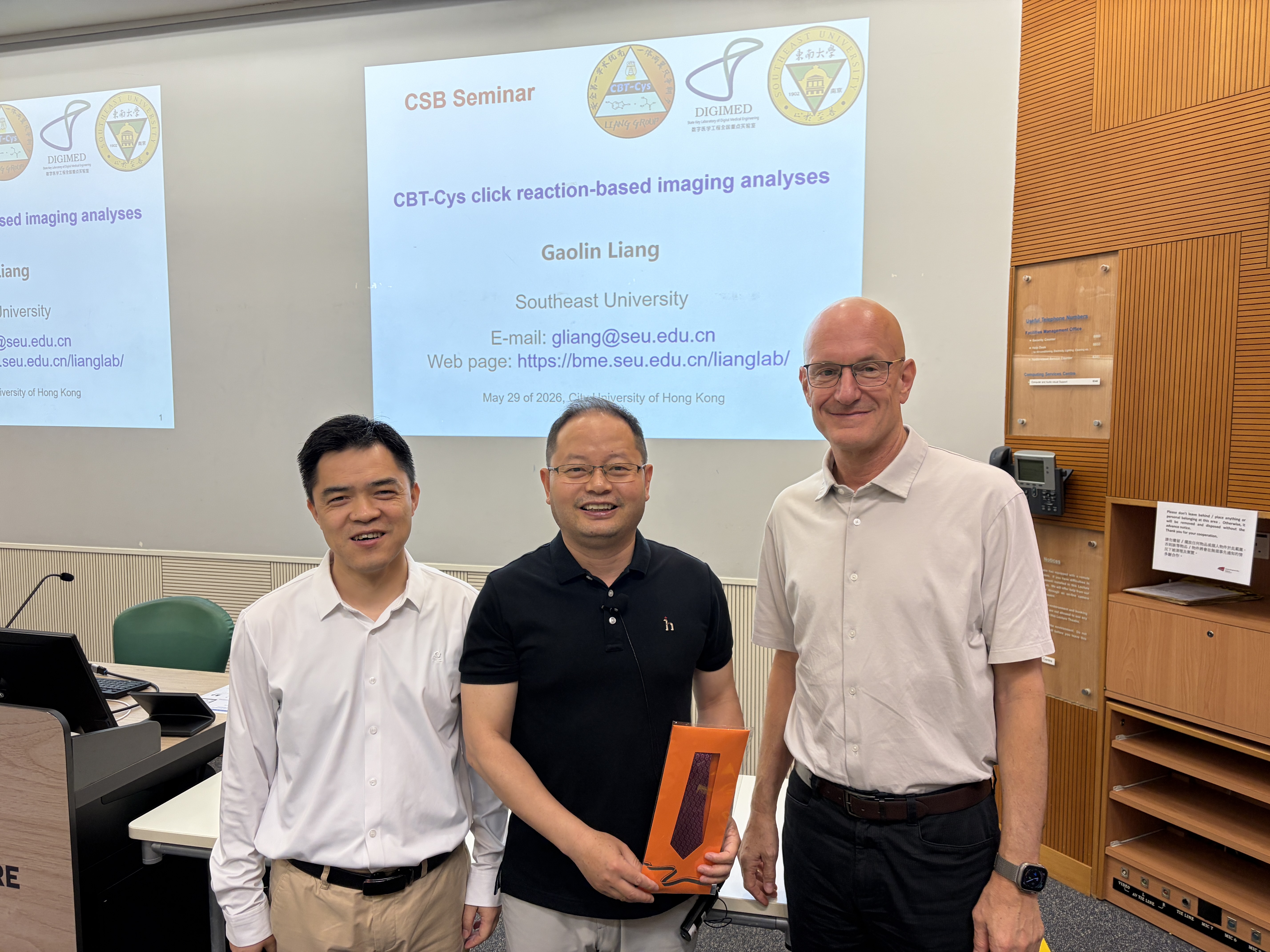
The College of Biomedicine was pleased to host Professor LIANG Gaolin from Southeast University as a distinguished speaker for the CBM Research Seminar on 29 May 2026. Professor Liang is Chief Professor of Southeast University, Inaugural Editor-in-Chief of Digital Medical Engineering, Deputy Director of the National Key Laboratory of Digital Medical Engineering, recipient of the National Science Fund for Distinguished Young Scholars, and Deputy Director of the Science and Education Committee of the China National Democratic Construction Association.
During the seminar, Professor Liang shared his team's recent advances in leveraging the CBT-Cys click reaction to address a central challenge in molecular imaging: signal amplification.
In his talk entitled "CBT-Cys Click Reaction-Based Imaging Analyses", Professor Liang provided an overview of molecular imaging as a technique that uses chemical tools to visualise biological processes at the molecular and cellular level. He highlighted that signal amplification, as the fourth of six steps in molecular imaging, is both a critical scientific bottleneck and the primary focus of his research team.
Professor Liang demonstrated how integrating the CBT-Cys click reaction with various imaging modalities has enabled significant signal enhancement, leading to highly sensitive analyses of important biomarkers and improved diagnosis of associated diseases. Throughout the talk, he presented a series of compelling examples in which small-molecule probes designed around the CBT-Cys click reaction were successfully applied to tumour imaging. Notably, these probes enabled signal-amplified imaging across multiple platforms, including: photoacoustic imaging, magnetic resonance imaging (MRI), computed tomography (CT), Raman imaging, and fluorescence imaging.
The lecture stimulated active discussion among faculty, researchers, students from diverse disciplines. Prof. Liang's seminar underscored the transformative potential of combining CBT-Cys click chemistry with intelligent probe design to advance molecular imaging methodologies for disease diagnosis.