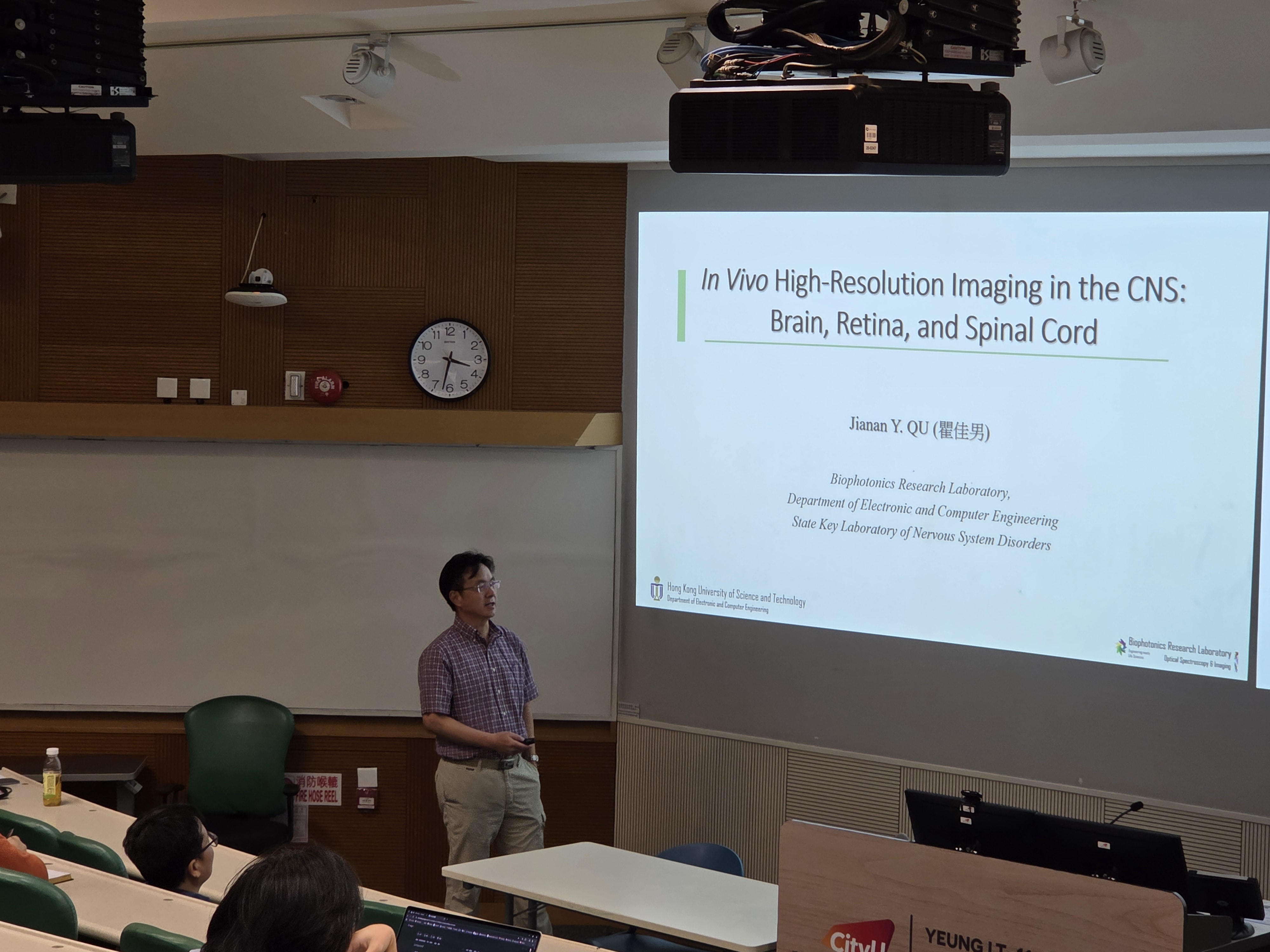
CBM Seminar Series – In Vivo High-Resolution Imaging in the CNS: Brain, Retina, and Spinal Cord
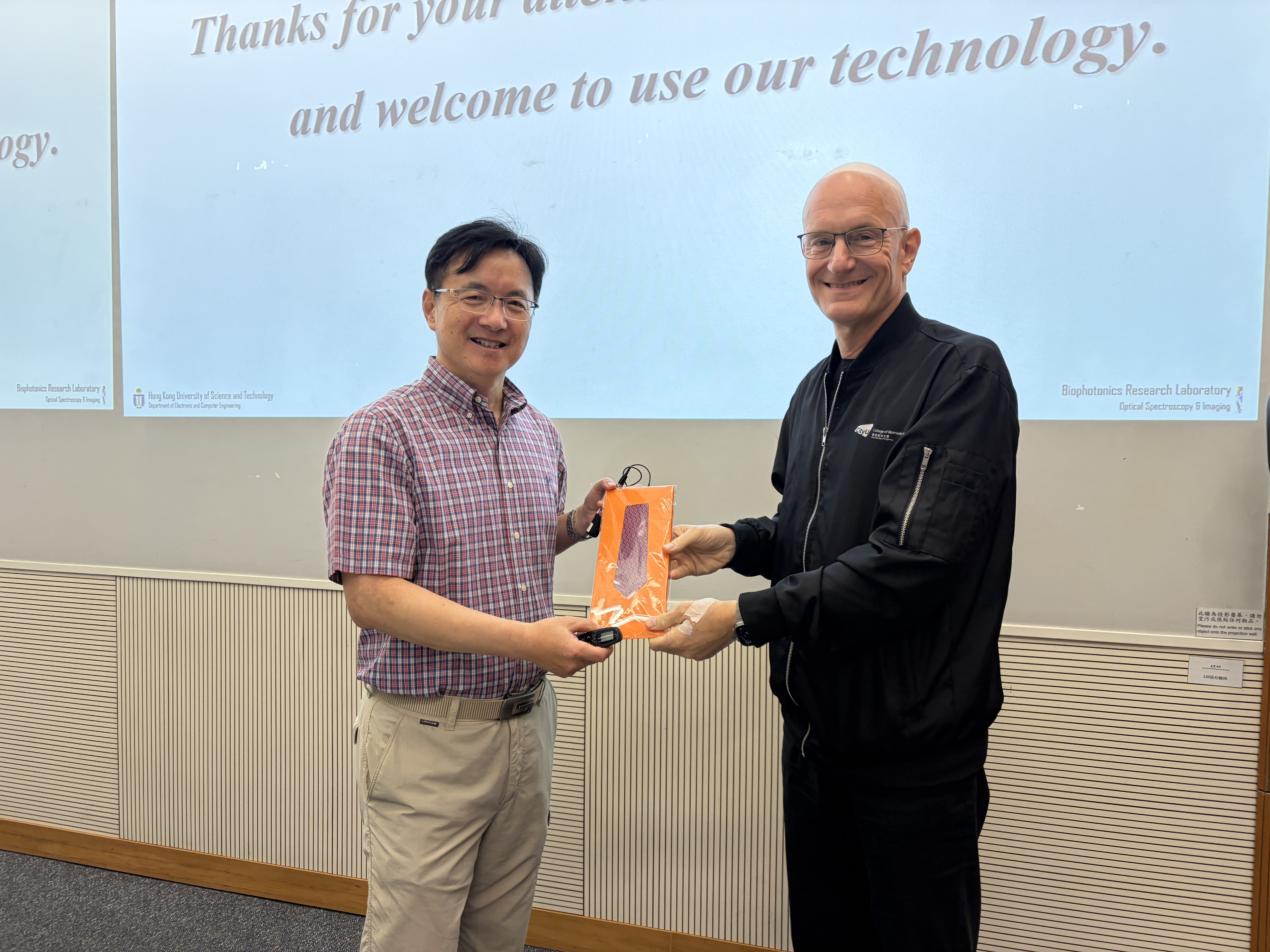
The College of Biomedicine was pleased to host Professor Jianan Qu from the Department of Electronic and Computer Engineering, The Hong Kong University of Science and Technology, as a distinguished speaker in the CBM Seminar Series on 23 March 2026. Professor Qu's laboratory focuses on developing novel optical bioimaging techniques to study the dynamic behaviors of biomolecules in living cells and organisms, with a recent emphasis on adaptive optics for central nervous system (CNS) imaging.
In his talk entitled "In Vivo High-Resolution Imaging in the CNS: Brain, Retina, and Spinal Cord", Professor Qu discussed recent advances in high-resolution optical imaging of the living central nervous system (CNS). He highlighted the technical challenges posed by tissue-induced aberrations, scattering, and motion, and presented innovative solutions developed by his laboratory, including adaptive optics, multiphoton microscopy, and minimally invasive optical access strategies.
Professor Qu demonstrated how adaptive optics methods enable subcellular-resolution imaging in the brain through intact or thinned skull to depths exceeding 1 mm, allowing structural and functional imaging in awake mice. He further described applications in the retina, where adaptive optics two-photon microscopy achieves submicron resolution for simultaneous structural and calcium imaging, revealing early functional abnormalities in glaucoma models. In the spinal cord, he presented a minimally invasive cleared intervertebral window approach that supports long-term imaging and provides new insights into microglial responses to neuronal activity and injury.
The seminar stimulated active discussion and underscored the potential of combining advanced optical technologies to achieve deep, longitudinal, near-diffraction-limited imaging of the CNS, with important implications for the diagnosis and treatment of neurological diseases.