Showing 261 to 270 of 307 results
18 Apr 2019
Gene therapy brings great hope to cure many inherited or rare diseases. However, as more and more gene therapies are expected to be approved for clinical trials, new problems may arise. Adeno-associated virus, AAV, does not cause any known disease and are commonly used as vector in gene therapy. But it was found that sometimes it can cause toxicity and inflammation in targeted tissues in animals and humans. A joint-research by City University of Hong Kong (CityU) and Harvard Medical School has revealed that the AAV toxicity is correlated with the cis-regulatory sequences which control gene expression in the virus genome.

12 Apr 2019
While the consequences of climate change have begun to take their toll, global energy demand has grown at the fastest pace ever in the past decade. Exploring renewable energy alternatives has therefore become more pressing than ever. A recent study led by researchers from City University of Hong Kong (CityU) has developed a new triboelectric nanogenerator (TENG) using a slippery surface to enhance energy harvesting efficiency. The findings may open up a new avenue for the design of energy harvesting devices with better stability and durability.
28 Mar 2019
28 Mar 2019
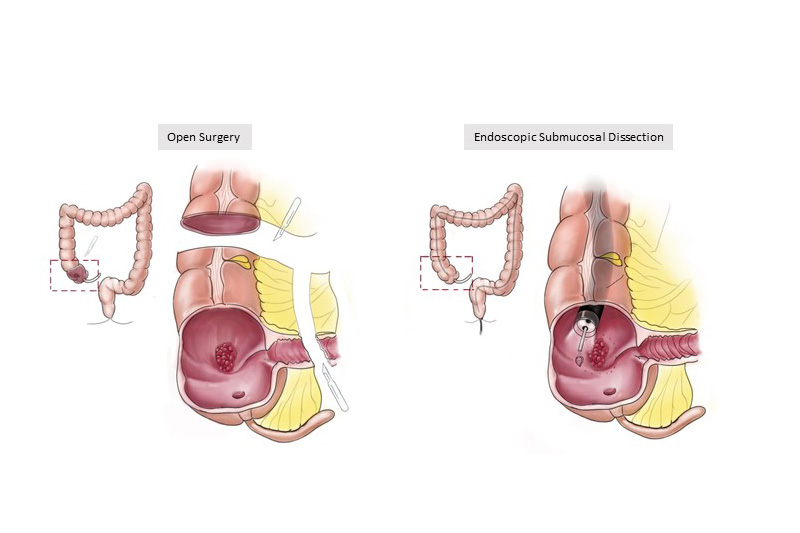
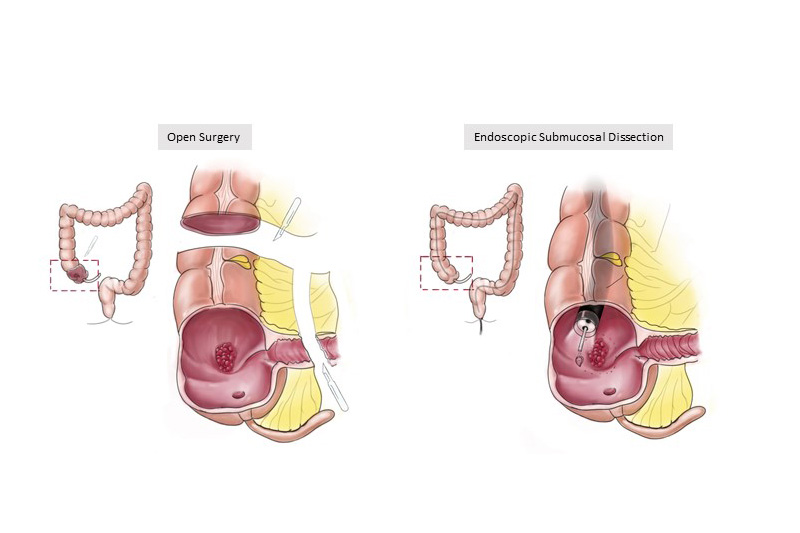
Colorectal cancer (CRC) is one of the leading causes of cancer-related deaths worldwide. While endoscopic submucosal dissection (ESD), a minimally invasive surgical procedure to remove gastrointestinal tumours, is sufficient for treating early-stage CRC patients who are at low risk for developing lymph-node metastasis (LNM), the current risk-stratification criteria based on post-endoscopic pathological examination tend to overestimate the degree of risk. A new biomarker was developed by a joint research team to detect LNM in patients with T1 CRC more accurately.
14 Mar 2019
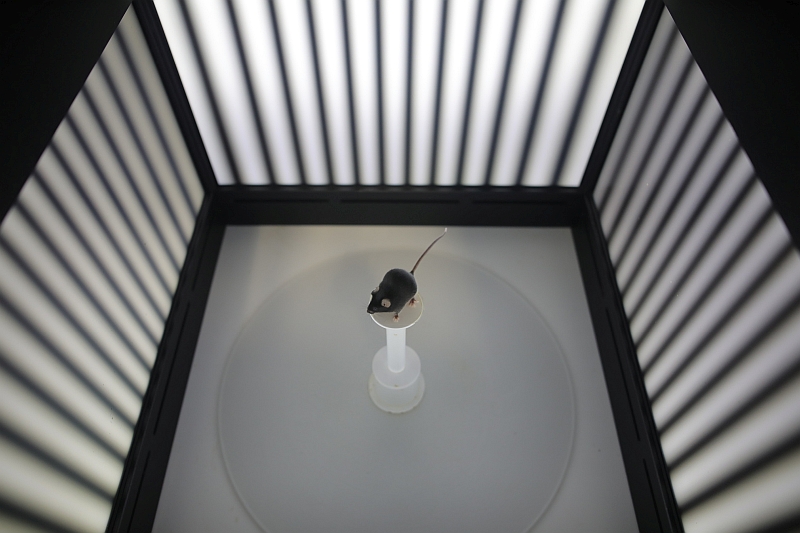
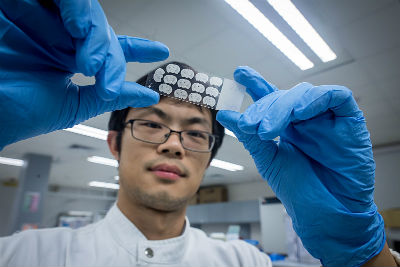
Having brought to light the previously little-known cholecystokinin (CCK) as the memory-writing switch in the brain few years ago, the team led by Professor He Jufang, Wong Chun Hong Chair Professor of Translational Neuroscience at City University of Hong Kong, recently further revealed the memory formation mechanism: high-frequency stimulation (HFS) induces the release of CCK, leading to memory formation, and N-methyl-D-aspartate receptors (NMDARs) enable memory formation via controlling CCK release. The findings consolidate the theoretical basis for developing new treatments for patients with Alzheimer’s disease and epilepsy.

21 Feb 2019
A research team from the Department of Systems Engineering and Engineering Management (SEEM) at City University of Hong Kong (CityU) has developed a pioneering non-destructive-testing based inspection system that can detect corrosion in buried and wall-covered pipes.

14 Feb 2019
Metal halide perovskites are regarded as next generation materials for light emitting devices (LEDs). A recent joint-research co-led by the scientist from City University of Hong Kong (CityU) has developed a new and efficient fabrication approach to produce all-inorganic perovskite films with better optical properties and stability, enabling the development of high colour-purity and low-cost perovskite LEDs with a high operational lifetime.
31 Jan 2019
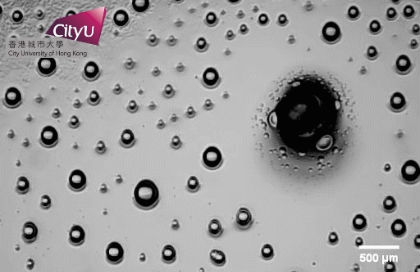
In a single sneeze or a cough, as many as 40,000 tiny droplets are forcibly propelled from our mouth and nose into the air. While we cannot control our sneezing, researchers from City University of Hong Kong’s (CityU) have recently developed an original method to collect micro-droplets, such as these precious human dewdrops, which may shed light on applications in detecting disease-causing bacteria and preventing the spread of disease.

10 Jan 2019
A research project conducted by the Electronic Engineering (EE) Department at City University of Hong Kong (CityU) has developed a software that can optimize mobile network design and reduce the energy consumption of the base stations by up to 4%. <br />

26 Nov 2018
A research team led by City University of Hong Kong (CityU) has developed a novel strategy to develop new high-strength alloys which are extremely strong and yet also ductile and flexible. The strategy overcomes the critical issues of the strength-ductility trade-off dilemma, paving the way for developing innovative structural materials in future.