
Professor Tianxiang He Presents on AI-Generated Content Copyrightability at China’s National IP Law Conference
Professor Tianxiang HE of the School of Law at City University of Hong Kong presented at the 2026 Annual Conference of the Intellectual Property Law Research Association of the China Law Society, held at Wuhan University on 12-13 September.
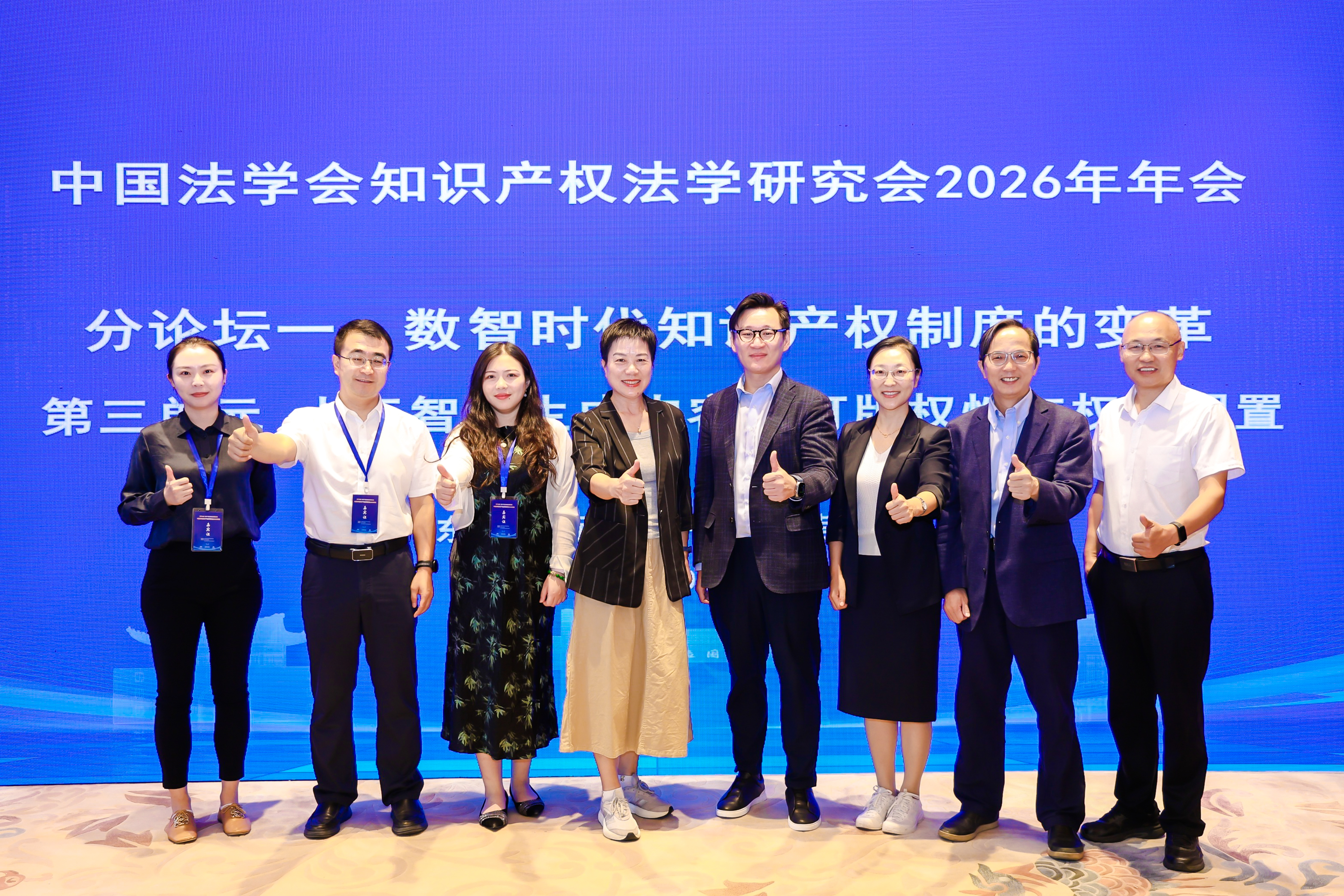
As a major national forum for intellectual property law, the conference brought together more than 400 academics, judges, government officials, practitioners and industry representatives. It covered current developments in copyright, patent, trademark and competition law, with artificial intelligence and copyright forming a substantial part of this year’s programme.
Professor He’s presentation, “Three Obstacles to AI-Generated Content Copyrightability,” was delivered in a dedicated session on the copyrightability and ownership of AI-generated content.
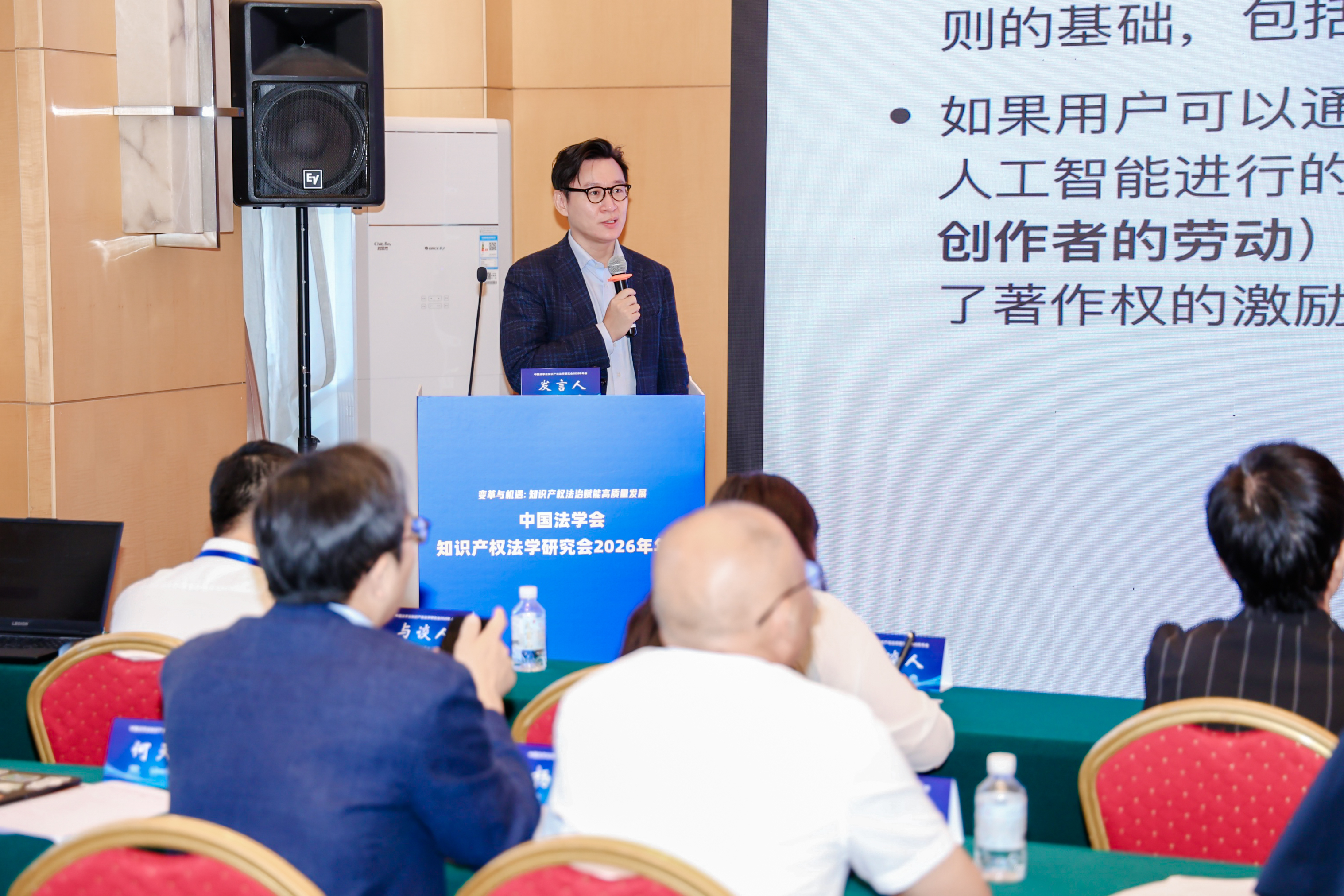
The presentation questioned the increasingly prevalent view that AI-generated content can qualify for copyright protection once sufficient human input or prompting is shown.
Three obstacles were identified:
The first is theoretical: users may lack sufficient control over the final expressive elements generated by AI, while treating a textual prompt as authorship of a visual or other cross-modal output may also conflict with the distinct “artistic languages” through which different categories of works are expressed.
The second is the windfall problem: granting copyright over machine-generated expression may give users exclusive rights over creative output they did not themselves produce and may distort copyright's incentive structure.
The third concerns the broader impact on human creativity and communication, including cognitive offloading, reduced creative diversity, and difficulties in distinguishing authentic human expression from AI-generated content.
The presentation, therefore, argued for a more cautious approach that distinguishes human creative contribution from AI contribution, rather than assuming that the final AIGC output should be protected as a whole.
香港城市大學法律學院何天翔教授出席了於2026年9月12日至13日在武漢大學舉行的「中國法學會知識產權法學研究會2026年年會」並發表演講。
會議作為全國知識產權法領域的重要論壇,匯聚了逾400位學者、法官、政府官員、實務工作者及業界代表。研討會涵蓋了版權法、專利法、商標法及競爭法之最新發展,其中人工智能(AI)與版權是本年度會議的核心議題之一。
何教授在聚焦AI生成內容的可版權性與所有權的專題分論壇上,發表了題為「人工智能生成內容可版權性的三大障礙」(Three Obstacles to AI-Generated Content Copyrightability)的學術報告。
該報告對日益普遍的看法提出質疑——即認為只要顯示足夠的人類投入或提示,AI生成內容即可取得版權保護。何教授在報告中提出了三大障礙:
第一為理論層面:用戶可能無法充分掌控AI所生成之最終表達內容;同時,將文字提示詞視為視覺或其他跨模態輸出成果的創作者,亦可能與不同作品類別所獨有的「藝術語言」相衝突。
第二為意外收益問題:若對機器生成之表達賦予版權,或會使用戶獲得非其親身創作成果的專有權,進而扭曲版權法的原初激勵機制。
第三則涉及對人類創造力與交流之更廣泛影響,包括認知卸載、創作多樣性降低,以及日常交流中難以區分真實的人類表達與AI生成內容。
該報告主張應採取更為審慎的態度,區分人類創意貢獻與AI的生成貢獻,而非直接假設最終生成內容應整體予以保護。