
The Vancouver Summer Program, held by the University of British Columbia (UBC), was a transformative learning experience that enhanced my knowledge of rehabilitation sciences and Vancouver’s culture. This report reflects on my experiences, addressing the host institution, events, difficulties, memorable moments, cultural insights, acquired skills, the programme’s relevance to my academic goals, and advice for future ROA recipients.
During the programme, I participated in the Med H package, which comprised two courses: Recovery from Injury and Disease and Exercise is Medicine. Recovery from Injury and Disease explored the pathology of conditions like concussion and stroke, teaching me how these injuries disrupt physical and neurological functions and require tailored rehabilitation strategies. Exercise is Medicine focused on the therapeutic role of exercise in managing disabilities, revealing how physical activity enhances mobility and cognitive function, reduces cancer-related fatigue, and supports recovery from chronic conditions like stroke and multiple sclerosis. I learned that exercise plans should incorporate strength training, aerobic exercise, and flexibility to address different recovery aspects, considering environmental and policy factors for accessibility. A key activity was a wheelchair scavenger hunt on UBC’s campus, where navigating obstacles and changing direction proved surprisingly challenging. This exercise deepened my empathy for individuals with mobility impairments. We also simulated disabilities like multiple sclerosis and leg amputation, highlighting the resilience required for rehabilitation. Another highlight was visiting ICORD (International Collaboration On Repair Discoveries), a world-leading health research centre focused on prevention, functional recovery, and quality of life for spinal cord injury patients. During the visit, we explored innovative technologies like electrical robots for walking assistance and wheelchair-accessible gym equipment, showcasing the intersection of research and practical rehabilitation.
UBC also organised vibrant campus activities that fostered community and creativity. During Sports Day, I tried spike ball, yoga, dance, dodge ball, and football, connecting with peers through laughter and teamwork. The tote bag painting workshop allowed me to express my creativity. I drew a blue whale, a moose, and a bear to represent Vancouver’s wildlife. City Exploration Day was a highlight, during which my group won a challenge involving UBC and Vancouver trivia, games like posing as a star together, and guessing words through gestures. These activities helped me build friendships with students studying pharmacy, medicine, and psychiatric nursing, enriching my network and sense of belonging.
The programme presented language and cultural challenges that tested my adaptability. Communicating in English daily, especially with my Filipino classmate, was initially daunting due to their fast-paced conversational style. At first, I hesitated to share ideas because my English was not fluent enough. With encouragement from peers, I gained confidence and was able to deliver complex concepts in simple terms. The cultural differences between the Philippines and Hong Kong were amusing. At the dorms, I shared a living space with Mandarin-speaking roommates, which brought both comfort and challenges. We shared a laundry card and groceries like oil and salt, but coordinating payments was difficult due to differing payment methods. Through communication, we settled our expenses using cash. Thankfully, we built trust and often cooked together during the programme.
The most unforgettable moment was a guest speaker session in Exercise is Medicine, where participants in BC Brain Wellness Program shared their recovery stories. A woman with multiple sclerosis, who could initially only move her left hand, described how gradual exercise and support enabled her to regain mobility. Now, she can walk independently and even complete a 3 km charity walk. Seeing her stand proudly in front of her wheelchair was profoundly inspiring, illustrating the transformative power of rehabilitation. Her story fuelled my passion for using biology to help others and highlighted the human impact of the science I studied.
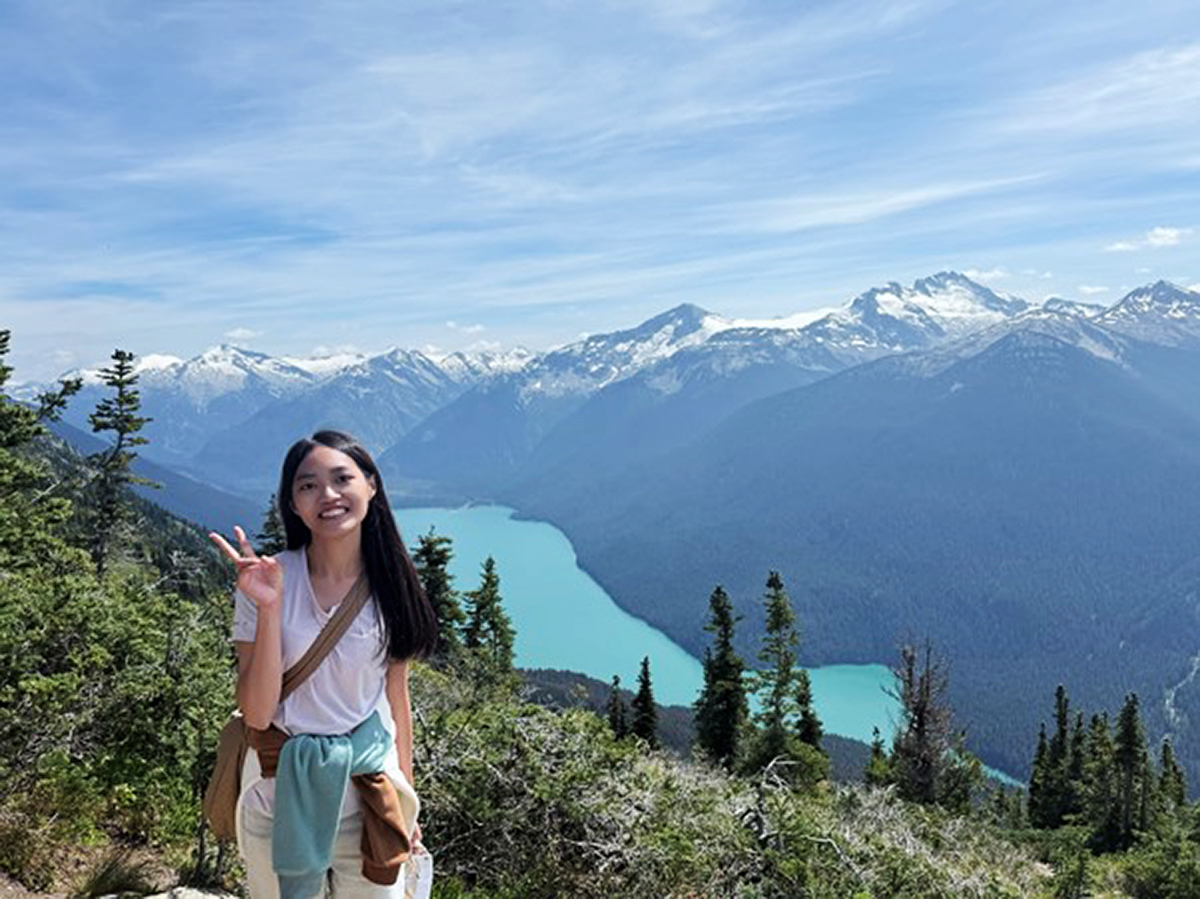
Another unforgettable experience was hiking in Whistler with friends. Unlike Hong Kong, the mountains there were rocky and slippery. It was easy to fall over. My friend and I had to keep an eye on each other. At first, we were unsure of our location and the length of the trail. Fortunately, Canadian locals provided guidance and helped us reach Cheakamus Lake. The stunning view of the lake surrounded by snowy mountains was worth the challenge.
Last modified: 29 October 2025