
Participating in the MED I package of Vancouver Summer Programme (VSP) at the University of British Columbia (UBC) was a transformative experience that broadened my horizons as an undergraduate student from Hong Kong. This four-week programme in July 2025 allowed me to immerse myself in an international academic environment, gain hands-on skills in medical sciences, and explore the vibrant culture of Vancouver, Canada. As a student studying biomedical sciences, this opportunity not only aligned perfectly with my career aspirations in healthcare and research, but also provided a different perspective and inspiration for my future pathway. Through reflection on my outreaching experiences, I hope to summarise what I went through this summer. Through this journey, I not only enhanced my technical expertise but also developed a global perspective that will shape my future endeavours.
The host institution, the University of British Columbia (UBC), is one of Canada's premier research universities, located in Vancouver, British Columbia. Ranked among the best, UBC is renowned for its excellence in health sciences, with its Faculty of Medicine being a global leader in medical education and research. The Vancouver campus spans over 400 hectares, featuring facilities like the UBC hospital and the Department of Pathology and Laboratory Medicine, where my programme was housed. A highlight of the programme was our visit to the Wellington Laboratory, which is known for its advanced research in molecular diagnostics and personalised medicine of neuro-related topics. During the visit, we observed sophisticated equipment like next-generation sequencers and engaged with researchers, which enriched our understanding of real-world applications in medical laboratory science.
The core of my experience was the MED I package, which consisted of two interconnected courses: "Introduction to Medical Laboratory Science" and "Fundamental Techniques for Clinical and Medical Research Laboratories." Each course involved lectures, lab sessions, and group projects, equivalent to six UBC credits. In "Introduction to Medical Laboratory Science," we delved into the fundamentals of laboratory diagnostics, covering topics like haematology, microbiology, clinical chemistry, and histopathology. Lectures were interactive, with guest speakers from UBC's postgraduates or teaching staff and engaging lesson games like jackpot buzz-in quizzes. We participated in case studies analysing clinical reports, which bridged theory with practice.
The second course, "Fundamental Techniques," was more hands-on. We learned essential lab skills, including gel electrophoresis, PCR, histochemistry staining and cell culture techniques. One highlight for me was the histochemistry lab session. As a BMS student who also enrolled in histology courses and a person particularly interested in the histology field, it was invaluable to learn more about the differences and delve into staining techniques. For example, the use of different staining recipes for H&E staining could provide different results.
Beyond academics, the VSP included extracurricular activities to foster cultural exchange. We attended orientation sessions with icebreakers, a campus tour of UBC's facilities, and social events like city exploration. A particularly memorable extracurricular activity was a weekend trip with friends to Joffre Lakes Provincial Park, where we hiked to see the stunning turquoise lakes surrounded by glaciers. This adventure, filled with laughter and breathtaking views that cannot be seen in Hong Kong, deepened my appreciation for British Columbia's natural beauty and strengthened bonds with my peers.
While the programme was enriching, it wasn't without challenges. As an international student from Hong Kong, the 15-hour time difference led to severe jet lag in the first week, making it hard to adjust to early morning classes starting at 8:30 AM. Academically, the fast-paced curriculum posed difficulties. Coming from a more lecture-based system in Hong Kong, I struggled with the emphasis on active participation and group work. During the lab sessions, my team had diverse backgrounds, leading to communication barriers; for instance, explaining technical terms in English to non-native speakers took extra effort. Cultural differences also surfaced—Canadians' informal classroom style contrasted with the hierarchical respect I'm accustomed to, making me hesitant to ask questions initially. Housing in UBC residences was comfortable, but sharing with roommates from different cultures meant adapting to varied sleeping habits and food preferences.
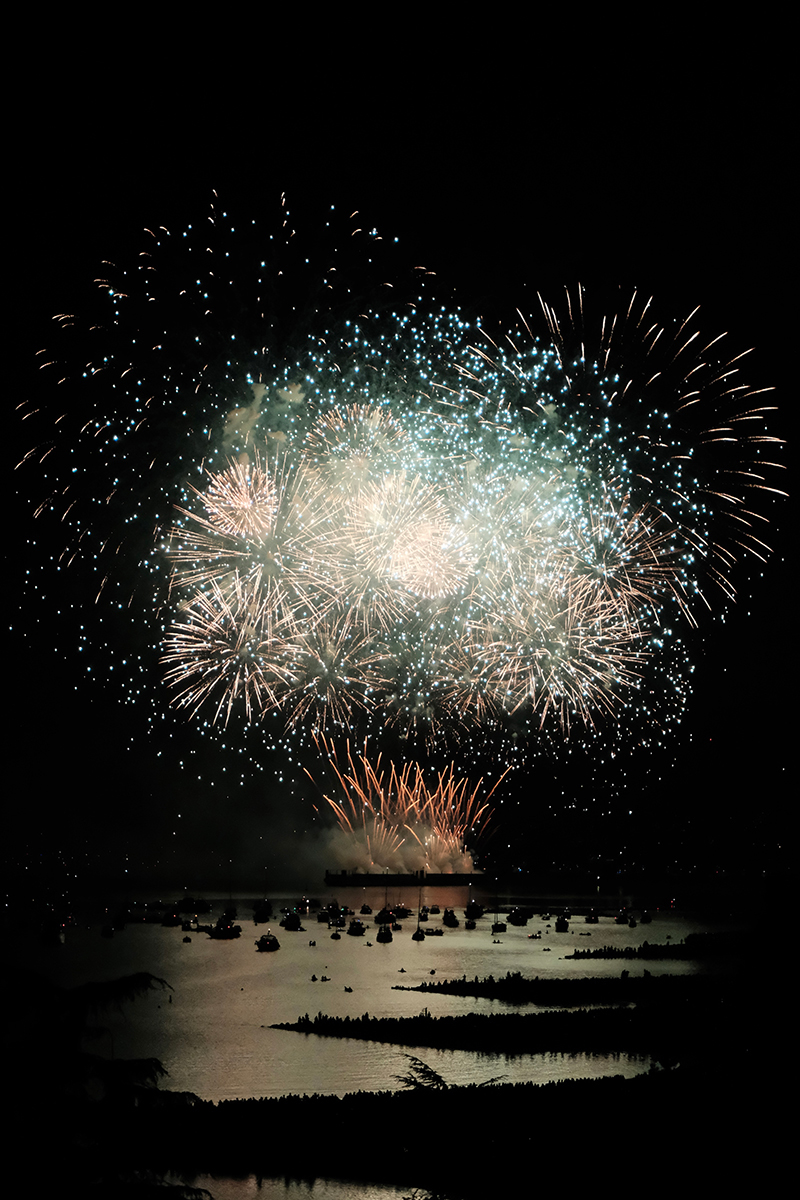
Several moments stand out as truly lifelong memories. One was during a lab session in "Fundamental Techniques," where we successfully isolated DNA from cheek cells using PCR. Watching the bands appear on the gel under UV light was exciting, as it was my first hands-on experience with molecular biology techniques using my own samples. On a personal level, a sunset hike on Wreck Beach with friends was unforgettable. Another delightful moment was watching the Honda Celebration of Light in English Bay and seeing the aurora borealis appear in UBC’s sky. This moment encapsulated the programme's spirit of global connection, far from the bustling streets of Hong Kong.
Vancouver's culture is a tapestry of inclusivity and environmental consciousness, which contrasted sharply with Hong Kong's fast-paced urban life. People prioritise outdoor activities; I noticed locals cycling is common, a skill I never had the chance to master as a child. With the desire to experience cycling around the parks, I finally learned at UBC and went cycling with friends. This also reminds me to participate in more outdoor activities after returning to Hong Kong. The city's multiculturalism was eye-opening—over 50% of residents are immigrants, creating a fusion of cuisines and festivals. At Granville Island, I tried poutine alongside Vietnamese food. Interactions with locals revealed a strong sense of community; VSP is also multicultural, and I learned about social issues like homelessness. Compared to Hong Kong's high-density living, Vancouver's spaciousness fostered a relaxed vibe. People are environmentally proactive, with UBC promoting sustainability through recycling programmes and electric buses.
The programme equipped me with invaluable knowledge and skills. Technically, I gained proficiency in lab techniques like PCR and histochemistry staining. I also gained insight into foreign medical laboratory settings. Group projects honed my teamwork and communication, especially in multicultural settings. Presenting our diagnostic outcomes improved my public speaking, while adapting to challenges built resilience. I became more independent, managing my schedule abroad, and networked with UBC professors, one of whom offered advice on participating in MLT-related study or work. Overall, the experience boosted my confidence, providing a competitive edge in Hong Kong's job market, where international exposure is highly valued.

Last modified: 29 October 2025