
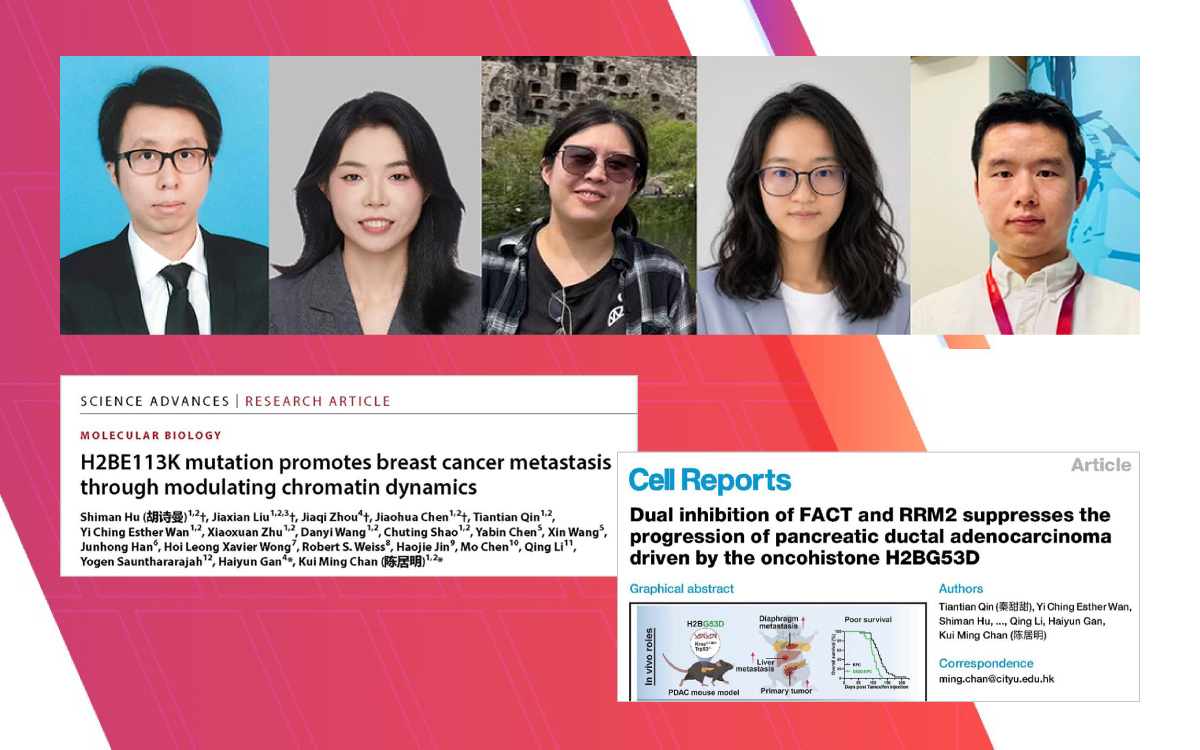
Histone proteins, once viewed primarily as structural components of DNA packaging, are now recognized as key regulators of gene expression. Oncogenic mutations in these proteins — known as oncohistones — can profoundly reprogram chromatin and drive cancer development. Prof. Kui Ming Chan’s research focuses on uncovering how such mutations alter chromatin dynamics and identifying new therapeutic vulnerabilities in these epigenetically driven cancers.
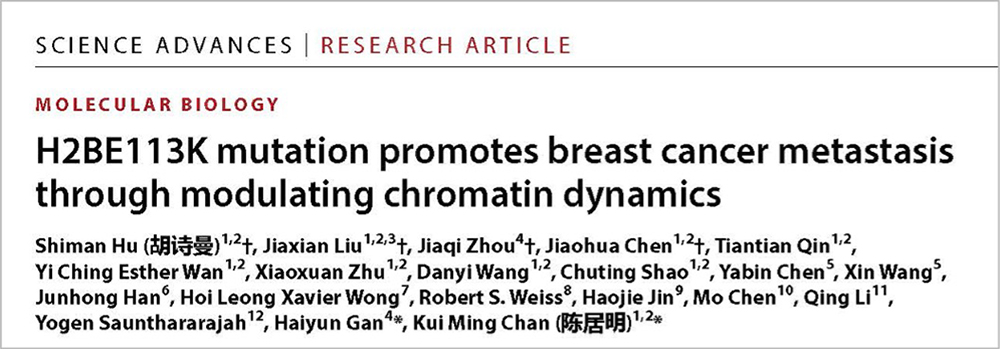
In a study recently published in Science Advances (Hu et al., Sci Adv 2026), the team identified an oncohistone, H2BE113K, as a key driver of breast cancer metastasis. The team demonstrated that this mutation reprograms chromatin dynamics, increasing transcriptional plasticity and enabling gene expression programs associated with invasion and metastatic spread. These findings uncover a previously unrecognized epigenetic mechanism underlying cancer progression.
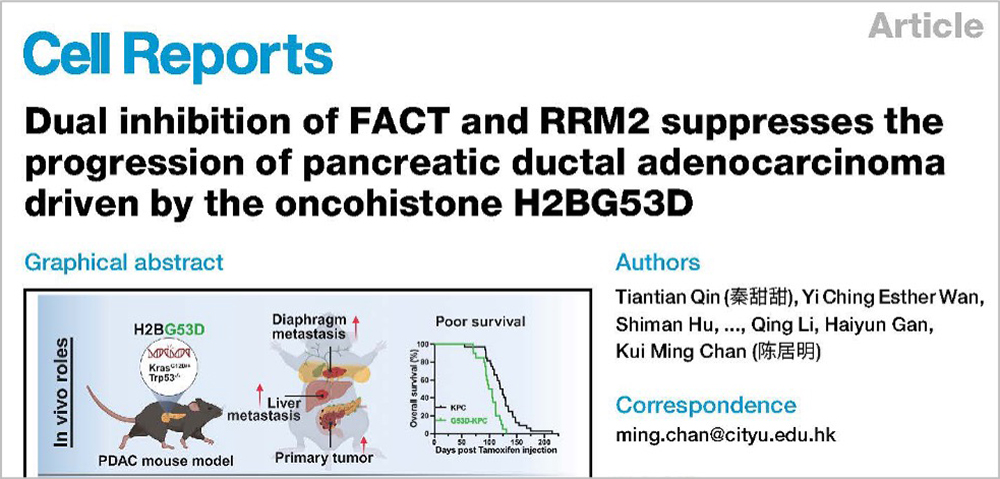
In addition to breast cancer research, Prof. Chan’s group has also investigated the oncogenic role of the H2BG53D in pancreatic ductal adenocarcinoma (PDAC), one of the most aggressive and deadliest forms of cancer. Building on earlier discoveries (Wan et al., STTT, 2020a, 2020b), the team further explored the molecular mechanisms and therapeutic vulnerabilities associated with H2BG53D in a study published in Cell Reports in December, 2025 (Qin et al., Cell Reports, 2025). They discovered that dual inhibition of the chromatin regulator FACT and the DNA synthesis enzyme RRM2 effectively suppresses tumor progression. Mechanistically, the H2BG53D mutation creates a dependency on chromatin remodeling and replication stress pathways, revealing a targetable synthetic vulnerability and a promising combination strategy for treating pancreatic cancer.
Together, these studies support a unifying concept: oncohistone mutations reshape chromatin in ways that create unique and actionable therapeutic dependencies. By integrating CRISPR-based functional genomics, advanced in vivo models, and biochemical approaches, Prof. Chan’s team aims to develop precision therapies tailored to specific histone mutations, including small-molecule inhibitors, genome editing strategies, and epigenetically informed combination treatments.
These discoveries not only open new avenues for treating pancreatic and metastatic breast cancer but also establishes a broader platform for epigenetic drug discovery. The team welcomes motivated PhD students, postdoctoral fellows, collaborators, and partners to join this effort, and invites support to accelerate the translation of oncohistone research into next-generation precision cancer therapies.
The first author of the Cell Reports paper, Dr Tiantian QIN, completed her PhD training in Prof. Chan’s laboratory at CityUHK and is currently an Assistant Professor at Wenzhou Medical University.
The Science Advances study is mainly done by Dr Shiman HU, also a former PhD student from Prof. Chan’s group at CityUHK, who will soon begin her postdoctoral training at Weill Cornell Medicine, USA. Co-first authors include Dr Jiaxian LIU, another former PhD student from the lab and now a lecturer at Guangdong Medical University, Mr Jiaohua CHEN, a final-year PhD student under Prof. Chan at CityUHK, and Dr Jiaqi Zhou, a senior researcher in Prof Haiyun Gan’s (co-correspondence) group at Chinese Academy of Science, Shenzhen.
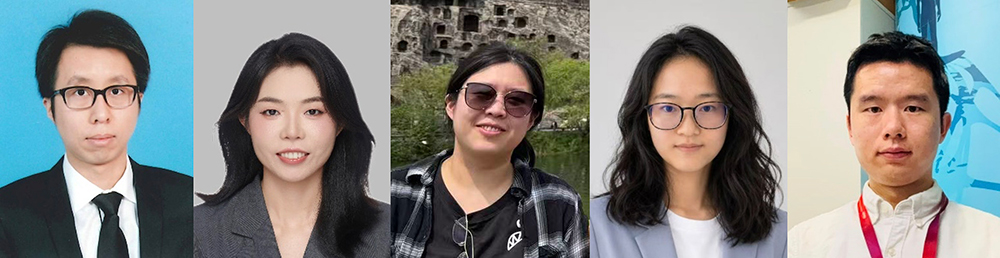
(Left to right: Prof Kui Ming CHAN, Dr Tiantian QIN, Dr Shiman HU, Dr Jiaxian LIU, Mr Jiaohua CHEN).