
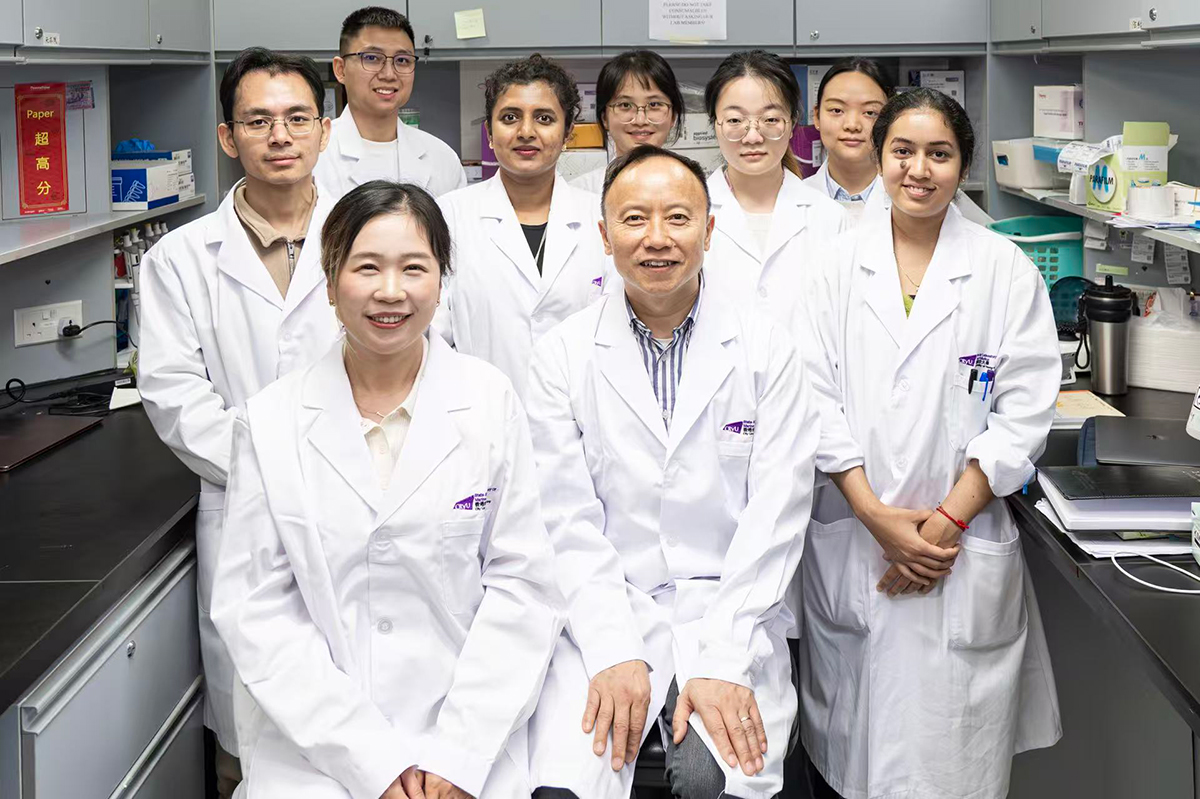
On 25 May 2026, Signal Transduction and Targeted Therapy published a research article online led by Professor Huiyong Yin and Professor Shanshan Zhong of City University of Hong Kong (CityUHK), in collaboration with the Shanghai Institute of Nutrition and Health (SINH), Chinese Academy of Sciences, entitled “Fructose 1-phosphate inhibits mannose phosphate isomerase to suppress hepatocellular carcinogenesis”. The study reveals a previously unrecognised mechanism by which fructose 1-phosphate (F1P), a fructose-derived metabolic intermediate, suppresses hepatocellular carcinoma (HCC) in the context of fructose-1,6-bisphosphate aldolase B (ALDOB) deficiency. By directly inhibiting mannose phosphate isomerase (MPI), F1P disrupts protein N-glycosylation, induces endoplasmic reticulum (ER) stress, and ultimately restrains hepatocarcinogenesis, highlighting a potential therapeutic strategy for HCC by targeting metabolic vulnerabilities in cancer cells.
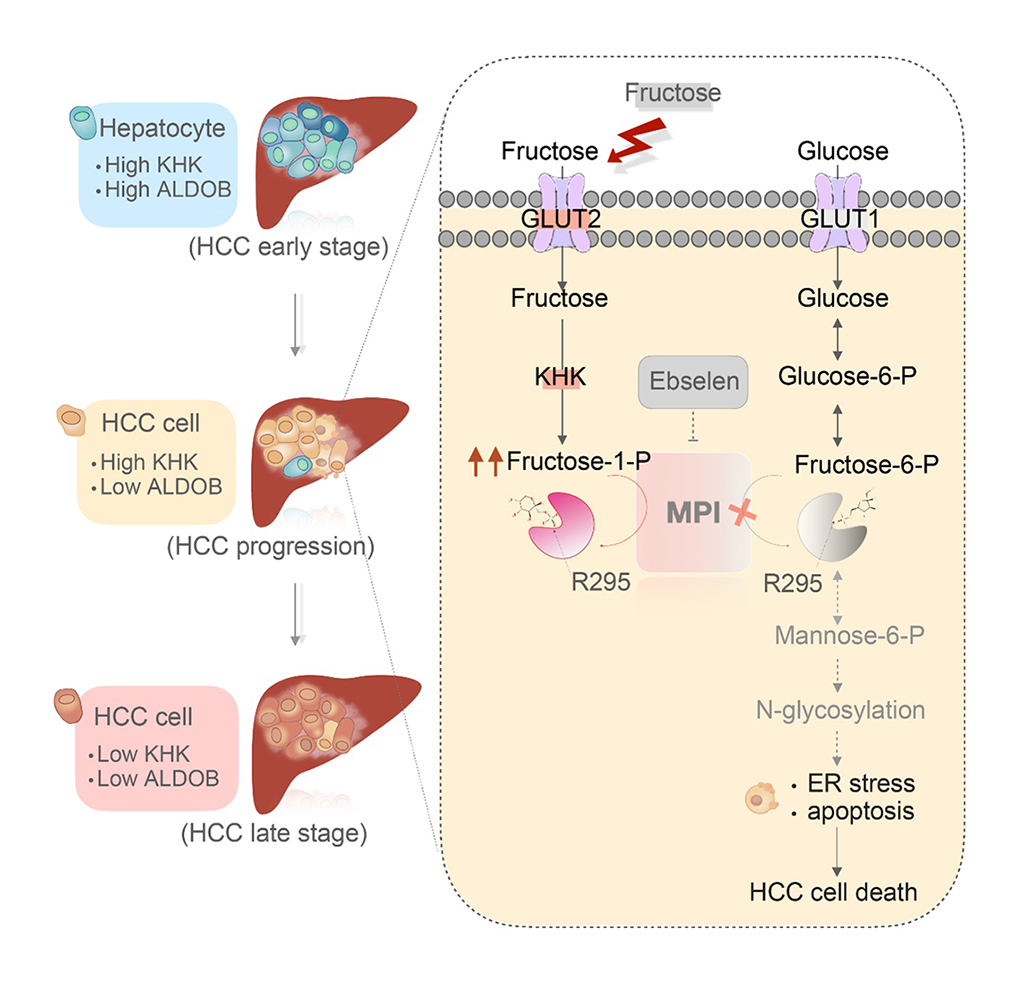
HCC is one of the most common malignancies in China and the world with poor prognosis. During the pathogenesis of HCC, cancer cells reprogram their metabolic pathways to gain survival advantages, termed metabolic reprogramming, one of the core hallmarks of cancer. Epidemiological studies largely support a positive association of fructose intake with the increased risks of metabolic diseases, such as obesity, diabetes, and hyperuricemia, which parallels with the increased exposure to dietary fructose in the form of corn syrup in soft drinks and other sweetened beverages. However, the risks of fructose exposure in HCC remain controversial because the critical enzyme in fructose metabolic pathway, ALDOB, is progressively downregulated in HCC, which forces the tumor cells to preferentially metabolize glucose over fructose. To bridge this knowledge gap, Professor Yin’s team investigated how ALDOB loss drives metabolic rewiring during HCC progression upon fructose exposure. Using transcriptomics, metabolic flux analysis, spatial transcriptomics and single-cell RNA sequencing, the research team found that although the fructose metabolic pathway is globally downregulated in HCC, a subset of tumour cells retains the capacity for fructose uptake and phosphorylation by the ketohexokinase (KHK). In the absence of ALDOB, however, these cells accumulate F1P intracellularly.
Further in vitro and in vivo experiments showed that dietary fructose supplementation markedly suppressed HCC in hepatocyte-specific ALDOB knockout mice, and that this effect is dependent on F1P production. Mechanistically, F1P directly binds to and inhibits mannose phosphate isomerase (MPI), thereby blocking mannose-6-phosphate production, impairing protein N-glycosylation, activating ER stress, and inducing tumour cell apoptosis. The team further identified a clinical drug ebselen as an MPI inhibitor through virtual screening, suggesting a potential therapeutic approach for liver cancer. A patent was filed to use ebselen as a novel agent for HCC treatment by targeting MPI.
In summary, this study defines a new metabolic rewiring in HCC with fructose exposure (Figure below): ALDOB deficiency leads to F1P accumulation, which inhibits MPI, disrupts N-glycosylation, activates ER stress, and induces tumour cell apoptosis. These findings provide novel insight into the context-dependent anti-tumour effects of fructose and offer an important basis for precision therapies targeting metabolic reprogramming in HCC.
Co-first authors for this study are Drs Yongqiang Wang and Ningning Wang, former PhD student in YIN lab at SINH, Mr Xiangyang Zhang, a 3rd year PhD student at CityUHK. This study was led by Professor Huiyong Yin and Professor Shanshan Zhong, a Research Assistant Professor of The Tung Biomedical Science Center (TBSC). This work was financially supported by grants from Shenzhen Medical Research Fund, National Natural Science Foundation of China, startup funds from the CityU HK, General Research Fund, and TBSC Project fund and Futian research project. This work was collaborated with Professors Shan Zeng and Hong Shen from Xiangya Hospital, Professor Shengxian Li from Shanghai Changzheng Hospital, Professor Jun Qin from Renji Hospital, and Professor Marcus Goncalves from New York University Longone Health, NY, USA.