

Professor Johnny Chan’s Expert Insights on Cloudbursts and Extreme Weather Featured in International and Local News
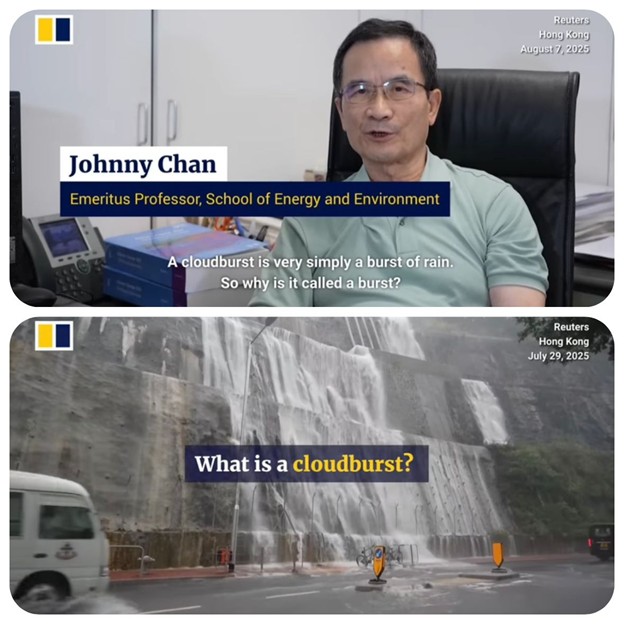
Photo source: Courtesy of SCMP
Prof. Johnny Chan, Emeritus Professor at the School of Energy and Environment (SEE), City University of Hong Kong (CityUHK), offers a clear and urgent explanation of cloudbursts—intense thunderstorms that release large volumes of rain in a short time, often triggering flash floods and landslides.
In video interviews featured by The Star, a major newspaper in Malaysia, and the South China Morning Post (SCMP), a leading local newspaper in Hong Kong, Prof. Chan explains that cloudbursts occur when warm air rises rapidly, causing water vapor to condense into large droplets and ice. As this process intensifies, the accumulated moisture is suddenly released, giving the impression that the clouds have “burst.” These events are particularly hazardous due to their sudden onset and extreme rainfall intensity.
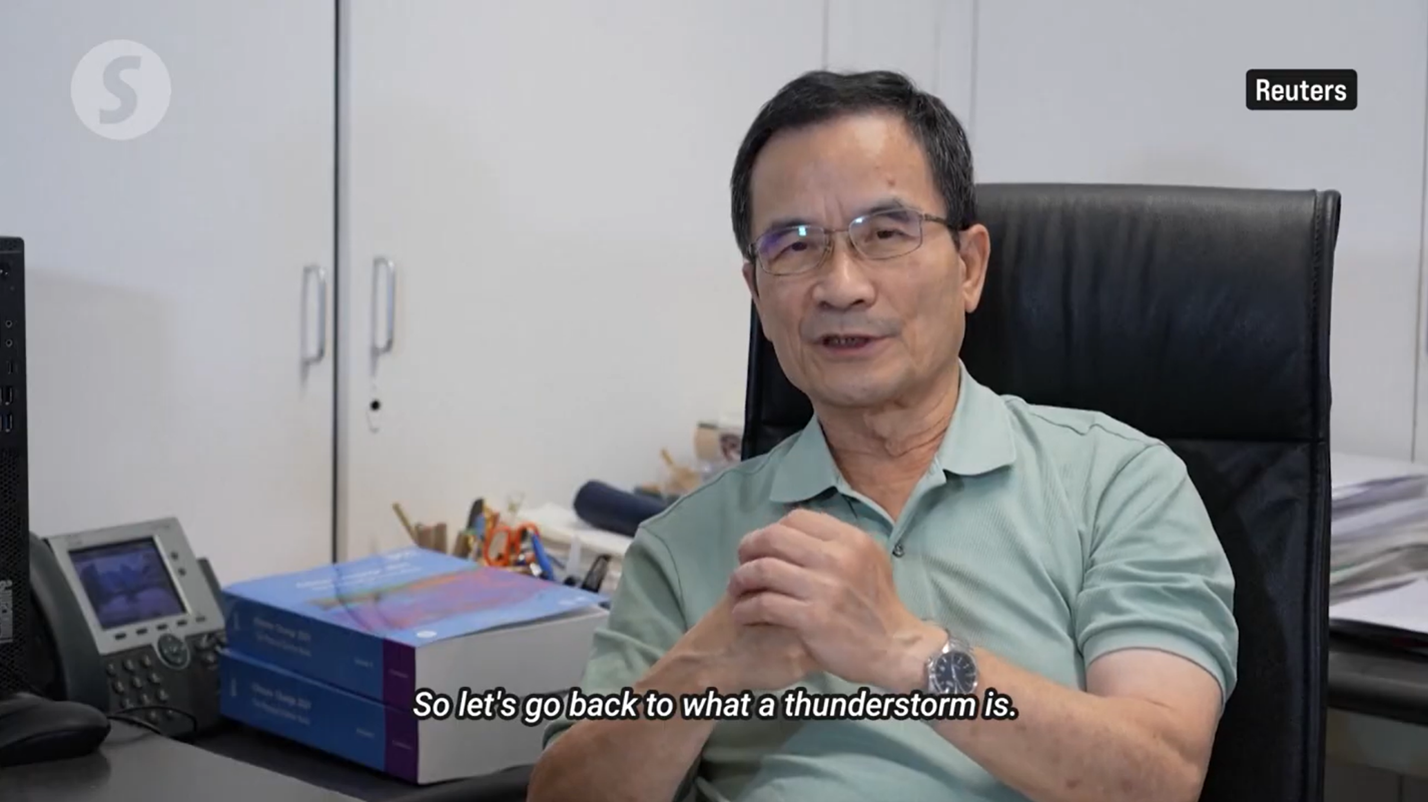
Photo source: Courtesy of The Star
Mountainous regions are particularly vulnerable. As moist air hits mountain slopes, it is forced upward—a process known as orographic forcing—which accelerates thunderstorm development. Combined with surface heating, this leads to stronger storms and heavier rainfall. Rivers often cannot handle the sudden surge, resulting in flash floods. Prof. Chan also warns that deforestation worsens the impact. Trees help stabilize topsoil; without them, heavy rain can easily wash it downhill, increasing the risk of landslides.
While forecasting cloudbursts remains difficult, short-term monitoring can help anticipate them. With climate change increasing the frequency of extreme rainfall, Prof. Chan urges long-term strategies to reduce flood risks.
For full coverage of the news, please visit The Star and SCMP.