

Unveiling the Hidden Benthic Biodiversity and Ecological Status in Victoria Harbour
Prof. Leo Lai CHAN
Associate Director, State Key Laboratory of Marine Environmental Health (SKLMEH), City University of Hong Kong
Unveiling the Hidden Benthic Biodiversity and Ecological Status in Victoria Harbour
Victoria Harbour, the iconic landmark of Hong Kong, is globally renowned for its deep waters and natural shelter, making it one of the world’s busiest economic ports. However, beneath the prosperity of shipping and urban development, what is the true ecological health status of the harbour's seabed? Recently, Professor Leo Lai CHAN, Associate Director of the State Key Laboratory of Marine Environmental Health (SKLMEH) at City University of Hong Kong, in collaboration with Professor James Kar-hei FANG from the Department of Food Science and Nutrition at The Hong Kong Polytechnic University, and Professor Xiaoshou LIU from the College of Marine Life Sciences at the Ocean University of China, unveiled the hidden ecological secrets of Victoria Harbour by publishing their latest findings on benthic biodiversity and ecological status.
Since 1841, human activities such as pier construction, land reclamation, and tourism development have contributed approximately 60 km² of land, underscoring significant and prolonged anthropogenic influences on the harbour. The researchers highlighted that while long-term water quality and sediment monitoring offer insights into short-term environmental health, the status of benthic communities provides a much more integrative reflection of biological health and ecosystem resilience.
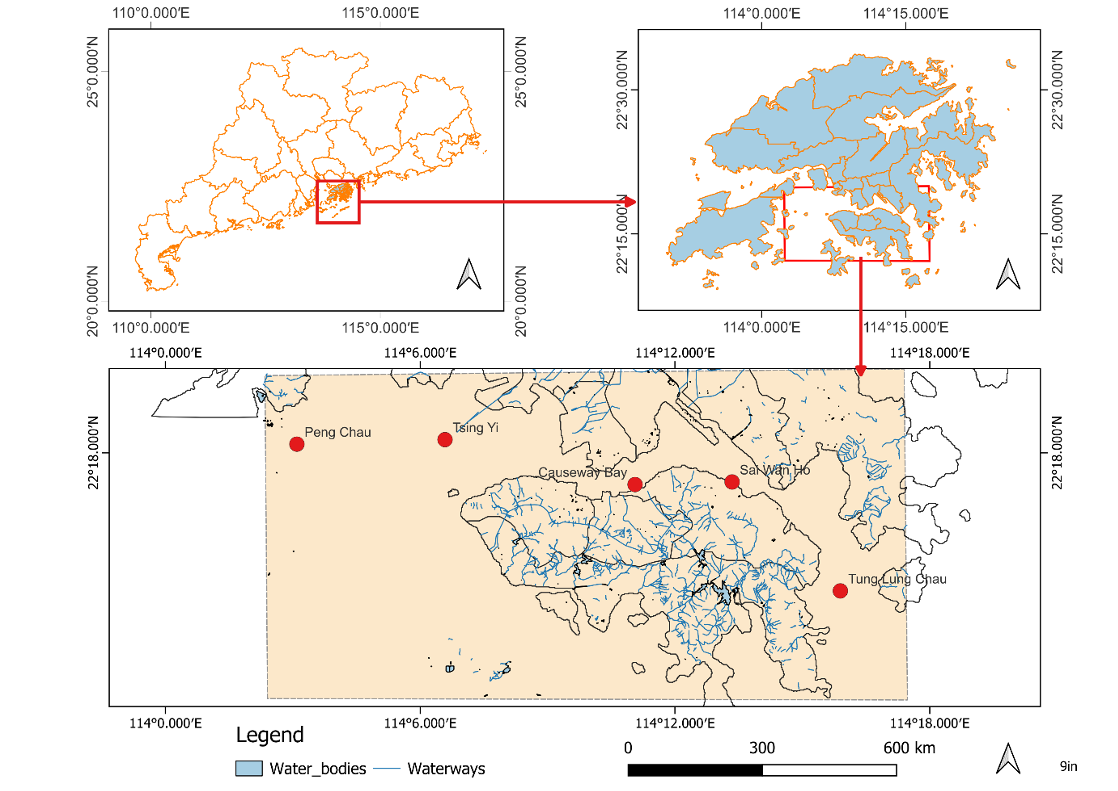
Figure 1: Map of Victoria Harbour, showing the sampling sites. PC: Peng Chau, TY: Tsing Yi, CB: Causeway Bay, SWH: Sai Wan Ho, and TLC: Tung Lung Chau.
With funding support from the Environment and Conservation Fund of the Hong Kong SAR Government, Prof. Chan’s team conducted a comprehensive one-year survey across both wet and dry seasons. The study spanned five representative sampling sites from west to east along Victoria Harbour: Peng Chau (PC), Tsing Yi (TY), Causeway Bay (CB), Sai Wan Ho (SWH), and Tung Lung Chau (TLC), to evaluate seasonal and spatial heterogeneity in water quality, sediment factors, and benthic communities.
To ensure comprehensive data collection, the team employed a rigorous four-level sampling methodology: (1) on-site water quality measurement; (2) sediment environmental factor analyses (including heavy metals and nutrient levels); (3) benthic species identification and biodiversity indices assessment; and (4) stratigraphic analysis of sediment cores (such as 210Pb activity and stable carbon/nitrogen isotopes).
Significant Seasonal and Spatial Variations with Evident Human Disturbance
The study revealed distinct seasonal water quality patterns, with sediment factors—such as carbon, nutrients, and heavy metals—significantly influenced by site-season interactions. Benthic biodiversity, particularly Mollusca, also showed clear seasonal shifts. Notably, a significantly higher number of benthic genera across most phyla were recorded during the dry season compared to the wet season (see Appendix 1).
Ecologically, Causeway Bay (CB) maintained stable, favorable conditions year-round, while Tsing Yi (TY) persistently exhibited poorer health. Tung Lung Chau (TLC) peaked in the wet season, whereas Sai Wan Ho (SWH) fared better in the dry season. Notably, abnormal 210Pb activity in the TY sediment cores indicated potential physical mixing and post-depositional disturbance, suggesting a trend of increasing human impacts on the seabed.
Advocating for an Upgraded Regulatory Framework for Future Conservation
This study clearly elucidates the combined effects of seasonal hydrodynamics, local heterogeneity, and ongoing anthropogenic disturbance on the benthic communities of Victoria Harbour. Based on these findings, the joint research team strongly advocates the establishment of an “integrated assessment framework” that combines multi-metric indices with a rationally designed monitoring program. Such a framework would not only facilitate accurate diagnosis of the ecological health of Victoria Harbour but also provide crucial scientific guidance for future marine conservation and ecological restoration practices in Hong Kong.
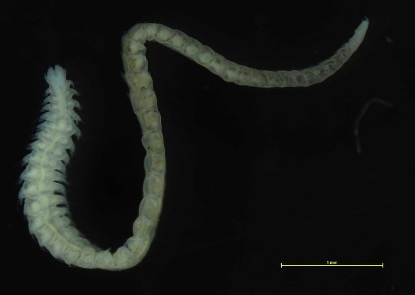
Figure 2: Benthic organism found in Victoria Harbour waters — Cabira pilargiformis (Annelida, genus Cabira).
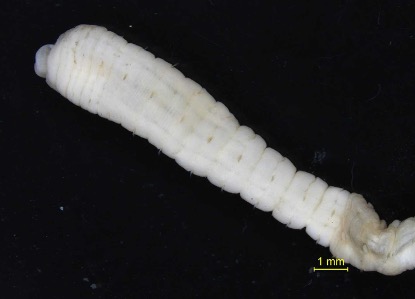
Figure 3: Benthic organism found in Victoria Harbour waters — Notomastus latericeus (Annelida, genus Notomastus).
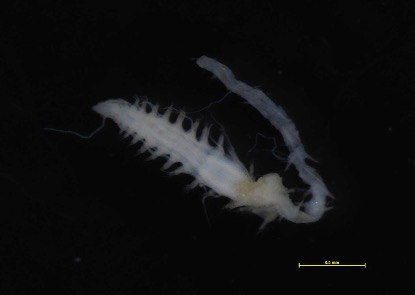
Figure 4: Benthic organism found in Victoria Harbour waters — Pionosyllis compacta (Annelida, genus Pionosyllis).
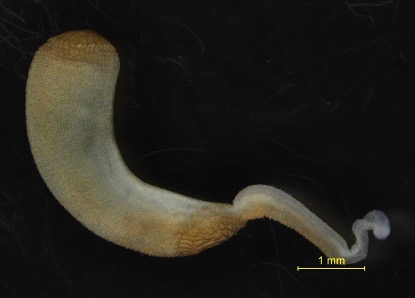
Figure 5: Benthic organism found in Victoria Harbour waters — Aspidosiphon grandis (Sipuncula, genus Aspidosiphon).
Appendix 1 – Number of Benthic Genera in Victoria Harbour
| Phylum | Wet Season | Dry Season |
|---|---|---|
| Porifera 多孔動物門 | 0 | 1 |
| Cnidaria 刺胞動物門 | 0 | 1 |
| Platyhelminthes 扁形動物門 | 0 | 2 |
| Nemertea 紐形動物門 | 1 | 1 |
| Annelida 環節動物門 | 60 | 89 |
| Sipuncula 星蟲動物門 | 1 | 4 |
| Echiura 螠蟲動物門 | 1 | 1 |
| Mollusca 軟體動物門 | 27 | 53 |
| Arthropoda 節肢動物門 | 24 | 51 |
| Phoronida 帚蟲動物門 | 0 | 1 |
| Echinodermata 棘皮動物門 | 4 | 4 |
| Chordata 頭索動物門 | 0 | 3 |
*For more photos and information related to this study, please contact the State Key Laboratory of Marine Environmental Health for further details. (Tel: 3442 4125, Email: sklmeh.info@cityu.edu.hk)