


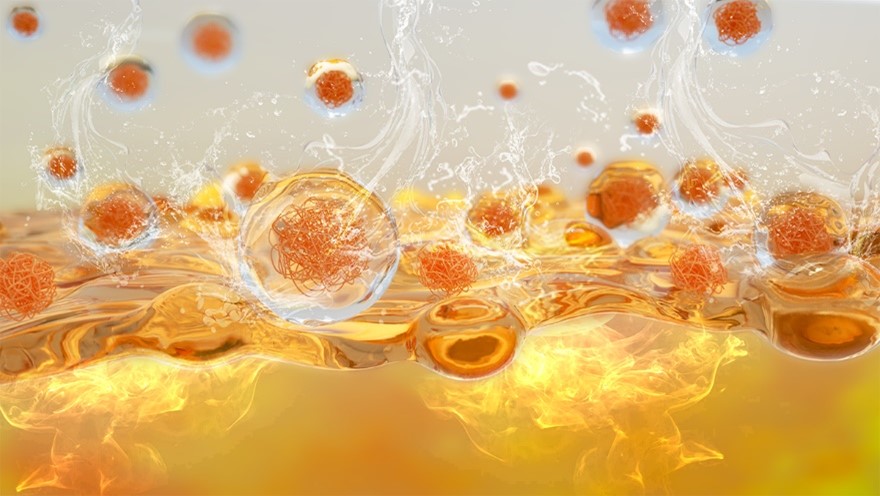
The assembly of polymers at liquid-liquid interfaces offers a promising strategy for fabricating two-dimensional polymer films. However, a significant challenge arises when the polymers lack inherent interfacial traction. In response, we introduce an approach termed chaperone solvent-assisted assembly. This approach utilizes a target polymer, X, along with three solvents: α, β, and γ. α and β are poor solvents for X and immiscible with each other, while γ is a good solvent for X and miscible with both α and β, thus serving as the chaperone solvent. The cross-interface diffusion of γ induces the assembly of interfacially nonactive X at the α-β interface, and this mechanism is verified through systematic in situ and ex situ studies. We show that chaperone solvent-assisted assembly is versatile and reliable for the interfacial assembly of polymers, including those that are interfacially nonactive. Several practical applications based on chaperone solvent-assisted assembly are also demonstrated.
Read more Nature Communications at:
https://www.nature.com/articles/s41467-024-51657-3
28 Aug 2024