


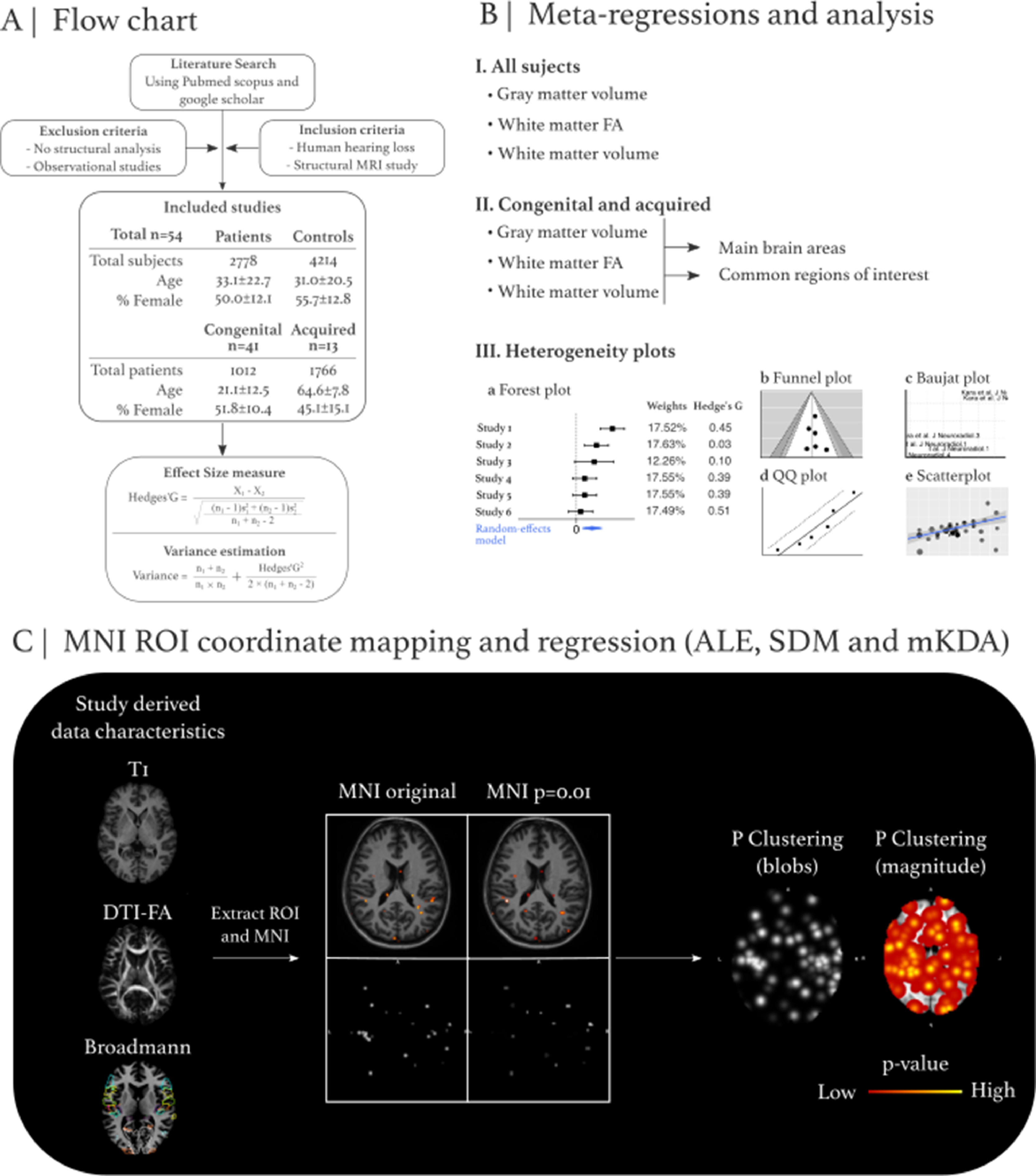
Hearing loss is a heterogeneous disorder thought to affect brain reorganization across the lifespan. Here, structural alterations of the brain due to hearing loss are assessed by quantitatively analyzing publicly available brain magnetic resonance imaging data from patients and controls. Hearing loss was found to affect gray matter (GM) and underlying white matter (WM) in nearly every region of the brain, instead of being concentrated in regions typically associated with hearing. In congenital hearing loss, GM decreased most in the frontal lobe, not the temporal lobe where traditional auditory regions are located. Similarly, acquired hearing loss had a decrease in frontal lobe GM, albeit the insula was most decreased. In congenital, WM underlying the frontal lobe GM was most decreased. In congenital, the right hemisphere was more negatively impacted than the left hemisphere; however, in acquired, this was the opposite. The WM alterations most frequently underlined GM alterations in congenital hearing loss. Future studies should use brain imaging of hearing loss as a prognostic template for discerning clinical outcomes. This work was a collaborative effort between the City University of Hong Kong, McGill University, University of Pennsylvania, and John Hopkin's University. It has been published in the top neuroscience journal NeuroImage.
Read more at ScienceDirect:
https://doi.org/10.1016/j.neuroimage.2021.117826
01 May 2021