

Professor Yong Yang's research team at City University of Hong Kong has achieved a transformative breakthrough in flexible electronics with their development of a novel 2D high-entropy-oxide (HEO) nanomembrane. Published in Nature Communications, this innovation successfully addresses the persistent brittleness challenge that has limited metal-oxide films in ultrathin encapsulation applications.
The team's bioinspired approach, drawing from natural materials like nacre and bone, has yielded a freestanding HEO nanomembrane with exceptional mechanical properties. The material demonstrates remarkable ductility approaching 90% and toughness exceeding 300 MJ/m³, outperforming both conventional metal oxides and advanced 2D materials such as graphene and MXenes. At the heart of this breakthrough lies a dual-phase nanostructure combining a rigid HEO scaffold with soft decomposed polymer chains derived from hydrogels. This architecture enables multiple protective mechanisms including crack deflection, bridging, and energy dissipation, mirroring nature's toughening strategies.
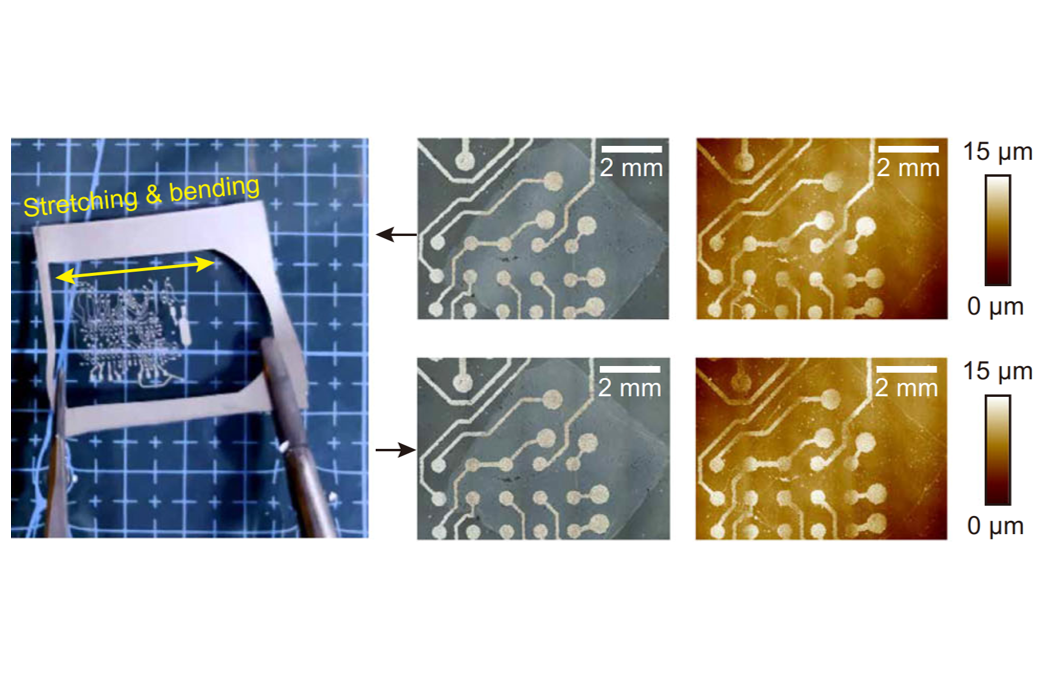
Beyond its mechanical superiority, the nanomembrane offers an impressive combination of functional properties. It maintains 83.2% visible-light transparency while forming strong bonds with diverse substrates. Most notably, the material provides exceptional oxidation resistance, effectively protecting copper circuits even under extreme conditions of 85°C temperature and 85% relative humidity. This research represents a significant achievement in nanomaterials development, with potential applications spanning multiple cutting-edge technologies. Wearable electronics, foldable displays, and implantable sensors stand to benefit from the material's unique combination of durability, flexibility, and environmental resilience.
For more details, please read the full article in Nature Communications.