

City University of Hong Kong Concludes Inaugural Conference on AI, Large Language Models, and the Social Sciences (LLMSS 2026)
21 Oct 2026 (Wed)
A global collaboration: 200 scholars and industry leaders gathered at CityUHK, 13–16 October 2026, to drive innovation in social science research in the age of artificial intelligence
The City University of Hong Kong (CityUHK) has successfully hosted the inaugural Annual Conference on AI, Large Language Models, and the Social Sciences (LLMSS 2026), held from 13 to 16 October 2026. The conference brought together 200 researchers, students, and industry practitioners for four days of workshops, keynotes, paper panels, and roundtables, placing Hong Kong at the frontier of an emerging field: the use of large language models (LLMs) to study, measure, and model human behavior.
LLMSS 2026 was jointly organized by the Computational Social Science Lab (CSSL) of the Department of Public and International Affairs (PIA), the Center for Public Affairs and Law, and the College of Liberal Arts and Social Sciences at CityUHK, together with academic partners from the University of Oxford and Peking University. It was supported by the NSFC–RGC Joint Research Scheme, the European Political Science Association, the Center for Communication Research, and ArtX Hong Kong Institute.
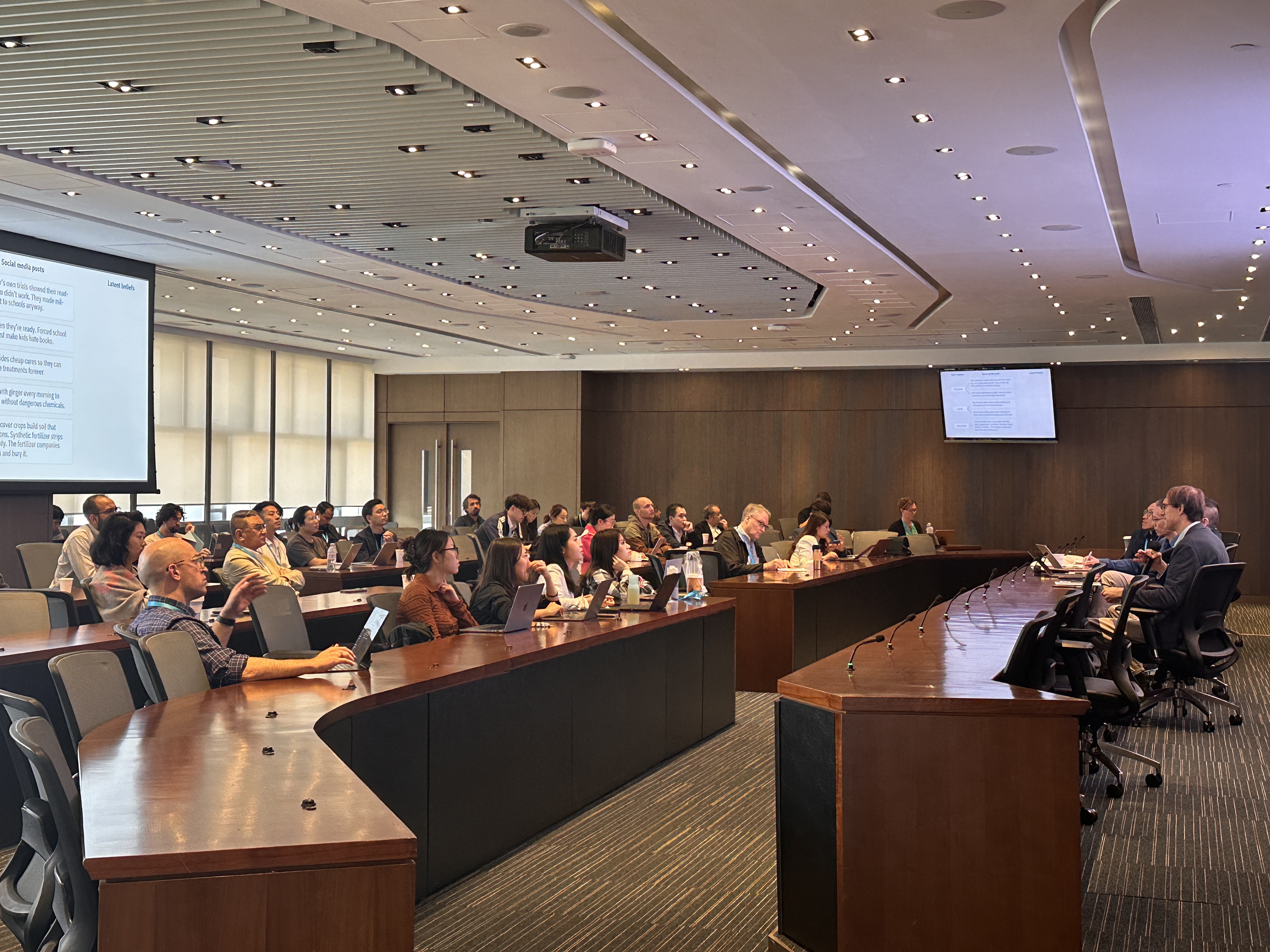
Innovation at the methodological frontier
The program spanned the social sciences, computer science, and the health sciences. Running through them was a shared drive to open new frontiers for empirical research — treating LLMs not only as objects of study but as instruments that can measure attitudes, simulate behaviour, and generate data at previously unreachable scale and speed. Panels explored new approaches to inference with model-generated data, tools for detecting and correcting bias, and the integration of LLMs into experiments, alongside the validation and reproducibility standards needed to keep such methods rigorous and accountable.
Digital twins and silicon samples
Among the most striking themes was the rise of "digital twins" and "silicon samples" — AI personas built to stand in for real people. Researchers asked whether LLMs can predict how politicians and citizens vote in referendums, recover policy positions from parliamentary speech, or forecast experimental effect sizes before studies are run. Together these studies pointed toward a future in which synthetic respondents complement traditional surveys and experiments, while prompting scrutiny of when such simulations can, and cannot, be trusted.
Breadth across disciplines and domains
The conference showcased the reach of these methods — from narratives and beliefs in financial markets to the future of work, AI in education, government service design, disaster response and public health, and even historical and literary text as data. Four keynote addresses were delivered by leading researchers from Harvard University, the University of Oxford, Tsinghua University, and Fudan University, alongside five roundtables on the future of research and research training in the age of AI.
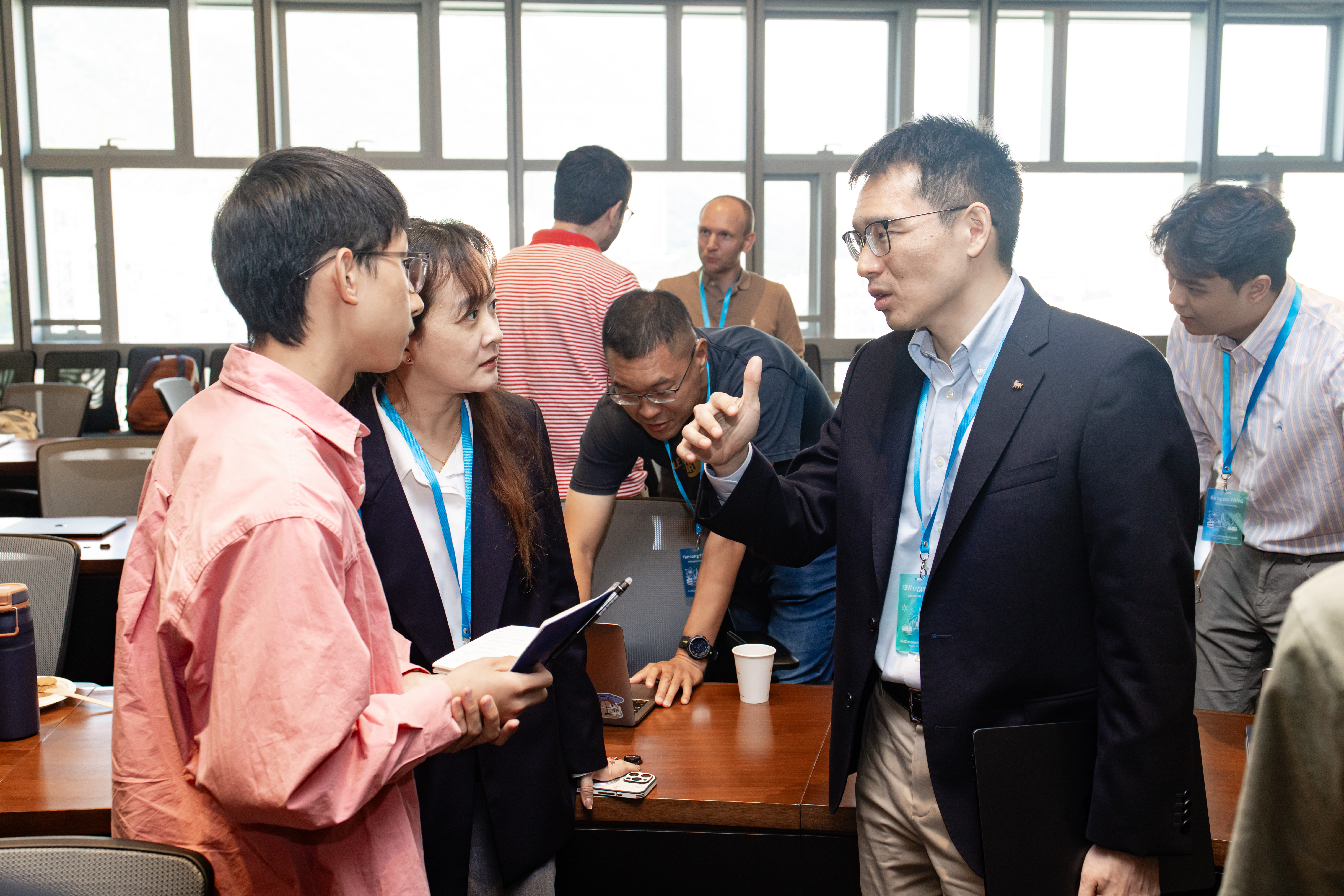
Academic and industrial partnerships
A defining feature of LLMSS 2026 was its ability to bridge academia and industry. Scholars from leading universities — including Harvard, Oxford, Stanford, Tsinghua, Peking, and Fudan — convened alongside practitioners who are building and deploying frontier AI systems, with representatives from major technology firms, including Tencent, Alibaba, and others [names and titles to be confirmed]. Participants were drawn from Hong Kong, the Chinese Mainland, and institutions across Asia, Europe, the Americas, and Australia, connecting methodological innovation with real-world scale while keeping rigor and transparency at the center.
A public good for the field
The conference opened with a day of hands-on pre-conference workshops, offered free to CityUHK colleagues and students. Led by researchers from Oxford's "Talking to Machines" initiative, they shared open, practical protocols — including the PoSSUM method for AI-assisted polling, whose state-by-state forecasts lower the barrier to rigorous AI-based research and equip early-career scholars with reusable methods.
Looking ahead to LLMSS 2027
For CLASS, PIA and CSSL, LLMSS 2026 marks another step in strengthening CityUHK's role as a hub for computational social science, interdisciplinary AI research, and international collaboration. The organizers confirmed that LLMSS will become an annual fixture, with LLMSS 2027 already in planning — set to deepen its methodological focus, expand hands-on training, and broaden its network of academic and industrial partners. Further information is available at https://coms.events/epsa-llm-26.