

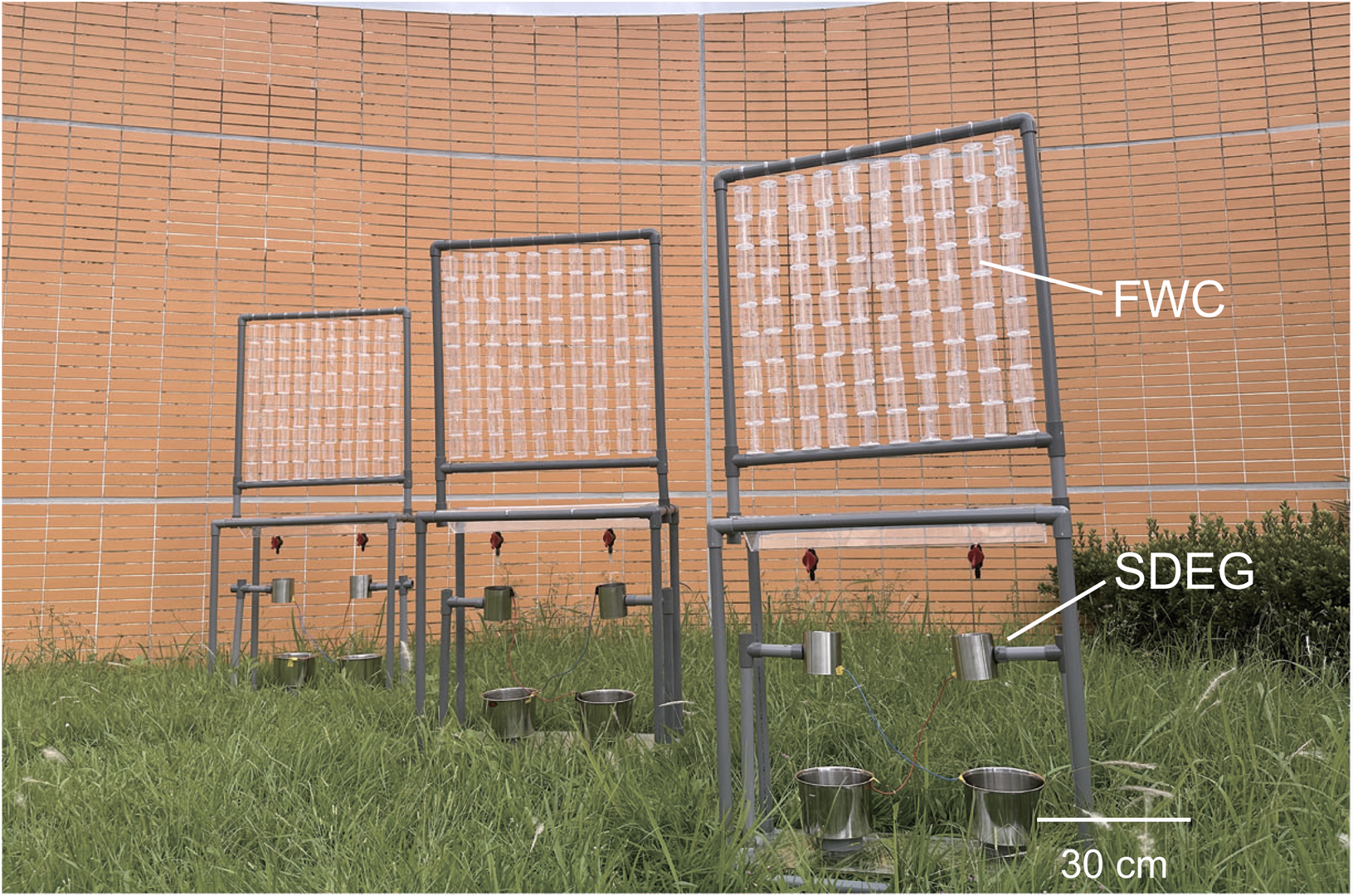
A recent study led by Prof. Steven WANG develops a self-sufficient system that converts fog to water and produces nitrogen fertilizer from air, published in Nature Communications. The system integrates a fog-to-water converter (FWC) and a spark-type droplet-based electric generator, achieving 35% fog-to-water conversion efficiency and 2.38 mg/L/h nitrogen fertilizer production. Scaling it could boost global wheat yield by ~1 megaton annually, addressing freshwater shortages and chemical fertilizer overuse simultaneously.
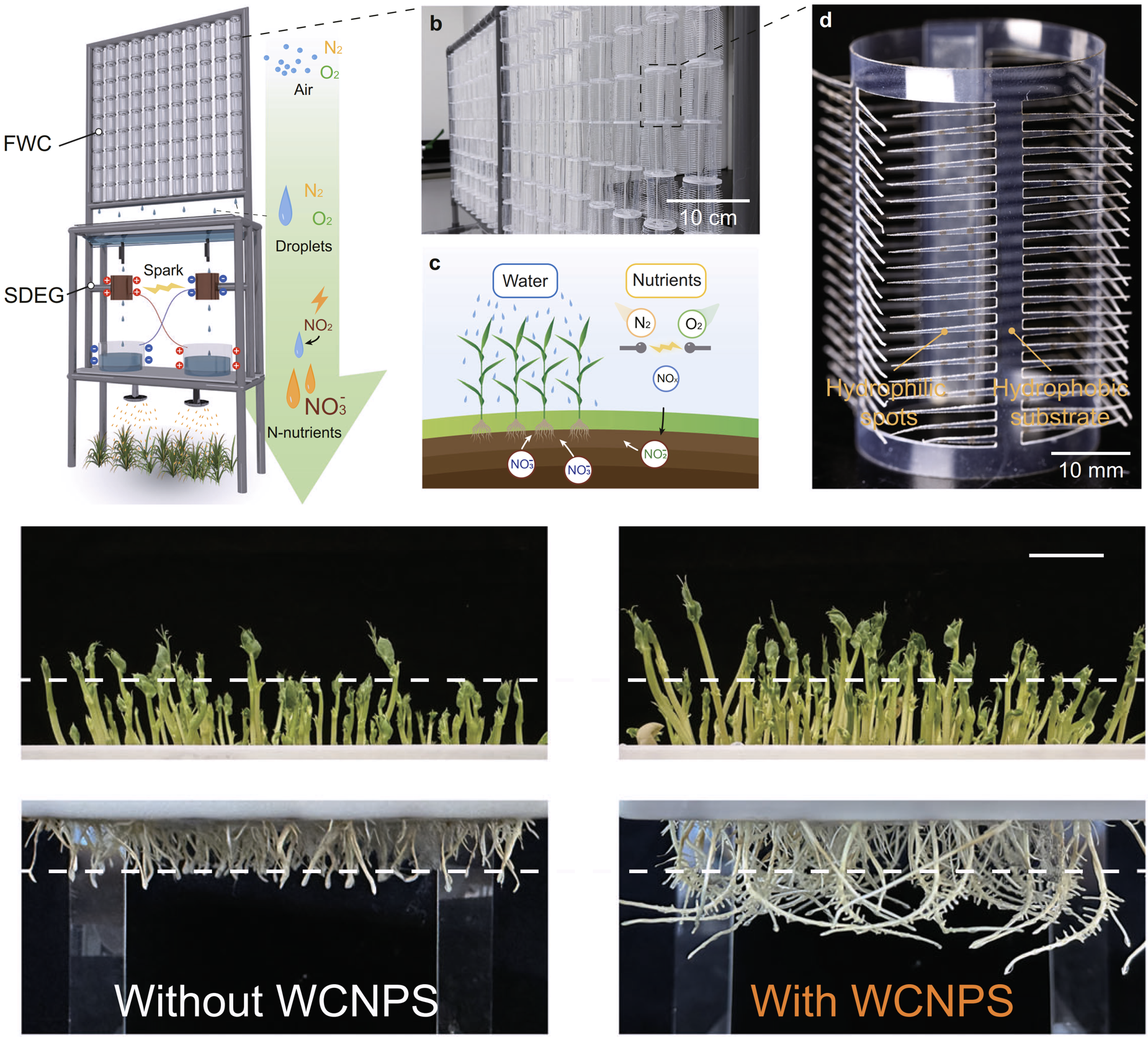
The FWC uses 3D wedged spines with biphilic surfaces (hydrophilic spots on hydrophobic substrate), inspired by cacti and beetles, to create vortices that trap fog droplets. The design leads to fog harvesting capability that is ~ one order of magnitude higher than existing systems. The spark generator converts falling droplets into 6 kV voltage, ionizing air to form fertilizers every 3 seconds, requiring no external energy. Unlike energy-intensive methods, this system operates passively via electrostatic induction. The 3D FWC’s omnidirectional fog capture and optimized droplet detachment (reducing critical detachment droplet diameter by ~25.9%) drive efficiency. The spark generator converts 25% of electrical energy to chemical energy, outperforming traditional nitrogen fixation technologies.
The system deployed in arid, foggy regions could deliver 11,239 kilotons of water and 99.8 kg of nitrate daily to arid zones at $0.0049/kg water. Tests show peas grown with it have 22.5% heavier stems, 3.5% more calcium, and 141.9% higher chlorophyll. It also accelerates seed germination and benefits wheat, spinach, and daikon, offering a path to reduce environmental harm from chemical fertilizers and secure food supplies for 2 billion water-stressed people.
For more details, please read the full article in Nature Communications.