


About Hong Kong
Hong Kong is always full of surprises!
Here you will find some helpful information for you to live in Hong Kong.
Get ready to explore your unique Hong Kong experiences with
Hong Kong Tourism Board now.
Weather
Hong Kong's climate is sub-tropical. It is usually hot and humid in summer, and cool and dry in winter.
| Season (Month) | Average Temperature |
|---|---|
| Spring(March to May) | 17°C to 26°C |
| Summer(June to August) | 26°C to 31°C |
| Autumn(September to November) | 19°C to 28°C |
| Winter(December to February) | 12°C to 20°C |
| Summer outfit | Light clothing such as T-shirts is appropriate for summer. It is advisable to also bring a jacket as most indoor areas in Hong Kong are air-conditioned, including campus facilities. |
| Winter outfit | Warmer clothing such as sweaters, jackets or coats is recommended for the winter months. There is practically no central heating in most indoor areas, and winter temperatures can drop below 10°C (50°F) especially in urban areas. |
Tropical storms and typhoons occur mainly between May and November.
When there is a heavy rainstorm or typhoon in the vicinity of Hong Kong, the Hong Kong Observatory will issue different weather warnings and signals to alert the public of the weather conditions. The warnings and signals will be broadcasted on TV, radio and the University’s homepage. You can also visit the Hong Kong Observatory's website to obtain the latest weather update.
University operations and classes may be suspended under adverse weather conditions. See University’s guidelines on adverse weather arrangements.
Electricity
|
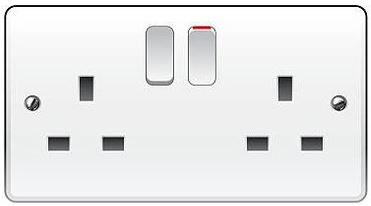
The standard voltage in Hong Kong is 220 volts AC, 50 Hz. The majority of electrical sockets allow the use of three-pin square plugs. Voltage transformers and adaptors are widely available and can be purchased in most convenience stores, supermarkets and even the canteen at the Student Residence. |
 |
Health and Well-Being
During your exchange at CityUHK, you are allowed to use the on-campus Young Chung-Yee Health Centre with a fee. The cost for regular medical consultations is HK$150, while emergency consultations will incur a fee of HK$200. Dental services (only applicable for the emergency services) will cost HK$200 per 20-minute unit (click here for more details).
Exchange students holding a valid Hong Kong student visa are eligible for local patient rates at public hospitals. The current charge for inpatient services in a general ward is HK$200 per day, while accident and emergency services cost HK$400 per attendance. For more detailed information on medical fees and charges, please click here.
There are 3 hospitals in the Kowloon Tong neighbourhood: Hong Kong Baptist Hospital (private), Caritas Medical Centre (public) and Queen Elizabeth Hospital (public). There are also 3 hospitals near the Student Residence (Ma On Shan Compound): Prince of Wales Hospital(public), Union Hospital(private) and CUHK Medical Centre(private).
All medical expenses incurred at both public and private healthcare facilities are to be borne by students at their own expense. Students are therefore strongly advised to obtain adequate medical insurance that meets their individual needs.
During your exchange, your mental wellness is equally important. If you are feeling stressed and would like to talk to someone who is a professional, on-campus counselling service is available by appointment. For more information, visit the website of Student Development Services. For any emergency hotline, please click here.
People in Hong Kong are vigilant about flu prevention, especially during the peak season for influenza from January to March and July to August every year. For more information about influenza and other communicable disease, please visit the website of the Centre for Health Protection.
Tap water in Hong Kong is not fit for drinking. You are advised to drink boiled water or water from drinking water fountains. Bottled mineral or distilled water is available at the food outlets on campus, convenience stores and supermarkets.
Transportation
Hong Kong is geographically compact and boasts one of the world's most efficient, safe, affordable, and frequent public transport systems.
The Mass Transit Railway (MTR) is one of the most convenient means of public transport in Hong Kong. It can take you almost anywhere you want to go. CityUHK is approximately 5 minutes' walk from Kowloon Tong MTR Station. Trains usually arrive at two-minute intervals. Be aware that the MTR is often extremely crowded during rush hours.
Buses, minibuses, trams, ferries and taxis are also widely used in Hong Kong and you can catch wonderful glimpses of the city along the way. Maps and information boards are present in each MTR station to facilitate your ease of travel. A bus terminal is located next to Festival Walk, which is about 10 minutes by foot from campus. For more information on how to get around in Hong Kong, please visit the website of the Hong Kong Tourism Board.
Communications
As a global communications hub and one of the highest per capita users of mobile phones, Hong Kong thrives on efficient telecommunications. Local calls are free from private landlines and cost only HK$1 per five minutes from public telephones. Hotels usually charge for local calls. If you are living in the Student Residence, you can make local calls for free using the telephone provided in your room.
Mobile phones that use most of the telephone systems around the globe – including GSM 900/1800, CDMA 2000 and WCDMA frequency bands – operate in Hong Kong. However, the GSM 1900 band, which is commonly used in the US, does not work in Hong Kong.
Mobile operators in Hong Kong have roaming agreements with most overseas operators enabling visitors to use their mobile phone when they come to Hong Kong. As roaming service can be expensive, you should check pricing with your network provider before using your phone in Hong Kong.
Prepaid sim card can be purchased from convenience stores such as 7-Eleven. Service plans, on the other hand, have to be subscribed in person at the branches of service providers.
Postage is inexpensive and the service is reliable. The nearest post office to CityUHK is located at 11A, Fa Po Street, which is approximately 15 minutes' walk from the campus. The General Post Office is next to the Star Ferry in Central on Hong Kong Island. Detailed postage information can be found on the Hongkong Post website.
Languages
English is the teaching medium at most universities, including CityUHK, but both Chinese and English are the official languages in Hong Kong. English is widely used within the government and also by the legal, professional and business sectors. There is no shortage of well-educated, competent bilingual or even trilingual professionals who speak English, Cantonese and Putonghua.
Working Hours
Financial & Commercial Sectors
Weekdays: 9:00 am - 5:00 pm
Saturdays: 9:00 am - 1:00 pm
Sundays & Public Holidays: Closed
Government & University Offices
Weekdays: 9:00 am - 5:00 pm
Saturdays, Sundays & Public Holidays: Closed
Shops & Restaurants
10:00 am - 10:00 pm or even longer hours
#The working hours listed here are generalised for reference only.
Culture
With a population that is mainly ethnic Chinese and a special historical background, Hong Kong is a global city in which Chinese traditions intertwine harmoniously with Western culture. You will find multiple denominations of churches sharing space with Chinese joss houses, temples, mosques, and synagogues. It is not surprising to see elderly residents playing ancient Chinese board games on digital tablets. In Hong Kong, people celebrate the Christmas and Easter holidays with the same fervour as they enjoy Buddha’s Birthday and Chinese New Year. Hong Kong is also an inclusive and innovative city where state-of-the-art skyscrapers are designed in consultation with Feng Shui masters.
Learn more about Hong Kong's customs and culture at www.discoverhongkong.com.
Religion
Hong Kong is a multicultural city where people enjoy the freedom to practise their own faiths. Most religions are represented in Hong Kong including Buddhism, Taoism, Confucianism, Christianity, Islam, Hinduism, Sikhism, Judaism and Jainism, etc. It is easy to find temples, monasteries, churches and mosques in Hong Kong. At CityUHK campus, a quiet room (R4205, 4/F, BOC) is available for quiet reflection, meditation and prayer. The Opening Hours are 09:00 - 21:00 (Mon-Sat).