

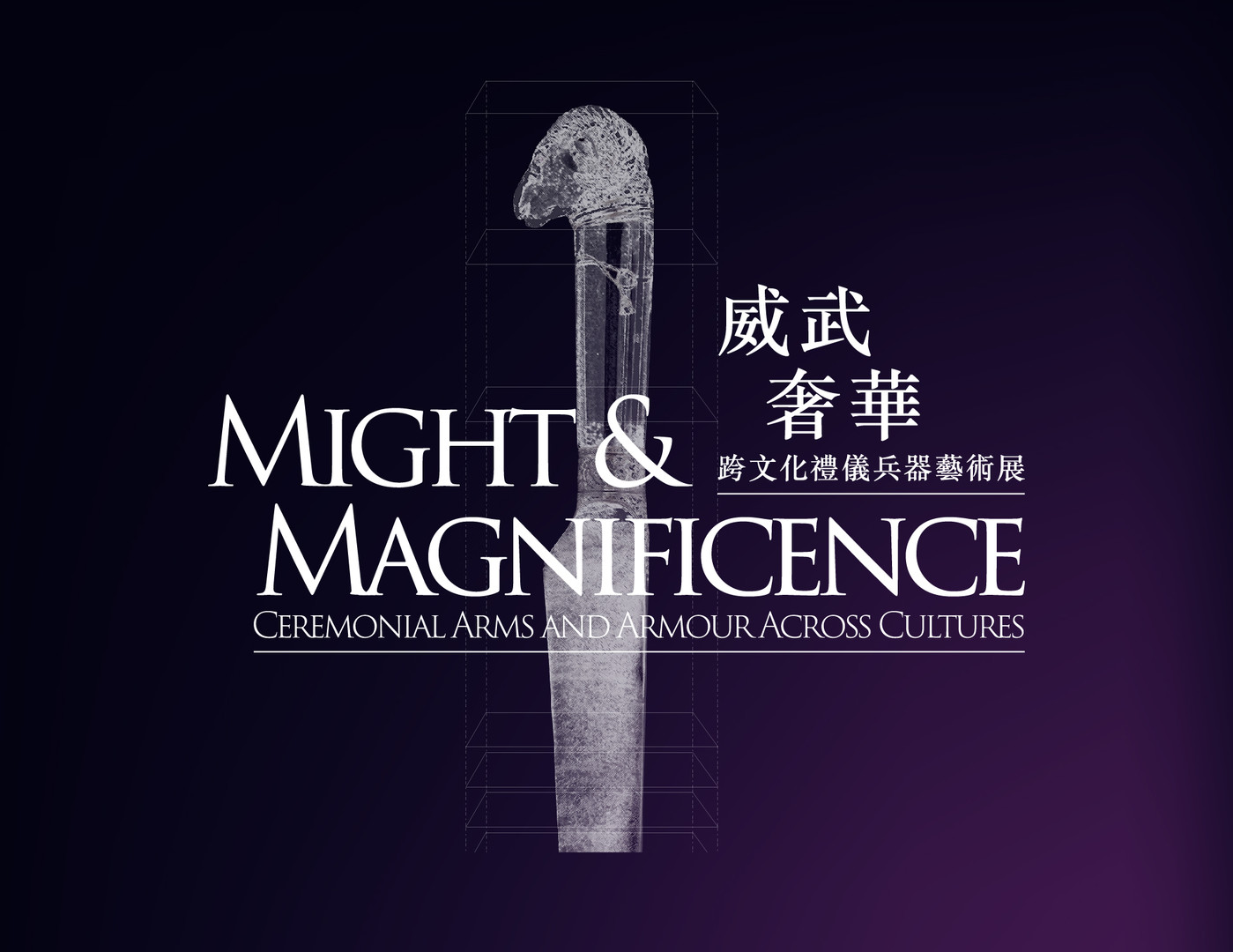
Introduction of the Exhibition
Arms and armour are often perceived through the narrow lens of warfare, seen
primarily as tools of combat and defence.
However, their significance transcends the battlefield, serving as powerful symbols that resonate deeply
within the cultural,
social, and political contexts of various societies. From North Africa to Southeast Asia, ceremonial arms
and armour were
items of prestige that played multifaceted roles, extending far beyond their practical use in war.
‘Might and Magnificence: Ceremonial Arms and Armour Across Cultures’ is an unprecedented exhibition, which
includes
nearly 200 examples of ceremonial arms and armour, spanning geographies, cultures, communities, religions,
histories, and
time periods. It demonstrates the importance and multifarious roles that these objects played, from markers
of status to
instruments of worship.
The exhibition features rare and exceptional pieces from esteemed private and local public collections, with
significant loans
from the renowned Mengdiexuan Collection and R&J Collection. Collectively, these works highlight the
enduring significance
of arms and armour beyond the battlefield, weaving connections across diverse regions and cultures through
shared
traditions, legends, and histories.
Standing as a powerful tribute to the extraordinary craftsmanship, technical expertise, and innovative
design that these
objects embody, the exhibition is divided into four major sections. The first serves as an introduction to
the concept of
ceremonial arms and armour, discussing how these objects contrasted from their martial counterparts. The
second section of
the exhibition serves as a visual glossary, showcasing decorative techniques through a diverse array of
ceremonial weapons.
The third section is divided into seven geographical subsections: Turkey and the Caucasus, North Africa and
the Arabian
Peninsula, India and Sri Lanka, the Himalayan regions, China, Japan, and Southeast Asia. The fourth and
final section of the exhibition,
entitled ‘Looking East’, examines the reciprocal impact that trade, conquest, and colonialism had on the
production of
both Eastern and Western ceremonial arms and armour.
Moreover, emphasising a cross-disciplinary approach, this exhibition showcases how art, technology, and
science interact
through interdepartmental collaborations at the City University of Hong Kong on the study of ceremonial arms
and armour
across regions. Through the immersive experience, interactive media, metaverse, and moving images, as well
as the
application of algorithms in media art, and the scientific studies using Scanning Electron Microscope (SEM)
on selected
arms and Multispectral Imaging (MSI) studies on military portrait paintings, this exhibition uniquely
combines art, science,
and technology.
This groundbreaking exhibition reveals the true essence of ceremonial arms and armour, showcasing them not
merely as
functional objects but also as profound symbols of cultural, social, and political identity. These objects,
meticulously crafted
and richly adorned, are living embodiments that tell stories spanning continents and centuries, connecting
diverse societies
through shared traditions of artistry, spirituality, and diplomacy. They embody the duality of function and
beauty, serving
both as tools of war and as symbols of power, status, and spiritual significance. This exhibition invites us
to view these
extraordinary objects through the lenses of art, science, and technology as enduring symbols of identity,
beauty,
and human creativity.
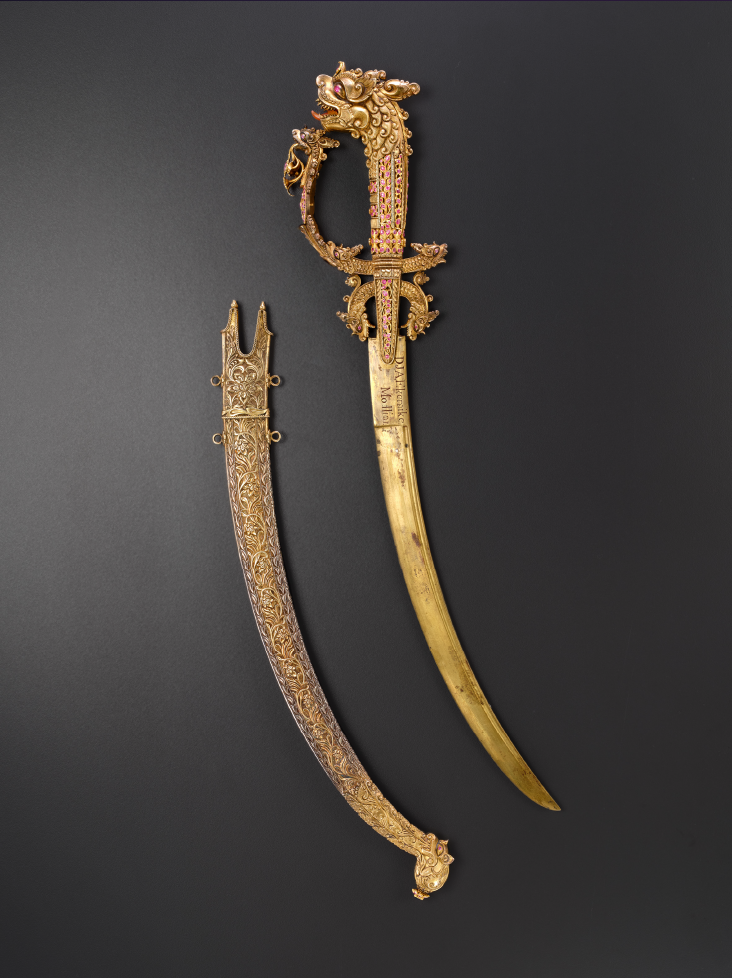
Kastane and scabbard |

Kris and sheath |

Khanjar (dagger) |
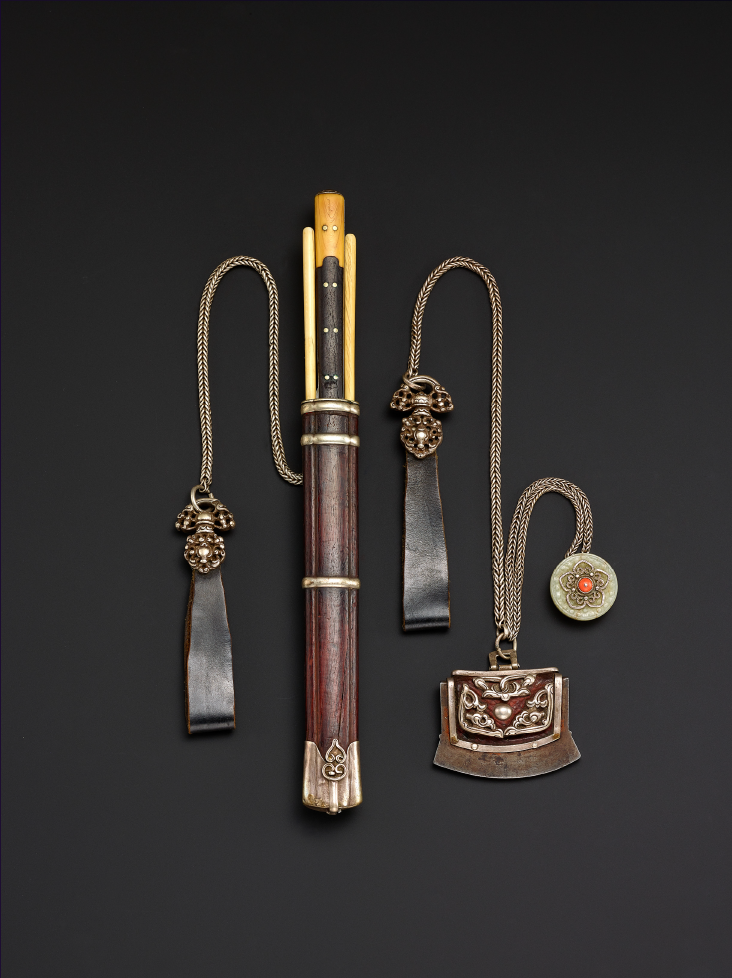
Khet kuga (trousse) with f lint striker
|
|
|
|
|---|---|
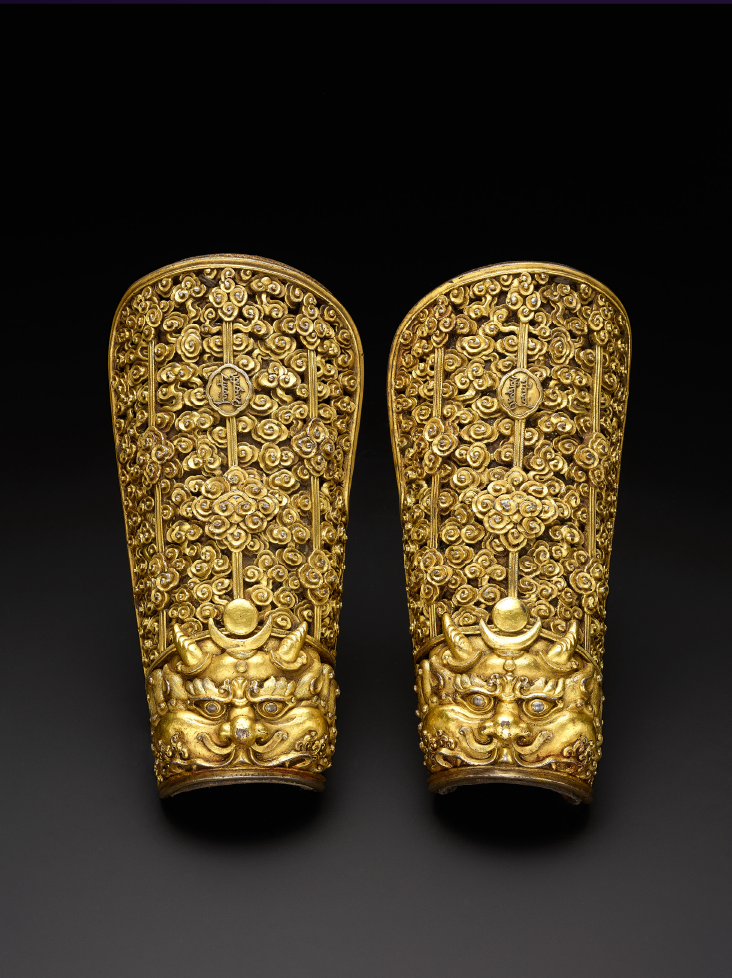
Vambraces (arm guards) |
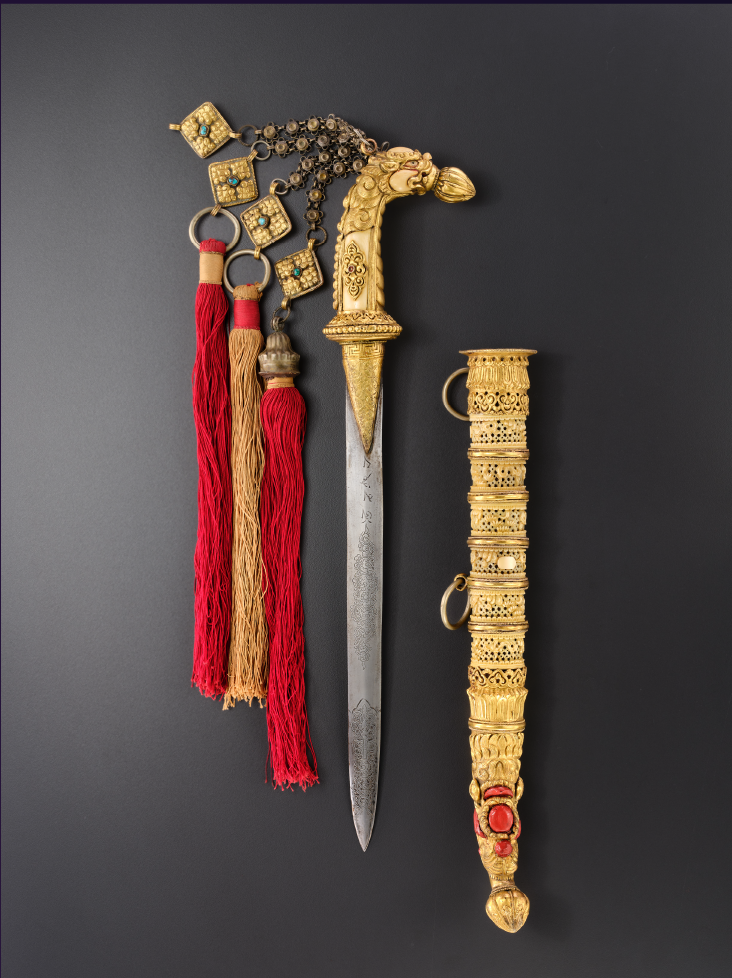
Dagger and sheath |