

Bridging Cultures and Empowering Futures Through Language Learning
Learning a new language opens up a great number of opportunities for students, while expanding their cultural horizons and enhancing communication skills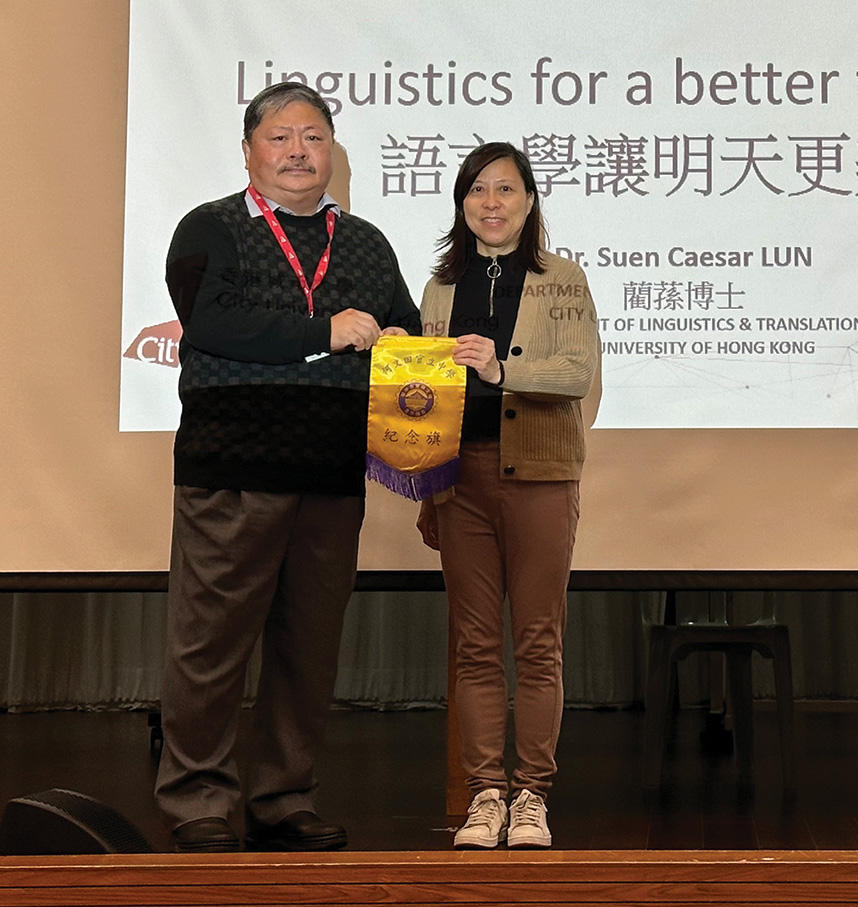
Lun (left) received thanks after speaking at a talk promoting linguistics.
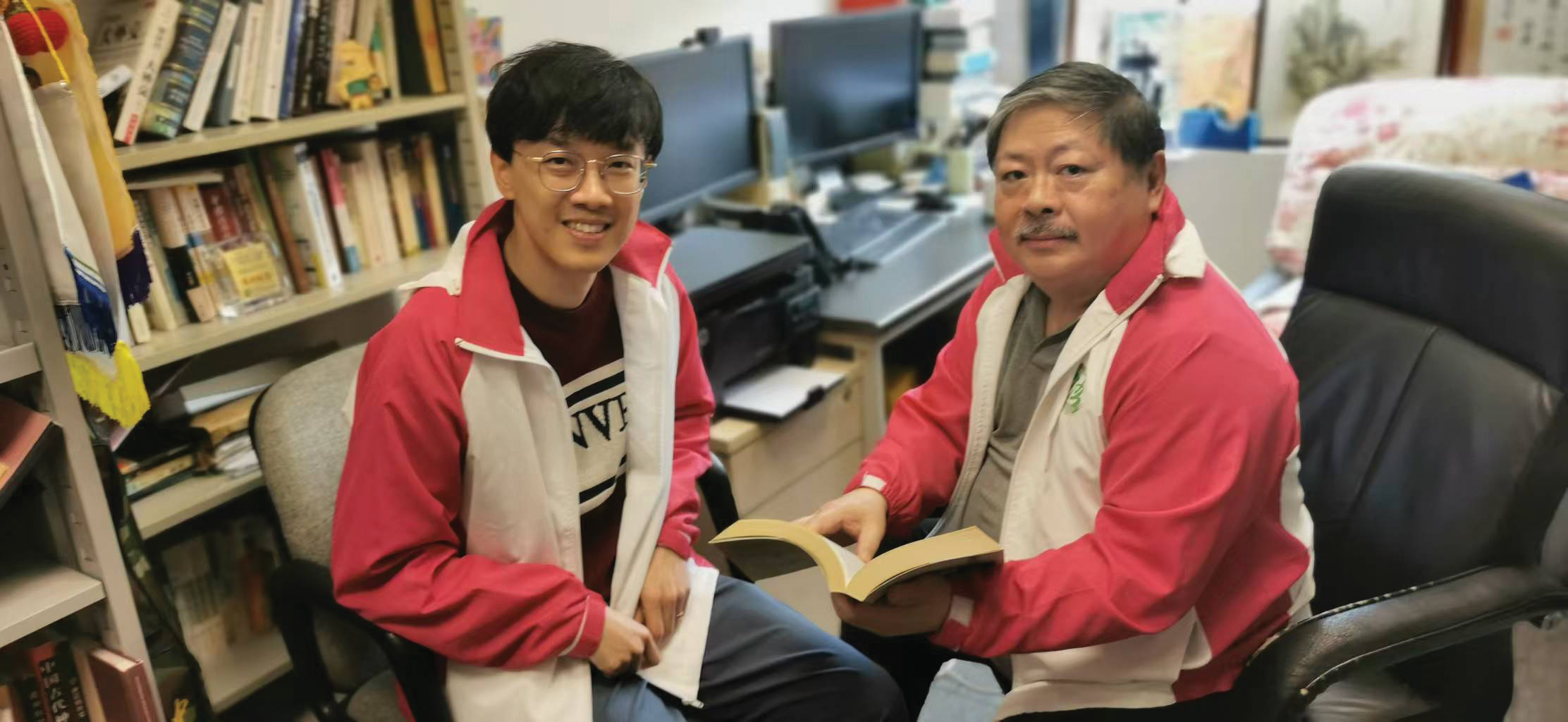
Lun (right) and Dr Tze-Ming LEE (left), who is consultant and co-investigator of the CLASSyCan project.
In an era where globalisation has rapidly intertwined cultures, the importance of language learning has never been more evident. The CLASSyCan initiative, a multimedia interactive Cantonese course developed specifically for non-Cantonese speakers, stands as a testament to how educational innovations can enhance human connections.
Professor Caesar LUN, Programme Leader of the Master of Arts in Language Studies (MALS), along with Professor Alfred Tat-Kei HO, Dean of the College of Liberal Arts and Social Sciences (CLASS) and Professor Niels O. SCHILLER, Head of the Department of Linguistics and Translation (LT), decided to spearhead this initiative to foster a deeper understanding of Cantonese and its rich cultural backdrop.
Helping Students Settle In
The motivation for creating CLASSyCan also stemmed from a desire to help, in particular, mainland students become attuned to life in Hong Kong.
“Since most of our students in the MALS programme are from the mainland and many of them are not Cantonese, we want to teach them some Cantonese so that they have a stronger motivation to stay behind and settle in Hong Kong after graduation,” Lun explains.
For this reason, the initiative is not merely a language course. Rather, it is a bridge to a new life, enhancing students' opportunities for personal and professional growth while facilitating cultural integration. Indeed, what sets CLASSyCan apart from traditional language courses is its multimedia approach, designed to enhance the learning experience significantly.
“The approach will rely heavily on self-learning motivation and the multimedia presentation method, to make the learning and understanding more digestible,” Lun says.
By incorporating videos, interactive animations and a variety of digital resources, the course aims to prepare students for practical, face-to-face interactions with local tutors. This method not only caters to diverse learning styles but also makes the process engaging and effective, ensuring that students remain motivated throughout their language journey.
Learning Difficulties
“However, learning Cantonese presents unique challenges for mainland students, primarily due to the differences in pronunciation and colloquial vocabulary,” Lun explains.
“The major challenge for anyone to master Cantonese to a good level of proficiency is actually their motivation to succeed,” he notes. The course addresses these challenges directly by employing contrastive linguistic knowledge, helping students recognise the systematic differences between Putonghua and Cantonese. This is crucial because, despite both languages sharing a common heritage, their phonetics and vocabulary can create significant barriers to learning. By starting with Jyutping, the Romanisation scheme widely used in Hong Kong, students can familiarise themselves with the sounds and structures of Cantonese in a systematic manner, making the learning process less daunting.
Engagement is also a central pillar of the CLASSyCan curriculum. The course includes various interactive elements, such as online quizzes, gamified learning modules, and small tutorial groups, which facilitate active learning.
“With more multimedia and more interactivity, we want to experiment with this new approach to pedagogy,” Lun says. This hands-on experience not only reinforces learning but also promotes retention, making the language acquisition process more enjoyable and less intimidating for students. The interactive components also allow learners to practise speaking and comprehension in a safe environment, building their confidence before they engage with native speakers.
The Importance of Culture
“Moreover, understanding a language goes beyond vocabulary and grammar; it is deeply intertwined with culture. The integration of cultural elements into the curriculum is critical for creating a holistic learning experience,” Lun emphasises.
“If language is not reflected in its link with a rich culture, nobody would care to learn it,” he says. Future modules will incorporate local scenarios, cultural anecdotes and real-life situations that enrich the students’ learning experience. This approach ensures that students not only learn to speak Cantonese but also understand the context in which the language is used, making it more relevant and meaningful to their lives in Hong Kong.
Although CLASSyCan has not yet been fully implemented, the feedback from initial participants has been promising, indicating a strong interest in the course’s innovative approach. As the programme evolves, it will continue to prioritise student input, enhancing its relevance and impact.
Language is not just a tool for communication. It is the key to understanding and appreciating the rich tapestry of cultures that surround us
Professor Caesar Lun
The effectiveness of the course will be measured through various assessments of students’ Cantonese language skills, including both formative and summative evaluations.
“It’s about building a habit with incessant practices and applications of the language skills one has mastered,” Lun says. By focusing on practical usage and continuous engagement, CLASSyCan aims to foster not only fluency but also confidence in using Cantonese in real-world situations. This emphasis on practical application is vital for ensuring that students can navigate their daily lives in Hong Kong, from ordering food to engaging in social conversations.
Developing CLASSyCan in the Future
Looking ahead, the potential for expanding the CLASSyCan initiative is vast. “We believe the future lies in the interactivity of learners with the courseware,” Lun says, hinting at the incorporation of advanced technologies such as the metaverse. This innovative direction could create immersive experiences where students practise Cantonese in virtual environments that mimic real-life scenarios, further enhancing their learning. While technology plays a significant role, the core of language learning remains rooted in the science and art of communication. Future developments will aim to integrate these innovations while maintaining a focus on effective language acquisition.
By addressing the specific challenges faced by mainland students and employing a multimedia approach, it not only teaches a language but also enriches lives. As Lun aptly summarises, “This is about both the science and art of communication.” Through initiatives like CLASSyCan, he hopes to better connect individuals, cultures and communities, paving the way for a more harmonious global society.
“Language is not just a tool for communication,” he says. “It is the key to understanding and appreciating the rich tapestry of cultures that surround us.”