

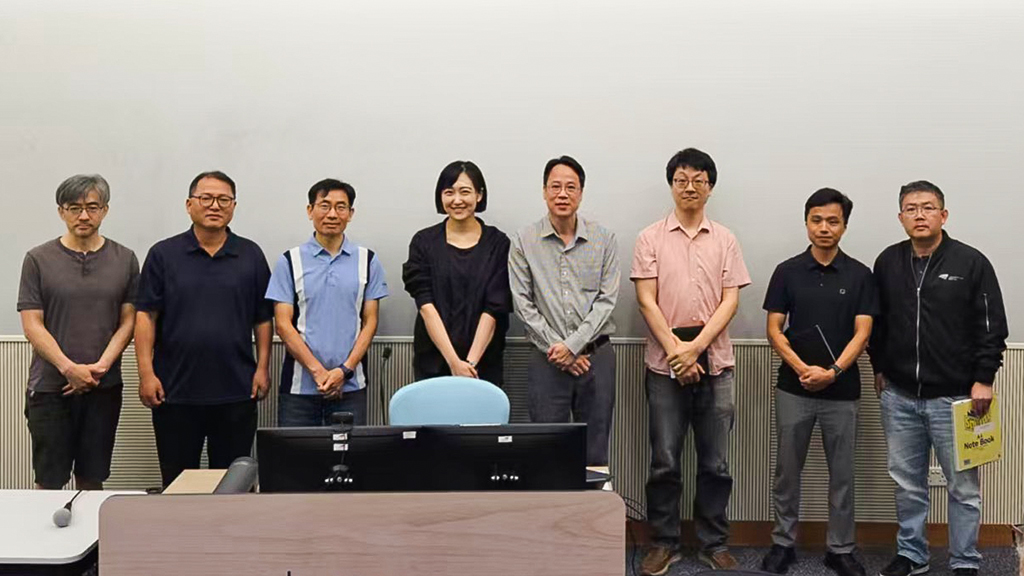
On 4 June 2026, Dr Chenchen Song, Principal Investigator at Nanyang Technological University (NTU), Singapore, delivered a seminar titled “Optical Imaging of Membrane Voltage to Understand Brain Physiology and Computation”. The presentation examined how optical neurotechnologies can reveal the electrical signals that underlie neuronal communication, brain computation and cortical physiology. Dr Song introduced genetically encoded voltage indicators (GEVIs), which can be expressed on neuronal membranes and report changes in membrane voltage through fluctuations in fluorescence. She reviewed more than two decades of progress in developing and applying these indicators, including their use in studying the computational properties of the mammalian cerebral cortex. By allowing researchers to monitor neuronal voltage dynamics, GEVIs provide information not only about whether neurons are active, but also about the timing and coordination of electrical signals within neural circuits.
A major focus of the seminar was the continuing refinement of the GEVI molecular toolbox, particularly the development of indicators that operate in the near-infrared spectral range. These advances may expand the depth, scale and flexibility of optical recordings and facilitate the study of neural activity in more complex brain tissue. Dr Song also discussed recent progress in applying optical imaging to improve understanding of cortical physiology. Her presentation demonstrated how molecular engineering, advanced imaging and systems neuroscience can be combined to investigate the cellular and circuit-level principles through which the brain processes information. The broader significance of this work extends beyond fundamental neuroscience, since a clearer understanding of biological computation may also contribute to future approaches to mental-health research and artificial intelligence.
The seminar was followed by a constructive discussion of both the promise and the practical challenges of optical voltage imaging. Participants considered how GEVIs can complement existing methods for measuring neuronal activity, how their temporal and spatial precision can help reveal computational principles, and what further improvements are needed for reliable measurements in intact and complex brain tissue. The development of near-infrared indicators prompted further discussion about how new spectral tools might enable deeper and more flexible investigations of brain function. Overall, the exchange connected Dr Song’s technical advances with broader questions concerning how circuit-level electrical signals give rise to physiology and behaviour, while highlighting the potential of refined optical neurotechnologies to support research into brain development, neurodevelopmental alterations and future therapeutic strategies.