

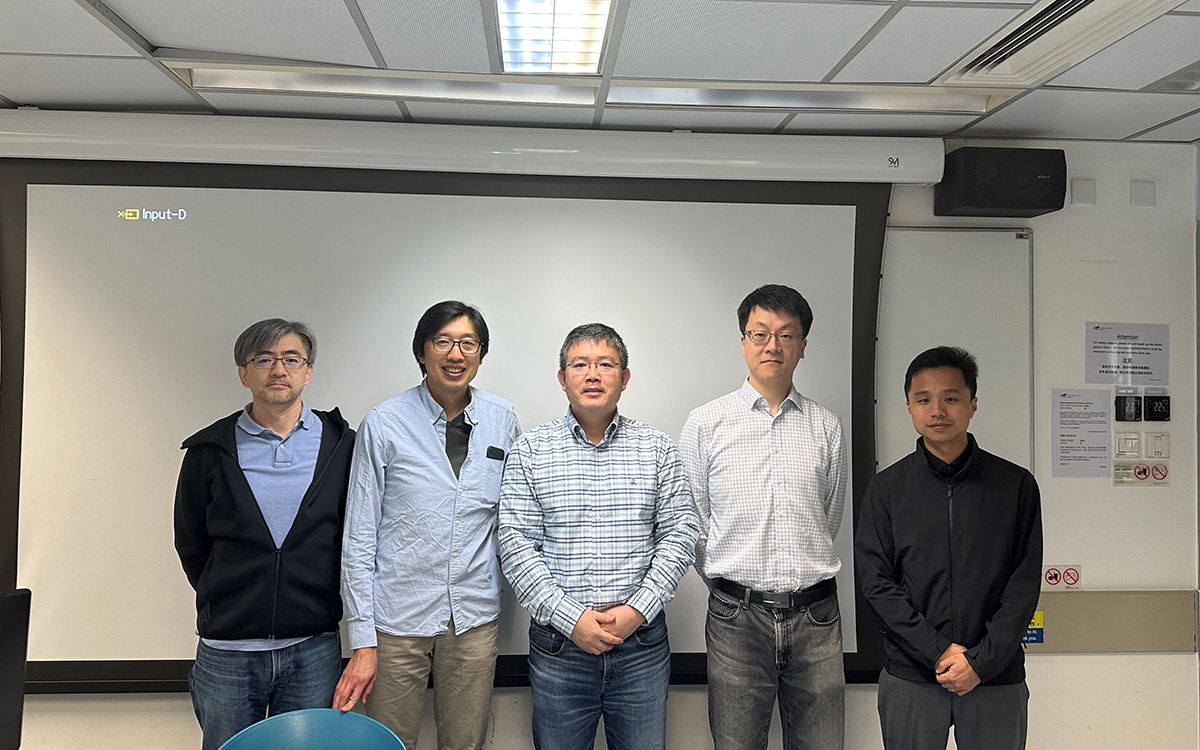
On 17 March 2026, Dr John Y. Lin, Senior Lecturer at the Tasmanian School of Medicine, University of Tasmania, presented a seminar on a diverse array of modular toolsets for manipulating neural and molecular signaling with high precision.
During the seminar, Dr Lin demonstrated recent advancements in multi-chromatic optogenetic control, specifically highlighting a channelrhodopsin co-expression system. This approach utilized two-color light stimulation to spectrally limit membrane excitation, enabling more refined control of cellular polarity. A key extension of this work included the development of the latest potassium-selective channelrhodopsins, providing a non-invasive method to induce hyperpolarization and “silence” neuronal activity with greater ion specificity than previous models.
Dr Lin further elaborated on expanding optogenetic targets beyond ion channels, presenting striking findings on the disruption of trimeric G protein signaling. By targeting Gq and Gi pathways, Dr Lin’s team enabled the precise temporal decoupling of intracellular signaling cascades. Additionally, Dr Lin introduced improved optogenetic disruptors of vesicular release, which now include neuropeptide-containing vesicles. This project utilized enhanced photosensitizer fluorescent protein systems and a chemigenetic approach to expand the spectral range, offering a versatile toolkit for investigating the complex dynamics of neurotransmitter and peptide discharge.
The seminar also highlighted the intersection of light-controlled signaling and synaptic plasticity. Dr Lin detailed an optogenetic activator of Brain-Derived Neurotrophic Factor (BDNF)/Tropomyosin receptor kinase B (TrkB) signaling, which enabled pathway-selective induction of “LTP-like” AMPA receptor up-regulation. This tool provides a mechanistic window into how specific growth factor signals drive the strengthening of synaptic connections.
Finally, Dr Lin addressed the challenges of background noise in protein aggregation studies by presenting an improved version of optogenetically controlled TDP-43. By reducing baseline activity, this refined tool allows researchers to more accurately model the pathological protein seeding associated with neurodegenerative diseases, pointing toward novel insights into circuit-level interventions for proteinopathies.