



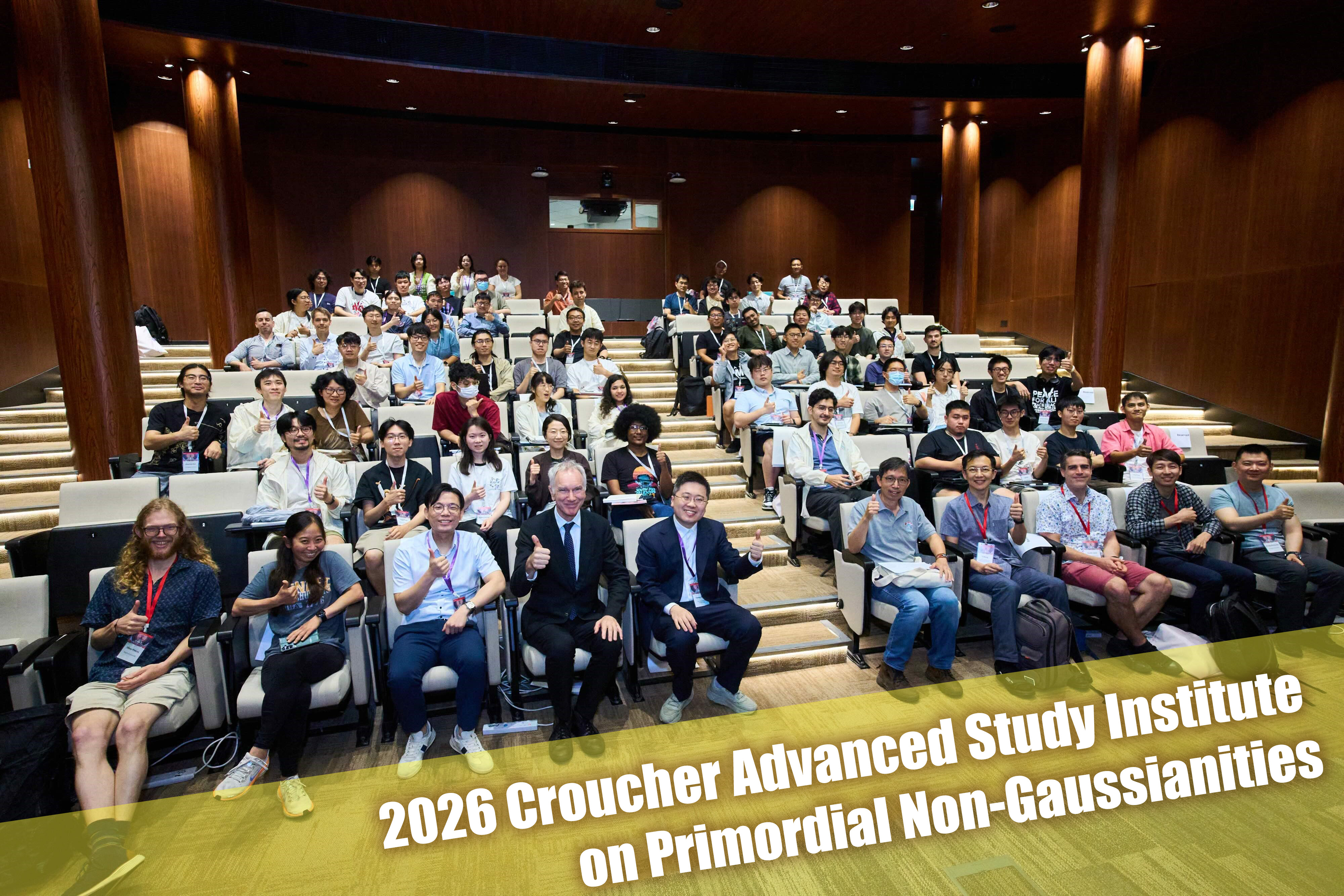
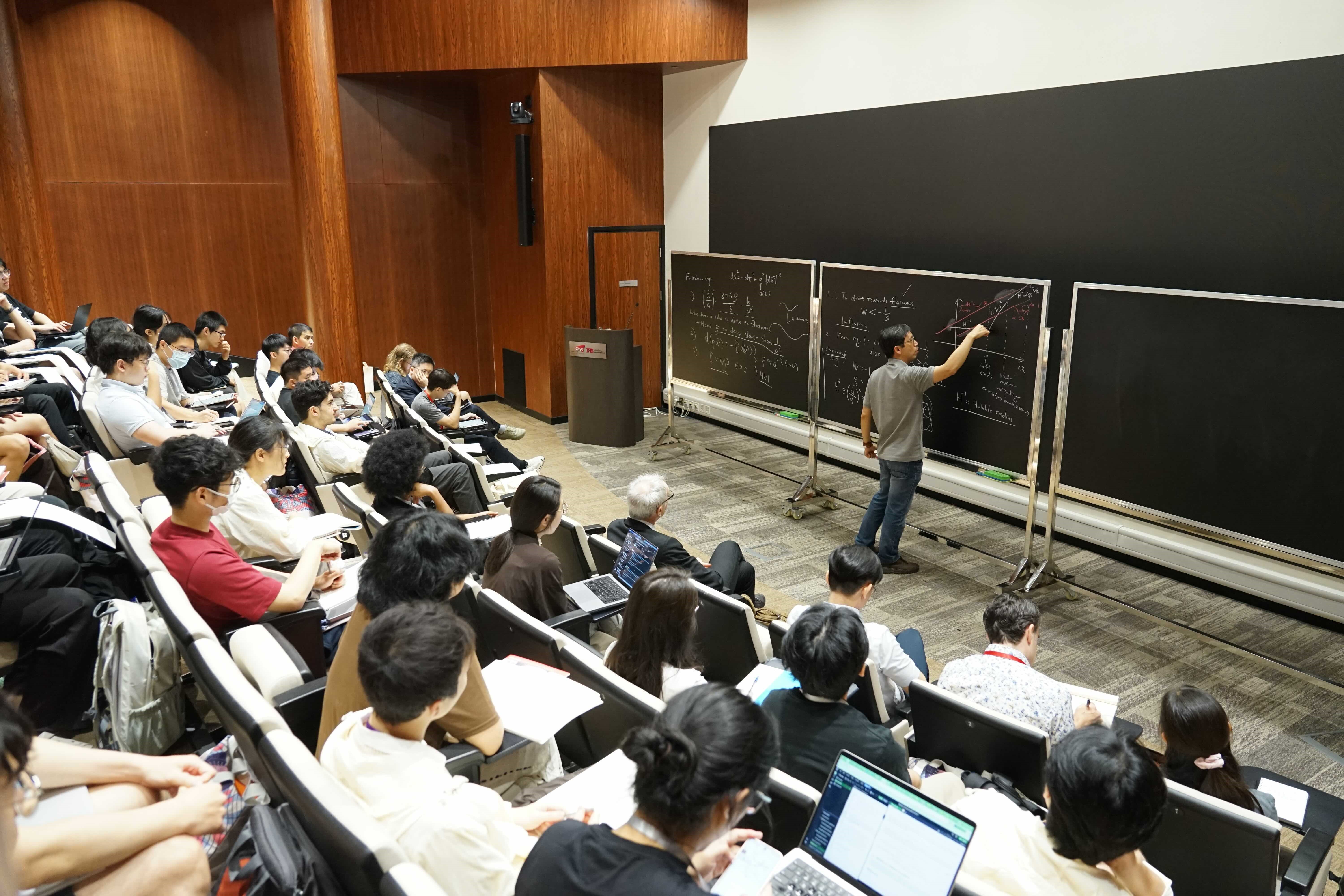
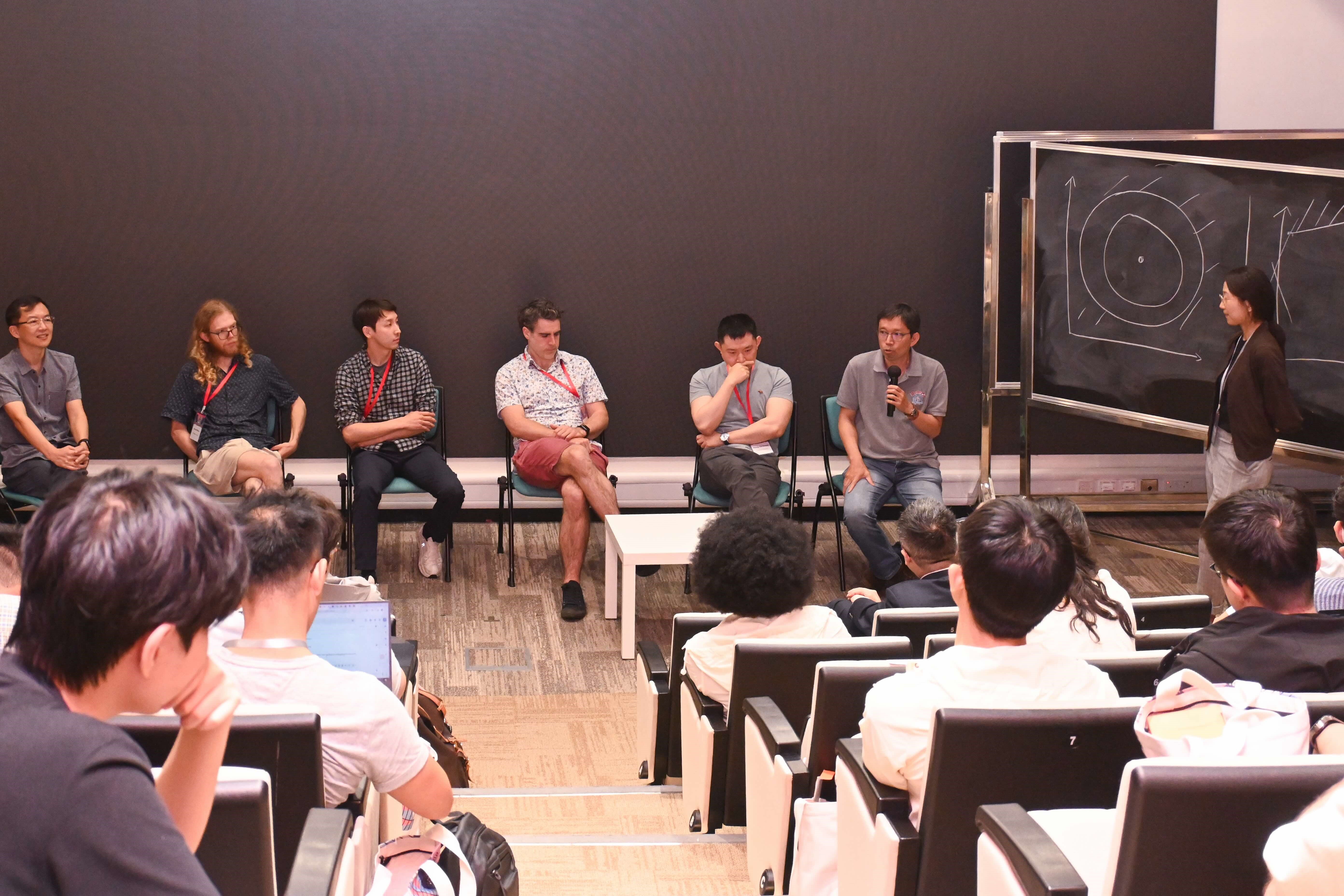
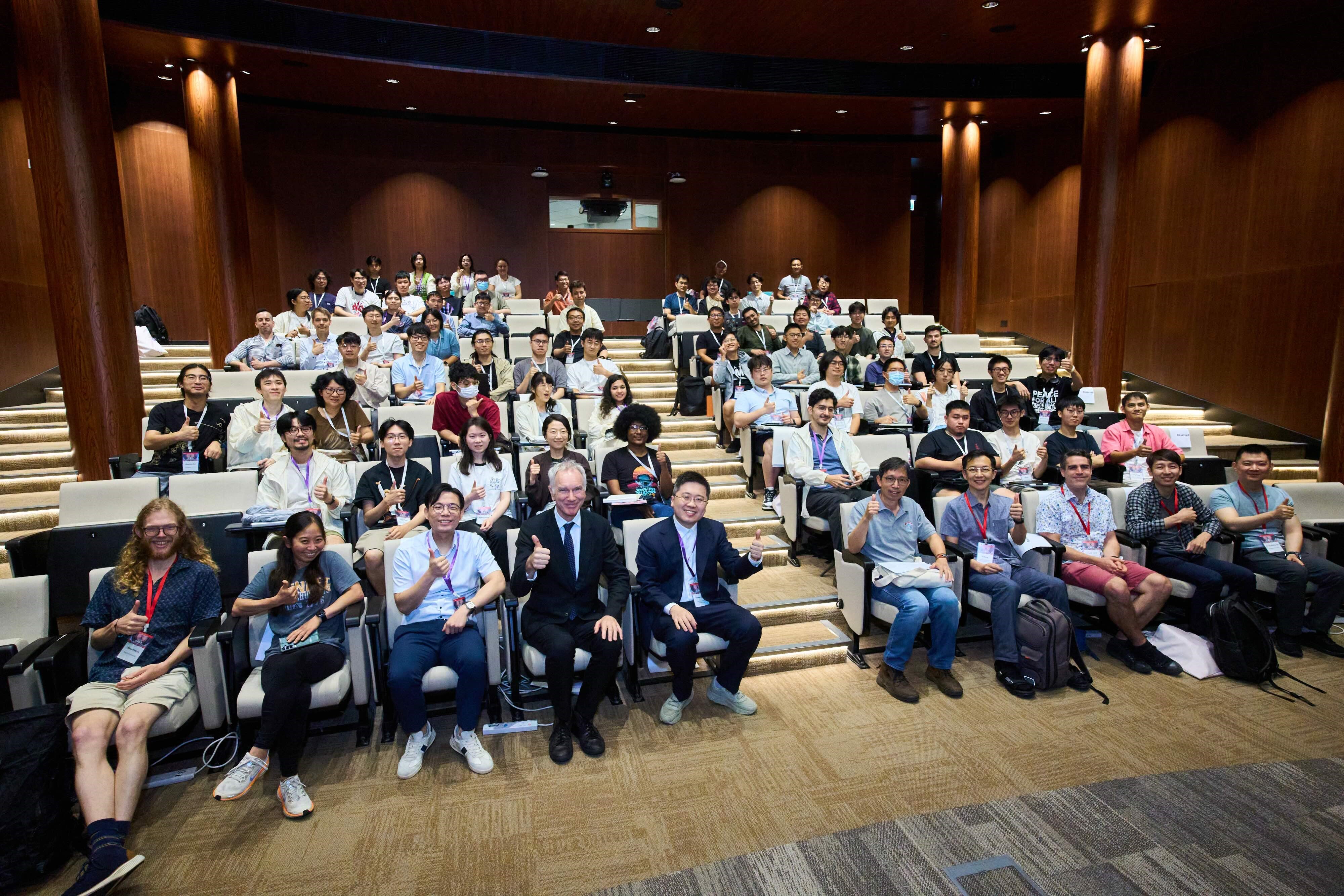
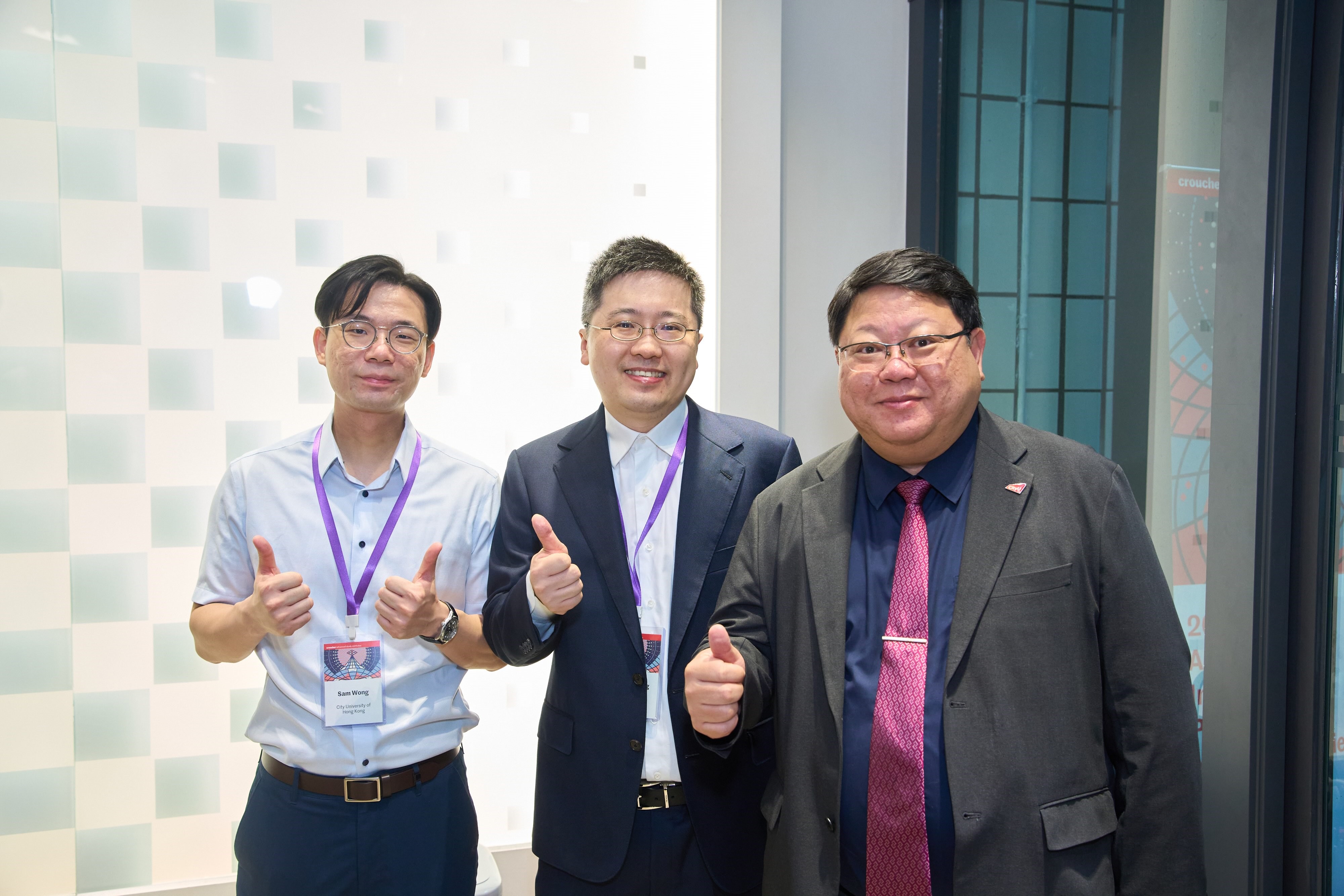
From 16 to 18 June 2026, the Department of Physics at City University of Hong Kong hosted the 2026 Croucher Advanced Study Institute (ASI) on Primordial Non-Gaussianities. Organised by Professor Yiming Zhong and Professor Sam Wong with the generous support of the Croucher Foundation, the three-day institute brought together six world-leading lecturers and a highly international group of participants for an intensive programme at one of the most exciting frontiers of modern physics.
Primordial non-Gaussianities (PNGs) are subtle departures from a perfectly Gaussian distribution in the tiny density fluctuations of the early Universe. They carry invaluable information about cosmological inflation and the fundamental physics at play near the Big Bang. With the precision of PNG measurements expected to improve by roughly an order of magnitude in the coming decade, thanks to new observations of the cosmic microwave background and large-scale structure, the field has become one of the most active frontiers connecting cosmology, particle physics, and astrophysics.
The institute was officially opened by Professor Kenneth Leung, Vice-President (Research) of City University of Hong Kong, and Mr David Foster, Executive Director of the Croucher Foundation. Their warm opening remarks set an inspiring tone for the days that followed.
At the heart of the programme were six world-leading lecturers: Lam Hui (Columbia University), Austin Joyce (University of Chicago), Hayden Lee (University of Pennsylvania), Oliver Philcox (Stanford University), Yi Wang (Hong Kong University of Science and Technology), and Zhong-Zhi Xianyu (Tsinghua University). Through a series of in-depth blackboard lectures and focused discussions, they led participants across the major frontiers of the field, spanning the cosmological bootstrap, cosmological collider physics, the effective field theory of large-scale structure, and applications of artificial intelligence in cosmology.
Beyond the lectures, the institute was designed to foster genuine exchange and collaboration. Lively panel discussions, animated conversations during the coffee breaks, and a series of evening short talks gave participants the chance to engage directly with the lecturers and with one another. The participating researchers had travelled from Cambridge, America, Germany, Denmark, Japan, South Korea, and China, among other places. Equipped with new knowledge, fresh ideas, and new connections, these young researchers are expected to make important contributions to this rapidly growing field in the years to come.
The Department of Physics extends its warm thanks to the Croucher Foundation for making the institute possible, and to all the lecturers, participants, and colleagues whose efforts brought it to life.
30 Jun 2026