about

MSE

About MSE

As the first of its kinds in Hong Kong, the Department of Materials Science and Engineering aims to foster globally competitive research and offer professional education that equips students and postdoctoral researchers to contribute to the materials science and engineering (MSE) community and related sectors both locally and globally. Since its establishment in 2017 and under the leadership of several dedicated past Heads, the Department has expanded its faculty and has become one of the most prominent MSE departments in the world.

First of its kinds in HK
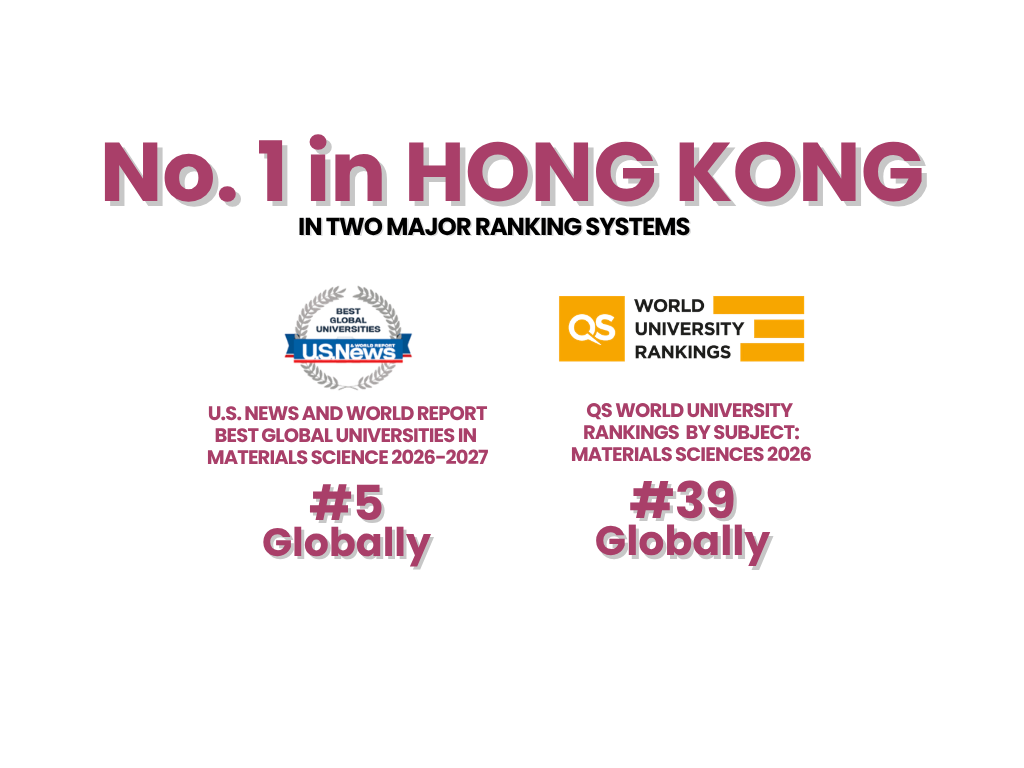
NO.1 in HongKong


Top 10 Globally

US NewsBest Global Universities in Materials Science in HK 2026-27 (#5 Globally)                                               

US NewsBest Global Universities in Nanoscience & Nanotechnology in HK 2026-2(#8 Globally)                                                                        

for website US News ranking trend 2020-26_trans
Top 20 Globally

News

ZHU Yuntian_027_2025
We are delighted to congratulate Prof. ZHU Yuntian, Chair Professor of the Department of Materials Science and Engineering, on his remarkable achievement in receiving the 2025 State Natural Science Award (Second Class). Prof. Zhu played a pivotal role in the award-winning project, “Research on the Strengthening of Heterostructured Metallic Materials,” led by Prof. WU Xiaolei’s team (Institute of Mechanics, Chinese Academy of Sciences). This groundbreaking research tackled one of the most challenging issues in materials science: the inherent trade-off between strength and ductility in metallic structural materials. Their key accomplishments include:

photovoltaics_Photo_2
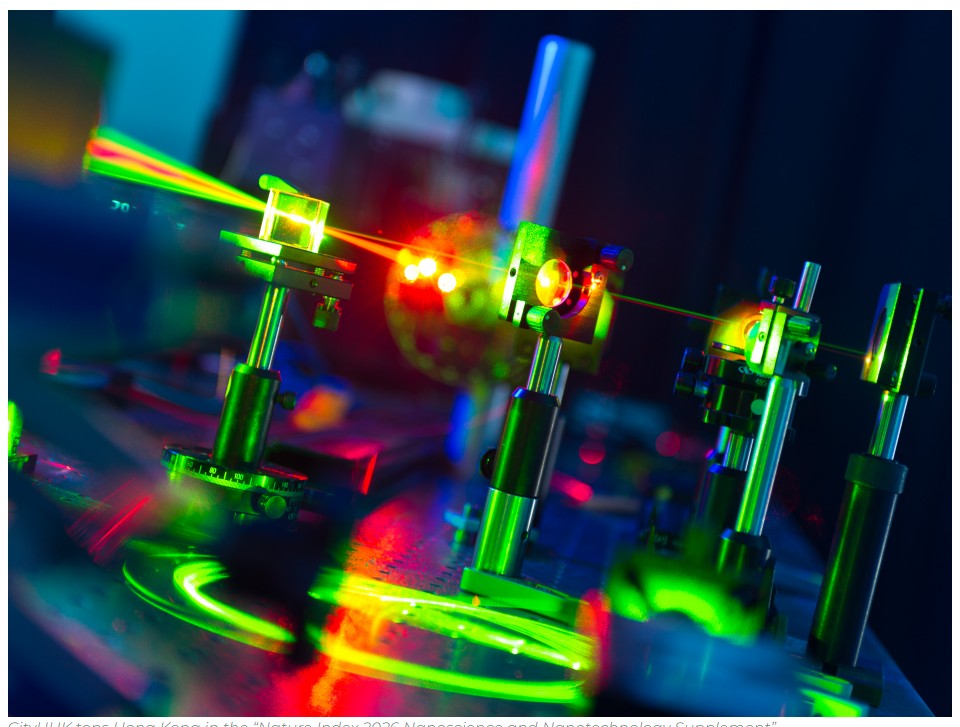
In organic photovoltaics (OPV), low-energy spin-triplet excitons (T₁) have long been regarded as “energy traps” that often dissipate energy as heat rather than contributing to light-to-electricity conversion. A research team from City University of Hong Kong (CityUHK) has recently overcome a technological bottleneck that has persisted for over a decade. They successfully “turned waste into treasure” by recycling triplet excitons and converting them into effective charge carriers for electricity generation. Using this new approach, they achieved an efficiency of 20.5% in OPV cells.
Led by Professor Alex Jen Kwan-yue, Lee Shau Kee Chair Professor of Materials Science at CityUHK, the team studied an organic photovoltaic system incorporating a new acceptor material, FTh-4F. They observed that the lifetime of free charge carriers in this system is significantly longer than that of spin-triplet excitons. This finding challenges the conventional understanding and suggests that triplet excitons can dissociate back into free charge carriers instead of simply decay into heat.
2026-27_US News Ranking
We are pleased to share that CityUHK Materials Science has demonstrated its world-class research excellence regarding the latest U.S. News & World Report 2026-2027 Best Global Universities rankings. MSE secured the #1 spot in Hong Kong for the 4th consecutive year and maintaining the #5 position globally. Furthermore, our strength in materials science-related areas remains exceptionally outstanding, with Nanoscience and Nanotechnology ranking #1 in Hong Kong and #8 worldwide. Since our department’s establishment, our growth trajectory has been nothing short of phenomenal: within just 5 years, we have leaped from #30 in the world to #5 globally. This year, we surpassed Nanyang Technological University (NTU)—a key benchmark institution for our Materials Science program—for the first time!
260527_CENG OTA_ZXY
We are delighted to announce that Prof. Zhong Xiaoyan has been awarded the prestigious CENG Outstanding Teaching Award for 2025–26. This honor recognizes Prof. Zhong’s exceptional contributions to student learning and teaching excellence. His commitment to fostering an engaging and supportive learning environment has been widely recognized and appreciated by both students and colleagues. His achievement reflects not only his personal excellence but also the department’s continued dedication to educational quality. Congratulations to Prof. Zhong on this well-deserved recognition. His accomplishment brings great pride to the department and serves as an inspiration to the MSE community.
 
original-47C029CD-CD78-4036-A168-3ACBDDDDC323
Professor Jin Di, Assistant Professor in the Department of Material Science and Engineering at City University of Hong Kong (CityUHK), has been honoured at the “Croucher Tak Wah Mak Innovation Awards 2026” in recognition of her outstanding achievements in scientific research. The award includes HK$5 million in research funding over the next five years.
InnoHK news - Prof Alex Jen
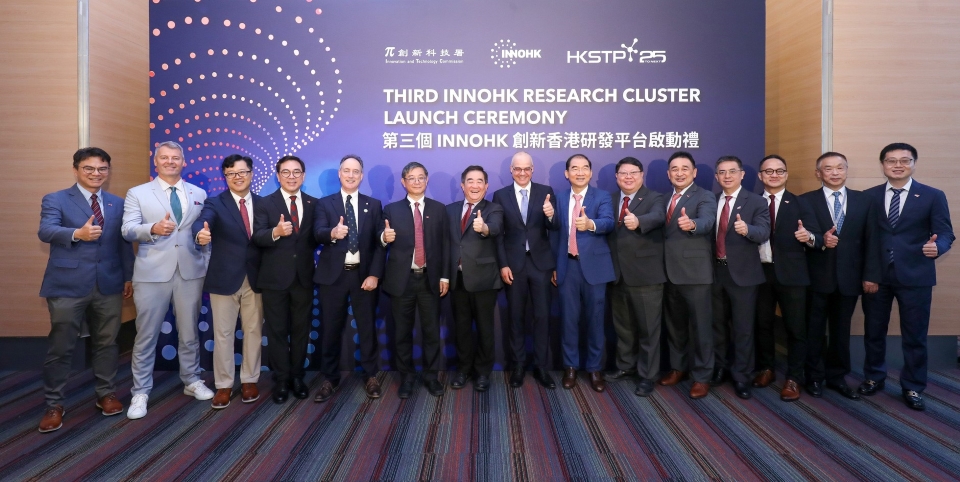
City University of Hong Kong (CityUHK) is actively supporting the Hong Kong SAR Government’s third InnoHK research cluster, “SEAM@InnoHK”, which aims to develop Hong Kong as a hub for global research collaboration. CityUHK proudly announced that two proposals it submitted jointly with leading international universities to establish research centres have been selected, highlighting CityUHK’s global leadership in sustainable development, advanced manufacturing and materials science.
QS_2026_thumbnail
We are delighted to announce that CityUHK has achieved #1 in Hong Kong and a global ranking of #39 for Materials Sciences in the QS World University Rankings by Subject 2026 — a significant leap from our previous position of #2 in Hong Kong and #52 globally in 2025. The QS subject rankings are evaluated based on five indicators: three data-based (Citations, H-index, and International Research Network) and two survey-based (Academic Reputation and Employer Reputation). This achievement reflects the dedication and excellence of our faculty members and research staff.

Top Journals

Our Videos

Highlight Events

Announcement

Public
Please note that the Fire Safety Information Kit has been posted on the FMO website under Safety and Health Information>Emergency Preparedness.
Fire Safety Information Kit
For more Safety and Health information, please click the following link.
Facilities Management Office - City University of Hong Kong
Fire Drill at Yeung Kin Man Academic Building (YEUNG) (8 January 2026)
Please note that a fire drill will be conducted at Yeung Kin Man Academic Building (YEUNG) on 8 January 2026 (Thursday).
All fire alarms in YEUNG will be activated at around 12:00 nn and will last until the fire drill is over.
The purposes of the fire drill are to:
1. Raise occupant awareness on the emergency evacuation procedures;
2. Ensure the integrity of the fire alarm system;
3. Ensure the efficient and safe exit of facilities in the case of an emergency.
Here are the summary:
1. The fire alarms will be activated at 12:00 noon until the fire drill is over. Participation is voluntary.
2. There is no single assembly point, participants can return to YEUNG via the proper entrance points after the fire drill is over.
3. Please bring along your CityUHK Smartcard.
4. Lock up office/personal valuables before leaving the office.
5. There will be a fire safety briefing at the garbage collection point near the Nam Shan Chuen Road Service Entrance at around 12:15 pm. All are welcome to join.

 
Please note that the Health and Safety Leaflet (HSL Gen020 Safe Use of Lithium-Ion Batteries 202512) has been posted on the FMO website under Safety and Health Information>Health and Safety Leaflets.
The Leaflets aim to provide easy-to-read, essential safety information so as to assist the CityUHK Community in promoting the highest achievable levels of workplace health and safety. Please help disseminate the Health and Safety Leaflets to your group members if deemed appropriate. 
For more Safety and Health information, please click the following link:
Facilities Management Office - City University of Hong Kong
 
Please note that the captioned Health and Safety Alert has been posted on the FMO website under Safety and Health Information>Health and Safety Alert. The purpose of the Health and Safety Alerts is to draw attention to potential hazards arising from the workplace, including laboratories, offices, workshops and communal areas; and the relevant measures taken to prevent recurrence. For more safety and health information, please visit the FMO website.
LSU is now facing a serious deficit (around 30K) in operating the Liquid Nitrogen Dispensing Services; the Liquid Nitrogen payment summary shows that from 17/2 to 17/6, the costs were $169845.5 (a total of 17092 L), LSU received $133800 (a total of 13381 L), the balance was -$36045.5, the wastage rate was calculated as 133800 ÷ 169845.5 = 78.7%, the charge per Litre including wastage was $10/Litre ÷ 78.7% = $12.86, and the wastage charges per Litre were $2.86. There is an inevitable wastage due to dispensing Liquid Nitrogen which contributes to the deficit shown above (-HKD$36045.5), so due to the deficit, we would like to charge users a wastage charge from next month onwards proportional to the volume of liquid nitrogen purchased—there will be an extra HKD$2.86 per Litre of Liquid Nitrogen purchased between January and July 2022 (for example, if you have ordered 100L liquid nitrogen, you need to pay extra HKD$286), and the new Liquid Nitrogen purchasing charge will be increased to$12.86 with an effective date on 1st August.
The Radiation Control System (RCS) will be officially launched on 1 Jul 2022 in the CityU service portal. Project/course leaders (lab-based department) or their delegates can utilize this system to purchase and dispose of radioactive substances. The RCS controls the purchase and storage of sealed and unsealed sources of a radioactive substance (e.g. Phosphorus-32, Sulphur-35, Iodine-131, etc.) and irradiating apparatus (e.g. X-ray, microCT, etc.). To facilitate the users’ understanding of the workflow in the system, LSU has prepared THREE separate user guides: RCS Unsealed Source Instruction Manual RCS Sealed Source Instruction Manual RCS Irradiating Apparatus Instruction Manual Please be reminded that the RCS is linked with the Risk Assessment Control System (RARS). Users should complete the risk assessment of the projects/courses (approved on or after 1 Nov 2021) with radiation safety approval, then proceed with the purchase via the RCS.
Referring to the last announcement dated 1 Nov 2021, the Risk Assessment Report System (RARS) will be linked with the Chemical Control System (CCS) on 1 Jul 2022. This means that for any courses/projects that have not yet completed the risk assessment via RARS, the course/project leader(s) and their delegates cannot purchase any chemicals via CCS. This measure only applies to projects approved by the RO on or after 1 Nov 2021. For projects approved before 1 Nov 2021, course leaders and delegates can purchase chemicals via CCS as usual. There is a new required field in CCS: Project/Course code. The project number(s) will be automatically matched with the project leader’s account for selection in CCS.
To enhance the awareness on safe custody of chemicals in laboratories, the Inter-departmental Counter Terrorism Unit (ICTU) has produced a pamphlet "Safe Custody of Chemicals in Laboratories" for the staff of laboratories' reference. Please find the pamphlet copies here:Chinese versions and English versions, for your dissemination to lab users in your unit.
Public
To All Chemical Purchasing Delegates and DSOs: In response to the situation of the COVID-19 infection, LSU will implement the following special working arrangements starting from 7 March, 2022 until further notice.Liquid Nitrogen dispensing services: Service only on Tuesday and Thursday (10:30 a.m. – 11:15 a.m.) Chemical pick up: Service only on Monday, Wednesday and Friday (9:00 a.m. – 17:00 p.m.) Should you need any urgent use of chemical/liquid Nitrogen or urgent dispose of waste, please contact Mr. Terry Leung (x7237) or Mr. Jimmy Mak (x6705) for special arrangement.
Starting from 4 Feb 2022, order requests for dispensing liquid nitrogen service should be made in the Chemical Control system (CCS), details as follows:Users place orders via Chemical Control System on or before 09:30 a.m. on the collection date.Order Confirmation (Dispensing Liquid Nitrogen Service) email will be sent to chemical purchasing delegates. Please bring along the order confirmation email to collect the liquid nitrogen at 10:30 a.m. on the date of ordering.Please note that the charging forms for liquid nitrogen and chemicals ordered from Mini store will be automatically sent to the chemical purchasing delegates and relevant Principal Investigators monthly. Please sign and return them to Chemical Control Team (CCT) at G1415.
LSU announced the launch of FIVE safety policies and guidelines as listed below, with effective from 14 Jan 2022: Policy on eyesight testing for users of class 3B and 4 lasers; Chemical Safety Guidelines; Laser Safety Guidelines; Radiation Safety Guidelines; and General Laboratory Safety Guidelines. The above policies and guidelines have been approved by the University Laboratory Safety Committee and Safety and Health Committee. These relevant documents are also available on the LSU website.
Please note that the University’s “Safety Policy” and “University Policy on 2-tier Safety Check” have been revised and posted on FMO website under Safety and Health Information. Safety Policy of CityUUniversity Policy on 2-tier Safety Check For more safety and health information, please visit the FMO website.
With reference to the University Policy on 2-tier Safety Check, Departmental Safety Officers / Representatives are required to carry out safety checks for their Departments / Offices / Centres on a half-yearly basis. Reports should be submitted to Head of Department / Office / Centre for improvement actions, and also to the Senior Safety and Administration Manager of FMO. Safety Checklist for Administration / Office AreasSafety Checklist for Laboratory / Workshop Please feel free to call Ms. Katie NG of FMO at ext. 6229 if you have any questions.

The Mercury Control Ordinance (Cap. 640) will come into effect on 1 December 2021. The full text of the Ordinance can be downloaded from the following link.
Please note that the Fire Safety Information Kit has been posted on the FMO website under Safety and Health Information>Emergency Preparedness.
Fire Safety Information Kit
For more Safety and Health information, please click the following link.
Facilities Management Office - City University of Hong Kong
Fire Drill at Yeung Kin Man Academic Building (YEUNG) (8 January 2026)
Please note that a fire drill will be conducted at Yeung Kin Man Academic Building (YEUNG) on 8 January 2026 (Thursday).
All fire alarms in YEUNG will be activated at around 12:00 nn and will last until the fire drill is over.
The purposes of the fire drill are to:
1. Raise occupant awareness on the emergency evacuation procedures;
2. Ensure the integrity of the fire alarm system;
3. Ensure the efficient and safe exit of facilities in the case of an emergency.
Here are the summary:
1. The fire alarms will be activated at 12:00 noon until the fire drill is over. Participation is voluntary.
2. There is no single assembly point, participants can return to YEUNG via the proper entrance points after the fire drill is over.
3. Please bring along your CityUHK Smartcard.
4. Lock up office/personal valuables before leaving the office.
5. There will be a fire safety briefing at the garbage collection point near the Nam Shan Chuen Road Service Entrance at around 12:15 pm. All are welcome to join.

 
Please note that the Health and Safety Leaflet (HSL Gen020 Safe Use of Lithium-Ion Batteries 202512) has been posted on the FMO website under Safety and Health Information>Health and Safety Leaflets.
The Leaflets aim to provide easy-to-read, essential safety information so as to assist the CityUHK Community in promoting the highest achievable levels of workplace health and safety. Please help disseminate the Health and Safety Leaflets to your group members if deemed appropriate. 
For more Safety and Health information, please click the following link:
Facilities Management Office - City University of Hong Kong
 
Please note that the captioned Health and Safety Alert has been posted on the FMO website under Safety and Health Information>Health and Safety Alert. The purpose of the Health and Safety Alerts is to draw attention to potential hazards arising from the workplace, including laboratories, offices, workshops and communal areas; and the relevant measures taken to prevent recurrence. For more safety and health information, please visit the FMO website.
LSU is now facing a serious deficit (around 30K) in operating the Liquid Nitrogen Dispensing Services; the Liquid Nitrogen payment summary shows that from 17/2 to 17/6, the costs were $169845.5 (a total of 17092 L), LSU received $133800 (a total of 13381 L), the balance was -$36045.5, the wastage rate was calculated as 133800 ÷ 169845.5 = 78.7%, the charge per Litre including wastage was $10/Litre ÷ 78.7% = $12.86, and the wastage charges per Litre were $2.86. There is an inevitable wastage due to dispensing Liquid Nitrogen which contributes to the deficit shown above (-HKD$36045.5), so due to the deficit, we would like to charge users a wastage charge from next month onwards proportional to the volume of liquid nitrogen purchased—there will be an extra HKD$2.86 per Litre of Liquid Nitrogen purchased between January and July 2022 (for example, if you have ordered 100L liquid nitrogen, you need to pay extra HKD$286), and the new Liquid Nitrogen purchasing charge will be increased to$12.86 with an effective date on 1st August.
The Radiation Control System (RCS) will be officially launched on 1 Jul 2022 in the CityU service portal. Project/course leaders (lab-based department) or their delegates can utilize this system to purchase and dispose of radioactive substances. The RCS controls the purchase and storage of sealed and unsealed sources of a radioactive substance (e.g. Phosphorus-32, Sulphur-35, Iodine-131, etc.) and irradiating apparatus (e.g. X-ray, microCT, etc.). To facilitate the users’ understanding of the workflow in the system, LSU has prepared THREE separate user guides: RCS Unsealed Source Instruction Manual RCS Sealed Source Instruction Manual RCS Irradiating Apparatus Instruction Manual Please be reminded that the RCS is linked with the Risk Assessment Control System (RARS). Users should complete the risk assessment of the projects/courses (approved on or after 1 Nov 2021) with radiation safety approval, then proceed with the purchase via the RCS.
Referring to the last announcement dated 1 Nov 2021, the Risk Assessment Report System (RARS) will be linked with the Chemical Control System (CCS) on 1 Jul 2022. This means that for any courses/projects that have not yet completed the risk assessment via RARS, the course/project leader(s) and their delegates cannot purchase any chemicals via CCS. This measure only applies to projects approved by the RO on or after 1 Nov 2021. For projects approved before 1 Nov 2021, course leaders and delegates can purchase chemicals via CCS as usual. There is a new required field in CCS: Project/Course code. The project number(s) will be automatically matched with the project leader’s account for selection in CCS.
To enhance the awareness on safe custody of chemicals in laboratories, the Inter-departmental Counter Terrorism Unit (ICTU) has produced a pamphlet "Safe Custody of Chemicals in Laboratories" for the staff of laboratories' reference. Please find the pamphlet copies here:Chinese versions and English versions, for your dissemination to lab users in your unit.
To All Chemical Purchasing Delegates and DSOs: In response to the situation of the COVID-19 infection, LSU will implement the following special working arrangements starting from 7 March, 2022 until further notice.Liquid Nitrogen dispensing services: Service only on Tuesday and Thursday (10:30 a.m. – 11:15 a.m.) Chemical pick up: Service only on Monday, Wednesday and Friday (9:00 a.m. – 17:00 p.m.) Should you need any urgent use of chemical/liquid Nitrogen or urgent dispose of waste, please contact Mr. Terry Leung (x7237) or Mr. Jimmy Mak (x6705) for special arrangement.
Starting from 4 Feb 2022, order requests for dispensing liquid nitrogen service should be made in the Chemical Control system (CCS), details as follows:Users place orders via Chemical Control System on or before 09:30 a.m. on the collection date.Order Confirmation (Dispensing Liquid Nitrogen Service) email will be sent to chemical purchasing delegates. Please bring along the order confirmation email to collect the liquid nitrogen at 10:30 a.m. on the date of ordering.Please note that the charging forms for liquid nitrogen and chemicals ordered from Mini store will be automatically sent to the chemical purchasing delegates and relevant Principal Investigators monthly. Please sign and return them to Chemical Control Team (CCT) at G1415.