

Opportunity
The global transition toward a circular economy has intensified the search for sustainable solutions to valorize the millions of tonnes of food waste (FW) generated annually. Enzymatic hydrolysis is a critical step in FW biorefineries, breaking down complex organic matter into simple sugars for subsequent fermentation. However, the efficiency of this process is severely hampered by the complex, non-Newtonian rheological properties of high-solid FW slurries. These slurries create significant mass transfer limitations, leading to uneven mixing, localized substrate depletion, and poor enzyme-substrate contact. Conventional solutions have focused on modifying the reactant chemistry—using enzyme cocktails or energy-intensive pretreatments—but have largely neglected the critical role of bioreactor hydrodynamics. The most common impeller design in stirred-tank reactors, the Rushton turbine, often proves inadequate for these viscous slurries, resulting in inefficient mixing, high energy consumption, and suboptimal sugar yields. There is a pressing need for a systematic, data-driven approach to optimize bioreactor design and operating conditions to unlock the full potential of food waste as a biorefinery feedstock.
Technology
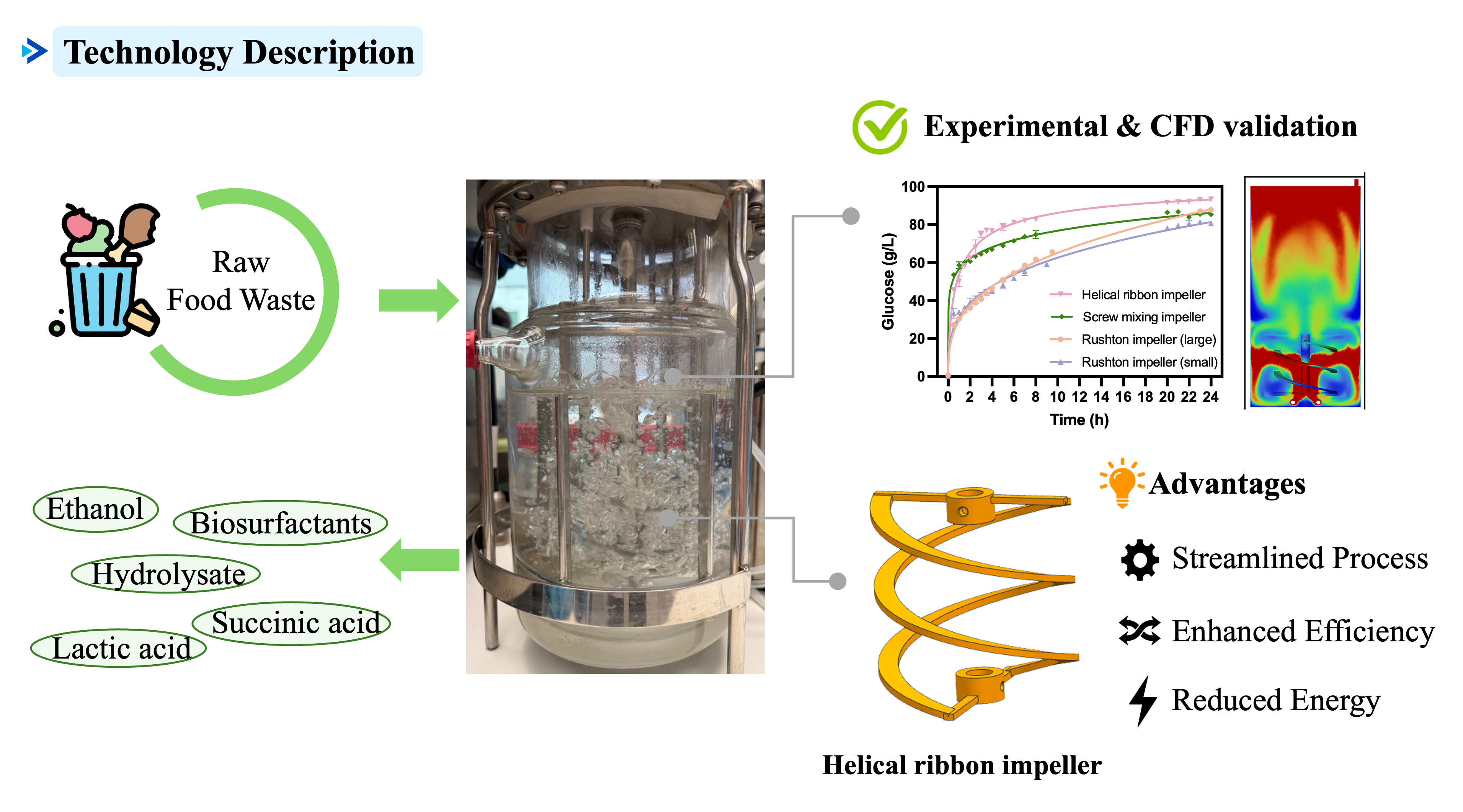
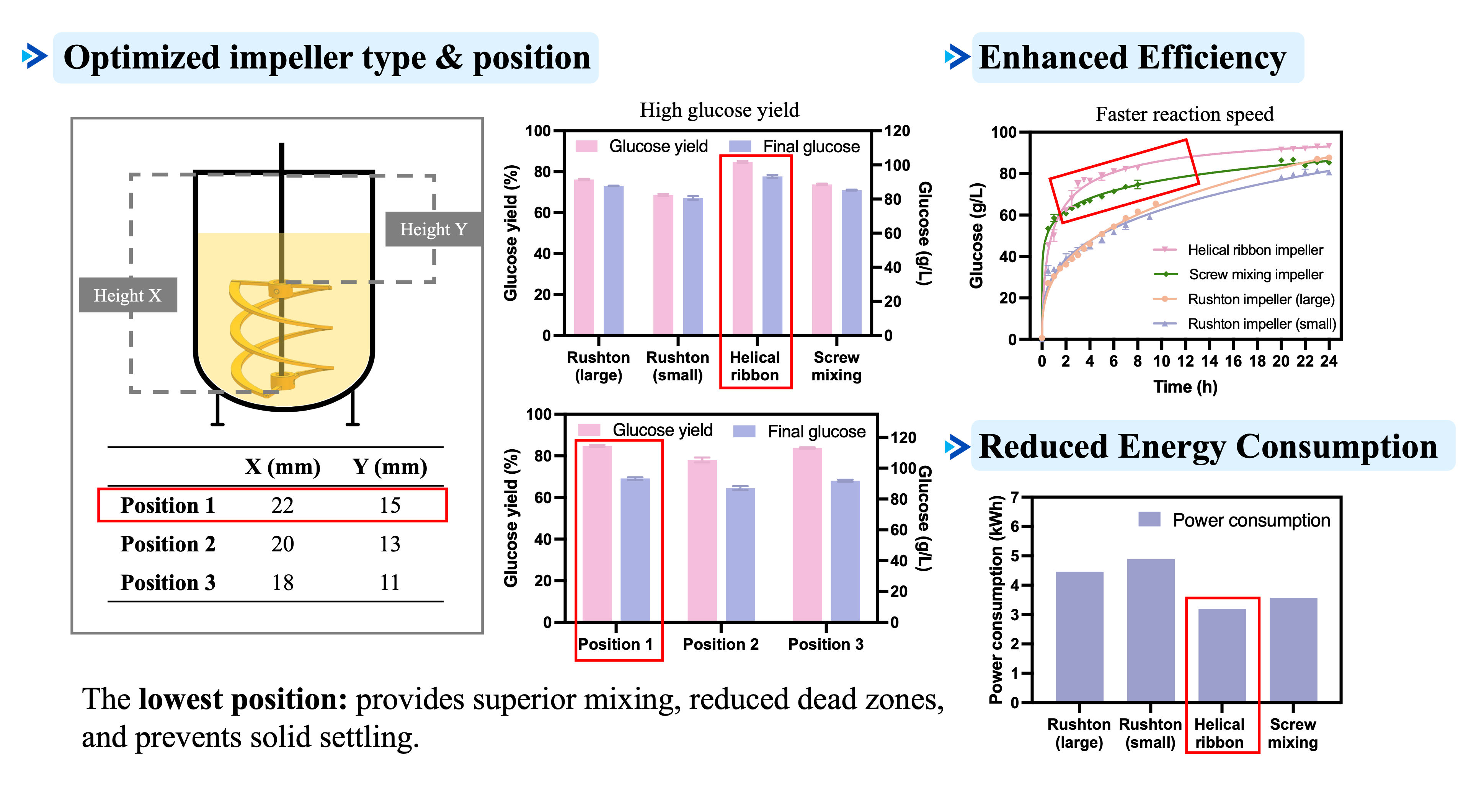
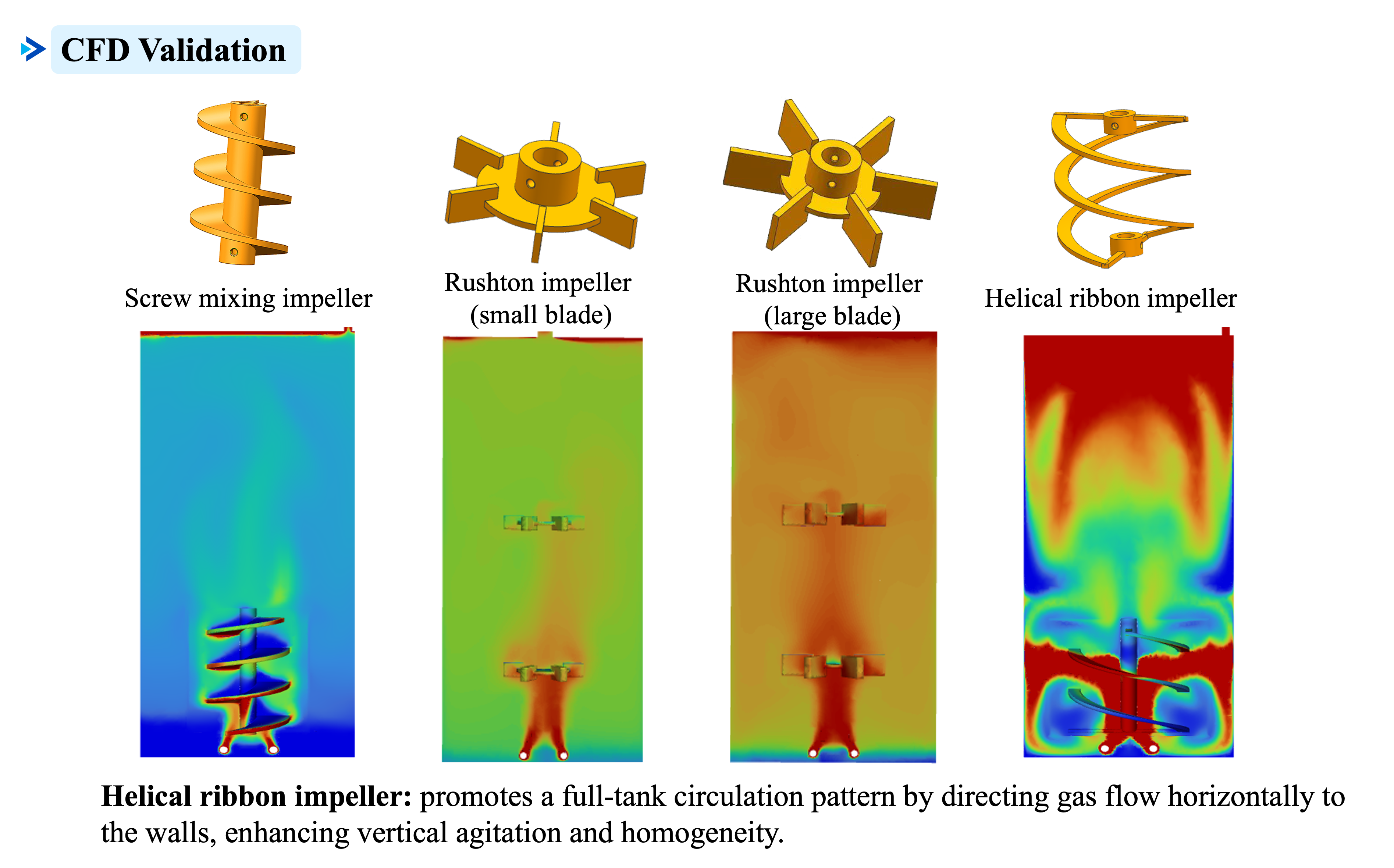
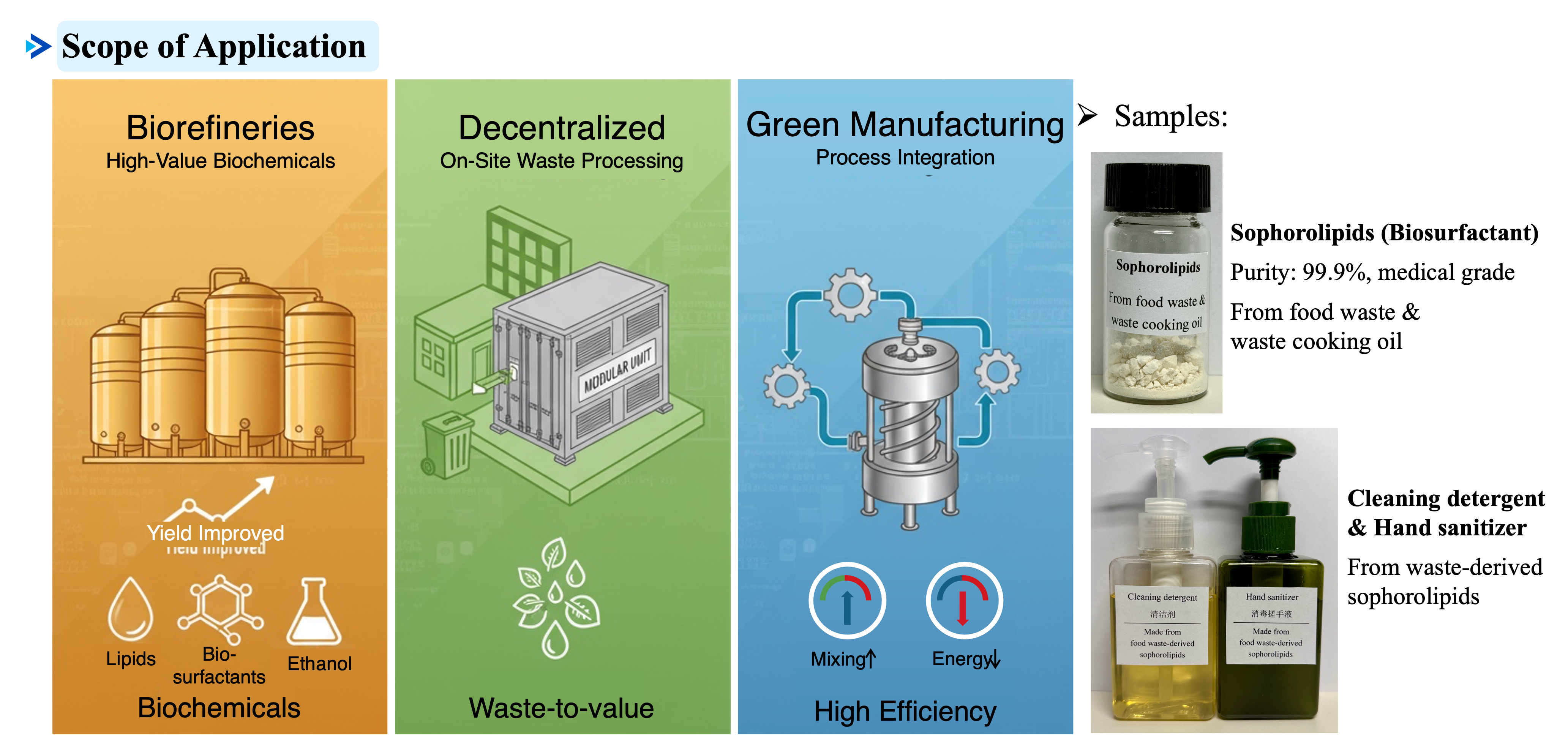
This innovation provides a systematic, experimentally validated method for optimizing bioreactor design and operating parameters to dramatically improve the enzymatic hydrolysis of starch-rich food waste. The core of the technology is the identification of a superior impeller geometry and optimal process conditions, guided by a synergistic combination of laboratory experiments and computational fluid dynamics (CFD) simulations. The key innovation is the selection and validation of a helical ribbon impeller over conventional Rushton turbines. Unlike Rushton impellers that generate primarily radial flow, the helical ribbon's spiral structure generates strong axial and radial flows, creating a global circulation pattern that ensures thorough suspension of solids, eliminates "dead zones" (low-velocity regions <5% of max velocity), and distributes gas uniformly throughout the reactor. The method prescribes optimal operating parameters: a solid-to-liquid (S/L) ratio of 40/60, which balances nutrient concentration with manageable viscosity (~1,500–2,500 mPa·s), and a glucoamylase enzyme dosage of 0.005% (v/w), which achieves high glucose yield while avoiding the saturation plateau beyond 0.01%. Critically, the method includes positioning the helical ribbon impeller at the lowest possible point in the reactor to enhance bottom mixing and substrate transport. CFD simulations, using a user-defined function to model time-varying viscosity, confirmed that raising the impeller height increases energy consumption without improving mixing, making the lowest position optimal for both performance and efficiency.
Advantages
- Higher Glucose Yield: Achieves a 48.9% increase in glucose yield over 6 hours compared to conventional Rushton impellers.
- Significant Energy Reduction: Reduces total energy consumption by 28.4% over a 24-hour hydrolysis run.
- Eliminates Dead Zones: Provides the most uniform gas-liquid mixing and minimizes low-velocity dead zones.
- Cost-Effective Enzyme Use: Identifies 0.005% enzyme dosage as optimal, avoiding diminishing returns beyond 0.01%.
- Data-Driven Scalability: Validated CFD methodology provides a robust framework for scaling up to industrial bioreactors.
Applications
- Industrial Food Waste Biorefineries: Optimizes hydrolysis for converting canteen and food processing waste into fermentable sugars.
- Biofuel and Biochemical Production: Enhances sugar yield for downstream production of bioethanol, lactic acid, or PHAs.
- Biogas Plant Pre-treatment: Increases digestibility of food waste in anaerobic digestion systems to boost methane yield.
- Bioreactor Retrofitting: Offers design guidelines for upgrading existing stirred-tank reactors with helical ribbon impellers.