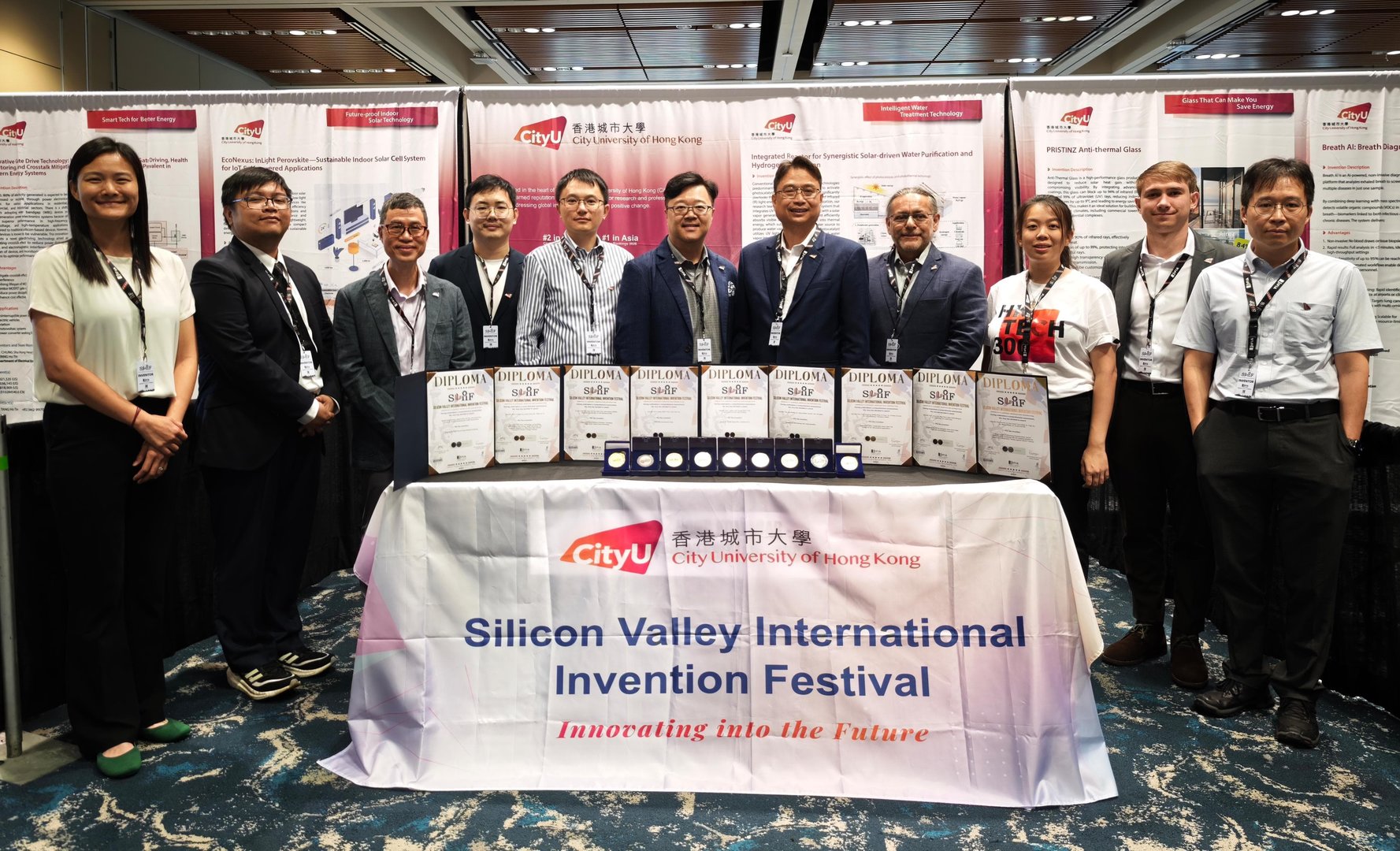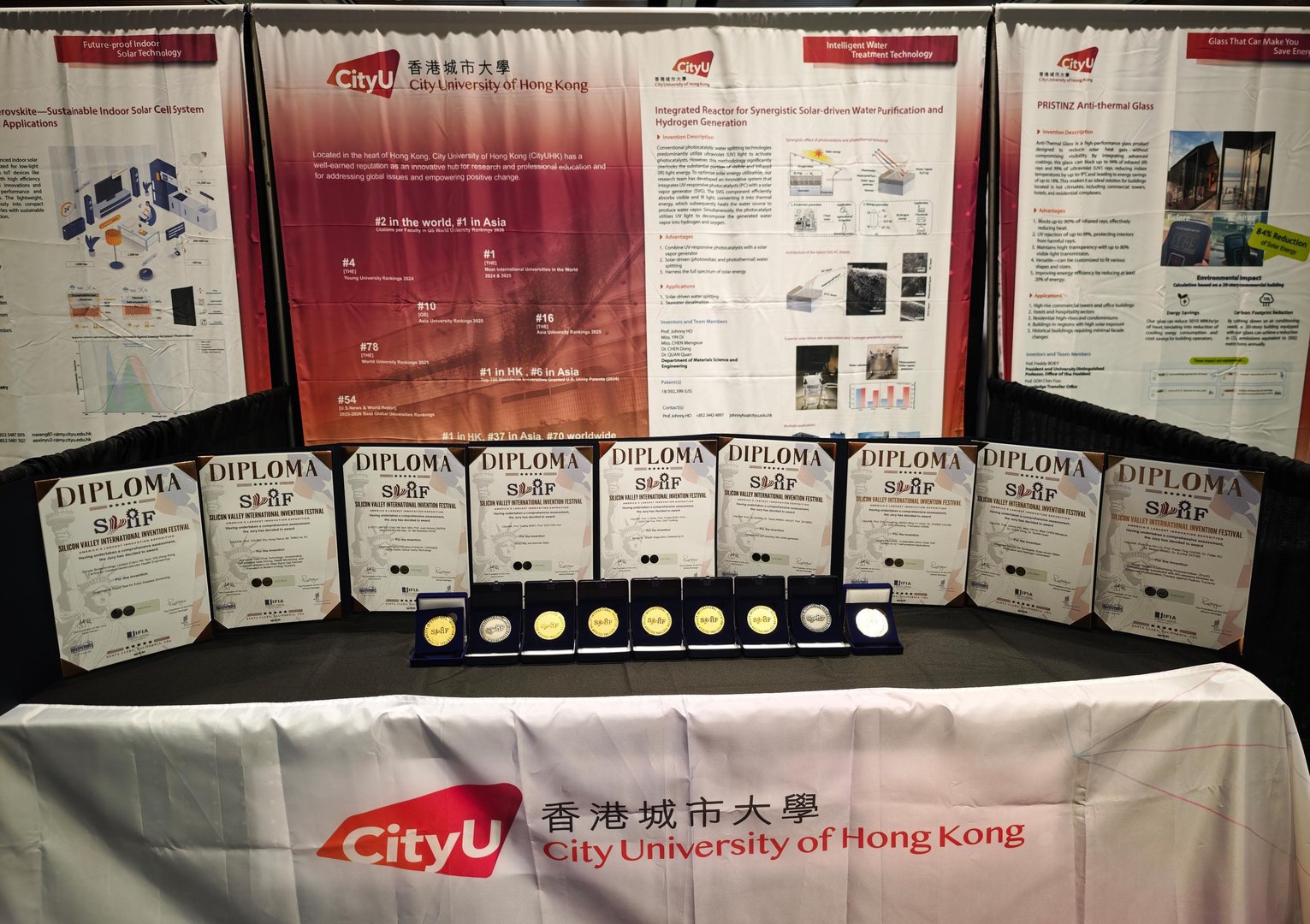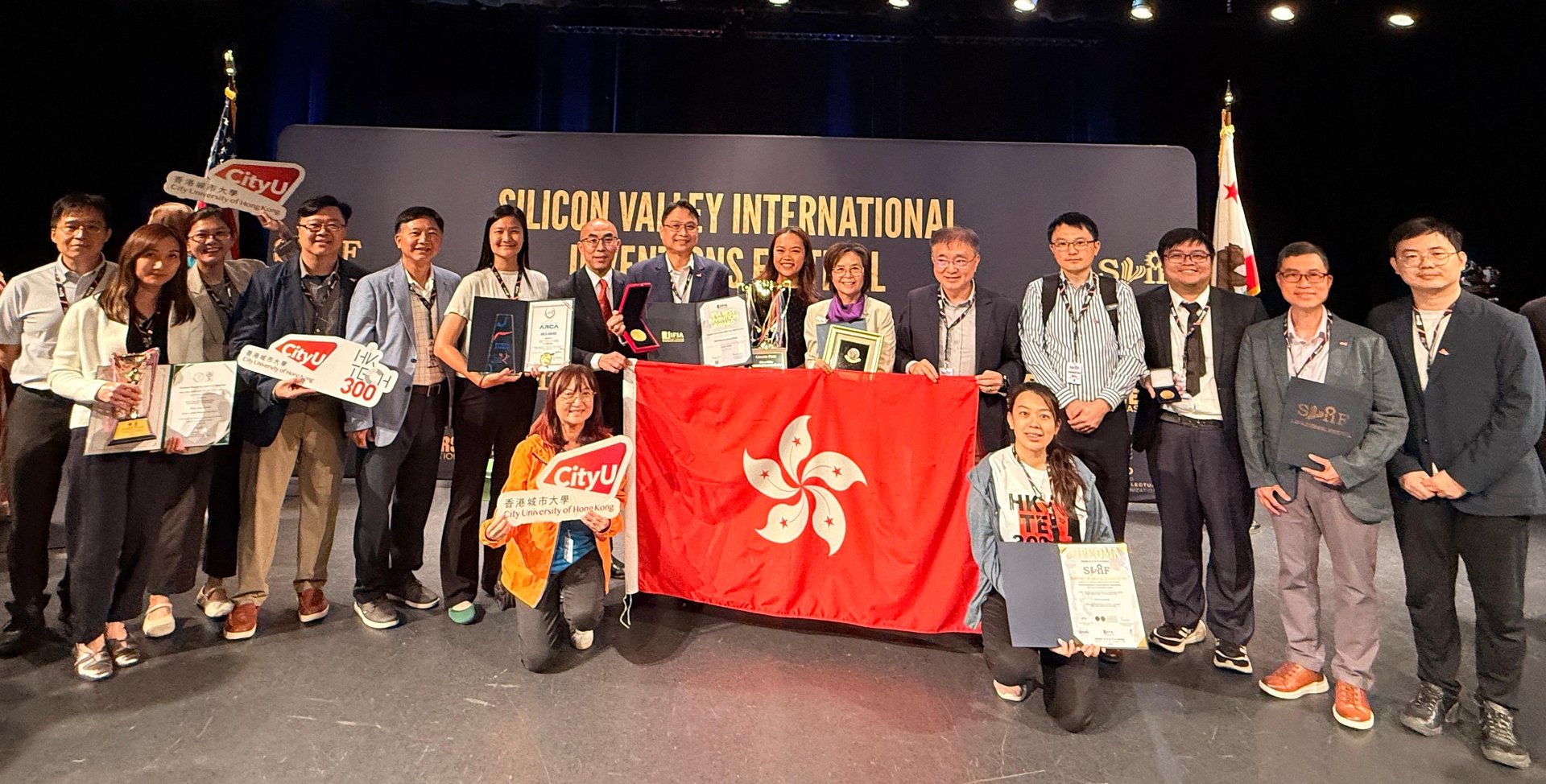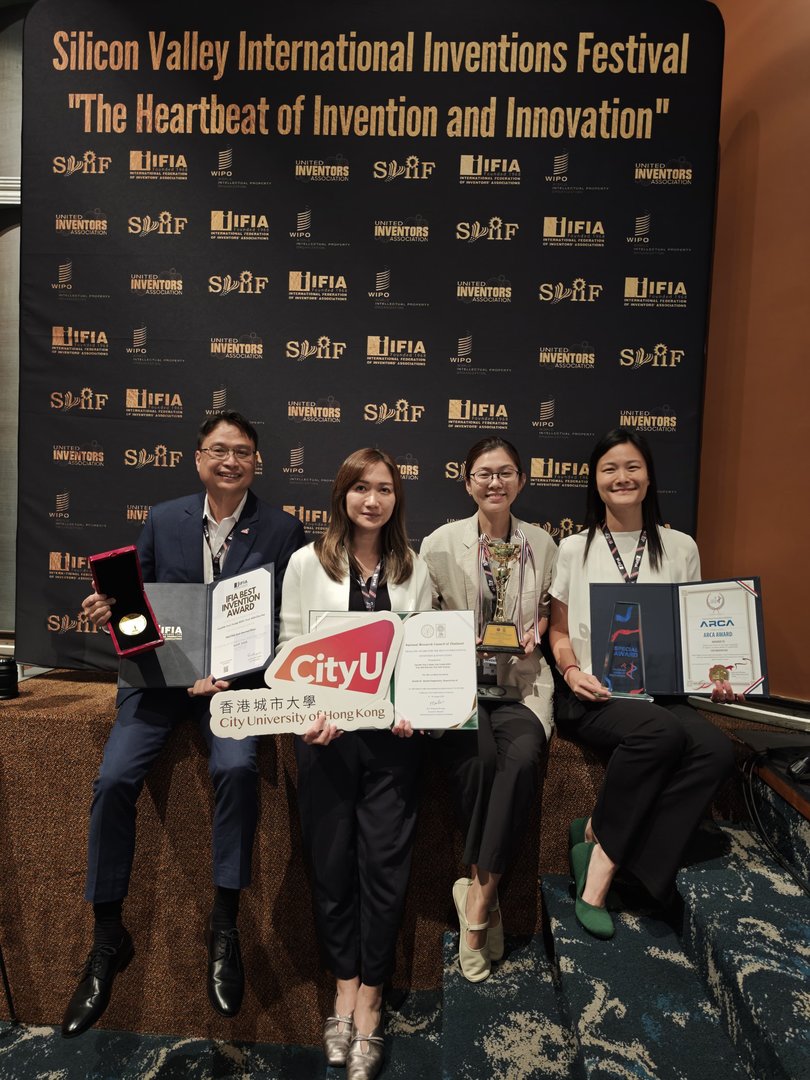
CityUHK dominates 2025 Silicon Valley Invention Festival with 3 Special Prizes, 7 Golds, and 2 Silvers
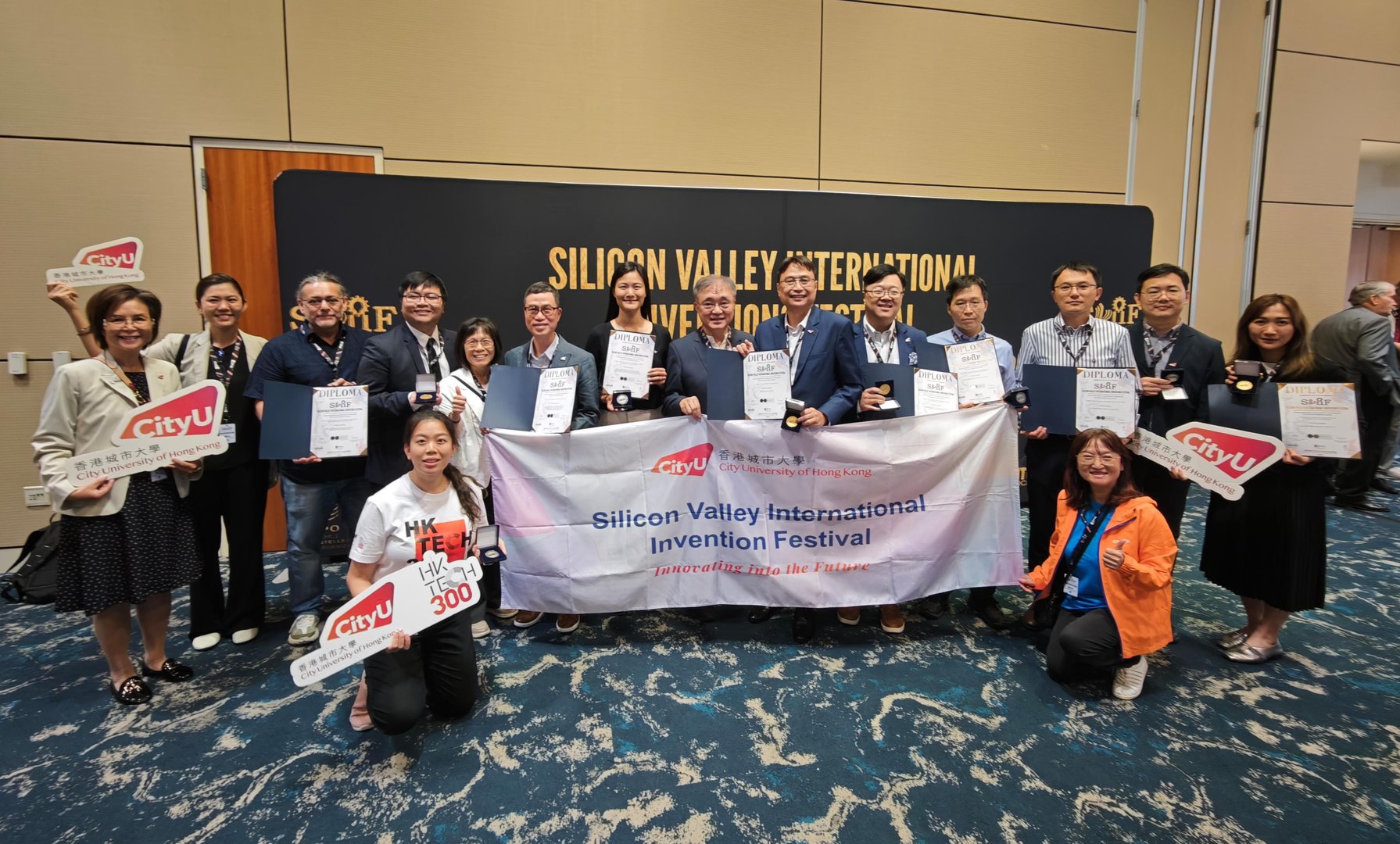
Leading scholars in healthcare, sustainability, renewable energy, and biomedical research from City University of Hong Kong (CityUHK) secured an inspiring 12 medals, including three Special Prizes, seven Gold Medals and two Silver Medals from among nine projects showcased at the Silicon Valley International Invention Festival (SVIIF) 2025.
Joining this highly respected inventions festival for the second year running, CityUHK emphatically underscored its remarkable research strengths by securing more Special Prizes than any other Hong Kong institution at SVIIF this year.
The CityUHK community proudly extended its congratulations to all awardees, proudly acknowledging the researchers’ dedication to fostering innovation and entrepreneurship, creating a favourable environment for knowledge creation, and generating groundbreaking solutions for global challenges.
The award-winning projects are:
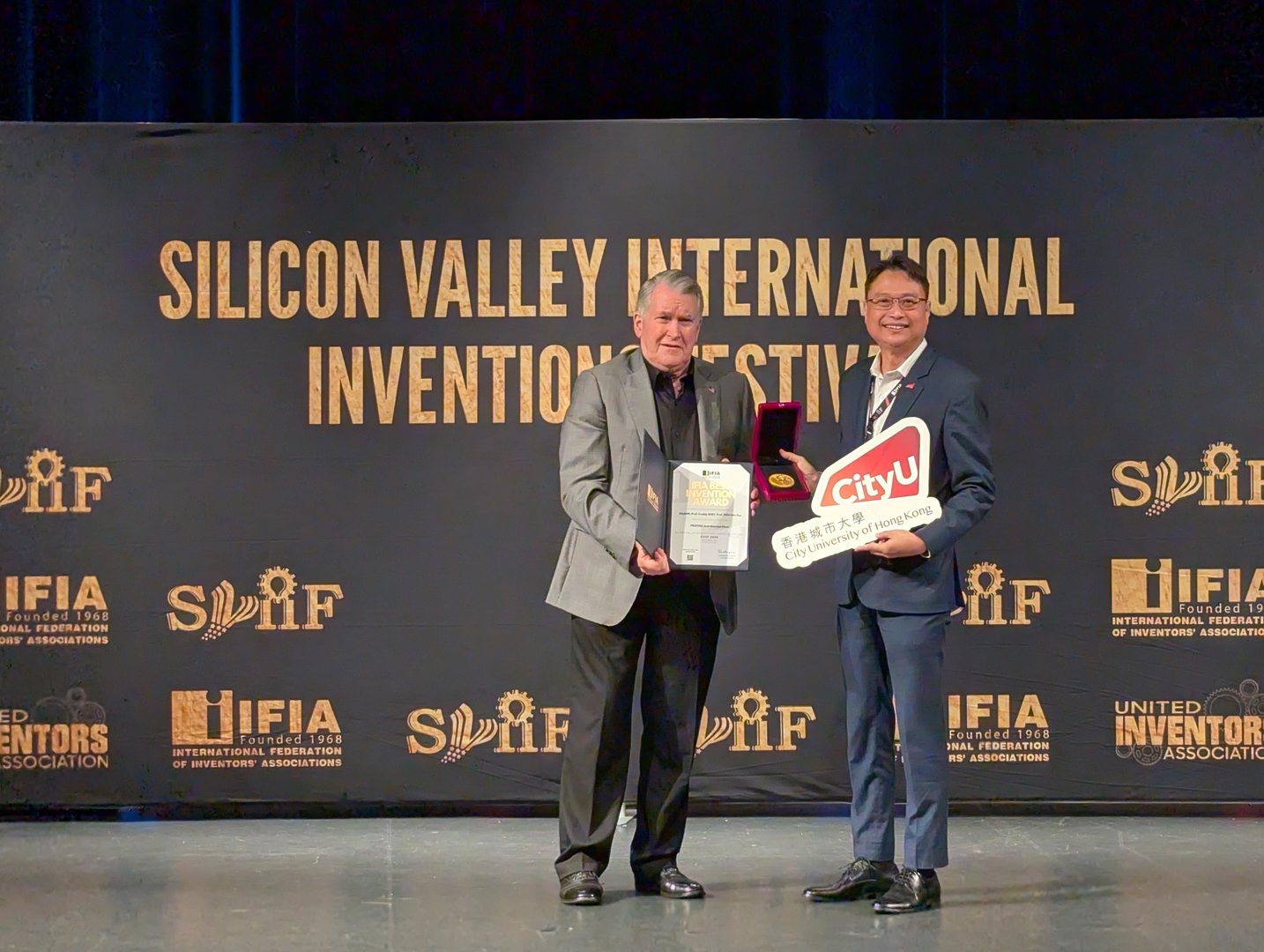
The “PRISTINZ Anti-thermal Glass” project led by Professor Freddy Boey, President of CityUHK and Professor Goh Chin Foo, Knowledge Transfer Office, won the IFIA Best Invention Award and the Gold Medal. Their anti-thermal glass helps to lower indoor temperatures by up to 9°C without the need for extra shade or tinting technology by filtering up to 90% of infrared radiation and 99% of UV rays.
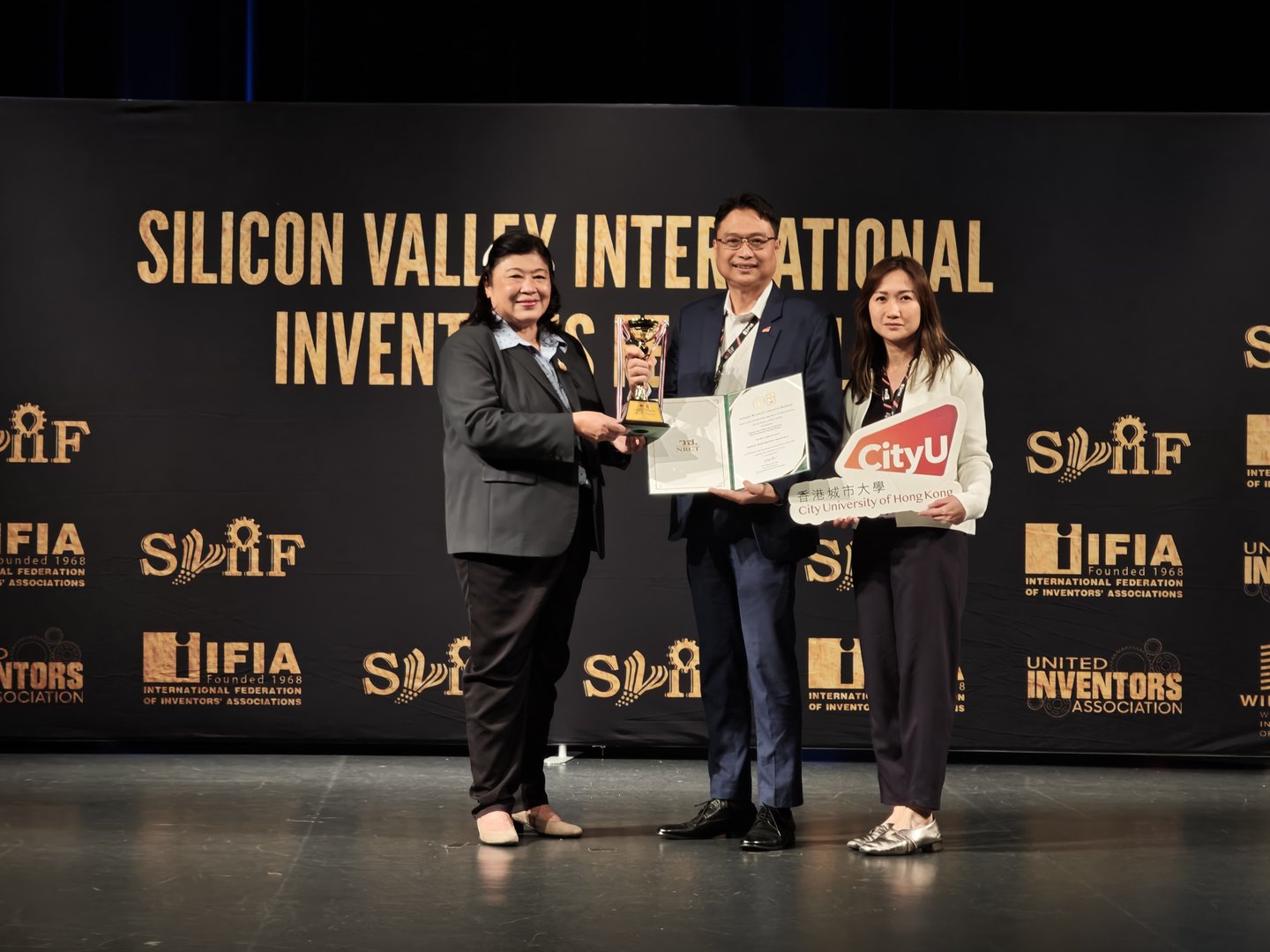
The “Breath AI - Breath Diagnostics, powered by AI” project led by President Boey and Professor Goh, won the Thailand Award for the Best International Invention & Innovation presented by the National Research Council of Thailand and the Gold Medal. This AI-powered, non-invasive diagnostic platform screens for multiple diseases in just one sample of exhaled breath. By combining deep learning with mass spectrometry, the technology detects volatile organic compounds in human breath that act as biomarkers linked to infectious and chronic diseases.
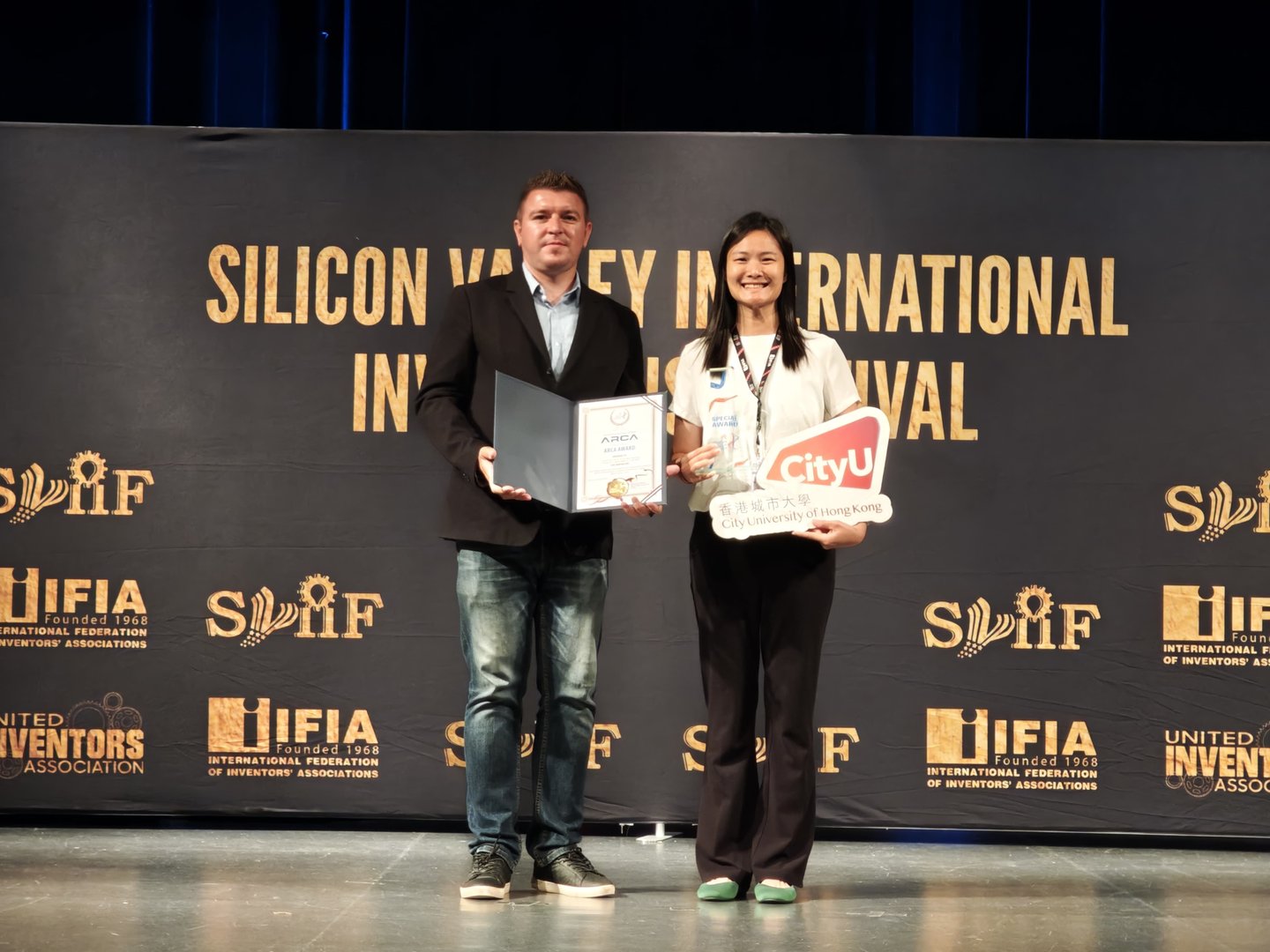
The “Novel Oxygen-Economising Photosensitiser: Zinc (II) Phthalocyanine Substituted with NO-releasing Moieties for Enhanced Photodynamic Therapy against Hypoxic Tumours” project led by Professor Lo Pui-chi and Professor Chow Kwan-ting, Department of Biomedical Sciences, won the International Innovation Exhibition ARCA Award presented by the Croatian Union of Innovations and the Silver Medal. These new light-activated compounds help improve a type of cancer treatment called immuno-photodynamic therapy. Made with zinc, they release nitric oxide and work especially well in low-oxygen tumours. When exposed to light, they cut off the cancer cells’ energy supply, kill the cells, and trigger the immune system to attack the tumour more effectively.
The “InLight Perovskite—Sustainable Indoor Solar Cell System for IoT Self-powered Applications” project led by Professor Zhu Zonglong, Department of Chemistry, won the Gold Medal. The team’s indoor solar system powers IoT sensors and devices with high efficiency, replacing disposable batteries, using perovskite cells designed for low-light environments, including LED lighting. The lightweight, flexible design with self-encapsulation ensures durability and seamless integration into compact devices.
The “Innovative Gate Drive Technology: Incorporating Self-adaptive Gate Driving, Health Monitoring, and Crosstalk Mitigation for Wide Band Gap Devices Prevalent in Modern Energy Systems” project led by Professor Henry Chung Shu-hung, Department of Electrical Engineering, won the Gold Medal. Designed for advanced power devices used in modern energy systems, this smart gate driver, i.e. a kind of power amplifier, reduces electrical interference, helps the devices last longer, and checks their condition to keep them running at their best.
The “Integrated Reactor for Synergistic Solar-driven Water Purification and Hydrogen Generation” project led by Professor Johnny Ho, Department of Materials Science and Engineering, won the Gold Medal. This solar-powered water splitting system, coupled with water purification capabilities, efficiently generates hydrogen fuel by harnessing sunlight while purifying open-water sources like seawater and wastewater. This dual-function approach advances clean energy production and enhances water security by transforming contaminated water into a valuable resource.
The “Portable and Self-cleaning Nitric Oxide Generator” project led by Professor Jin Shang, School of Energy and Environment, won the Gold Medal. The team’s compact handheld inhaled nitric oxide (iNO) device delivers on-demand, stable NO for 30+ hours using 0.4g of material. Its reactor converts powdered material and water mist into therapeutic NO at
The “Advanced Optical Efficiency Enhancer: Leveraging Highly Stable Optical Cavity Technology” project led by Professor Juan Antonio Zapien, Department of Materials Science and Engineering, won the Gold Medal. Promoted by E-VITY LIMITED under HK Tech 300, the team’s innovative optical cavity design delivers superior tolerance to light divergence and misalignment. As a cost-effective, high-efficiency optical enhancer that minimises leakage, it expands applications from precision optics like lasers and sensors to cutting-edge industrial solutions such as UVC air purifiers and photocatalysis.
The “Quantitative Rapid Test for Early Disease Screening” project led by Professor Chen Ting-Hsuan, Department of Biomedical Engineering, is a start-up project promoted by Cimple Biotechnology Limited and incubated by HK Tech 300. The winner of the Silver Medal, this quantitative rapid test quantifies urine albumin/creatinine ratio (uACR) as bar lengths on a device, offering solutions for large-scale chronic kidney disease screening in primary care.
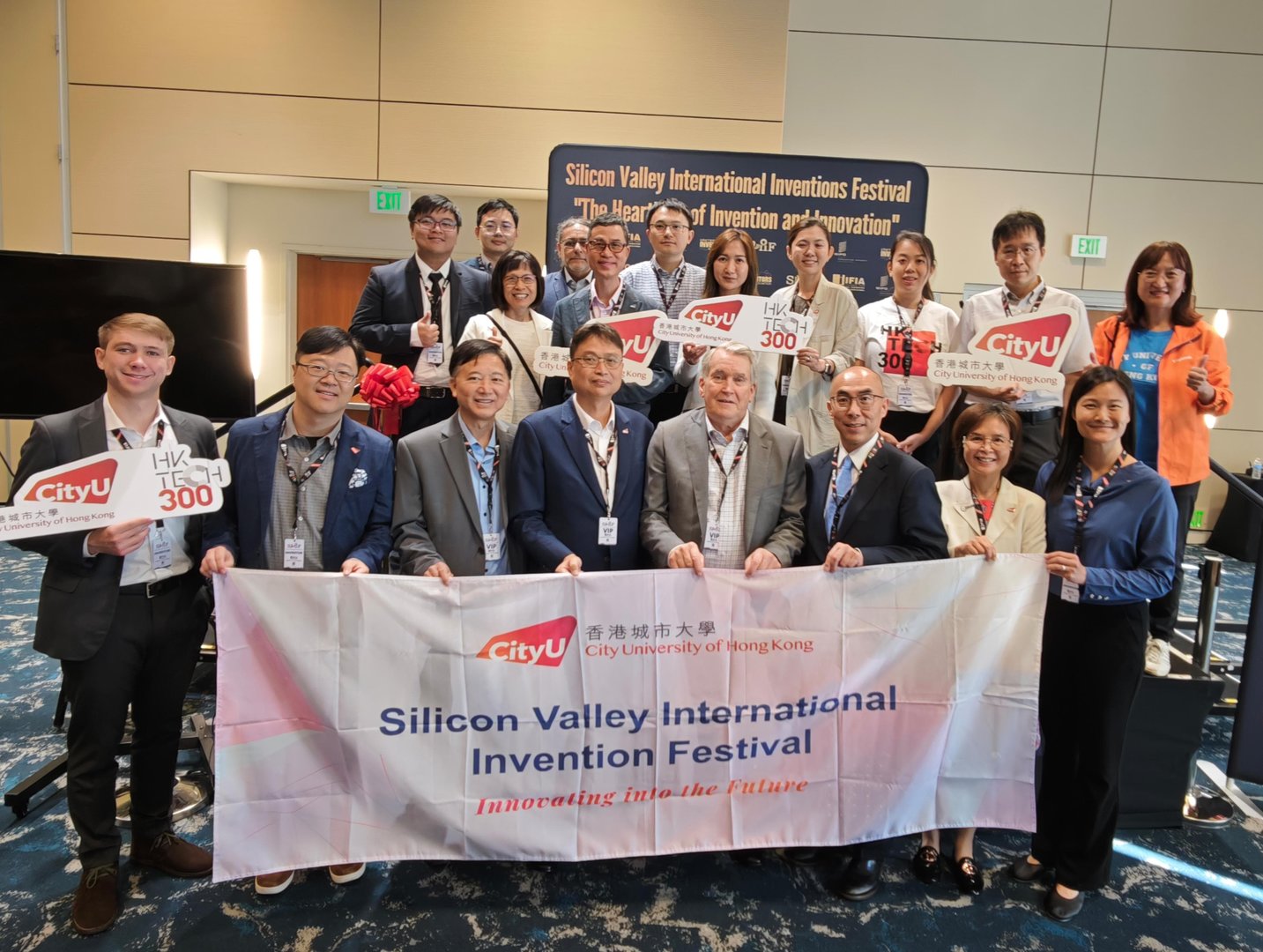
Held this year from 8 to 10 August at the Santa Clara Convention Center in California, SVIIF showcases cutting-edge inventions from around the world and provides a unique platform for inventors to receive internationally recognised awards for excellence in innovation.
Moreover, SVIIF connects inventors, entrepreneurs and industry practitioners with potential investors, partners, and clients from the US and other parts of the world, too.