

CityUHK pioneers safer aqueous zinc-based batteries. Paving the way for greener energy storage to power future data centres
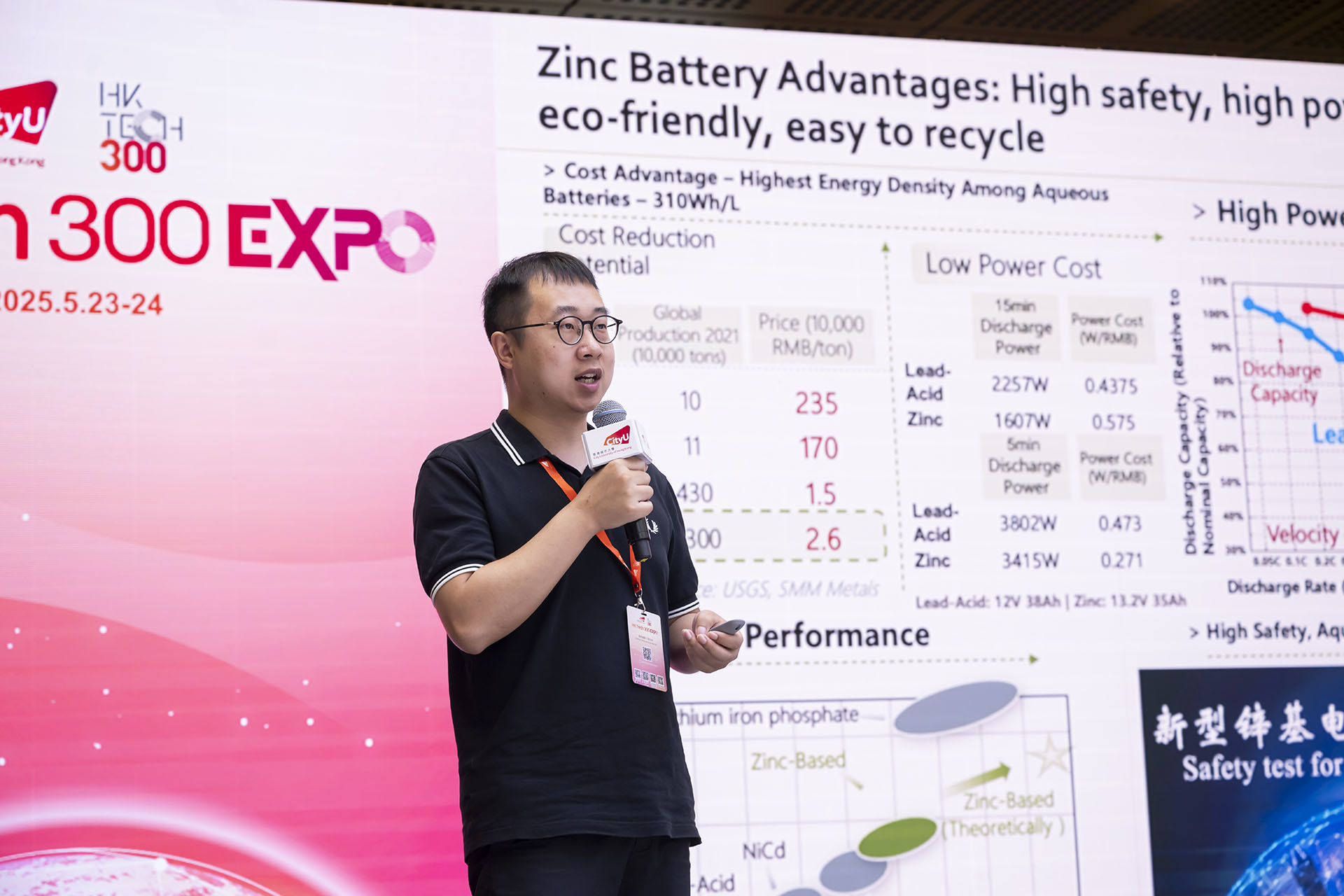
To address the fire risks of lithium batteries, as well as the bulky size and limited power capacity of lead-acid batteries, a research team from City University of Hong Kong (CityUHK) has been awarded funding under the second batch of the “RAISe+ Scheme” to develop the next generation of aqueous zinc-based batteries that offer improved safety, higher power, lower cost and environmental sustainability. The team aims to establish a production line with an annual capacity of 1 GWh over three years. This breakthrough addresses large-scale energy storage challenges, providing future data centres with ideal backup power and improving the safe operation of AI facilities in Hong Kong and global markets.
Addressing safety and efficiency challenges in existing battery systems
As the world accelerates toward carbon neutrality and renewable energy development, battery technologies have become essential for building a resilient and sustainable energy infrastructure.
(Photo credit: City University of Hong Kong)
Though lithium battery systems currently dominate the market owing to their high energy density, they pose serious safety risks with short-circuiting or overheating concerns. In contrast, approximately 90% of batteries in Uninterruptible Power Supply (UPS) backup systems are lead-acid batteries, whose inherently low power density requires over-provisioning of battery units to meet instantaneous power demands. This increases costs, complicates maintenance and limits system flexibility.
To address the industry’s urgent need for safe and sustainable energy storage solutions, Professor Zhi Chunyi, formerly of the Department of Materials Science and Engineering at CityUHK, has devoted many years to researching aqueous electrolyte batteries, achieving major breakthroughs in advancing battery safety and performance. In 2020, he co-founded “Amazinc Energy Limited” with Dr Tang Zijie from his research team, focusing on aqueous zinc-based batteries as its core product.
A water-based, safe and environmentally friendly innovation
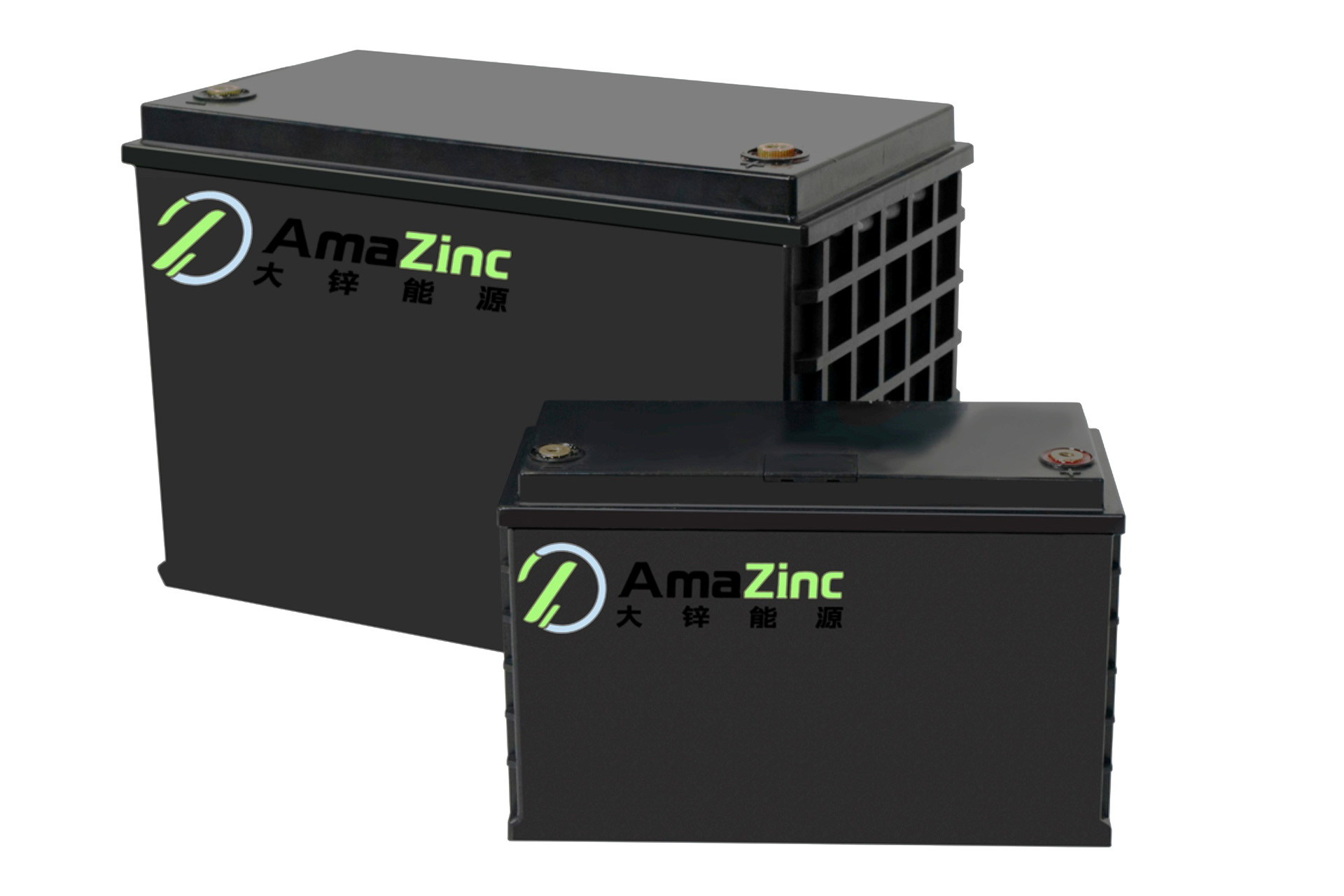
Aqueous zinc-based batteries use zinc metal as the main electrode material and water as the electrolyte, eliminating the fire and explosion risks associated with lithium-ion batteries. In addition, zinc is abundant, recyclable and non-toxic, making the entire manufacturing and recycling process more environmentally friendly and cost-effective than lithium-based technologies.
To further improve performance and application value, the team will (i) optimise the structure and surface treatment of zinc anode materials to prevent zinc dendrite formation and extend battery life; (ii) apply a stable protective layer on the cathode’s surface to enhance its dissolution resistance and cycling stability; and (iii) design a two-layer composite separator to further improve battery safety and performance.
(Photo credit: City University of Hong Kong)
Building on these material-level improvements, the team will also refine the “cell development process” by precisely controlling key manufacturing techniques, including slurry coating, roll pressing, electrode cutting, tab welding, electrode winding and vacuum electrolyte filling, to further enhance battery consistency, mechanical strength, energy density and cycle life.
In addition, three novel systems, including a battery management system (BMS), a power control system (PCS) and an efficient thermal management system, will be developed specifically for zinc-based batteries. These systems will monitor battery status in real time to ensure stable operation, prevent overheating and enhance overall system reliability.
Boosting industrialisation and production capacity
To accelerate the commercialisation of its research outcomes, Amazing Energy Limited has received support from HK Tech 300, CityUHK’s flagship innovation and entrepreneurship programme, through angel funding. In addition, the project titled “Development and application of large-scale energy storage and UPS systems based on intrinsically safe aqueous batteries” has been awarded under the second batch of the “RAISe+ Scheme” by the Government of the Hong Kong Special Administrative Region. The project is led at CityUHK by Professor Zhang Qichun, from the Department of Materials Science and Engineering.
The company also operates automated production facilities in the Chinese Mainland, supporting pilot production and testing of zinc-based batteries for backup power applications.
It is also gradually integrating into Huasu Technology, a leading domestic supplier of BMS and data centre infrastructure solutions. By leveraging Huasu’s strengths in BMS, backup power for data centres, energy storage systems and market channels, this partnership aims to accelerate the commercialisation of zinc-based batteries in markets such as UPS for data centres, energy storage and green energy, driving research outcomes toward larger-scale and higher-level industrial development.
“Our goal is to develop a new generation of battery technology that is both safe and efficient,” said Dr Tang. “The aqueous zine-based battery system eliminates fire risks, reduces costs, and can operate safely and reliably in large-scale energy storage and backup power applications. With the support of RAISe+, along with Hong Kong’s strengths as an international financial centre and digital hub, we aim to provide more reliable solutions for local data centres, financial institutions, medical systems and high-end commercial facilities. Hong Kong will serve as a platform for technology demonstration, standards alignment and overseas market expansion, accelerating the internationalisation of research outcomes.”