


Breaking Through Personal Limitations to Create a Unique Wheelchair Experience
Daniel Chong
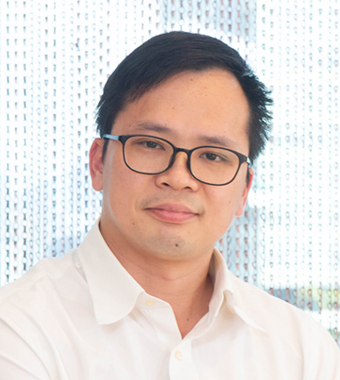
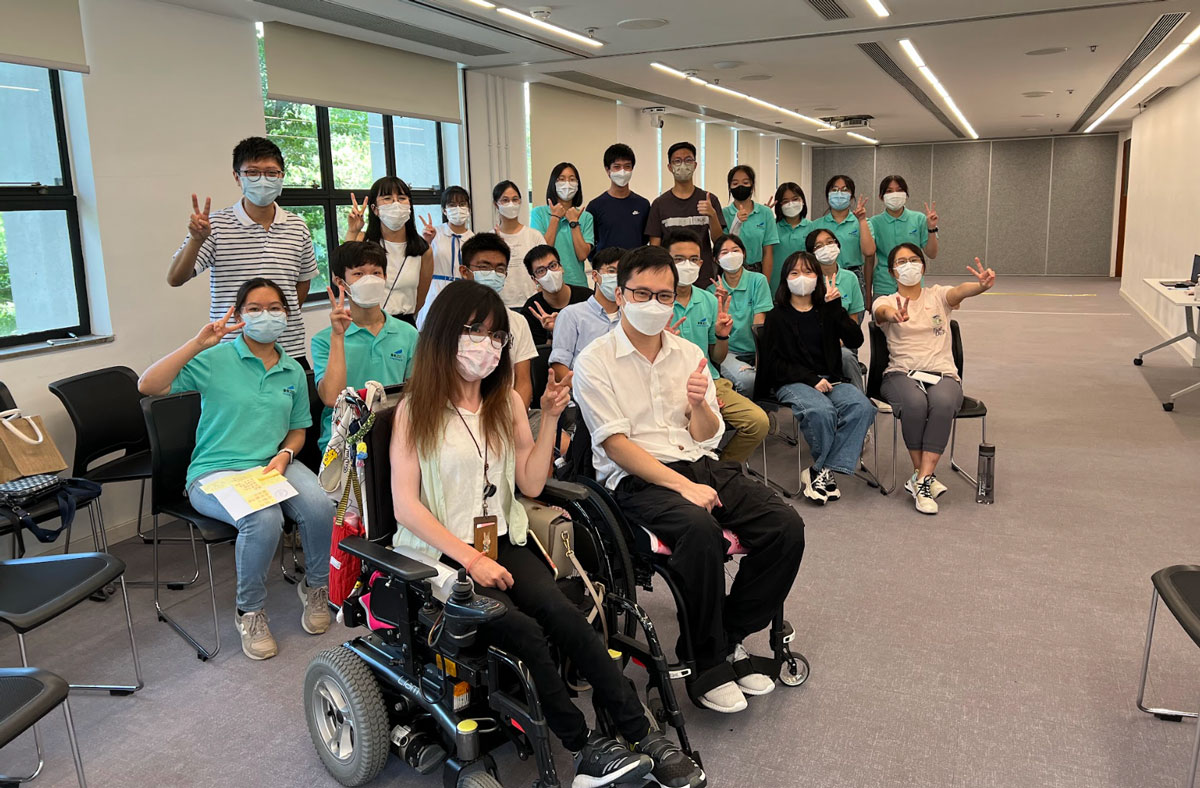
Daniel CHONG actively promotes social inclusion. Pictured is the Wheel Real Experience activity and STEM wheelchair robot programming workshop.
- Bachelor of Engineering (Honours) in Nuclear and Risk Engineering, City University of Hong Kong
- Co-founder of Wheel Real Experience
Life is full of setbacks, but the key lies in how one regains momentum and overcomes adversity. Daniel Chong, who studied Nuclear and Risk Engineering at City University of Hong Kong (CityUHK), originally intended to pursue a career in engineering. However, during his first year of university, he was diagnosed with a spinal cord injury of unknown cause, which resulted in the loss of mobility in his lower body. "At first, I thought I would be discharged from the hospital soon," Daniel said with a smile. His physical limitations forced him to reconsider his life path. Four years ago, with the support of CityUHK’s "HK Tech 300" innovation and entrepreneurship program, he co-founded Wheel Real Experience. By combining his personal experiences and knowledge, he designed a STEM curriculum that integrates wheelchair experience and assistive technology, promoting inclusivity among the next generation.
Reflecting on his university major selection, Daniel admitted that he was still uncertain about his future direction at the time. However, having studied science in secondary school and developed an interest in engineering, he enrolled in CityUHK’s engineering program, joking, "My original plan was to take the conventional path and become an employee." It wasn’t until the summer before his second year that he suddenly experienced spinal discomfort. After a medical examination, he was diagnosed with bleeding and required immediate surgery, the effects of which were profound. Daniel recalled spending nearly two years coming to terms with the devastating news. Fortunately, upon returning to campus, he received proactive support from professors, staff, and many classmates, enabling him to successfully complete his studies.
People with disabilities often face numerous challenges in job hunting and employment. Daniel once aspired to become an engineer but had to abandon this dream due to the difficulty of moving freely around construction sites. He also shared that some employers expressed interest in hiring him but faced spatial constraints in their offices. These experiences led Daniel to reflect deeply, eventually inspiring him to start his own business. He hoped to not only find a space where he could thrive but also create job opportunities for other people with disabilities.
However, his entrepreneurial journey was far from smooth. Daniel mentioned that as someone who acquired a disability later in life, it took him considerable time to adapt to using a manual wheelchair. He deeply felt that the development of assistive technology lagged far behind mainstream technology, which motivated him to leverage his knowledge to develop innovative products tailored to the needs of wheelchair users. In 2017, he formed a team with friends and successfully applied for funding from the Social Innovation and Entrepreneurship Development Fund to develop an intelligent wheelchair light called "Wheel Real Light," designed to help wheelchair users navigate challenges while traveling. Unfortunately, the project ultimately succumbed to resource and market issues: "Even as a person with a disability designing an accessible product, there can be oversights or omissions. The most important thing is to let go of one’s assumptions and re-evaluate the market environment."
He continued, "When you’ve invested so many resources and effort into developing a product, it’s natural to feel disappointed, but there’s no need to be overly fixated. Every failure provides a clearer understanding of the market and whether there is still room for development. The technical skills and experience gained can be transformed and applied elsewhere; nothing is wasted." Subsequently, Daniel integrated his team’s research and development result into a STEM curriculum and teaching materials. This allows primary and secondary school students not only to experience using a wheelchair but also to engage in hands-on activities, learning programming, robotics, autonomous driving, and other technologies to create mini electric wheelchairs.
Wheel Real Experience is now in its fourth year, with 5 to 6 full-time employees, including several people with disabilities. Additionally, many wheelchair users collaborate part-time as experience instructors. The company focuses on providing inclusive wheelchair experiences and STEM education for youth. Its services also extend to government departments and corporate managers: "My goal is to provide participants with valuable wheelchair experiences. By allowing them to feel the problems and difficulties faced by people with physical disabilities in daily life, we can comprehensively drive reforms and promote more wheelchair-friendly measures or policies."
When discussing the essential qualities of an entrepreneur, Daniel repeatedly emphasized the importance of staying true to oneself and finding a field and direction one is genuinely passionate about and interested in, rather than pursuing a fleeting idea. This ensures sufficient motivation to move forward and greater resilience in the face of setbacks, making it less likely to give up easily. "If you’re doing something simply because you see a need for it, rather than because you truly want to do it, you may lose momentum halfway, and everything will come to an end." Looking ahead, Daniel hopes to continue developing assistive technology for people with disabilities, introducing innovative wheelchair products and universal designs from around the world to benefit wheelchair users, including not only people with disabilities but also the growing number of elderly individuals who require wheelchairs due to population aging.
(Published at 21 August 2025)