‘@


| ‘@ |
‘@
|
||
|
|
Radiation Biophysics
Our current radiation biophysics research mainly focuses on two areas, namely, (1) studying in vivo radiobiological effects using zebrafish embryos, and (2) rescue effect.
| Resources | |||||
|
Review paper:
Lam, R.K.K., Fung, Y.K., Han, W., Yu, K.N., 2015. Rescue effects:
Irradiated cells helped by unirradiated bystander cells. International
Journal of Molecular Sciences 16, 2591-2609.
(download
pdf version) |
|||||
|
Review paper:
Choi, V.W.Y., Yu, K.N. 2015.
Embryos of the zebrafish Danio rerio in
studies of non-targeted effects of ionizing radiation. Cancer Letters
356, 91-104.
(download
pdf version) |
Review paper: Wang, H., Yu, K.N., Hou, J., Liu, Q., Han, W., 2015. Radiation-induced bystander effect: Early process and rapid assessment. Cancer Letters 356, 137-144. (download pdf version) | ||||
|
|
||||
|
|
|
Studying in vivo radiobiological effects using zebrafish embryos |
|
|
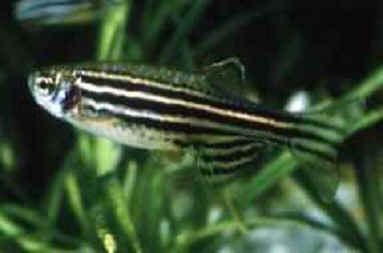
An adult zebrafish, Danio rerio. |
‘@ In recent years, the zebrafish, Danio rerio, a small vertebrate from Southeast Asia, has become a preferred model for studying human disease, including carcinogenesis. The most important advantage is that the human and zebrafish genomes share considerable homology, including conservation of most DNA repair-related genes. Rapid embryonic development is another advantage so the effects can be assessed within 24 hours post fertilization (hpf). We began using zebrafish embryos to study in vivo radiobiological effects in 2007 [1]. The examined in vivo radiobiological effects include the hormetic effect, photon hormesis, adaptive response, rescue effect, bystander effect and multiple stressor effect. A recent review on using zebrafish embryos to study non-targeted effects of ionizing radiation can be found in Ref. [2]. ‘@ References
[1]
[2]
‘@ |
|
‘@ |
‘@ Hormetic effect Hormetic responses are characterized by biphasic dose-response relationships showing a low-dose stimulation and a high-dose inhibition. Alpha-particle-induced hormetic effect has been demonstrated in zebrafish embryos using alpha particles [1,2], and has been found to be communicated to bystander unirradiated zebrafish embryos [3]. A subhormetic zone was also found in microbeam-proton-irradiated zebrafish embryos [4,5], which together with the hormetic and toxic zones constituted the triphasic low-dose response in zebrafish embryos. ‘@ References [1]
[2]
[3] [4]
[5]
‘@ |
|
‘@ |
‘@ Photon hormesis Photon hormesis or photon radiation hormesis refers to the phenomenon where the biological effect of an ionizing radiation (other than photons) is suppressed by a simultaneous small photon radiation exposure. The proposed mechanisms underlying photon hormesis include high-fidelity DNA repair and removal of aberrant cells through apoptosis. Photon hormesis was shown in the dose response of zebrafish embryos to 2-MeV neutrons, which showed that the responses to neutron doses of 70 and 100 mGy (corresponding to photon dose contamination of 9.8 and 14 mGy, respectively) were significantly lower than expected [1]. We were the first group ever to observe neutron-induced bystander effect (NIBE). The NIBE was found between irradiated and unirradiated zebrafish embryos for a certain neutron-dose range (20 to 50 mGy) [2]. Non-induction of NIBE for neutron doses >50 mGy was attributed to photon hormesis (with corresponding photon doses > 7 mGy). More recently, we also revealed that priming neutron doses applied at 5 hpf could not induce radioadaptive response (RAR) against a challenging X-ray dose of 2 Gy applied at 10 hpf [3]. Non-induction of RAR on embryos having received 25, 50 and 100 mGy of neutron doses was explained by photon hormesis which mitigated neutron-induced damages. Separate experimental results were provided to verify that high-energy photons could disable RAR. Specifically, 5 or 10 mGy X-rays disabled the RAR induced by a priming dose of 0.88 mGy of alpha particles delivered to 5 hpf zebrafish embryos against a challenging dose of 2 Gy X-rays delivered to the embryos at 10 hpf. [3] ‘@ References
[1]
[2]
[3] Ng, C.Y.P., Kong, E.Y., Kobayashi, A., Suya, N., Uchihori, Y., Cheng, S.H., Konishi, T., Yu, K.N., 2015. Non-induction of radioadaptive response in zebrafish embryos by neutrons. Journal of Radiation Research, in press. ‘@
|
|
‘@ |
‘@ Adaptive response Adaptive response (AR) or radioadaptive response (RAR) occur when a small preceding priming dose decreases the biological effectiveness of a subsequent large challenging dose. RAR has been demonstrated in zebrafish embryos using alpha particles [1,2], and has been found to be communicated to bystander unirradiated zebrafish embryos [3]. RAR was also induced in microbeam-proton-irradiated zebrafish embryos [4,5] through nitric-oxide dependent pathways [6] and was likely to involve de novo synthesis of factors [7]. ‘@ References
[1]
[2]
[3]
[4]
[5]
[6]
[7]
‘@
|
|
‘@ |
‘@ Rescue effect Rescue effects refer to the phenomenon in which the biological effects of the irradiated cells/organisms are mitigated by the bystander unirradiated cells/organisms. We reported data demonstrating that zebrafish embryos irradiated by alpha particles could release a stress signal into the water, which could be communicated to the unirradiated zebrafish embryos sharing the same water medium, and then these unirradiated zebrafish embryos could release a feedback stress signal back to the irradiated embryos to mitigate the radiation induced DNA damages in the latter [1]. Our results also showed that the strength of the rescue effect depended on the number of rescuing bystander unirradiated embryos [1]. In a latter study, we also demonstrated that the signals for bystander effect and rescue effect had the same function [2]. We also found that unirradiated zebrafish embryos need nitric oxide but not the nitric-oxide-induced damages to rescue alpha-particle irradiated zebrafish embryos [2]. ‘@ References
[1]
[2]
|
|
‘@ |
‘@ Bystander effect Radiation-induced bystander effects (RIBE) in cells/organisms refer to biological effects that the unirradiated cells/organisms respond as if they have been irradiated, when they are put in contact with the irradiated cells/organisms or in the medium previously holding the irradiated cells/organisms. Alpha-particle-induced bystander effect has been demonstrated in zebrafish embryos using alpha particles [1], which was attenuated of in a carbon-monoxide-concentration dependent manner [2]. RIBE was also implied in the induction of hormetic effect and adaptive response in bystander embryos, and in the induction of the rescue effect in the irradiated embryos in the presence of bystander embryos. We also found bystander effect between embryos irradiated with high-dose X-rays and unirradiated embryos through nitric-oxide dependent pathways [3]. ‘@ References
[1]
[2]
[3]
‘@
|
|
‘@ |
‘@ Multiple stressor effect Multiple stressor effects are the resultant effects due to exposures to a mixture of environmental stressors, e.g., ionizing radiations, heavy metals, etc. Evidence showed that toxicity could be modified by simultaneous or sequential exposures to multiple environmental agents. We have studied the multiple stressor effects of alpha particles and cadmium (Cd) on zebrafish embryos. Antagonistic effects occurred for alpha-particle irradiation followed by Cd exposure [1] and also for Cd exposure followed by alpha-particle irradiation [2]. On the other hand, mostly additive and some synergistic effects occurred for simultaneous alpha-particle irradiation and Cd exposure [3]. More recently, we have studied the multiple stressor effects of alpha particles and depleted uranium (DU) on zebrafish embryos. Interestingly, DU changed the hormetic effect brought about by alpha-particle irradiation into an apparently toxic effect. This could be explained in terms of the promotion of early death of cells predisposed to spontaneous transformation by the small alpha-particle dose (i.e. hormetic effect) and the postponement of cell death upon DU exposure [4]. ‘@ References
[1]
[2]
[3]
[4]
‘@
|
Back to Radiation Biophysics page

|
Nuclear Radiation Unit |
Page last modified on 3-Jul-2017 |